The Old Cottage, Colmore Lane
A probable 16th-century hall house, timber-framed with wattle-and-daub infill and a plain tile roof.

Roofs round Peppard Common, from hall house to council cottages
Rotherfield Peppard is a scattered Chilterns village round Peppard Common, with a 16th-century hall house and a Grade II* church. We read each roof before we price.
A probable 16th-century hall house, timber-framed with wattle-and-daub infill and a plain tile roof.
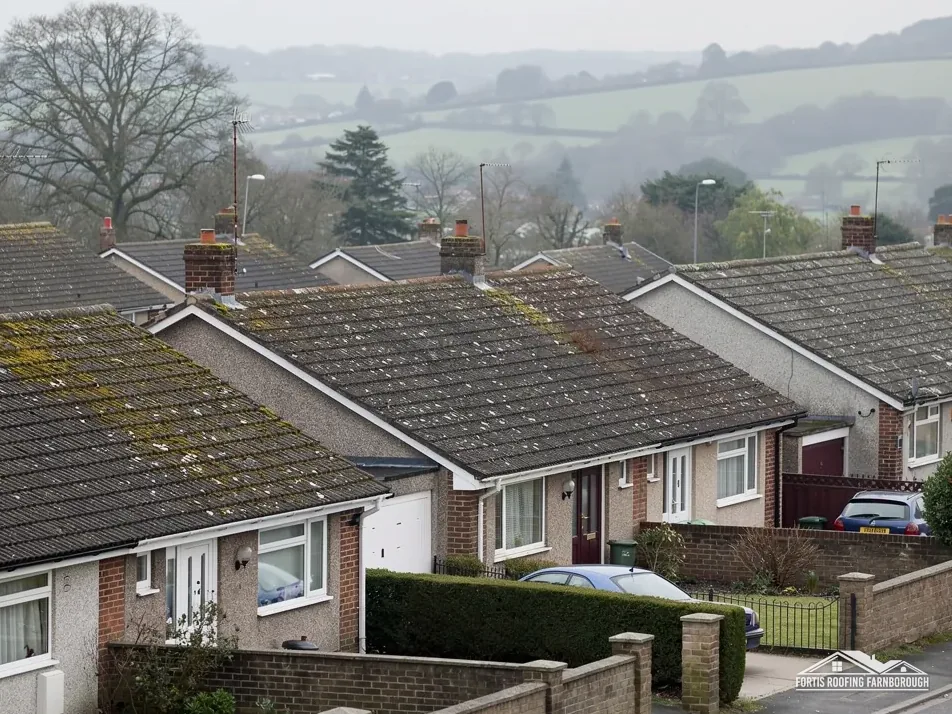
Six council houses were built along Church Lane in 1928, with six more and two culs-de-sac later.

Settlement is scattered, with farmsteads and houses around commons or along roads, on chalk with clay-with-flints.
Map of Rotherfield Peppard with Sonning Common, Kidmore End, Stoke Row, Binfield Heath marked around it.
Map data © OpenStreetMap contributors. Loads only when you ask for it.
Sonning Common lies south of Rotherfield Peppard, Kidmore End south-west, Stoke Row north-west, Binfield Heath and Shiplake south-east, Henley-on-Thames east and Nettlebed north.
About 26.1 road miles north-west of Farnborough · South Oxfordshire District Council and Oxfordshire County Council.
Peppard, clay tile and common
How two councils share a Peppard roof job, what published lifespans say for clay tile and for slate, along with what the Chilterns designation, a conservation area and a Grade II* church ask of a repair.
| No. | Chapter | The figure it turns on |
|---|---|---|
| 01 | A scattered village and its two councils | South Oxfordshire plans; Oxfordshire is the county |
| 02 | Clay tile, slate and how long coverings last | Brick and clay tile, some slate and flint |
| 03 | A Chilterns landscape, a conservation area and All Saints | 93% inside the Chilterns National Landscape |
Chapter 01 of 03
| Role | Body for Rotherfield Peppard addresses |
|---|---|
| Planning authority | South Oxfordshire District Council |
| County council | Oxfordshire County Council |
| Building control | Your building control body, chosen before work starts |
| Scaffold on a road | A licence from the highway authority; applicant to be confirmed |
| Civil parish | Rotherfield Peppard, 1,730 usual residents at the 2021 Census |
| Distance from our base | 26.1 road miles north-west of Farnborough, from the A325 |
Rotherfield Peppard is spread out. Farmsteads and houses sit round commons or along lanes, and a roof may lie at the end of a long drive. That shapes a roofing job more than any council does: access, deliveries and the lie of the ground are settled at the survey, because a lorry that cannot reach the house changes the programme, and carrying materials by hand adds time on site.
Planning for Peppard belongs to South Oxfordshire District Council, with Oxfordshire County Council above it as the county authority. Our own base is in Hampshire, so we read these two councils' guidance afresh for each Peppard job, and the report names the guidance we followed. Where a question is about the lane or its verge, the licence belongs to the highway authority.
Treat the Planning Portal's rule as three numbers. Keep the work below 25 per cent of the building envelope and below 50 per cent of the roof, and Building Regulations normally stay out of a re-roof; pick a new covering that weighs 15 per cent or more above the old, and they come in. The survey measures the roof and prints all three figures in the report, with the measurements behind them. If an application is needed, your building control body takes it, and we tell you which route we would suggest.
A scaffold that obstructs a lane or the edge of a common is a licensing matter, because section 169 of the Highways Act 1980 gives the highway authority the power, and the authority sets the fee and lead time. We find out both, and who submits the form, before booking. Scaffold on private ground needs no highway licence, and a house set back from the lane may allow that.
The ground itself needs a look, and a trip to the site shows more than any map. The published account describes the parish as chalk with patches of river gravel and clay-with-flints on the high ground, and a scaffold on a slope or soft ground needs sole boards and careful bracing. The survey notes what the ground is like at each proposed scaffold position, and the plan allows for it.
Many Peppard roofs are close to trees. Fallen branches, leaves and damp shade all play a part in how a roof ages, and the survey includes a look at what overhangs each slope, with a note of anything that should be cut back by the owner or the tree's owner before work starts, so that branches do not scrape a new covering.
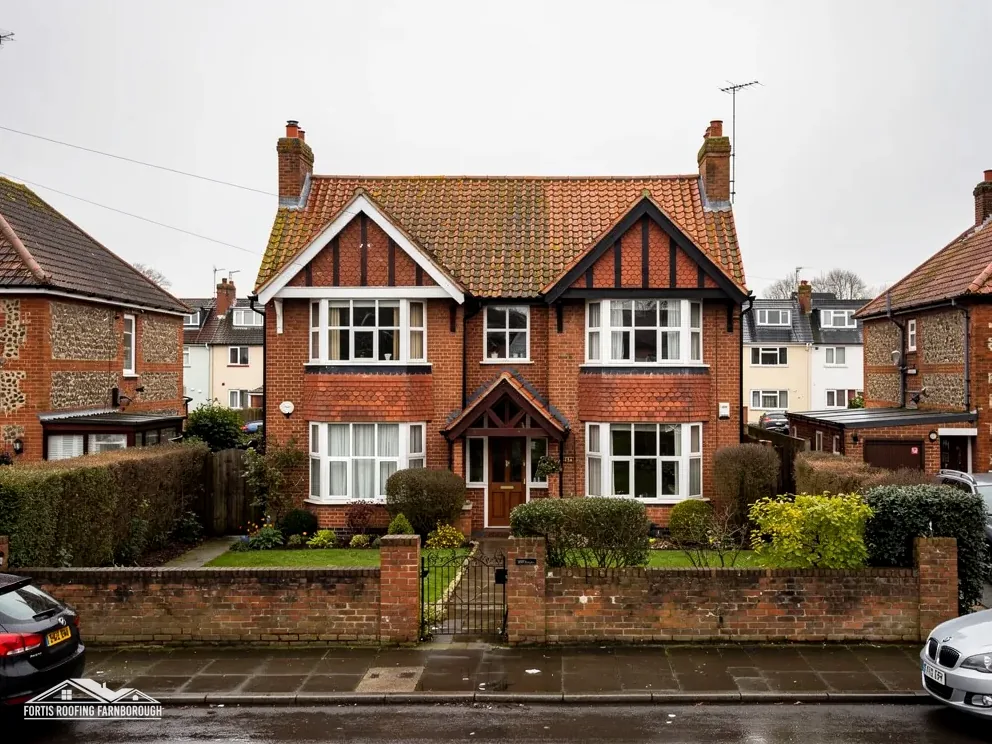
The Victoria County History of Oxfordshire, published in 2011, says that in Rotherfield Peppard the buildings are brick and clay tile, with occasional timber framing, flint and slate, and that thatch has rarely been used for roofs since the 19th century. It adds that most of the present housing is of the 18th century and later, and that the Old Cottage on Colmore Lane, probably an early to mid 16th-century hall house, is timber-framed with wattle-and-daub infill and a plain tile roof.
The chart above shows lives published by HomeBuilding: clay tile 60 to 80 years, concrete tile 40 to 50 years, reclaimed Welsh slate 50 to 80 years, Spanish natural slate 75 to 100 years, and Welsh slate 100 years or more. These are typical figures and never promises, and a roof's own condition matters more than its date. Fixings, battens and underlay each fail on their own timetable, so a covering can outlast its fixings, or the reverse.
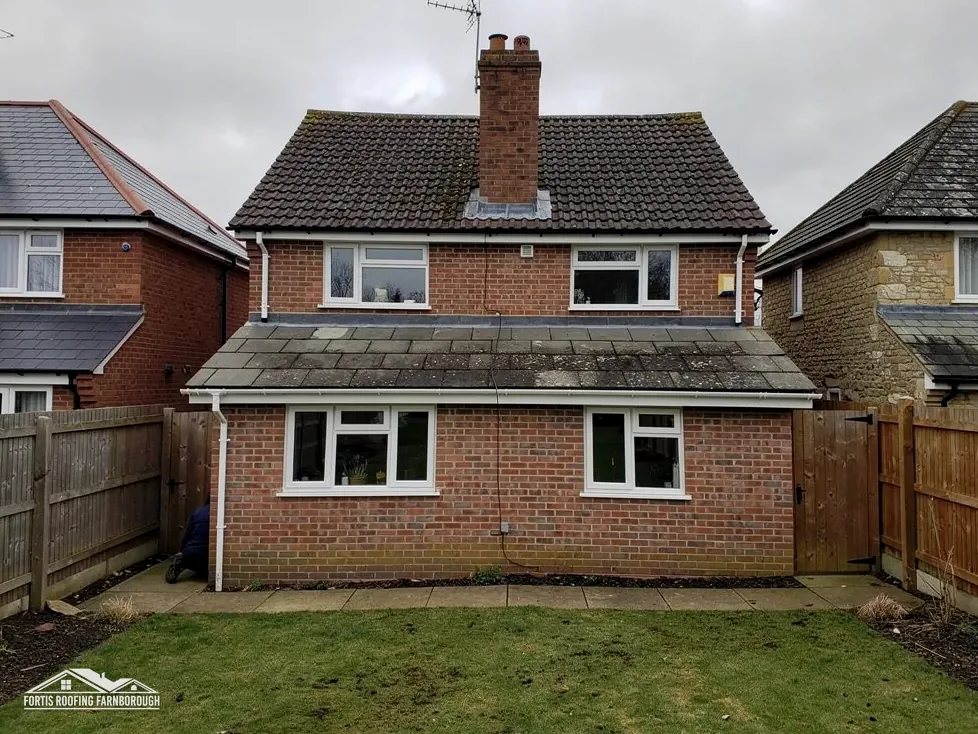
A plain tile roof on an old frame is a different job from a new roof on a new frame, because the timbers may have moved over the centuries, and a straight edge laid across the slope will often show it. We sight along the ridge and the eaves for sag, and raise tiles at several points to see the battens. Our pitched roofing page explains repairs to tiles, ridges and valleys once that evidence is in.
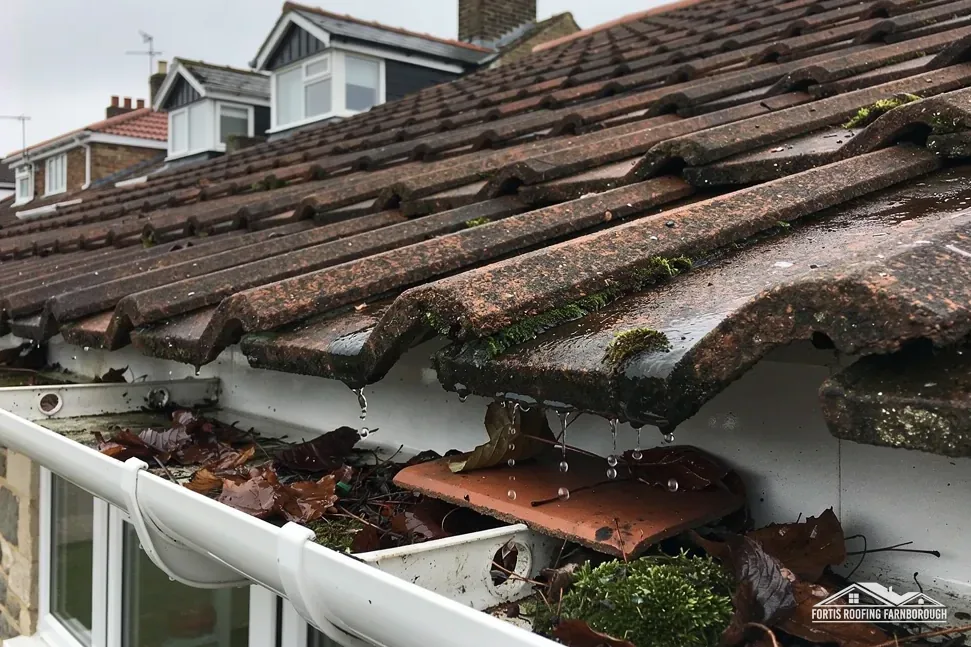
Trees round the commons and lanes mean moss and leaf fall. Marley says powerful jet washing can harm the surface of a tile, so it does not recommend it, and our roof cleaning and moss removal page describes gentler methods, and valleys and gutters are cleared on every survey.

Six council houses were built along Church Lane in 1928, and after the Second World War came a further row of six and two culs-de-sac, with greenfield building and infilling continuing into the 1970s. Peppard therefore grew in stages. A roof from the 1920s and another from the 1960s may be in sight of each other, and the survey reads each on its own evidence, naming the covering in the report, so that no roof is judged by its neighbour.
Chapter 03 of 03
Peppard's designations in four published figures
About 93 per cent of the 1.5 km area round Rotherfield Peppard falls within the Chilterns National Landscape, formerly the AONB, so the designation shapes the questions here. Land of that kind has no permitted development right for dormers, and any new dormer or large rooflight deserves a conversation with South Oxfordshire's planners before a drawing is made. Our planning permission for roof work guide sets out the rules at national level, and the council can say how they apply to your plot.
The Rotherfield Peppard conservation area lies within about 0.75 km of the centre, and South Oxfordshire's map shows whether a house stands inside it. It adds a second layer to the landscape designation, so a repair that alters the covering, the ridge line or a stack should go to the council first. Ask also whether an Article 4 direction applies to your address, since a direction can bring small roof alterations under planning control.
The church of All Saints, a Grade II* building with continuing Anglican worship, brings its roof repairs under the ecclesiastical exemption and the faculty system, outside the district council's consent. The cottage some 30 metres east of the Dog public house, and Peppard Farm House, are both listed Grade II, with 3 listed buildings on the national list within 500 m of the centre. If a listed house's character is affected, listed building consent is required, and we ask before pricing.
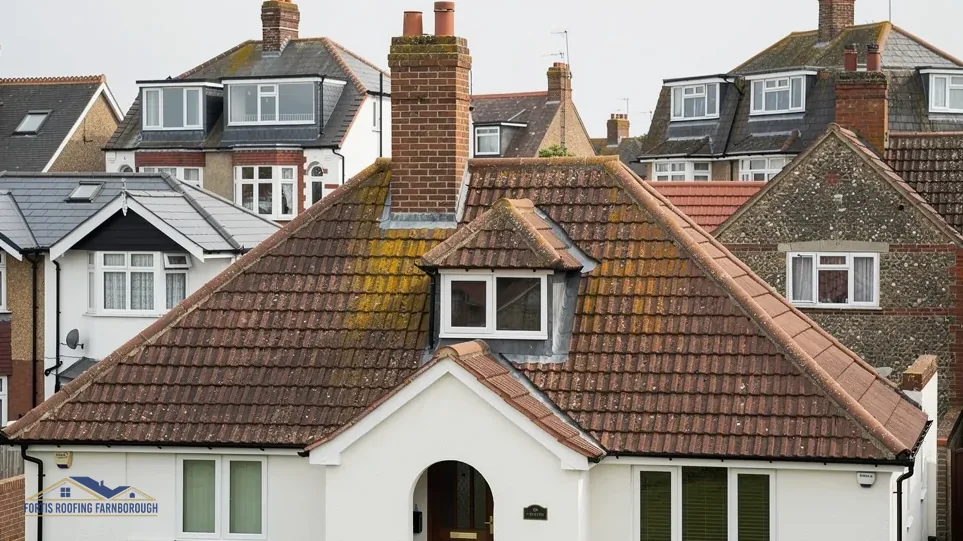
Under section 55 of the Town and Country Planning Act 1990, works that leave a building's outer appearance materially unchanged do not count as development, so an unlisted Peppard house can be repaired like for like without an application. Our survey pictures record the starting point. A chimney is one of the details people notice from the lane, and our chimney repairs page explains repointing, flashing and rebuilding.
With so few listed buildings and a scattered layout, a Peppard house may be judged on the landscape and conservation questions alone. So the first call should include your postcode, and both maps are checked before the visit, which lets the report separate the work likely to need consent from the work that does not.
HomeBuilding gives a typical life of 60 to 80 years for clay tile, and Marley reports a BRE minimum life expectancy of 60 years for clay tiles. Those are typical figures, not promises. We lift tiles on the survey and check the battens and fixings too, because a roof's condition matters more than its age.
About 93 per cent of the 1.5 km area surrounding the village is inside it, so a good many addresses sit within the boundary. South Oxfordshire's planners can confirm yours. Inside it, a dormer means a planning application, and any new covering or ridge profile goes to the council before a price is given.
The church follows a separate route. All Saints, listed Grade II* and still in Anglican use, takes roof repairs to the faculty system through the ecclesiastical exemption. For Peppard Farm House and other listed homes, South Oxfordshire's listed building consent applies, which we raise before any price is agreed.
A scaffold that obstructs a lane or its verge needs the highway authority's licence, and we confirm the applicant, fee and lead time first. Whether any common land is involved depends on where the poles stand, which the survey records. Poles wholly on your own ground need no highway licence.
Get your free roof quote
Give us your Rotherfield Peppard address and the problem you have noticed, and we will fix a survey day.
10-year workmanship guarantee, in writing.