Hand-made red clay tiles
South Oxfordshire's appraisal says the oldest Henley buildings are clad in local hand-made red clay tiles.
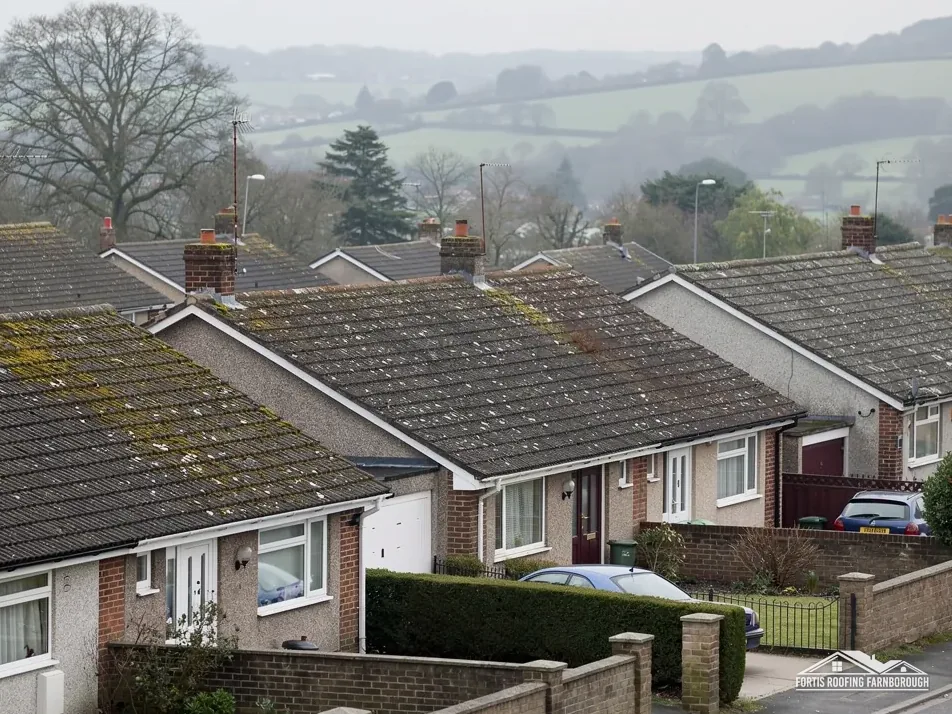
Hand-made clay tile, Welsh slate terraces and Edwardian cottages
Henley's own appraisal pairs hand-made red clay tiles on the oldest roofs with Welsh slate on 19th-century terraces. We find out which covering each slope carries.
South Oxfordshire's appraisal says the oldest Henley buildings are clad in local hand-made red clay tiles.
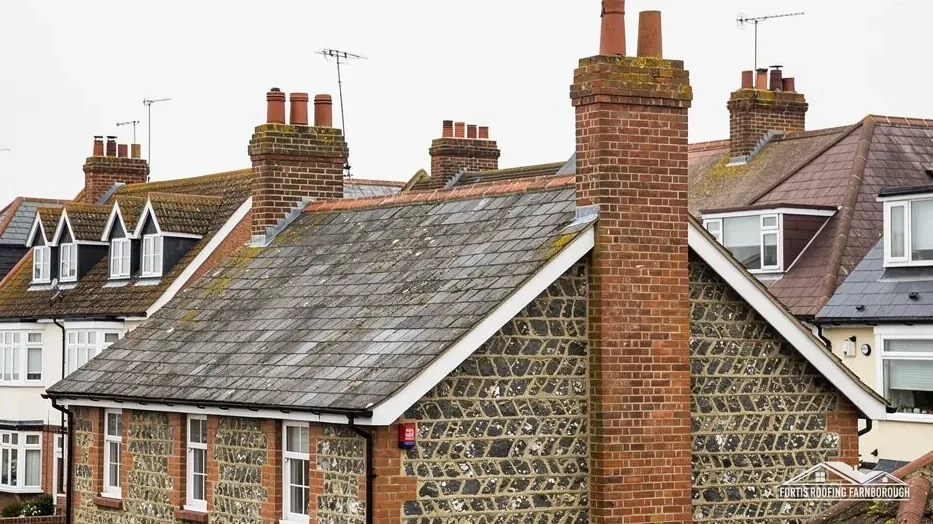
The same appraisal records Welsh slate on other buildings, including the 19th-century terraces beyond the town centre.

The St Mark's Road area is a late Victorian and Edwardian suburb of generous villas, with its own conservation area.
Map of Henley-on-Thames with Binfield Heath, Shiplake, Hambleden, Wargrave marked around it.
Map data © OpenStreetMap contributors. Loads only when you ask for it.
Binfield Heath and Shiplake lie to the south, Hambleden to the north-east, Wargrave to the south-east, Rotherfield Peppard and Sonning Common to the west.
About 22.8 road miles north of Farnborough · South Oxfordshire District Council and Oxfordshire County Council.
Henley, timber frames and tile
Which councils handle roof work in a Chilterns-edge market town, what South Oxfordshire's own appraisals say about Henley's tiles, slate and timber frames, and how its three conservation areas and listings shape a repair.

| No. | Chapter | The figure it turns on |
|---|---|---|
| 01 | South Oxfordshire and Oxfordshire behind a Henley roof | South Oxfordshire plans, Oxfordshire licenses roads |
| 02 | Jettied frames, clay tile and Welsh slate | 12,406 residents, Henley-on-Thames parish |
| 03 | Three conservation areas, listed inns and a church | 7 per cent inside the Chilterns landscape |
Chapter 01 of 03
| Role | Body for Henley addresses |
|---|---|
| District council and planning authority | South Oxfordshire District Council |
| County council and highway authority | Oxfordshire County Council |
| Building control | Southvale Building Control, or a registered approver |
| Landscape designation | Chilterns National Landscape, at the town's edge |
| Distance from Farnborough | 22.8 road miles north, from the A325 |
Henley sits in Oxfordshire, a county where the councils behind a roof job differ from those closer to our Farnborough base. Planning decisions come from South Oxfordshire District Council, while the roads are Oxfordshire County Council's. For building control you can use Southvale Building Control, which serves South Oxfordshire and Vale of White Horse, or pay a registered building control approver, a private firm registered to do the same job under rules in force since 6 April 2024. Henley is 22.8 road miles from Farnborough, so a survey there is a planned day, with the access questions settled beforehand.
For re-covering we begin from the Planning Portal: an application is not normally needed while work touches under 25 per cent of the building envelope and under 50 per cent of the roof. Cover the roof with something 15 per cent or more heavier and the job moves into approval and structural-check territory. That matters in Henley, where a change between clay tile and slate, in either direction, alters the load the frame carries. The weights are compared at the survey, before any covering is chosen, and a close call goes to the council's building control team.
Where a Henley building stands at the back of the pavement, space for a scaffold is tight. Any scaffold standing on the pavement or the road must be licensed under section 169 of the Highways Act 1980. For Henley's streets that means asking Oxfordshire County Council who deals with it and how long it takes. Poles set wholly inside your own boundary never touch the highway. The layout is settled at the survey, so poles, boards and any walkway for pedestrians are planned before a start date is promised.
Where a street cannot take a scaffold at all, there are other ways to reach a roof, such as a tower in a yard or a ladder for a small repair, and we say which is realistic after the first visit. Skips are planned in the same way, because there is rarely a spare drive to put one on, and the neighbours get a plain-English plan for each day.
Chapter 02 of 03
Henley set out in four published facts
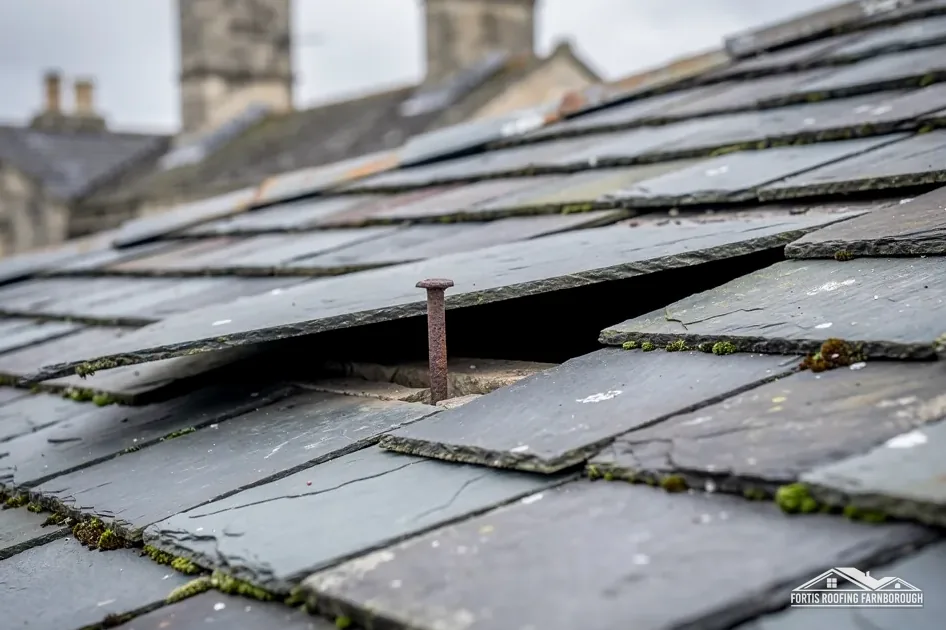
South Oxfordshire's conservation area appraisal describes a town historically dominated by timber-framed and jettied buildings, many refronted or replaced in the 18th and 19th centuries, so that some refronted buildings conceal timber-framed cores. For roofs, it says the oldest buildings are clad in local hand-made red clay tiles, while other buildings, including the 19th-century terraces beyond the town centre, have Welsh slate. Those are two distinct jobs, and we approach them separately on every Henley survey.
A refronted house can look 18th-century from the street and still carry a much older frame and roof structure behind. That affects how we survey it: we look at the rafters, purlins and wall plates from the loft where we can, we note any signs of movement, and we do not assume the roof is as modern as the front. Hand-made clay tiles are not perfectly uniform, so slight unevenness belongs to their character and is not proof of failure. We photograph it and explain which unevenness matters and which does not.
Slate terraces beyond the centre have another weak point: the lead and the fixings. The slates may be sound long after their nails have corroded, and a terrace shares gutters and party walls with its neighbours. Our slate roofing page describes how slates are refixed or replaced, and our lead roofing and lead work page deals with the valleys and abutments where terraces tend to leak.
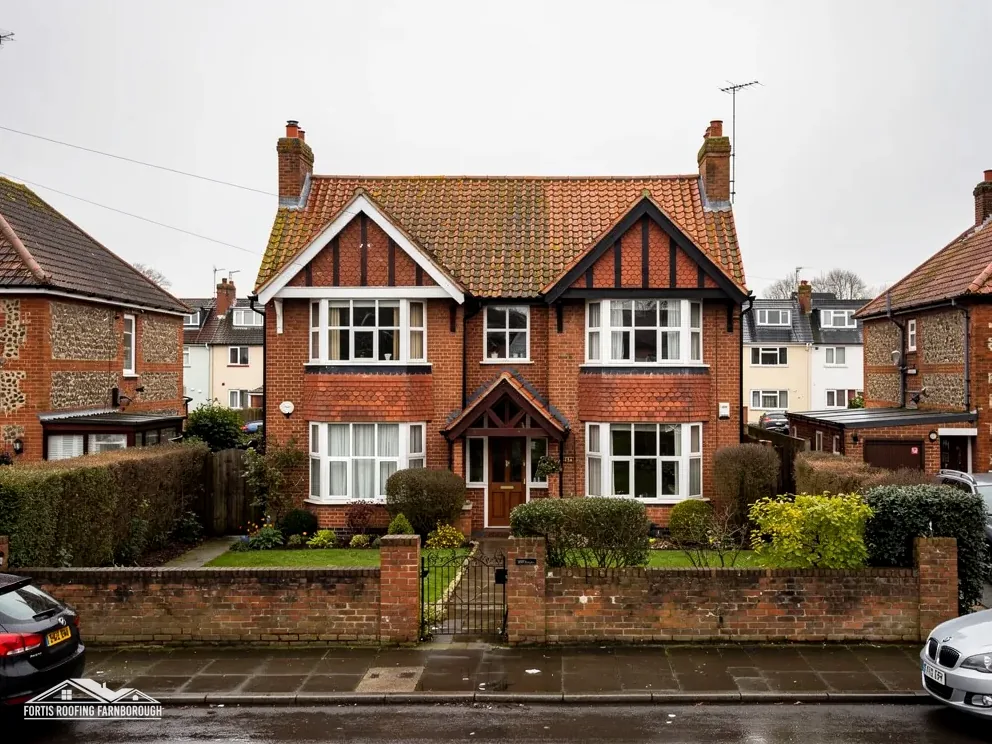
The appraisal also describes the St Mark's Road area as a late Victorian and Edwardian suburb of generous villas and the Reading Road area as a planned Edwardian estate of terraced cottages. Villa roofs bring valleys, dormers and tall stacks to check; terraced cottages bring shared ridges and gutters. We survey for what each type brings, and report on both separately.

Hart Street's coaching inns, the Red Lion and the Catherine Wheel, and Brakspear's former brewery on New Street, which the appraisal calls the only physical survivor of the town's brewing and malting industries, remind us that Henley was a working town. Large, plain roofs on old trade buildings have their own failures: long runs of gutter, valleys between ranges and heavy old timbers. Conversions of such buildings add roof windows and flues that change how the roof is put together, so we note what is up there before anyone adds to it.
Chapter 03 of 03
| Designation | In Henley | For roof work |
|---|---|---|
| Conservation areas | Henley main area, Reading Road, St Mark's Road | Changes to the look checked with the council |
| Article 4 directions | Reading Road and St Mark's Road areas | Ask the council what each covers at your address |
| Grade I listed | Chantry House (list entry 1047033) | Listed building consent for works affecting character |
| Grade II* listed | 18 Hart Street and 32 Bell Street | Listed building consent for works affecting character |
| Grade II* church in use | Parish Church of St Mary the Virgin | Church of England faculty, not listed building consent |
Henley has three conservation areas on the national dataset: the main town area, the Reading Road area and the St Mark's Road area. The council lists an Article 4 direction for each of the last two. What each direction removes is not something we assume, so we ask South Oxfordshire what applies at your address before a roof, chimney or frontage change is priced, and we wait for the answer.
Historic England lists Chantry House at Grade I, and 18 Hart Street and 32 Bell Street at Grade II*. A listing brings its own consent: listed building consent for anything touching the building's character, which comes in addition to the permitted development rights a listed house still has. The appraisal names coaching inns such as the Red Lion and the Catherine Wheel on Hart Street. Our planning permission guide explains how the routes fit together.
Henley's Parish Church of St Mary the Virgin is listed Grade II* and is a working Anglican parish church, which puts its roof work under the faculty system. Beyond the town centre, the national landscape layer shows that 7 per cent of the 1.5 km area around the centre falls inside the Chilterns National Landscape, the designation that replaced the old AONB label. The designation forms part of the planning picture, so whether an address near the edge falls inside it deserves a check with the council before design work begins.
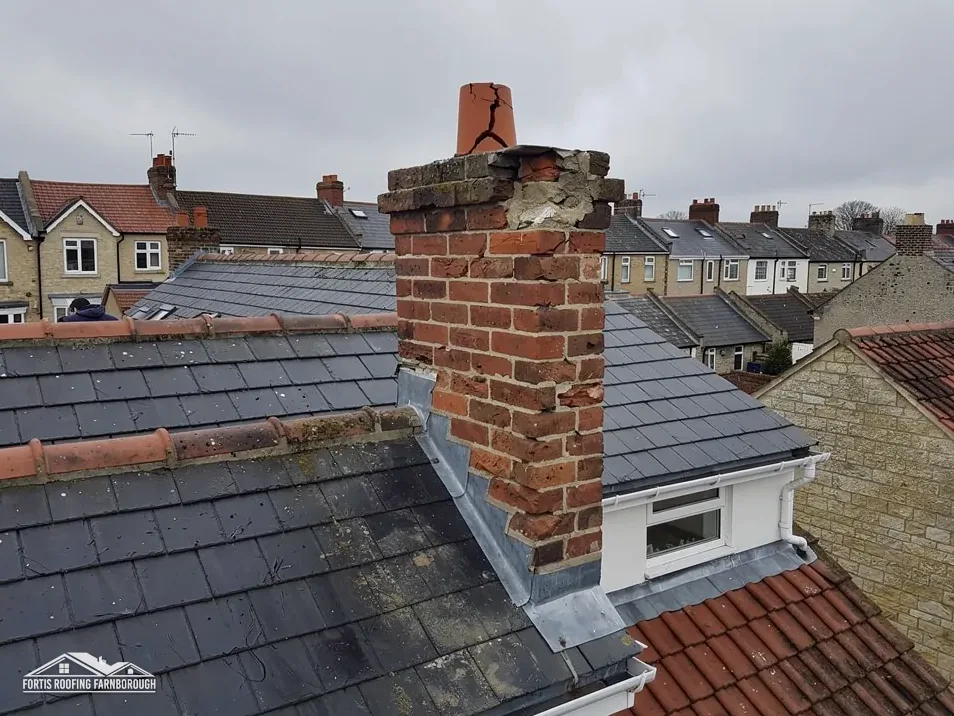
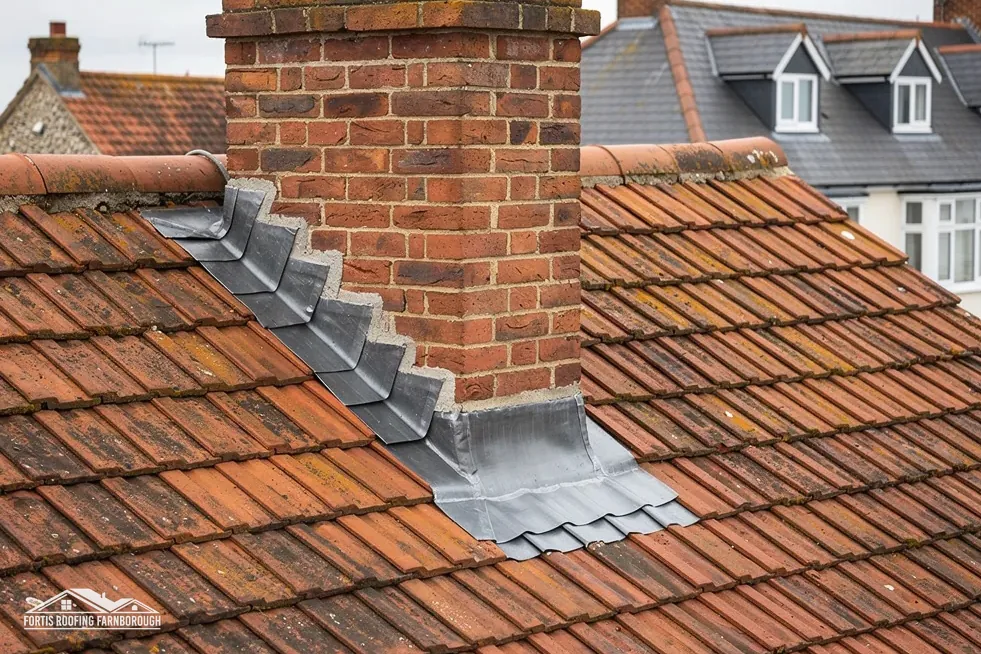
For an ordinary house inside any of the three conservation areas, the lowest-risk repair copies what is there: the same hand-made clay tile or the same Welsh slate, in the same coursing, with the ridge and chimney left as they are. Lead at chimneys and valleys is renewed in matching code when it fails. We record those details first, so South Oxfordshire's team sees exactly what we propose to keep and what we propose to change, and you receive the same record with your written price.
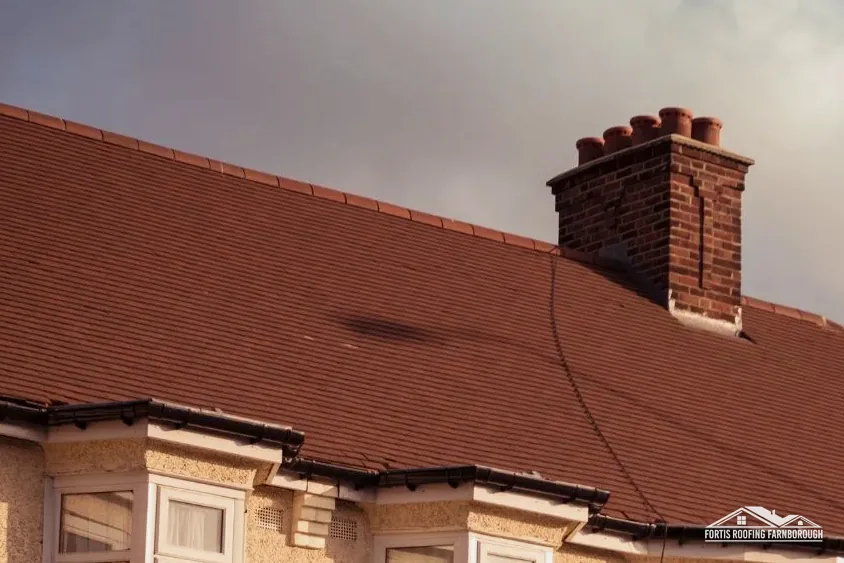
Steep clay pitches and tall stacks also affect access, so we agree early how each chimney will be reached. A stack that cannot be worked on safely from a ladder gets a tower or a platform, and that goes into the plan you are shown before the work is booked.
Yes. South Oxfordshire's appraisal says some refronted Henley buildings conceal timber-framed cores, so a roof can be far older than the front suggests. We look at the rafters and wall plates from the loft where we can reach them, and report what we find before advising on any repair or re-cover.
Both areas are conservation areas, and the council lists an Article 4 direction for each. What a direction removes depends on its wording, so we ask South Oxfordshire what applies at your address before pricing any roof or chimney change. Keeping to the existing tile or slate is the cautious course in either area.
The national landscape layer shows 7 per cent of the 1.5 km area around Henley's centre inside the Chilterns National Landscape. The designation forms part of the planning picture, so an address near the edge should be checked with South Oxfordshire before any design work starts on the house.
Works affecting a listed building's character need listed building consent. Historic England lists 18 Hart Street at Grade II*, and a change of covering or chimney can affect character. A modest repair in matching material may not. We send our photographs and the method to South Oxfordshire before any pricing is done.
Get your free roof quote
Name your Henley street and the symptoms, and we will slot in a survey.
10-year workmanship guarantee, in writing.