Homes round the former heath
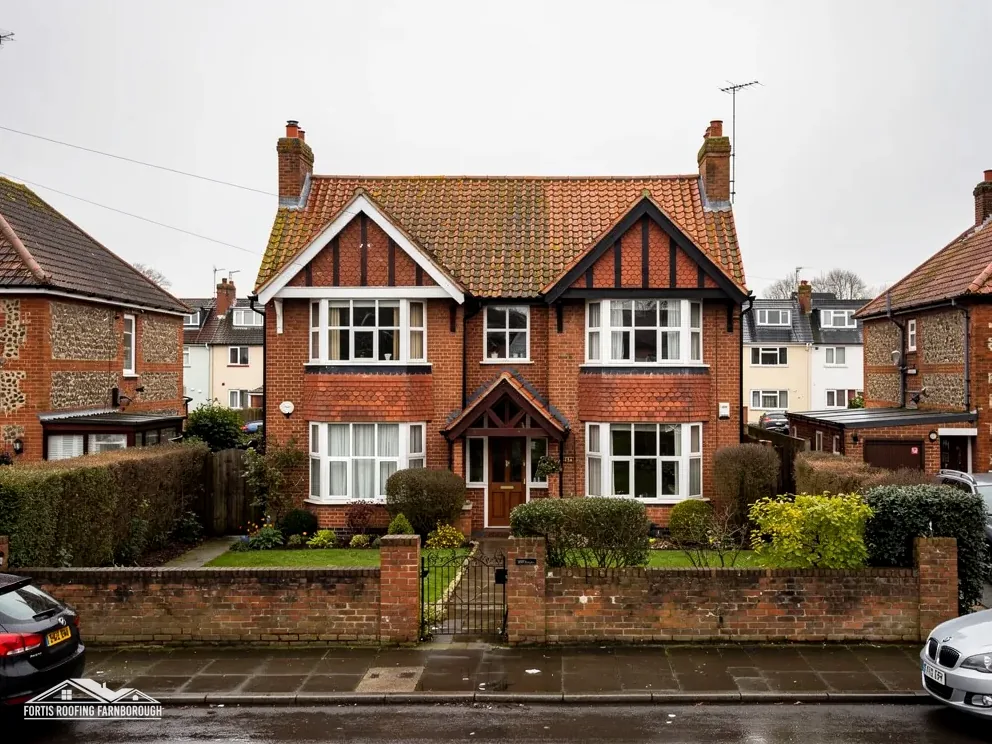
The poor gorse-covered common at the village centre was enclosed from 1867, and houses grew round it.
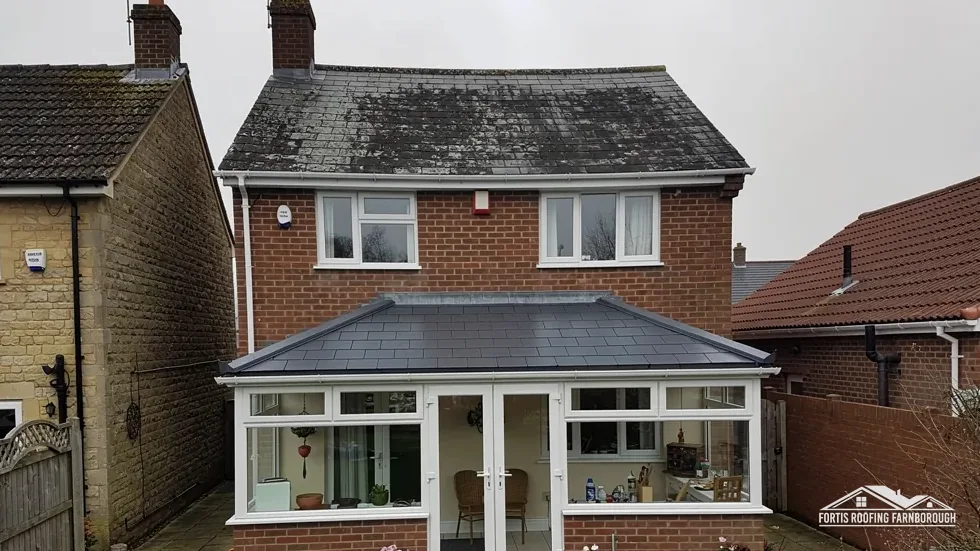
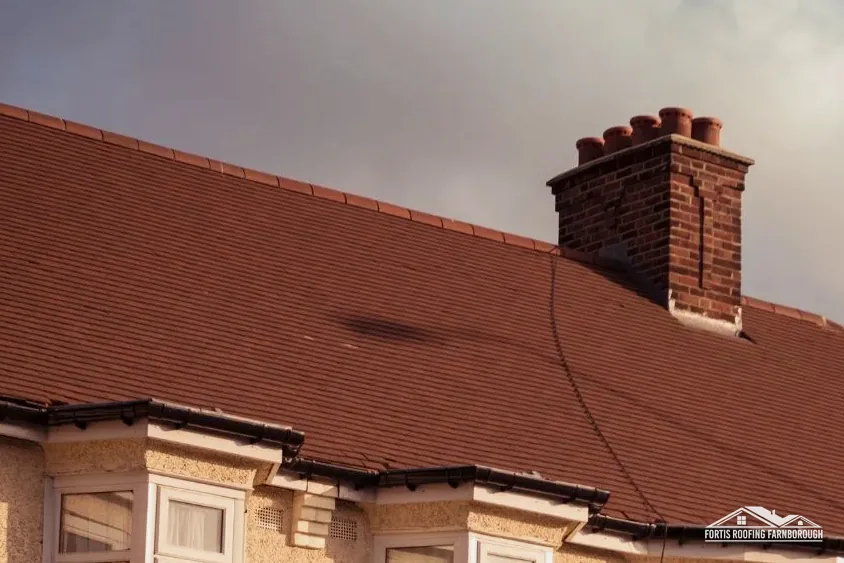
Roofs around the old heath, in brick and tile kiln country
Binfield Heath grew round a gorse-covered common enclosed from 1867, with local kilns making bricks and roof tiles from about 1869. We survey each roof slope by slope.
The poor gorse-covered common at the village centre was enclosed from 1867, and houses grew round it.

Shiplake Kiln and Comp Kiln made bricks and roof tiles from about 1869 until 1935.
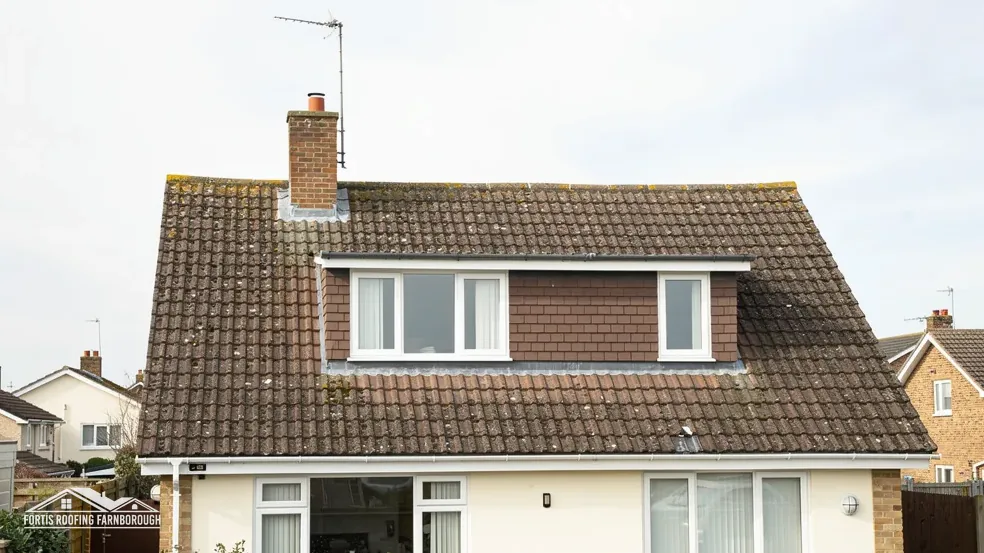
Elm Tree Farmhouse, Holmwood and Thatched Cottage are each listed at Grade II.
Map of Binfield Heath with Shiplake, Sonning, Wargrave, Henley-on-Thames marked around it.
Map data © OpenStreetMap contributors. Loads only when you ask for it.
Shiplake lies to the east, Wargrave to the east beyond it, Henley-on-Thames to the north, Sonning Common to the north-west and Sonning to the south.
About 23.9 road miles north-west of Farnborough · South Oxfordshire District Council and Oxfordshire County Council.
Binfield Heath, grants and kilns
Which councils and building control service answer for a Binfield Heath roof, what grants exist and what they do not cover, how the heath and kilns shaped the village, and what the Chilterns designation means for a repair.
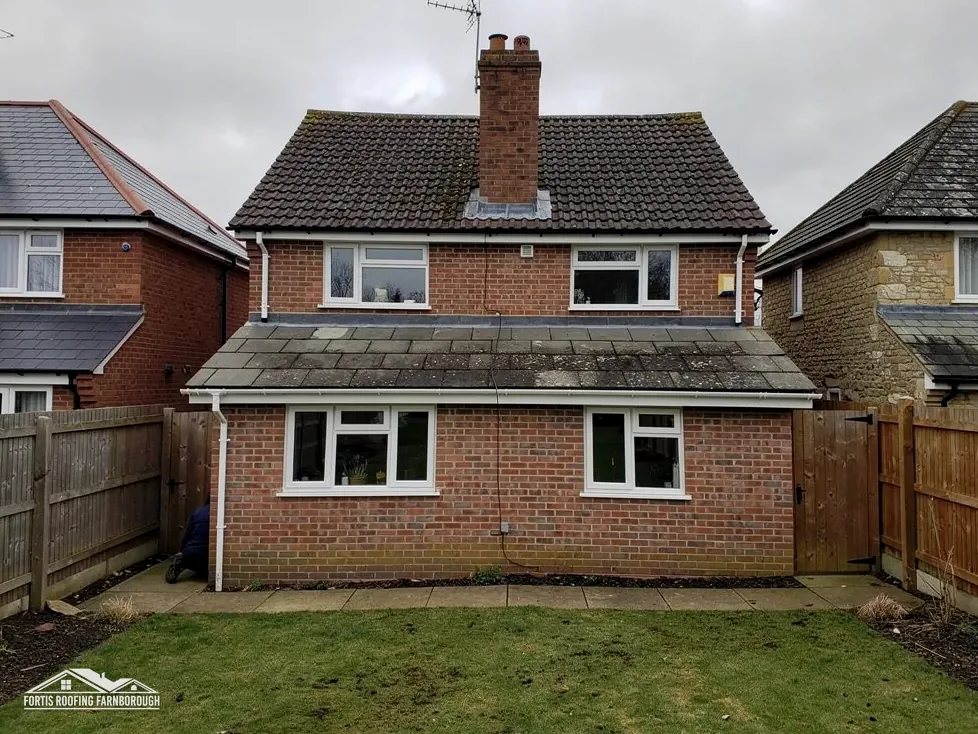
| No. | Chapter | The figure it turns on |
|---|---|---|
| 01 | Oxfordshire's councils and what roof grants exist | No national grant for a new roof |
| 02 | The enclosed heath and the Shiplake kilns | Kilns made roof tiles, 1869 to 1935 |
| 03 | The Chilterns edge, Sonning Eye and listed houses | 42 per cent in the Chilterns designation |
Chapter 01 of 03
| Matter | Position at Binfield Heath |
|---|---|
| District council and planning authority | South Oxfordshire District Council |
| County council and highway authority | Oxfordshire County Council |
| Building control | Southvale Building Control, South Oxfordshire's service |
| Replacement roof funding | No national grant exists |
| ECO4 scheme | Runs until 31 December 2026 |
Binfield Heath sits in South Oxfordshire, a two-tier area. South Oxfordshire District Council is the planning authority and Oxfordshire County Council is the highway authority. Building control for the village comes through Southvale Building Control, the service South Oxfordshire shares with Vale of White Horse. Farnborough is 23.9 road miles away, so a survey here is booked as a fixed visit, with the whole roof recorded in pictures and measurements, every slope, gutter and chimney, and the findings put to you in plain words before anyone talks about work.
Owners often ask whether public money will pay for a roof. None is paid nationally towards a replacement covering, and the schemes that do exist are narrower. Ofgem says the Energy Company Obligation, ECO4, will run until 31 December 2026, and it is aimed at insulation and heating for eligible households, not at replacing a roof covering. The Great British Insulation Scheme has ended: installations had to be complete by 31 March 2026. GOV.UK's Warm Homes Plan sets out £15 billion of public money for homes, but money in a national plan is not money for a roof covering.
The Warm Homes: Local Grant covers insulation, and GOV.UK says household income must usually be £36,000 a year or less. A Disabled Facilities Grant pays for adaptations to a home, which can include work to make a house safe and usable for a disabled occupant. None of these is a promise, and each has its own rules. Check the scheme's own page and your council before you rely on one, and we will not suggest that any grant is certain.
Scheme dates
Insulation can still matter when a roof is renovated, because Approved Document L applies whatever the funding. Under Table 4.3 a renovated roof worse than 0.35 W/(m²·K) is improved to 0.16, with the relief in paragraph 4.13 where that is impractical or would not repay within 15 years. The survey records what insulation is there, so any scheme assessor or building control officer can be shown it.
A scaffold that stands on a public road is licensed by the highway authority, which for Binfield Heath is Oxfordshire County Council. Ask the scaffolder who files the application, and we agree the dates around it.
Chapter 02 of 03
Binfield Heath's local record in dates
Binfield Heath Parish Council's history describes the heath as poor, gorse-covered common land at the centre of the village, enclosed from 1867, mainly at the instigation of the Baskerville family of Crowsley. It sits on high ground between Henley-on-Thames and Reading, around that former heath. The parish itself is young: it was created in 2003 from a village previously split between Eye and Dunsden and Shiplake parishes. The 2021 Census counted 703 usual residents.
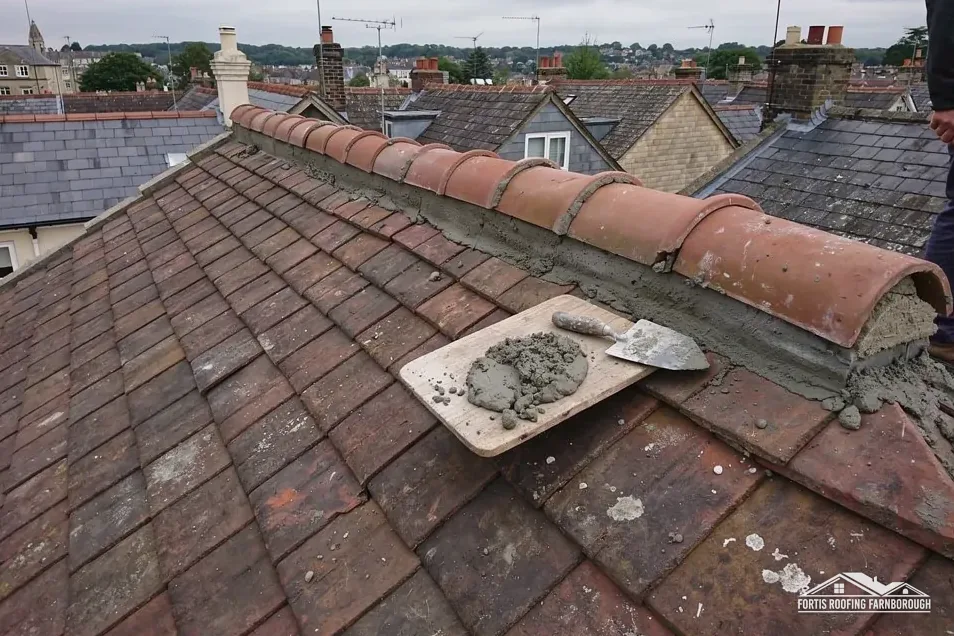
For a roofer the most interesting line in the history is about industry. Shiplake Kiln and Comp Kiln made bricks and roof tiles from about 1869 until 1935, and their output supplied the bricks for local houses. Kiln Lane recalls the works. That gives a reason to look closely at older roofs here: a tile from a local kiln may sit on a house that is older than the survey, and matching it means holding a sample against reclaimed stock rather than a catalogue. Reclaimed tiles are sorted by size, thickness and soundness, and any that are cracked or flaking are left out, because one weak tile in a repair becomes the next leak.
We never assume the tile on a roof came from either kiln. The survey lifts and photographs a sample, measures its size and thickness, and notes how it hangs on the batten. If a repair needs a match, we try reclaimed tile first, and we tell you where new tile has to stand in. A match is judged in daylight from the ground, because that is how the neighbours will see it, and the choice is agreed with you before any tiles are ordered.
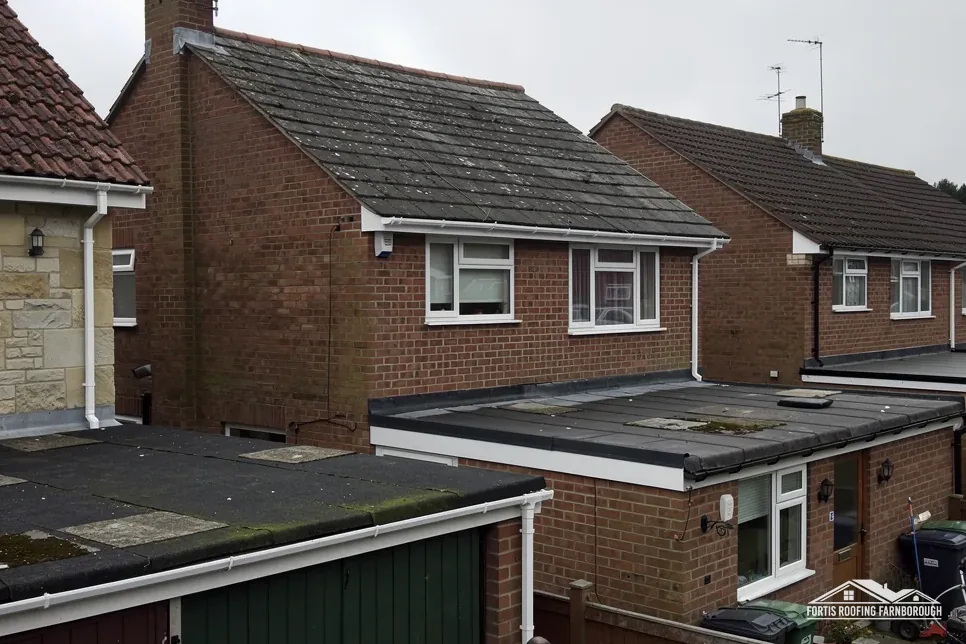
A village built on enclosed common land has houses of many ages in short runs, because plots were released over time. That means roofs next to one another can differ in pitch, covering and underlay, and a repair on one cannot be copied from the next. HomeBuilding gives clay tile 60-80 years as a typical life, which is a range and not a promise of what is left. Our pitched roofing page explains how a worn slope is judged.
One more point is worth knowing where an older roof may change covering. The Planning Portal says approval is needed where the performance of a new covering in a fire would differ significantly from the existing one. A change to a very different covering is therefore a question for building control before it becomes a tile order, and we raise it at the survey.
Chapter 03 of 03
| Designation | Near Binfield Heath | For roof work |
|---|---|---|
| National Landscape | Chilterns, partly: 42 per cent of the 1.5 km area | Ask the planning team about dormers and extensions |
| Nearest conservation area | Sonning Eye, within about 2.5 km | Confirm your address with the council |
| Grade II listed | Elm Tree Farmhouse (NHLE 1059608) | Listed building consent |
| Grade II listed | Holmwood (NHLE 1285007) | Listed building consent |
| Grade II listed | Thatched Cottage (NHLE 1181389) | Listed building consent |
Chilterns is a National Landscape, the designation that replaced the AONB label, and it reaches into the ground around Binfield Heath. The village point lies just outside it, yet 42 per cent of the area within 1.5 km falls inside the designation, which is a large share. A house on that side of the village sits in a different planning position, so a loft dormer or a roof extension is a question for South Oxfordshire's planning team before it is designed. Our planning permission for roof work guide shows how to ask.
The nearest conservation area in the national dataset is Sonning Eye, within about 2.5 km of the village, so it is not on your street. That is not the same as saying nothing applies. We check each address against the council's own map and tell you the result before anything is priced. The answer goes into the survey file, so the planning position is on record from the start.
Historic England lists Elm Tree Farmhouse at Grade II, with the listing dated 5 January 1990, and records Holmwood and Thatched Cottage at the same grade. It counts four listed buildings within 500 m of the centre. For a listed house, alterations to its character need listed building consent, and Thatched Cottage's thatch is a matter for a thatcher, as thatching is its own trade. We survey the structure and the roofline around any thatch, and leave the straw to the specialist.
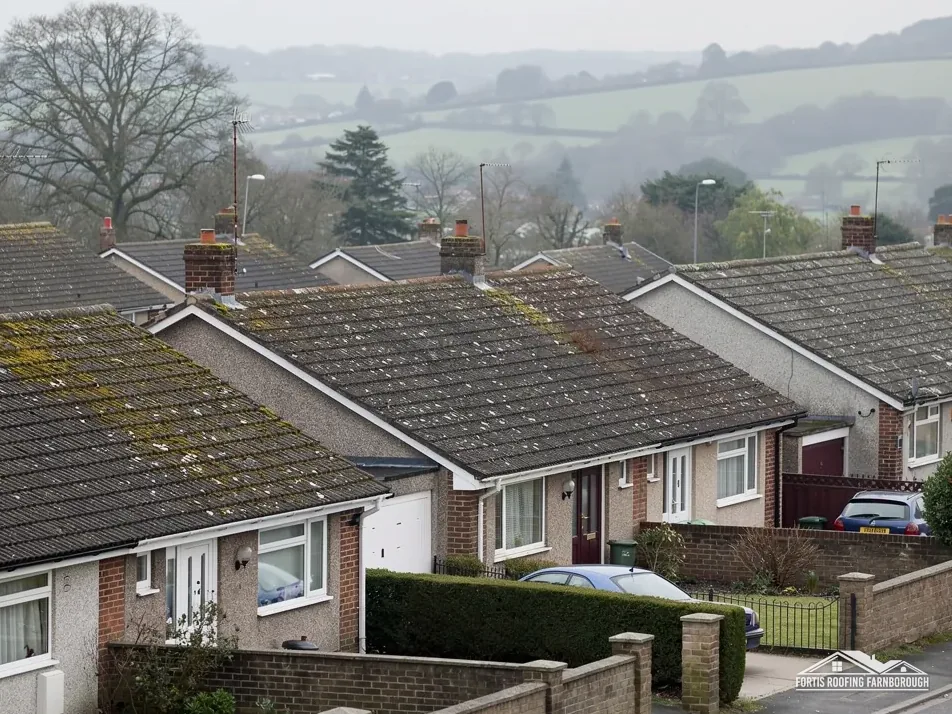
A farmhouse often has outbuildings and extensions behind it, each with its own roof and sometimes a different covering. The survey walks every roof on the property, from the main house to the lean-to, and lists them separately, so you know which are urgent, which can wait and which are sound.
Where a listed or older house has a chimney, the stack and its lead are what we look at first. Our chimney repairs page explains how a stack is judged, and we record the flashings, pots and pointing to give any repair a clear baseline. Ask the scaffolder, too, who files the licence if the poles stand on a road, and agree the dates in writing.
The parish history says Shiplake Kiln and Comp Kiln made bricks and roof tiles from about 1869 until 1935. We never assume a tile came from either. The survey lifts and photographs a sample, measures it, and tries reclaimed stock first when a match is needed, then tells you where new tile has to stand in.
No national scheme pays for a replacement roof. ECO4 runs until 31 December 2026 and covers insulation and heating for eligible households, the Great British Insulation Scheme has ended, and the Warm Homes: Local Grant has an income limit. Check each scheme's page for eligibility before relying on any of them.
It can. About 42 per cent of the area within 1.5 km of Binfield Heath lies inside the designation, so a loft dormer or an extension may sit in a different planning position from a house elsewhere in the village. Ask South Oxfordshire's planning team before any design is drawn up.
Southvale Building Control is the service South Oxfordshire uses, shared with Vale of White Horse, while a registered building control approver offers a private route. A few replaced tiles stays inside the Planning Portal's limits. We tell you at the survey if your job goes further, and which route fits.
Get your free roof quote
Tell us your Binfield Heath road and the problem. We will survey the roof, then send one price.
10-year workmanship guarantee, in writing.