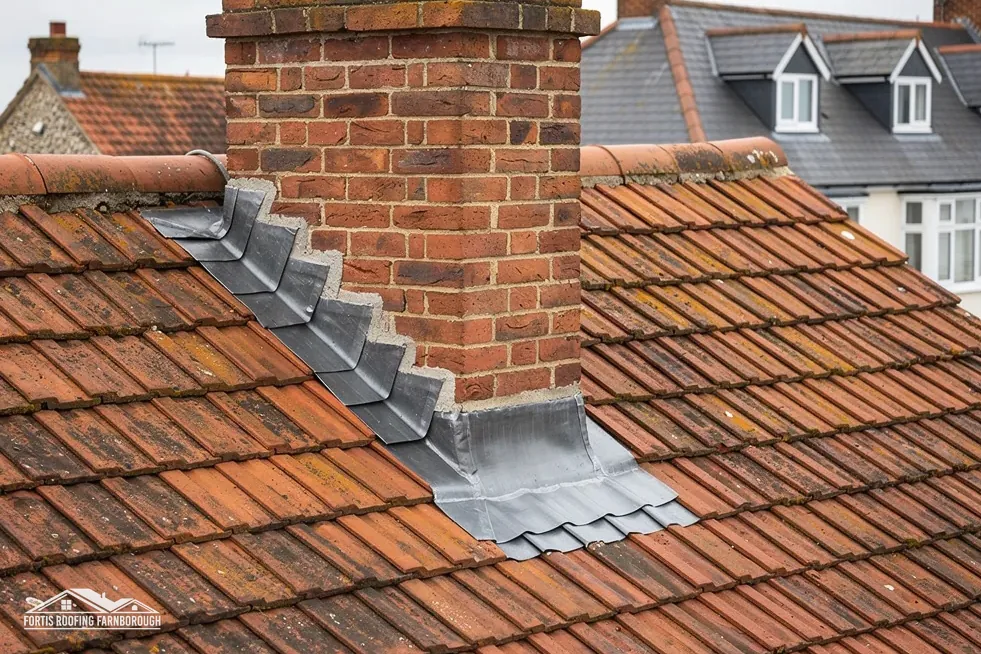
Coaching-era High Street brick
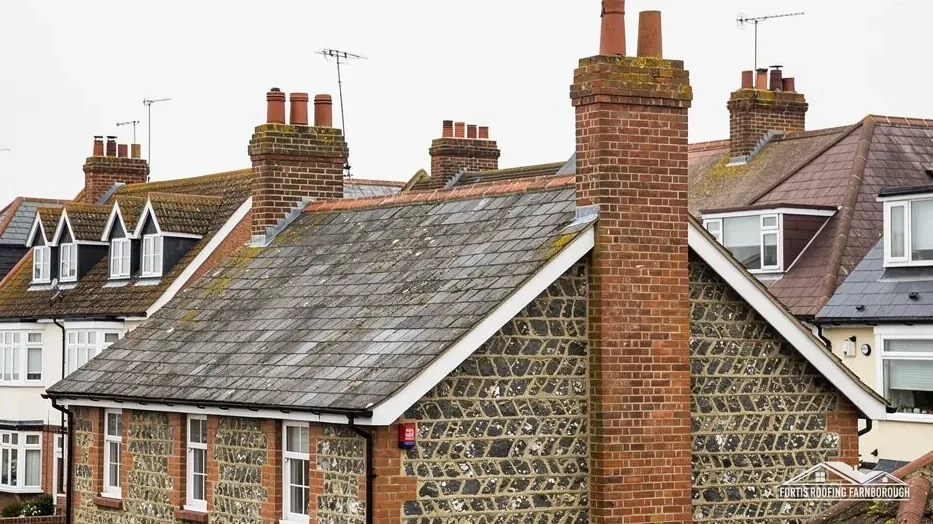
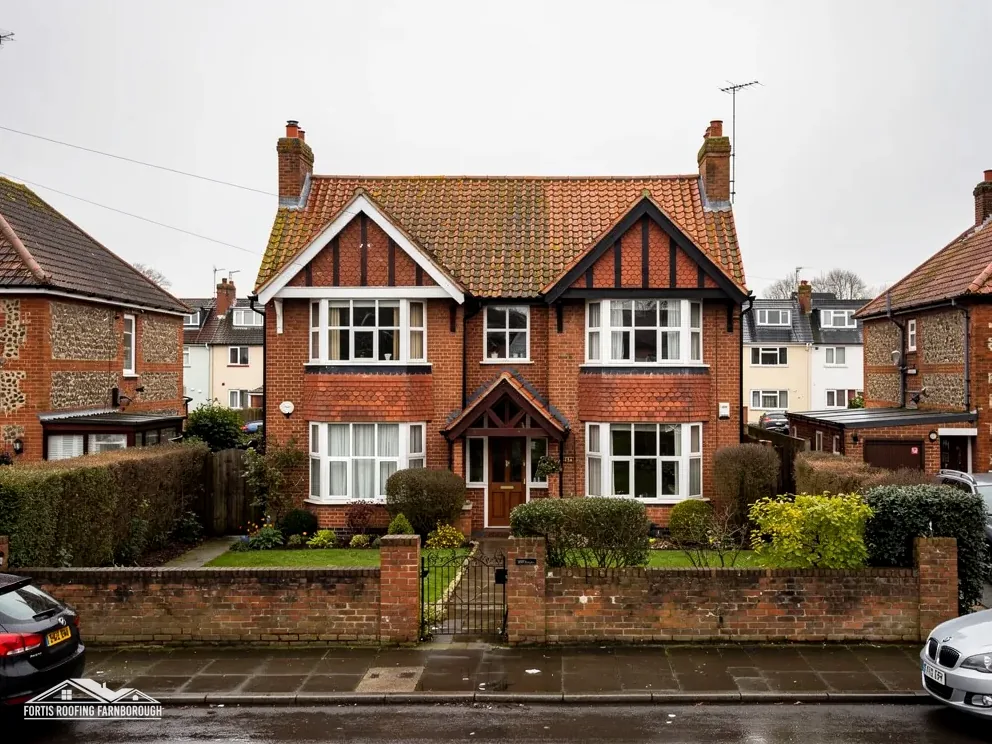
Rebuilding in the prosperous coaching era produced sash windows and decorative red and grey brick along the High Street.
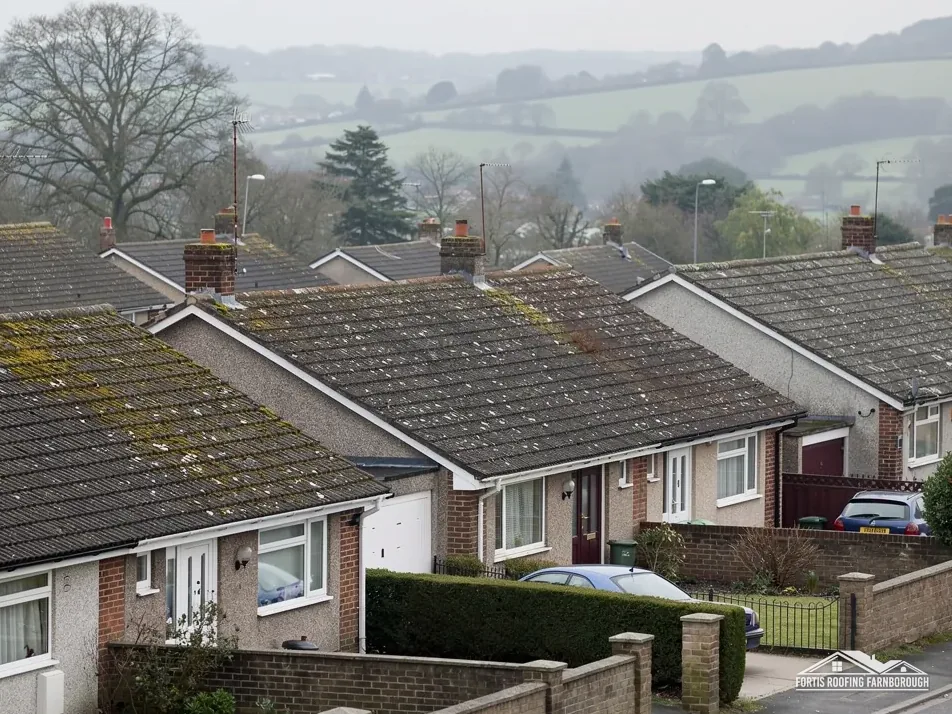
Roofs in a Chilterns brickmaking village on high ground
Nettlebed made its own bricks until 1938 and still keeps one great kiln. We survey each roof on the evidence, and check the Chilterns rules first.
Rebuilding in the prosperous coaching era produced sash windows and decorative red and grey brick along the High Street.

Brick production ended in 1938, and one large kiln north of the High Street survives, listed Grade II*.
A small cruck-framed cottage at Crocker End has been dated to about 1415, with a cross wing added in 1441.
Map of Nettlebed with Nuffield, Stoke Row, Rotherfield Peppard, Sonning Common marked around it.
Map data © OpenStreetMap contributors. Loads only when you ask for it.
The village stands on high ground between commons and woodland on the Henley to Oxford road, and Farnborough lies 27.8 road miles to the south-east.
About 27.8 road miles north-west of Farnborough · South Oxfordshire District Council and Oxfordshire County Council.
Nettlebed, kilns and commons
Who answers for roof work in Nettlebed, what the 2016 county history records of its brickmaking, tiles and timber frames, and how the Chilterns designation and listed buildings shape a repair.
| No. | Chapter | The figure it turns on |
|---|---|---|
| 01 | South Oxfordshire and the roof limits | South Oxfordshire plans and inspects |
| 02 | Brick, kilns and a coaching High Street | Brick production ended in 1938 |
| 03 | Chilterns rules, a conservation area and the kiln | Chilterns covers all of the 1.5 km area |
Chapter 01 of 03
| Role | Body for Nettlebed addresses |
|---|---|
| District council and planning authority | South Oxfordshire District Council |
| County council | Oxfordshire County Council |
| Building control | Southvale Building Control, or a registered approver |
| Scaffold licence on the highway | The highway authority; we arrange it with the scaffolder |
Planning for Nettlebed rests with South Oxfordshire District Council, under Oxfordshire County Council. A repair seldom needs either. A larger job might need both, and it helps to sort out which questions belong to whom before anyone climbs a ladder, because a missed step on a re-roof costs a week.
The Planning Portal sets three tests, and the card beside this chapter lists each of them. If a job touches less than a quarter of the building envelope, a term that takes in the roof and every wall, window and door, and less than half of the roof, no building control application is normally required. A new covering that adds 15 per cent or more in weight is the third test, and it brings approval whatever the area. A Nettlebed house is not exempt from any of them just because it is old.
Where the work passes a test, the application goes to Southvale Building Control, which covers both South Oxfordshire and its neighbour Vale of White Horse, or to an approved private inspector registered for the work. Our survey measures the area and records the covering already on the roof. That lets us say, before a date is fixed, which side of the limits the job sits and what the extra step means for the timetable.
Scaffolding over the pavement or the carriageway falls under section 169 of the Highways Act 1980, and the highway authority issues the licence. Scaffolding on your own plot is outside that rule. On a village street the pavement may be the only place from which a front slope can be reached, so the licence is sorted out with the scaffolding firm and we check who files it, which means the date you are given is one the paperwork can meet.
Smaller repairs, such as a few tiles on a rear slope or a renewed flashing, are often within reach of a tower, and then none of this arises. The survey shows which applies to your roof, with photographs, so there is no guesswork left about access, scaffold or paperwork when the price arrives.
Chapter 02 of 03
Nettlebed, brick village in figures
The Victoria County History's 2016 account of Nettlebed is full of useful detail. It says brick, much of it from local kilns, is by far the commonest material in the village, especially along the High Street, where rebuilding in the prosperous coaching era produced sash windows and decorative red and grey brick. It speaks of walls and building fronts. It tells us how the village was built, not what covers every roof today, and we do not read one from the other.
The same account says thatch was probably common earlier and continued on some farm buildings into the early 19th century, and that tiles on houses were mentioned as early as 1363. A small cruck-framed cottage at Crocker End has been dated by tree rings to about 1415, with a box-framed cross wing added in 1441. A cruck frame is made of pairs of curved timbers rising from the ground to the ridge, and it is the sort of structure that needs careful handling when a roof is lifted.
Roofs on timber-framed buildings behave differently from roofs on modern brick houses. The rafters may be few and widely spaced, the walls can move slightly, and the junctions are rarely square. When we survey one, we photograph the roof's present shape and check the timbers we can safely reach before we describe a repair.
Local detail of this kind is why we avoid blanket advice. A frame dated to the early fifteenth century and a coaching-era front can stand within a few hundred metres, and the right repair for one is wrong for the other.
Parish and kilns
Brick production at Nettlebed ended in 1938, and a single large kiln, just north of the High Street, has been preserved. It is a reminder that bricks, and probably other clay goods, were fired close to where they were used. We never treat that as a promise that a particular roof carries local tile, and we match from what we find, not from what we assume.
The 2021 Census counted 777 usual residents in the parish, so a Nettlebed survey is often a conversation with someone who has seen the roof before and remembers what was done. We ask, note it, and then check it against what we can see.
Chapter 03 of 03
| Designation | At Nettlebed | For roof work |
|---|---|---|
| National Landscape | Chilterns, all of the 1.5 km area | Ask South Oxfordshire before any dormer |
| Conservation area | Nettlebed Conservation Area | Matching repairs; ask the council about changes |
| Grade II* listed | Brick Kiln (NHLE 1181146) | Listed building consent for work affecting character |
| Grade II listed | 1 and 3 High Street (NHLE 1285122); 15 and 17 High Street (NHLE 1181141) | The same consent route |
| Grade II listed church in use | Church of St Bartholomew (NHLE 1369329) | Church of England faculty system |
Every part of the 1.5 kilometre area around Nettlebed lies inside the Chilterns National Landscape, which was formerly an Area of Outstanding Natural Beauty, and the dataset puts the overlap at 100 per cent. Within that landscape, a dormer or roof extension on a Nettlebed house begins with South Oxfordshire's planners, who weigh how it would look from the commons. Our planning permission and roof work guide explains where the permitted routes end.
Nettlebed also has a conservation area of its own. Inside one, a repair that matches the existing materials and details keeps the village's look intact, while a change of material is a question for the planning team. The council's own pages show where the boundary runs, and we check it with them before a roof is priced. The council can also tell you whether an Article 4 direction covers your address.
Twenty-four listed buildings stand within 500 metres of the village centre. The Brick Kiln is listed Grade II*, and numbers 1 and 3 and numbers 15 and 17 High Street are listed Grade II. Listing does not remove permitted development, yet it adds listed building consent for anything that affects the building's character. Swapping a roof covering for a different material counts, and so can altering a ridge or chimney.
St Bartholomew's church joined the list at Grade II on 13 February 1985. As a Church of England church still in worship use, it takes roof work through the faculty system, with no council consent involved.
Because Nettlebed has so many older buildings close to the High Street, a neighbour's roof or chimney is often only a few metres from yours. If the work needs scaffold, we plan it so the neighbouring property is protected, and we tell you what we have agreed. Any new opening, such as a roof window, is checked against the designation before it is drawn.
On an older Nettlebed house, dated photographs of ridges, verges, chimneys and flashings are taken before the work and again after it. If anyone later asks what was on the roof, there is an answer. Our lead roofing and lead work page describes the renewal of valleys and flashings on older roofs, and chimney repairs covers the stacks themselves, where so many older roof leaks begin.
Often, but not always, and we do not promise it before looking. The survey records the tile's size, thickness, colour and fixing, then we compare what is available against a slope. The Victoria County History mentions tiles on houses as early as 1363, so old coverings can be well matched by careful sorting and reuse.
That is for South Oxfordshire District Council's planners to say, and inside the Chilterns National Landscape we put any dormer to them before drawings are made. A repair or a like-for-like re-roof is separate and does not carry the restriction. Where a project would change the roof's shape, we raise the question with the council ahead of any price.
Not as a church in use. St Bartholomew's is listed Grade II and belongs to the Church of England, so the ecclesiastical exemption applies and the faculty system governs its roof. For a listed house on the High Street, such as numbers 1 and 3, listed building consent from the council is the route instead.
Either can. Southvale Building Control is the council route, and a registered approver is the private one. The deciding test is the Planning Portal's pair of limits, under 25 per cent of the building envelope and under 50 per cent of the roof, plus the 15 per cent weight rule, and the survey tells you whether your re-roof passes them.
Get your free roof quote
Send us your Nettlebed address along with a note of any leak or damage, and a survey will be booked.
10-year workmanship guarantee, in writing.