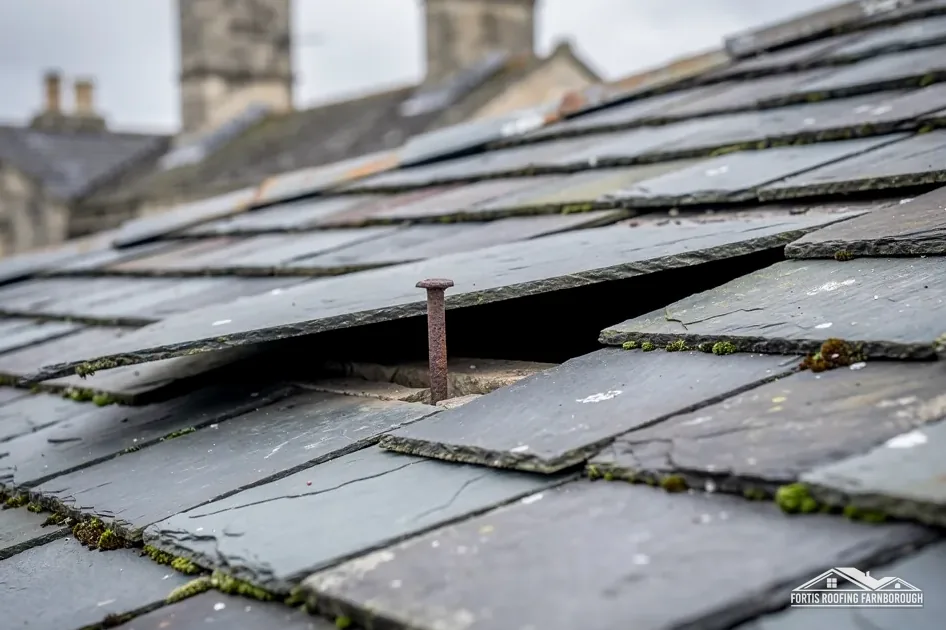
Orange and red roof tiles
Orange and red roof tiles feature in the materials list of the council's Church Oakley appraisal.
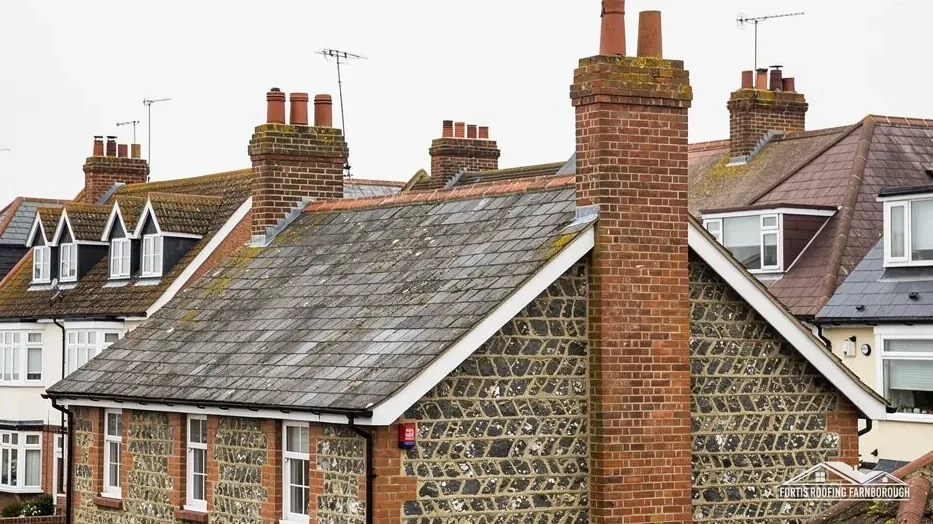
Brick, flint and chalk-cob walls under tile, slate and thatch
Church Oakley's own appraisal lists red brick, timber frame, flint, chalk cob, orange and red roof tiles, slate and thatch. We find out which covering sits on each house.
Orange and red roof tiles feature in the materials list of the council's Church Oakley appraisal.
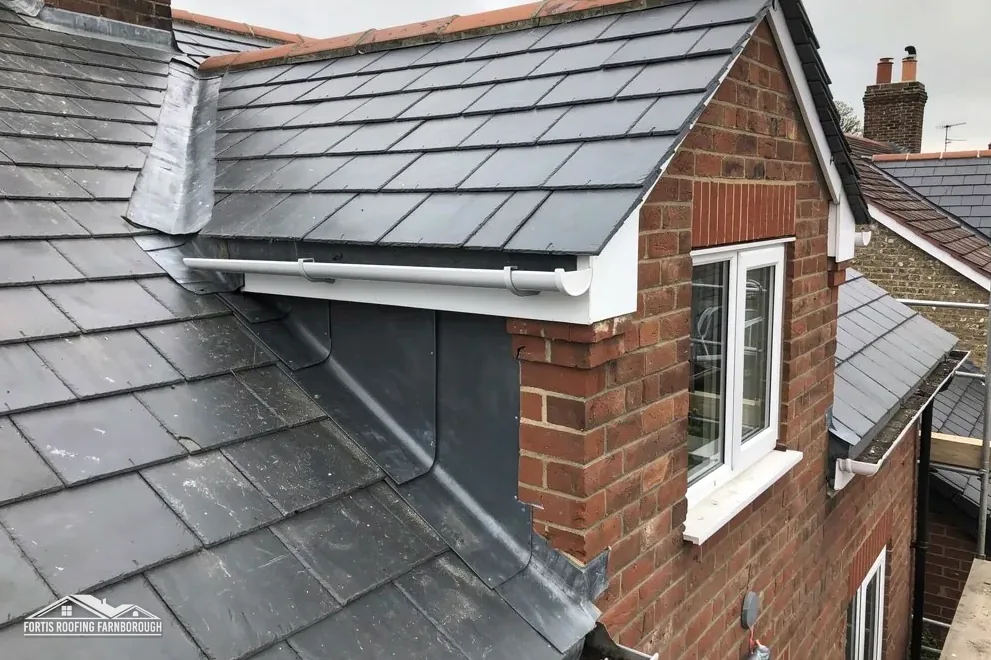
The same appraisal lists slate and thatch too, so neighbouring houses can carry very different coverings.

Historic England lists 3 Rectory Road, Barn Cottage, the Barn House and Deep Well Cottage, all at Grade II.
Map of Oakley with East Oakley, Worting, North Waltham, Dummer marked around it.
Map data © OpenStreetMap contributors. Loads only when you ask for it.
East Oakley is a few hundred metres away to the east; Worting lies north-east, Dummer and North Waltham south, Overton west, with Basingstoke beyond.
About 22 road miles west of Farnborough · Basingstoke and Deane Borough Council and Hampshire County Council.
Oakley, brick, cob and tile
Who decides and licenses roof work at Oakley, what the council's own appraisal lists for the village's materials, and how the conservation area and listed buildings shape a repair. Each figure carries its source.

| No. | Chapter | The figure it turns on |
|---|---|---|
| 01 | A borough that plans, a county that licenses | 10 clear working days' notice |
| 02 | What Church Oakley's appraisal lists as materials | 5,385 residents, Oakley parish |
| 03 | Church Oakley's conservation area and listed barns | Church Oakley, with a council appraisal |
Chapter 01 of 03
| Role | Body for Oakley addresses |
|---|---|
| District council and planning authority | Basingstoke and Deane Borough Council |
| Building control | Basingstoke and Deane's own Building Control team |
| County council and highway authority | Hampshire County Council |
| Scaffold licence on the highway | Hampshire County Council; scaffold companies apply for customers |
| Notice before the start | 10 clear working days, with no extensions |
Oakley belongs to the two-tier half of Hampshire. Basingstoke and Deane Borough Council handles planning and keeps its own building control team, while Hampshire County Council answers for the highway, which means licensing anything that stands on its roads. Starting from the A325, the village lies 22 road miles on the western side of Farnborough, and a survey day is planned on that road figure, not on the straighter 18.8 miles a crow would fly.
On its building regulations page the borough lists a new covering on pitched and flat roofs alike as an alteration that might also need approval. It gives no percentage, so we pair its wording with the Planning Portal's yardstick: an application is not usually expected so long as work touches under 25 per cent of the building envelope and under 50 per cent of the roof. Swapping a few slipped tiles is far inside that zone. Stripping a slope or the whole roof is outside it, and then the borough's team hears from us before the job is booked.
Weight comes into it as well. Should the new covering weigh at least 15 per cent more than the old, approval comes with a structural check. A registered building control approver, working under rules that began on 6 April 2024, is the private alternative to the borough's team, and either will be shown the same survey photographs.
Under Hampshire County Council's rule it is the scaffold firm that lodges the licence for the customer, so the form never lands on your doormat. Hampshire County Council also asks for 10 clear working days between lodging the form and starting, grants no extensions, and charges £211.90 for the first two weeks and £72 for each further two-week period. A drive or a private road needs no licence.
No extensions means the licence length has to match the programme. At the survey we agree how many weeks the poles will really be up, so a re-roof that runs a few days long never leaves a scaffold standing without cover. Small repairs that a ladder or a low tower can reach skip all of this.
Before any scaffold goes up on a road, we tell you the dates, where the skip will sit and which neighbours should be warned. A tidy site matters as much as the roof.
Chapter 02 of 03
Four facts the records give for Oakley
The borough's appraisal of the Church Oakley conservation area lists the village's materials: mellow red brick, timber frame, flint, chalk cob, stone and render, with orange and red roof tiles, slate and thatch above them. It names brick as the leading wall material and adds that the materials follow no single pattern through the village, but it does not say which roofs carry which covering, so we read each house on its own evidence. The county history of 1911 adds that Church Oakley stood so close to its parish's eastern edge that the hamlet of East Oakley lay in Wootton St Lawrence parish.
A village of tile, slate and thatch has neighbours whose roofs behave very differently. On a clay-tiled roof the fixings, battens and valleys usually need more checking than the tiles. A slate roof can be sound while its nails have rusted through. A house with chalk cob walls, which the appraisal lists, is sensitive to water arriving at the wall head, so the eaves, gutters and verge matter more than usual. We look at those first on any older Oakley house and photograph what we find.
Matching is a skill in its own right. Orange and red clay tiles differ in colour and size from batch to batch, so the replacement is chosen against the sound tiles beside it, on the roof, in daylight, and a sample is shown to you before the order goes in. Our slate roofing page sets out how slates are lifted, refixed and replaced, and our pitched roofing page covers clay and concrete tile in the same way.
A thatched house still has gutters, chimney flashings and sometimes a tiled or slated outbuilding, and those are what we survey there, alongside every other slope on the property.

Malshanger House, in its wooded park west of the village, is recorded in that same history as built beside an older house whose octagonal tower still stood in 1911. Grand and humble buildings sit close together here, and each receives the same treatment: photographs, measurements and one written price, so you can see what the roof needs before you agree to anything.
Chapter 03 of 03
| Designation | In Oakley | For roof work |
|---|---|---|
| Conservation area | Church Oakley, within about 0.75 km of the centre | Changes to the look checked with the borough |
| Grade II listed | 3 Rectory Road (list entry 1179676) | Listed building consent for works affecting character |
| Grade II listed | Barn Cottage and the Barn House (list entry 1092905) | Listed building consent for works affecting character |
| Grade II listed | Deep Well Cottage (list entry 1092900) | Listed building consent for works affecting character |
| Article 4 direction | House of multiple occupation conversions, Oakley | Not a roof rule; check others by address |
Church Oakley is one of the borough's designated conservation areas, designated by Basingstoke and Deane in 1976, and has an appraisal of its own, and the national dataset places it within about 0.75 km of the centre of Oakley. Inside it, the appearance of a roof becomes a planning matter. Refixing tiles or renewing flashing exactly as before leaves the roof looking as it did, and that sits comfortably on the safe side. Swapping the covering for a different material, reshaping the ridge, or taking down and rebuilding a stack changes the picture, and those proposals go to the borough first.
Historic England lists 3 Rectory Road, Barn Cottage and the Barn House, and Deep Well Cottage, each at Grade II. Any work that alters a listed building's character needs listed building consent, while the permitted development rights of a listed house carry on alongside, the consent coming on top. Our planning permission guide shows how the two fit together. A barn roof is often a long, plain slope, yet the timbers under it may be old and the covering heavy, so a close look at the structure comes before any change of material.
The borough's list of Article 4 directions includes one for conversions of dwellings to houses of multiple occupation across Oakley, which is not a roof rule. The conservation-area directions it has in force are for four areas of Basingstoke town, so they do not reach Oakley. Your address is still checked with the borough before any price is given, because designations and boundaries can change. If one turns up, we say what it covers before the price is written.
On any older Oakley house we build the same record: coursing, ridge and hip details, verges, stacks and flashings, photographed from the ground and the ladder, so the borough can see what is there and what we propose. You keep that record alongside the written price.
Converted barns and outbuildings bring their own questions. Roof windows, flues and extra insulation each change a roof's make-up, so we record what is there before anyone decides what to add, and the borough sees the same record.
Church Oakley's appraisal lists chalk cob among the village's materials, and cob is sensitive to water arriving at the wall head. So the eaves, gutters and verge matter as much as the covering itself. We photograph those first on an older Oakley house and deal with any water path before judging the tiles or slates.
Under Hampshire County Council's arrangements the scaffold firm lodges the licence for its customer, which spares you the form. Hampshire County Council wants at least 10 clear working days before the start, offers no extensions, and charges £211.90 for the first two weeks. Private roads and drives need no licence.
Basingstoke and Deane lists a new covering on pitched and flat roofs among works that might need approval, which is the borough's own wording for its addresses. The Planning Portal's limits of 25 per cent of the envelope and 50 per cent of the roof help us judge it, and we ask the borough's team about any close call.
The direction the borough lists for Oakley covers conversions of dwellings to houses of multiple occupation, which is not a roof rule. Its conservation-area directions are for four areas of Basingstoke town. We still check your address with Basingstoke and Deane before pricing, in case anything else has been added since.
Get your free roof quote
Tell us the Oakley address and what is wrong, and we will arrange a survey.
10-year workmanship guarantee, in writing.