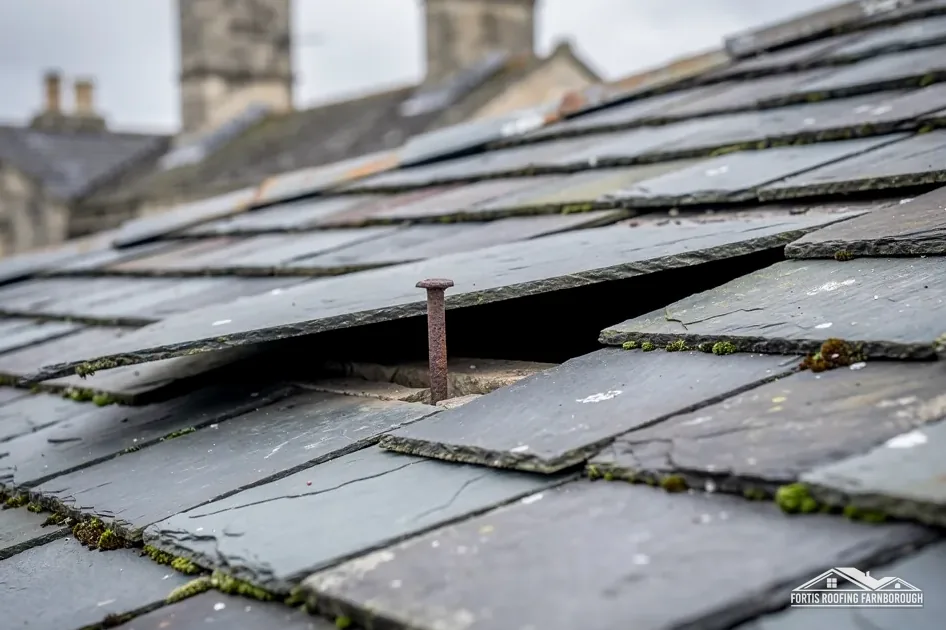
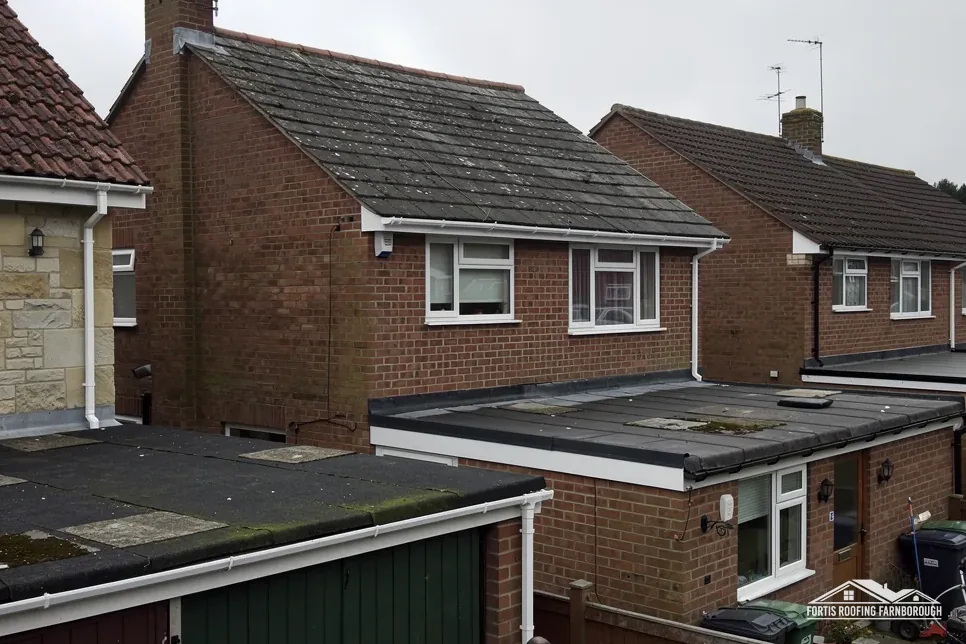
Hipped and gabled roofs
The council's appraisal says historic roofs are hipped, half-hipped or gabled, and often steeply pitched.

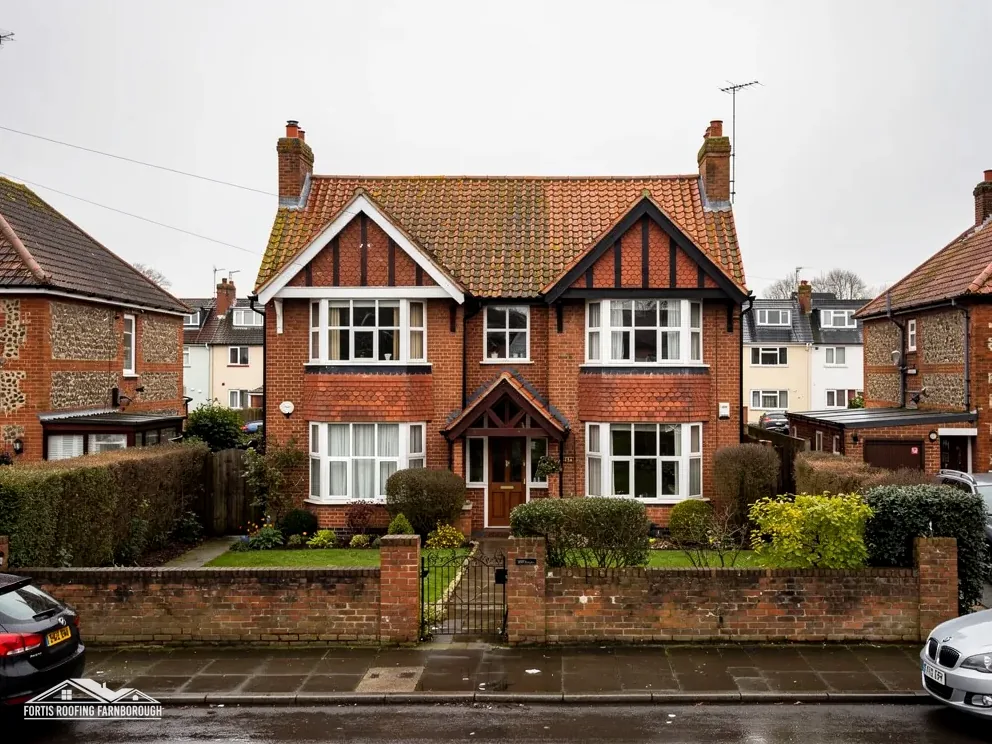
Hips, handmade clay tile, flint walls and thatch on the downs
North Waltham's appraisal records plain handmade clay tiles, slate and thatch, on hipped, half-hipped and gabled roofs that are often steeply pitched. We survey each one closely.
The council's appraisal says historic roofs are hipped, half-hipped or gabled, and often steeply pitched.

Many half-timbered houses have thatched roofs, and Batchelors on Popham Lane dates to 1499.
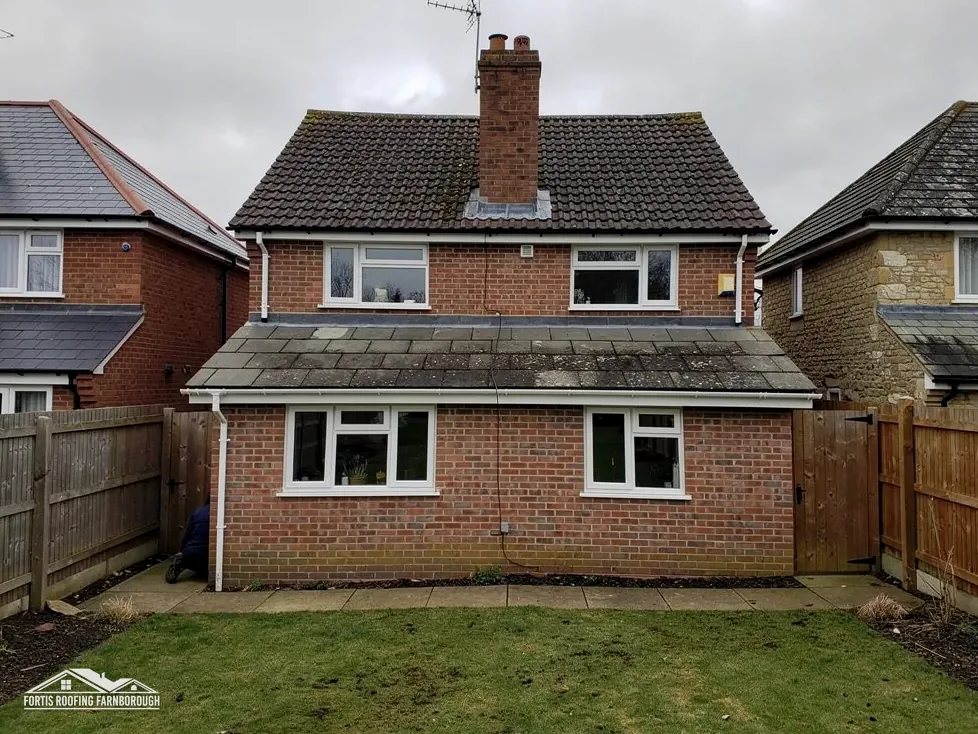
Flint walling with red brick around openings, quoins and bands is the village's characteristic building tradition.
Map of North Waltham with Dummer, Oakley, East Oakley, Overton marked around it.
Map data © OpenStreetMap contributors. Loads only when you ask for it.
Dummer lies to the east, Oakley and East Oakley to the north, Overton to the north-west, Worting to the north-east and Micheldever to the south-west, all within about six miles.
About 23.5 road miles west of Farnborough · Basingstoke and Deane Borough Council and Hampshire County Council.
North Waltham, the downland record
Who handles roof work at North Waltham, what the borough's appraisal records of its clay tile, slate and thatch, and how the conservation area and church bear on a repair.
| No. | Chapter | The figure it turns on |
|---|---|---|
| 01 | Basingstoke and Deane, Hampshire and scaffold | 10 clear working days before scaffold |
| 02 | Thatch, handmade clay tile and flint | Batchelors dated to 1499 |
| 03 | The conservation area and St Michael's spire | Designated 1981, St Michael's Grade II |
Chapter 01 of 03
| Role | Body for North Waltham |
|---|---|
| District council and planning authority | Basingstoke and Deane Borough Council |
| County council and highway authority | Hampshire County Council |
| Building control | Basingstoke and Deane, its own team |
| Scaffold licence | Hampshire County Council: the scaffolding company applies |
| Notice before the scaffold goes up | 10 clear working days, no extensions |
North Waltham stands on the downs south-west of Basingstoke, 23.5 road miles from Farnborough, where Hampshire's district and county tiers both apply. Planning and building control sit with Basingstoke and Deane Borough Council, while scaffold licences on the highway are Hampshire County Council's to grant. The government withdrew its decision to replace Hampshire's councils in September 2026, so that split stands as it is.
On its own website the borough flags roof re-covering, pitched or flat, as a possible building regulations matter. That is Basingstoke and Deane's phrasing, meant for its own addresses, and it is a prompt to check, not a rule that every re-roof needs approval. The borough's list is read alongside the Planning Portal's tests, and it is at the survey that we settle whether your job goes to the borough's building control team or to a registered approver, the private route.
Hampshire County Council's scaffolding page makes the scaffolding firm the applicant, not the householder. Hampshire wants 10 clear working days from application to erection and grants no extensions. Hampshire County Council's fee is £211.90 for the first two weeks, then £72 for every further fortnight. In practice the licence is the scaffolder's task, and the timetable is ours to manage throughout the job.
That calendar matters on a village road. A re-roof that runs past the first two weeks needs a further period, and because extensions are not offered, we plan the scaffold dates around the job rather than hope to stretch them. Poles on your own drive or garden are on private land and need no licence, so a rear-elevation repair can often start sooner than one on the road frontage.
Old timber roofs raise a question about insulation. RICS says a timber roof structure covered in spray foam cannot be fully seen or inspected, and it advises owners to check with their mortgage provider whether the lender's policy allows it. The Energy Saving Trust does not recommend spraying foam onto a leaking roof. So a survey before any insulation is added is worth having, because it records the rafters, the battens and the underlay while they can still be seen.
Chapter 02 of 03
North Waltham in published figures
The borough council's North Waltham conservation area appraisal lists the coverings on the village's historic buildings: plain handmade clay tiles, slate and thatch. It says their roofs are hipped, half-hipped or gabled, and often steeply pitched. Many houses are half-timbered with thatched roofs, and Batchelors on Popham Lane has been dated by dendrochronology to 1499, with alterations in 1574. The appraisal describes it as a hall-house of which three bays survive. The 2021 Census counted 850 residents in the parish.
A hip runs down the outward corner where two slopes meet, and a half-hip stops partway up the gable end. Hip tiles cap each hip all the way to the eaves, and they are among the first to loosen, because they hold the join of two slopes. Under BS 5534's 2014 revision, according to Marley, hips and ridges are no longer left to mortar alone, and BS 8612 tests the dry-fixed alternatives. On the survey we record how each hip is held and tell you what we would do.
Handmade plain tiles are small and numerous, so a re-roof of one means thousands of fixings, each of which has to hold a tile against the slope, the wind and the weight of the courses above it. HomeBuilding gives clay tile 60-80 years as a typical life, a figure that describes a range and says nothing certain about your own roof. Slate repairs are done slate by slate where the rest is sound, and our slate roofing page covers them. Where a roof meets flint walling, the abutment is sealed with lead flashing let into the wall, and because a flint wall is never a true line, the lead is cut and dressed to follow it.
Age and population
The appraisal says the only long-straw thatch is at Chalk Cottage, which is built of cob. Thatching is its own trade, and the thatcher is the right adviser on the straw itself. We survey the structure around it: the chimneys, the gutters, the lead and any tiled or slated outbuildings. Old thatched, tiled and timbered roofs can hold bats. GOV.UK includes roof repair and replacement in works that may affect bats, and under the Habitats Regulations 2017 damage to a roost is an offence even where it was unintended.
Chapter 03 of 03
| Designation | At North Waltham | For roof work |
|---|---|---|
| Conservation area | North Waltham (1981) | Changes to the look checked with the borough |
| Grade II listed church in use | Church of St Michael (NHLE 1092931) | Faculty system, not council consent |
| Grade II listed | Batchelors (NHLE 1179560) | Listed building consent |
| Grade II listed | Blake Cottage (NHLE 1339545) | Listed building consent |
| Grade II listed | Camellia Cottage (NHLE 1092934) | Listed building consent |
The borough's appraisal gives 1981 as the year North Waltham's conservation area was designated, and the borough says it has more than 40 conservation areas in all. The borough's directions on roof changes are confined to four central Basingstoke areas, and North Waltham sits outside them. Whether any direction applies at your own address is for the borough to confirm. Our planning permission for roof work guide shows how to ask.
The appraisal records that St Michael's Church roof was originally covered in wood, and that only the spire keeps that covering. Historic England lists the church at Grade II, first listed on 26 April 1957. With Anglican worship in regular use, roof and spire work there goes through the faculty system rather than the borough. The spire's wooden covering is thus a matter for the church's own advisers, whose instructions govern any roofing there.
Batchelors was first listed at Grade II on 17 October 1984, and Blake Cottage and Camellia Cottage are also Grade II. Works to a listed house that alter its character need the council's listed building consent, which runs separately from Building Regulations. We hold work on such a house until the consent route is clear, and our survey photographs accompany the application, showing the roof as it stands.

When you compare roofers for a listed or conservation job, ask each one whether the quote includes VAT and the scaffold, and whether the consent route is covered. The standard VAT rate is 20 per cent, and a roof job for a homeowner never falls under the domestic reverse charge.
Next to listed houses, a repair is judged by how well it matches, so nothing is left to memory or to chance. We note the pitch, the lap and size of the tiles, the hip and ridge detail, the gutter fall and the state of the verges and eaves before any price is written, and every photograph is kept with the quote for you. If a gutter has failed, our gutters, soffits and fascias page covers how the roofline is renewed, which matters most on steep roofs where water runs hard.
The appraisal records half-timbered houses with thatched roofs, and long-straw thatch at Chalk Cottage. Thatching is its own trade, so a thatcher is the person to advise on the straw. We survey everything around it, the chimneys, the gutters and any tiled or slated roofs on the same property, and photograph where the different roofs meet, a record a thatcher will find useful too.
Either can be right, depending on the roof. Since the 2014 revision of BS 5534, mortar alone is not counted on to hold hip tiles, and BS 8612 tests dry-fixed systems. The answer turns on the tile and its present bedding, so the survey notes how yours is held and says what we would fit and the reason, and the result is written down for you.
St Michael's has a Grade II listing and regular Anglican worship, which sends roof and spire work through the faculty system and keeps it out of the borough's hands. The appraisal records that the roof was originally covered in wood, and that only the spire keeps that covering. Church advisers decide how it is repaired, and we follow their instructions on any work there, whichever part of the building is involved.
Not under Hampshire County Council's rule, which makes the scaffolding firm the applicant. Hampshire County Council requires 10 clear working days before erection, charges £211.90 for the first fortnight and £72 for every fortnight after, and offers no extensions. We plan the roof dates around those terms and show you the calendar in writing before you agree.
Get your free roof quote
Tell us your North Waltham road and what is wrong. We visit, survey and photograph the roof, and send a single price.
10-year workmanship guarantee, in writing.