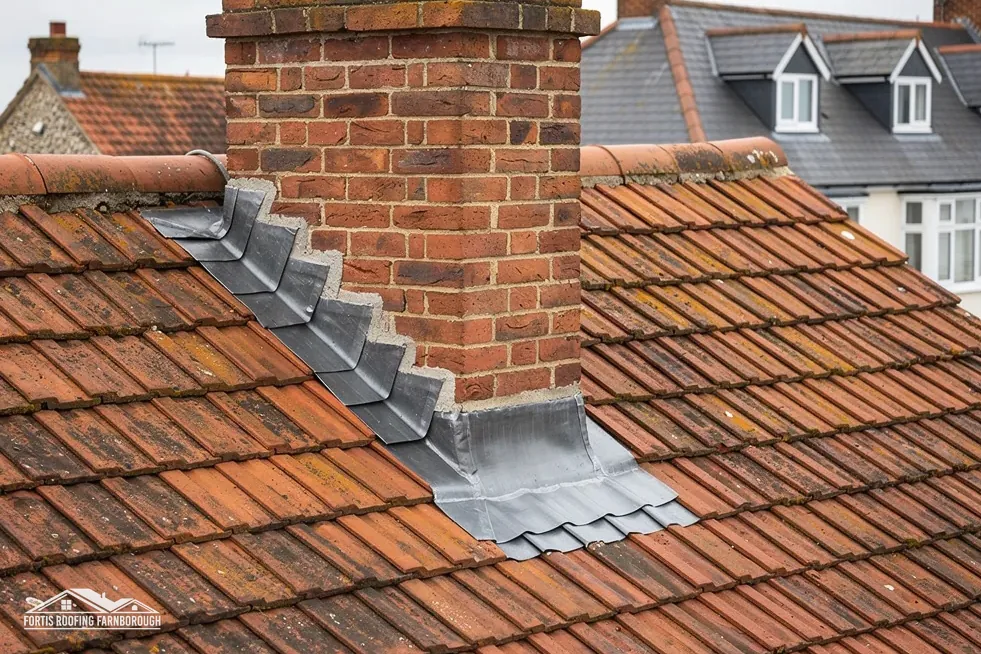
Orange and red roof tile
Basingstoke and Deane's appraisal names orange and red roof tiles among the village's vernacular materials.

Flint, mellow brick and orange-red roof tile on the chalk downs
Dummer's appraisal lists mellow red brick, timber frame, flint, orange and red roof tile and thatch, with no single pattern. We read each roof, not the street.
Basingstoke and Deane's appraisal names orange and red roof tiles among the village's vernacular materials.
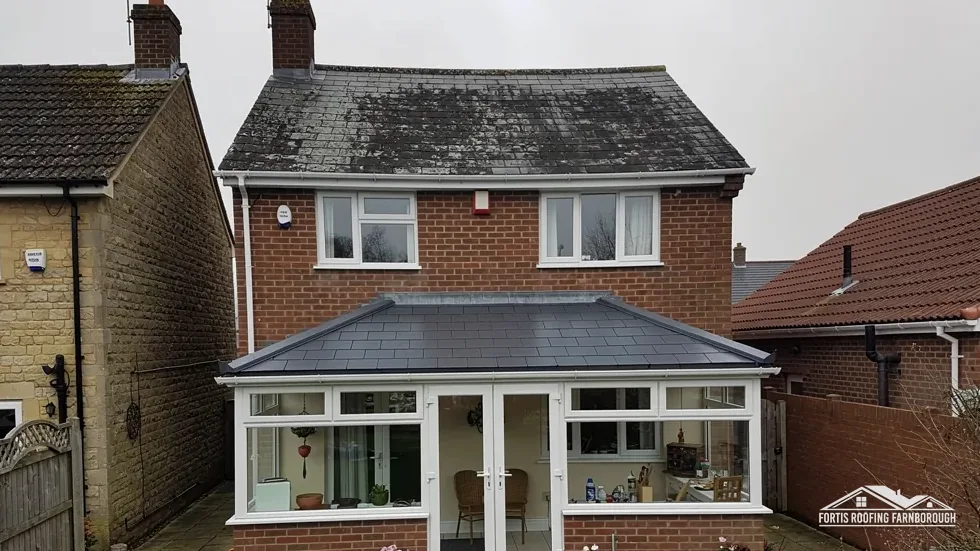
In 1908 the county history described old thatched and half-timbered cottages, farms and farm buildings along the village street.
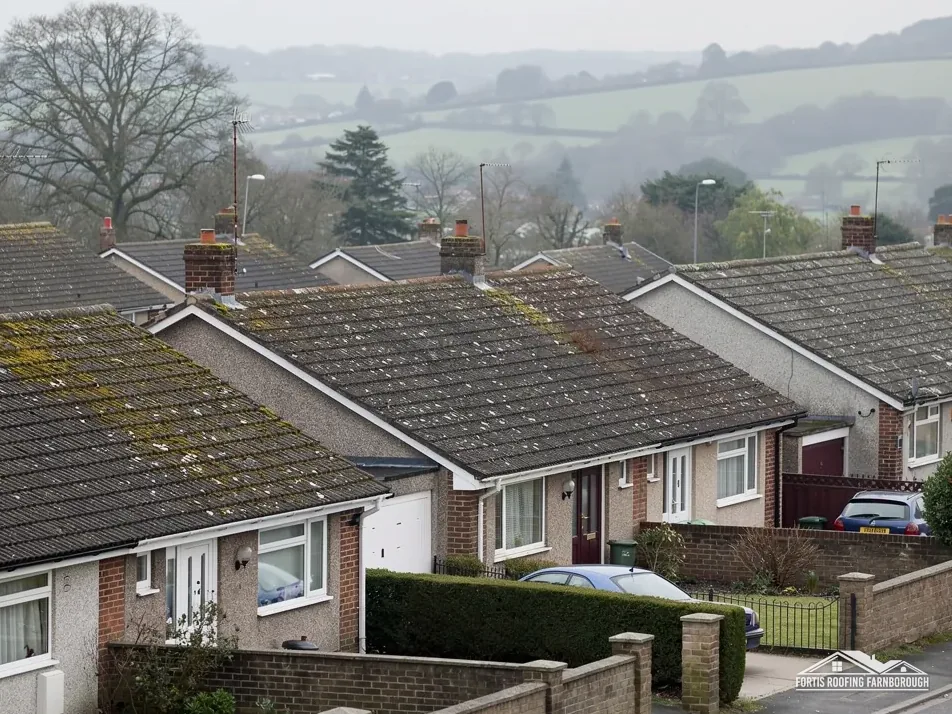
The same history records a village pump covered by a square tiled roof on four wooden pillars.
Map of Dummer with North Waltham, East Oakley, Oakley, Worting marked around it.
Map data © OpenStreetMap contributors. Loads only when you ask for it.
North Waltham lies to the west, East Oakley and Oakley to the north, Worting to the north, Basingstoke to the north-east, and Overton lies north-west of it.
About 21.2 road miles west of Farnborough · Basingstoke and Deane Borough Council and Hampshire County Council.
Dummer, flint and tile
Who decides roof work in a Basingstoke and Deane village, what its appraisal and the county history say about Dummer's flint, brick, tile and thatch, and how the conservation area and the listed barns and church shape a job.

| No. | Chapter | The figure it turns on |
|---|---|---|
| 01 | Basingstoke and Deane plans, Hampshire licenses | 10 clear working days |
| 02 | Flint, brick and tile on a chalk hill | 1,397 residents, Dummer parish |
| 03 | Dummer's conservation area, barns and All Saints | All Saints, Grade I, by faculty |
Chapter 01 of 03
| Role | Body for Dummer addresses |
|---|---|
| District council and planning authority | Basingstoke and Deane Borough Council |
| Building control | Basingstoke and Deane's own Building Control team |
| County council and highway authority | Hampshire County Council |
| Scaffold licence on the highway | Hampshire County Council; the scaffold firm applies |
| Notice before a licence starts | 10 clear working days |
Dummer is a downland village in Basingstoke and Deane, inside Hampshire's two-tier system, so Basingstoke and Deane Borough Council handles planning and building control and Hampshire County Council is the highway authority. Dummer lies 21.2 road miles from Farnborough, heading west from the A325, and 18.6 miles as the crow flies.
Basingstoke and Deane's building regulations page lists re-covering pitched or flat roofs among alteration projects that might need approval. Those are the council's words, written about its own addresses, and it gives no percentage. The Planning Portal supplies the national yardstick: a re-roof needs no building control application while it touches under 25 per cent of the building envelope and under 50 per cent of the roof. We take both into account, and a covering 15 per cent or more heavier needs approval. A close case goes to the council's team with our measurements.
Under Hampshire County Council's rule, the scaffolding firm lodges the application for its customers. Hampshire County Council wants 10 clear working days between applying and the start date, charges £211.90 for the first 2 weeks and £72 for each further 2-week period, and offers no extensions. A new application is needed if the job overruns, which is why the programme is planned before the scaffold goes up.
Hampshire's no-extension rule makes the order of work matter. We agree the sequence with you before the application goes in: strip, batten, underlay, tile, ridge, and then the scaffold comes down. If weather or what we find under the tiles changes that order, the new dates are explained to you at once.
The survey gathers what each body will ask: how much of the roof the work touches, what the old and new coverings weigh, and where the scaffold will stand. Those three answers settle whether Basingstoke and Deane's team needs to be asked, whether Hampshire's licence is involved, and how long the programme runs. They go into the report with photographs, so you can see the reasoning behind the plan.
Hampshire exempts scaffolding placed on private roads from the licence. In a village with lanes and drives, the first step is to establish whether the scaffold stands on the public highway at all, and we note that at the survey.
Chapter 02 of 03
Dummer, as the records give it
Basingstoke and Deane's appraisal describes Dummer's vernacular materials as mellow red brick, timber frame, flint, orange and red roof tiles and thatched roofs, following no single pattern. It places the village in the gently undulating landscape of the central chalk downlands, with its western end on a small hill capped by clay with flints. The 2021 Census counted 1,397 usual residents in the parish. The county history of 1908 describes old thatched and half-timbered cottages, farms and farm buildings along the village street, and a pump covered by a square tiled roof on four wooden pillars.
A village with several materials has several roof problems. Orange and red clay tile fails at the fixings and the battens. A timber-frame house has roof timbers that have moved with the frame. A thatched cottage has a chimney, and the lead and flaunching around a chimney are roofline work whatever the roof is made of. We never assume what one house carries from what its neighbour has. Each is surveyed on the evidence under the tiles.
Where a thatched house has a tiled outbuilding, extension or porch, those tiled parts are ordinary roofs with ordinary faults: slipped tiles, cracked ridges and failed flashings. We survey them, and the chimney through a thatch roof is roofline work too. The report separates the parts, so you know which problems sit with which structure.
Flint appears in walls, including those of the church, which the appraisal describes as a simple longitudinal building with plain flint walls. Where a tiled roof meets a flint wall at a gable or a chimney, a lead flashing or a mortar fillet takes the water, and those junctions are where an old roof leaks while its tiles are sound. We photograph each junction and report its condition.
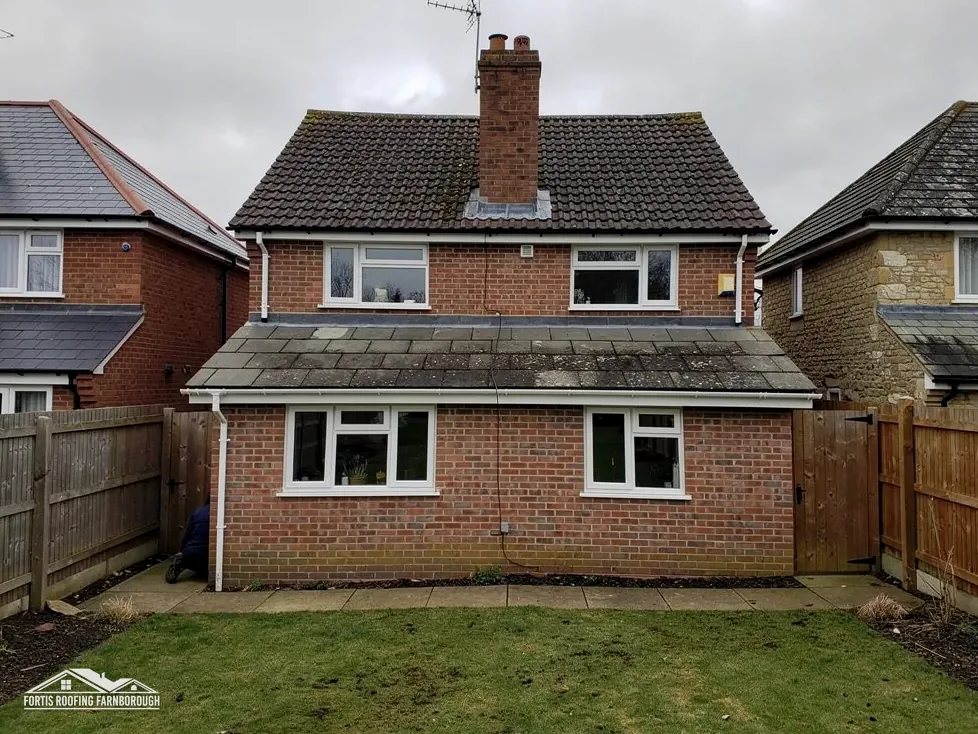
Clay with flints on the hill, over the chalk of the downs, is a reminder that whatever the ground does, roof water has to be taken away properly. Gutters, hoppers and downpipes are traced to their outlets on the survey. Our pitched roofing page explains how tile roofs are repaired and re-covered, and our lead roofing page covers the flashings.
Chapter 03 of 03
| Designation | In Dummer | For roof work |
|---|---|---|
| Conservation area | Dummer | Changes to the look checked with Basingstoke and Deane |
| Grade I listed church in use | Church of All Saints (list entry 1093019) | Church of England faculty, not listed building consent |
| Grade II listed | Barn at Little Manor Farm (list entry 1178443) | Listed building consent for works affecting character |
| Grade II listed | Barn at Tower Hill Farm (list entry 1339507) | Listed building consent for works affecting character |
| Grade II listed | Dummer House (list entry 1093020) | Listed building consent for works affecting character |
Basingstoke and Deane lists more than 40 conservation areas across the borough, and the national planning dataset has Dummer among them. In a conservation area a roof repair stays possible, but how the roof looks becomes a planning matter. The council's roof-related article 4 directions cover four town-centre areas in Basingstoke itself, so for a Dummer address the sensible step is to check whether any direction applies with the council before pricing a change of covering.
All Saints, the village church, is listed Grade I, and mapping data shows it as a working Anglican church. A church in that position goes through the faculty system, not listed building consent from the council. That is a different process from the one for a house, run by the church, and we would not price work on the building until its approvals are clear.
The barns at Little Manor Farm and Tower Hill Farm, and Dummer House, are each listed Grade II. Changes that touch a listed building's character need listed building consent, and a barn conversion or the reroofing of a listed barn can be that kind of work. Listed buildings keep permitted development rights; the consent comes as well. A repair that follows the existing roof makes the best starting point for the conversation with the council, and our planning permission guide sets out the routes.
Barn roofs raise a question of scale. A barn roof is a large plane of tile or sheet with few details, and a repair may involve scaffold lifts, battens in quantity and long runs of ridge. The survey measures the area and photographs each slope in sections, so the work can be sized before it is priced. Where a barn has been converted to a house, the paperwork from the conversion may record what insulation and ventilation exist, and it is worth asking the owner for it.
On a survey of a listed barn we record the roof timbers, the pitch and the covering, because a large roof area changes the price and the access needed, and the council will want to see what exists. Our chimney repairs page covers the stacks and flashings that sit above many Dummer cottages.
The junction between a tiled roof and a flint wall relies on lead or mortar, and that line ages faster than the tile. The appraisal names flint walls, including the church's, among Dummer's materials. We photograph each junction on the survey and report whether the flashing needs renewing or the tiles need work.
Under Hampshire County Council's rule, the scaffolding firm lodges the application for its customers. Hampshire County Council wants 10 clear working days between applying and the start, and charges £211.90 for the first 2 weeks and £72 for each further 2 weeks. You do not apply yourself, but you should allow for the notice.
All Saints is Grade I listed and shown as a working Anglican church, so roof work goes through the faculty system rather than listed building consent. Basingstoke and Deane Borough Council is not the approval route for the church itself, though it remains the planning authority for houses around it.
Basingstoke and Deane's page lists re-covering pitched or flat roofs among alteration projects that might need approval. It gives no percentage. We use the Planning Portal's 25 per cent and 50 per cent test as a guide, and we ask the council's team when a job sits close to that line.
Get your free roof quote
Give us your Dummer address and the roof problem, and a survey date will follow.
10-year workmanship guarantee, in writing.