A thatched main street
The county history of 1908 found the main street lined on both sides with quaint thatched half-timbered houses.
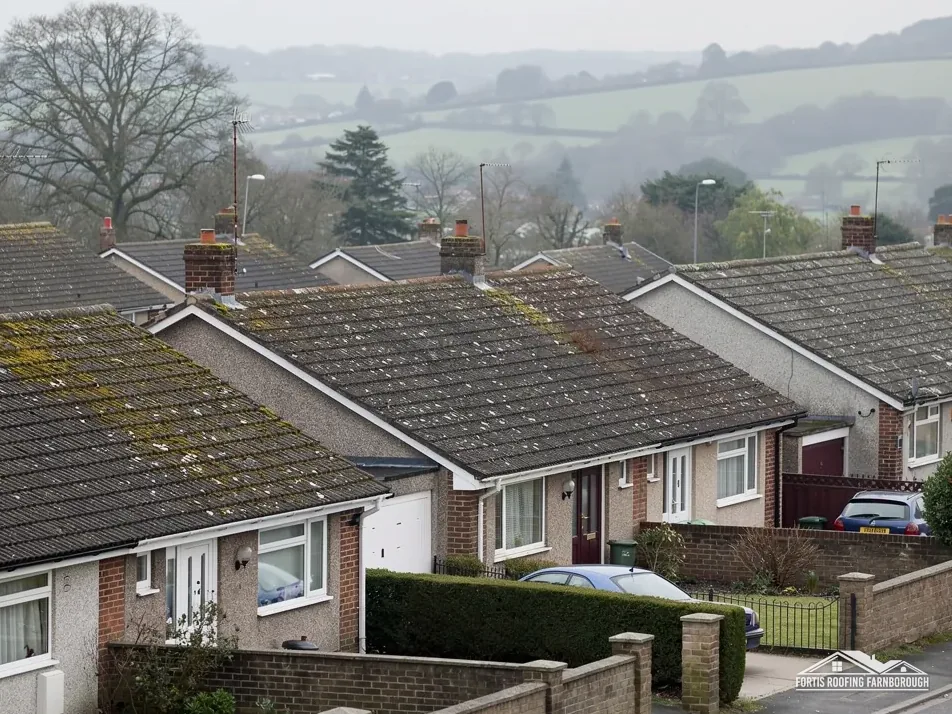
Roofs on a thatched downland street north-east of Winchester
In 1908 Micheldever's main street was lined on both sides with thatched half-timbered houses. We survey the lead, tiles and gutters that sit beside them.
The county history of 1908 found the main street lined on both sides with quaint thatched half-timbered houses.
The nave and chancel are brick, rebuilt in 1806 after a fire, with an octagonal nave and a 16th-century tower.
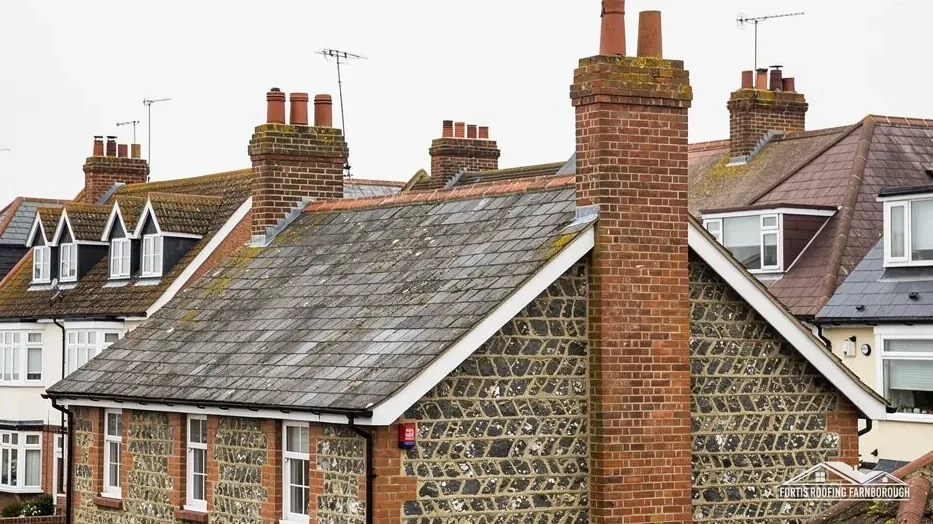
In 1908 the tithing of Weston Colley was described as scattered thatched cottages and one or two good-sized houses.
Map of Micheldever with North Waltham, New Alresford, Dummer, Overton marked around it.
Map data © OpenStreetMap contributors. Loads only when you ask for it.
Micheldever is a village in chalk downland north-east of Winchester, and the A325 at Farnborough is 28.5 road miles from it, in the direction of the north-east.
About 28.5 road miles south-west of Farnborough · Winchester City Council and Hampshire County Council.
Micheldever, lead and thatch
Which lead codes suit soakers, flashings and valleys beside thatch and tile, what the 1908 county history records of Micheldever's street and church, and how its conservation area and listed cottages shape a repair.
| No. | Chapter | The figure it turns on |
|---|---|---|
| 01 | Lead beside thatch: codes and what they do | Lead flashing: over 80 years |
| 02 | A thatched street and a church rebuilt in brick | The church was rebuilt in 1806 |
| 03 | Conservation area, Grade II* church and Duke Street | St Mary's Grade II*; Duke Street Grade II |
Chapter 01 of 03
| Code | Thickness, mm | Weight, kg per m² | Royston's use |
|---|---|---|---|
| 3 | 1.32 | 14.97 | Soakers only |
| 4 | 1.80 | 20.41 | Soakers, flashings, valleys, dormers |
| 5 | 2.24 | 25.40 | Flashings, valleys, box gutters, dormers |
| 6 | 2.65 | 30.05 | Flashings, valleys, box gutters, dormers |
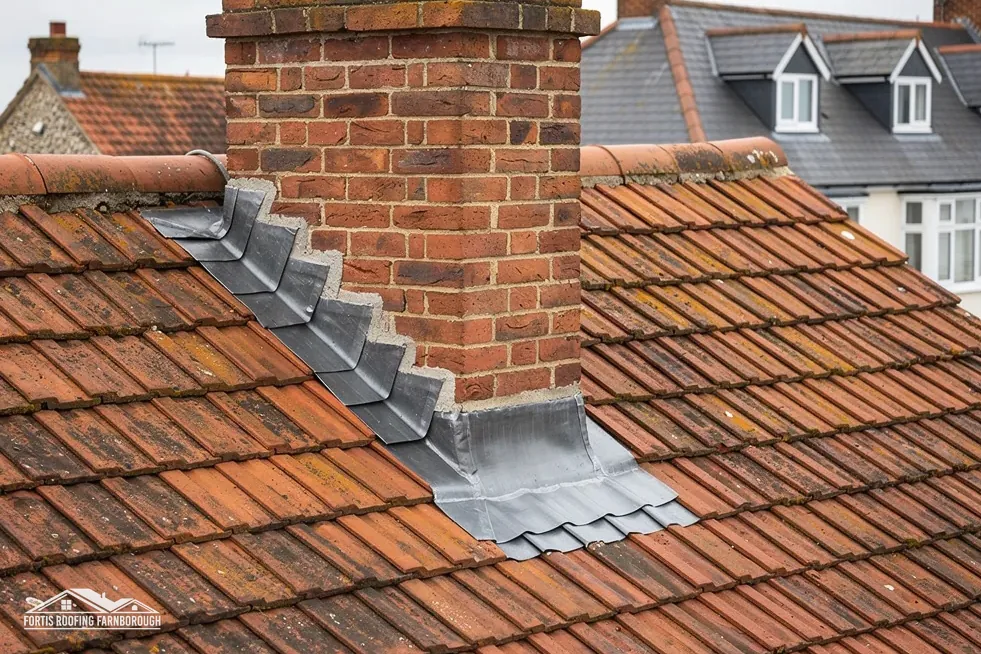
Houses with thatch or old tile roofs often rely on lead at the awkward spots: round chimneys, along walls that rise through a roof, and in the valleys between slopes. The chart lists one maker's lead codes. Each code stands for a thickness and a weight, with a colour the maker marks on the roll, and heavier codes go where the lead works hardest.
A soaker is a small folded sheet of lead that sits under the edge of a slate or tile where the roof meets a wall or chimney, carrying water across the joint. A flashing is a strip tucked into a wall joint and bent down over the roof covering. A valley gutter lines the join between two slopes. In Royston's brochure the lightest code, Code 3, is for soakers only, and from Code 4 upward the sheet is listed for flashings and valleys, with Codes 5 and 6 also named for parapet and box gutters.
According to MyJobQuote, lead flashing can last for over 80 years, a floor figure with no promise attached. A sound old flashing is therefore often better kept and repaired in its own code than torn out and replaced. Approved Document C points to BS 6915 for lead, whereas BS 6229, the flat-roof standard, covers membranes only and has nothing to say about lead.
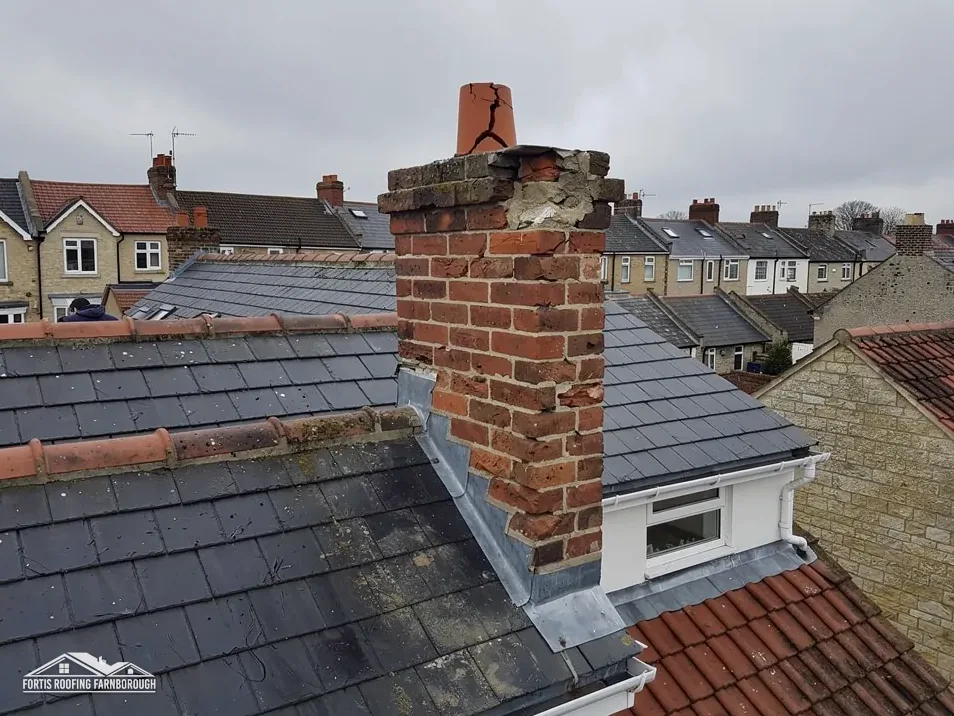
Thatch is a covering with its own craftspeople. Our work on a thatched Micheldever house is everything at its edges: chimney stacks and their flashings, abutments to walls, lead valleys against adjoining tile or slate, gutters and eaves boards. We photograph each junction and describe the lead we find, so you can see for yourself whether it is sound.
On the road side, Hampshire County Council licenses scaffold in Micheldever, and when a frame must stand on the highway it is the scaffolding company that applies to Hampshire County Council for its customers.
Where the lead is old, we also check what fixes it. Lead that is sound but held by rusted nails or a crumbled wedge of mortar needs a new fixing more than a new sheet, and that is often the cheaper path to a roof that stays dry.
Chapter 02 of 03
Micheldever's village and church, four published figures
The Victoria County History of 1908 described Micheldever's main street as lined on both sides with quaint thatched half-timbered houses, with only a few less attractive modern cottages. The church's nave and chancel are of brick, rebuilt in 1806 after a fire, with an octagonal nave, and its tower dates from the first half of the 16th century. The tithing of Weston Colley was described in 1908 as scattered groups of thatched cottages and one or two good-sized houses.
A village that was thatched on both sides of its street in 1908 will have had many roofs re-covered since, and some will have changed material. The survey names what each Micheldever roof carries today, and the notes say which parts look original. A house beside a thatched one may have a tiled roof with lead valleys, and the junction between two different roofs, one thatch and one tile, is where careful flashing matters most.
The brick church shows another effect of history. A building rebuilt after a fire in 1806 has a roof of that date or later, and an octagonal nave means eight slopes meeting at hips, an arrangement that tests a roofer's detailing. We would not suggest that a house resembles it, but it shows how often the village's roofs have been rebuilt.
The 2021 Census counted 1,443 usual residents in the parish, and 35 listed buildings stand within 500 metres of the village centre. Many old buildings have a paper trail of some kind, a listing entry or an earlier planning file, and we try to read it before we climb a ladder. Council planning files, listing entries and the owner's own papers all help, and we ask what you hold on the house, including any old photographs of the roof.
A tiled roof standing next to a thatched one gets its shared junction photographed from our side, and what shows is reported to you, so a talk with the neighbour can start from the same images.
Church and parish
The thatch itself belongs to a specialist thatcher, and when a thatcher is working we agree the order of work so that lead and gutters are never disturbed by a later visit. Gutters beside thatch need care of their own. Water running off a thatched eave carries debris, and a gutter that clogs at the corner can overflow onto the wall below. We clear and test the runs and photograph the outlets.
Chapter 03 of 03
| Record | In Micheldever | For roof work |
|---|---|---|
| Conservation area | Micheldever, within about 0.75 km of the centre | Matching repairs; ask Winchester about changes |
| Grade II* listed church in use | Church of St Mary (NHLE 1095267) | Church of England faculty system |
| Grade II listed | 111 and 112 Duke Street (NHLE 1095273) | Listed building consent for work affecting character |
| Grade II listed | 113 and 114 Duke Street (NHLE 1155573); 115 and 116 Duke Street (NHLE 1350773) | The same consent route |
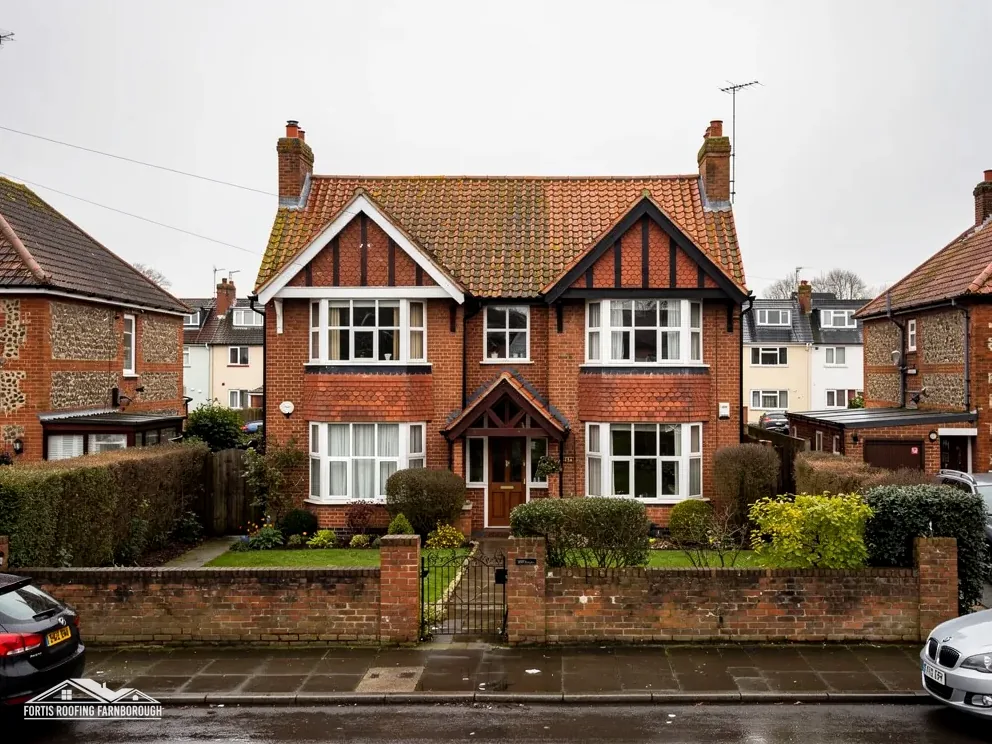
The Micheldever conservation area lies within about 0.75 km of the village centre, and Winchester City Council's planners hold the boundary. A repair that sticks to the existing materials, details and lines keeps what the designation is for. Changing a covering from one material to another is a question for the council before work, and so is anything that would show from the street. Whether an Article 4 direction applies to your address is also for Winchester to say.
Numbers 111 to 116 Duke Street are listed Grade II in three pairs, the first pair on the list since 16 November 1983. Permitted development survives listing, yet work touching a listed house's character also calls for listed building consent. Our planning permission and roof work guide sets out where repair ends and alteration begins.
The list has carried St Mary's church at Grade II* since 5 December 1955. Because the congregation is Anglican, roof works there go through the faculty system instead of the council. We would not price work on it without first confirming the process with the church's own officers, and we would wait for their reply in writing.
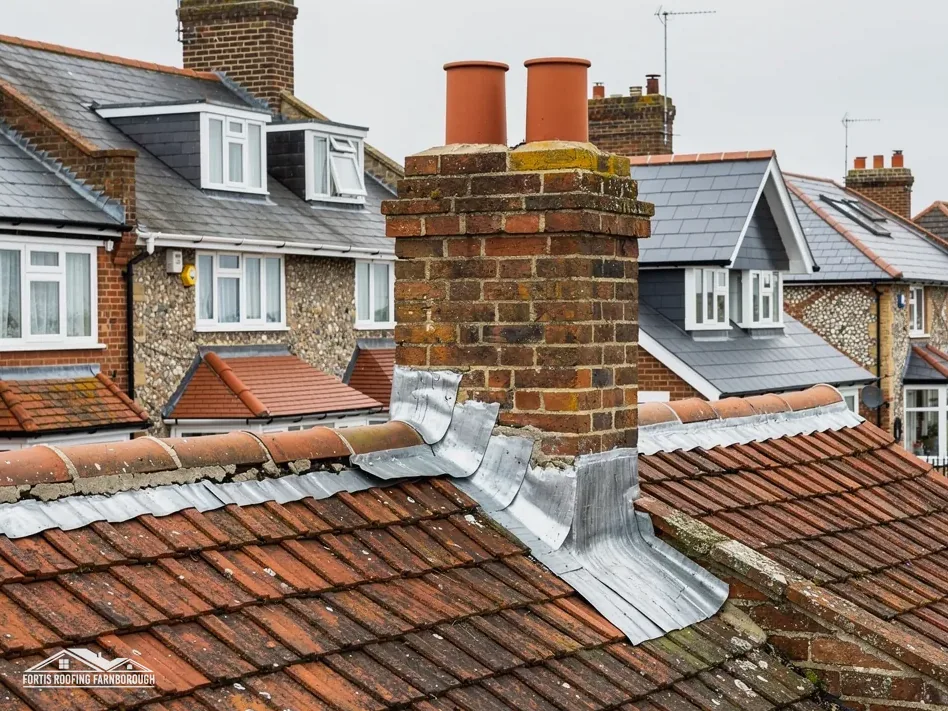
For each older Micheldever house we keep a dated record of ridges, chimneys, abutments and valleys, taken before work and again after, and it comes to you with the written price. Chimney stacks and their flaunching are covered on our chimney repairs page, while lead roofing and lead work describes the flashings linking them to the roof.
If a repair would change anything visible, such as the ridge line, chimney height or covering, tell us at the survey. Asking Winchester once, with the roof fully described, avoids a second round of letters, and the reply goes into the file we hand over at the end of the job.
Pairs of cottages like those on Duke Street can share a chimney, a ridge or a party wall between the two halves, so a leak mended on one half can turn out to start on the other. When we survey one half of a pair, we describe what we see of the shared parts from our side. The neighbour's half is a conversation for you to have.
At the edges and the joints. Thatch has its own craftspeople, while we deal with chimney stacks and their flashings, lead abutments to walls, valleys beside tile or slate, gutters and eaves boards. We photograph each junction, describe the lead we find, and tell you whether it is sound or needs repair.
Royston lists Code 3 for soakers only, and from Code 4 upward for flashings and valleys. The correct code depends on the detail and exposure, and Approved Document C refers to BS 6915 for lead. The survey settles it: we photograph the lead already there and then say which code we would fit.
Yes. St Mary's is Grade II* listed, yet worship there is Anglican, so the ecclesiastical exemption applies and the faculty system covers its roof. For a listed house, such as the Duke Street cottages, listed building consent from Winchester City Council is the route, and we raise that before pricing.
Winchester City Council, through its own service for building control, or a registered approver should you prefer a private firm. A full re-roof passes the Planning Portal's limits of under 25 per cent of the building envelope and under 50 per cent of the roof, so we tell you which route applies.
Get your free roof quote
Send your Micheldever address and a note of what is wrong, and a date for the survey will follow.
10-year workmanship guarantee, in writing.