Rebuilt after the 1736 fire
A brewhouse fire spread quickly along thatched roofs, and with relief funds the town was rebuilt on its present lines.

Roofs in a coaching town rebuilt after the fire of 1736
A fire in 1736 ran along New Alresford's thatched roofs, and the town was rebuilt on the lines it keeps today. Every roof here is surveyed on what it shows.
A brewhouse fire spread quickly along thatched roofs, and with relief funds the town was rebuilt on its present lines.

After the new London road was made in 1753, New Alresford became a great posting centre until the railway came.

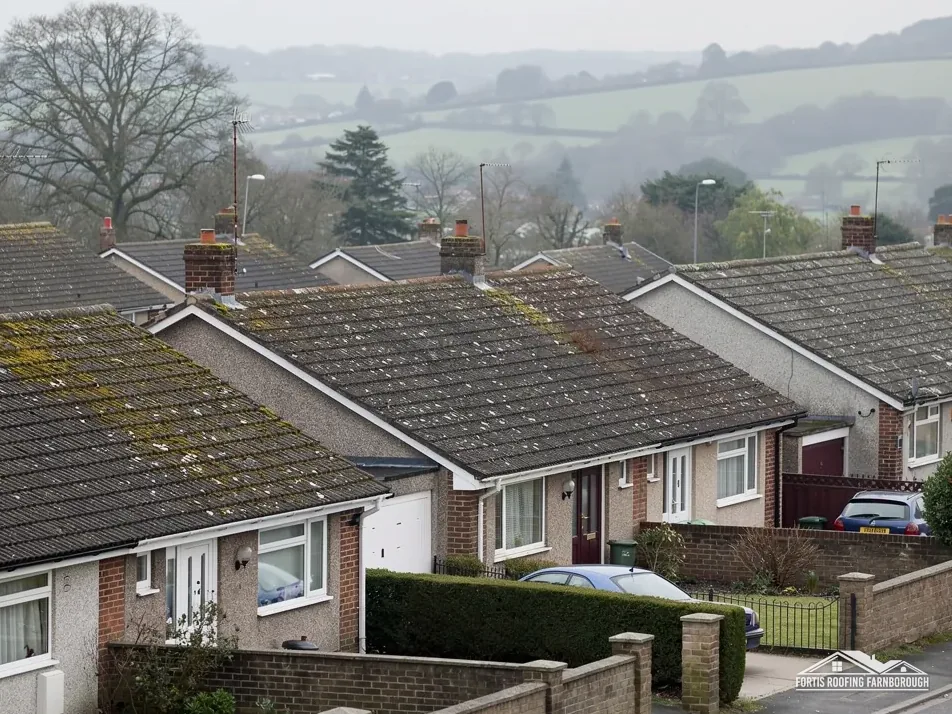
The Design Statement describes the roofs as a mixture of red tile and slate, with some thatch in Mill Hill.
Map of New Alresford with Ropley, Medstead, Four Marks, Micheldever marked around it.
Map data © OpenStreetMap contributors. Loads only when you ask for it.
New Alresford is a small market town on the River Alre north-east of Winchester, with Farnborough 29.6 road miles away, towards the north-east.
About 29.6 road miles south-west of Farnborough · Winchester City Council and Hampshire County Council.
New Alresford, limits and a fire
Where a New Alresford re-roof crosses the line that brings building control in, how a fire in 1736 and the coaching road shaped the town, and what its 128 nearby listings and conservation area ask of a repair.
| No. | Chapter | The figure it turns on |
|---|---|---|
| 01 | When a re-roof reaches building control | Three limits: 25, 50 and 15 per cent |
| 02 | A coaching town rebuilt on its old lines | Rebuilt after the fire of 1736 |
| 03 | 128 listed buildings and a conservation area | 128 listed buildings within 900 m |
Chapter 01 of 03
The three limits in the Planning Portal's re-roofing test
Winchester City Council is the planning authority for New Alresford and runs its own building control service. Hampshire County Council is the county council and the highway authority. A New Alresford re-roof can meet any of them, depending on how much of the roof is touched and what goes on it, and knowing which saves weeks.
The Planning Portal's re-roofing test has three limits that work as a set. The Planning Portal expects no application where under 25 per cent of the building envelope and under 50 per cent of the roof is touched. The envelope is the entire outer surface of the house, roof included. Replacing a few slipped tiles, or the pointing on a ridge, falls well inside both.
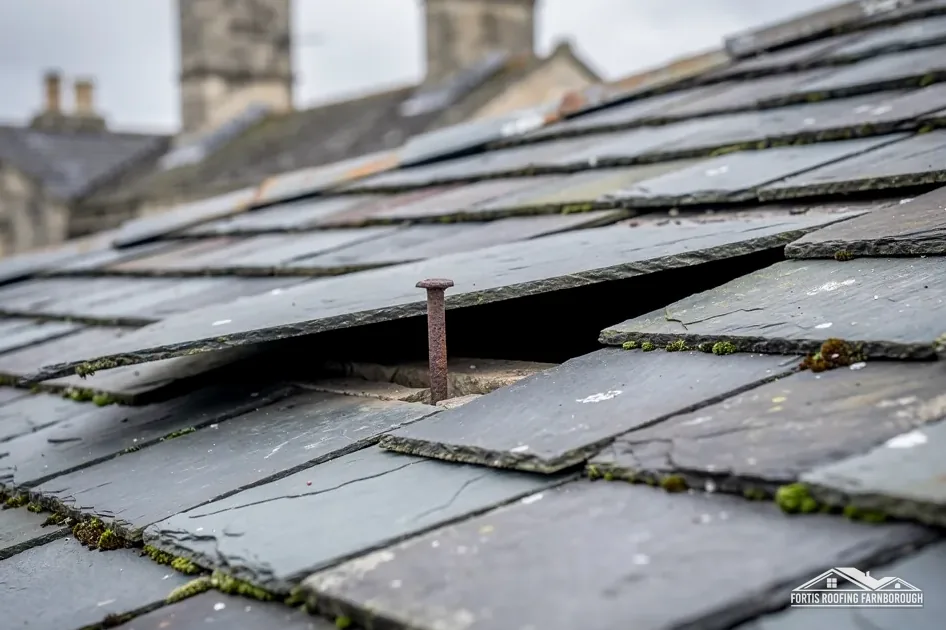
The third limit is weight. Approval is also needed where a covering would add 15 per cent or more to the load, or one whose performance in a fire would differ markedly from the old. The Planning Portal also suggests a word with a structural engineer or surveyor first, and our survey records the existing covering and the timbers beneath it, so that conversation has real figures behind it.
New Alresford's history gives the fire point a local meaning. The fire of 1736 began in a brewhouse and spread along thatched roofs. A move from one covering to another can change how a roof performs in a fire, and that is partly why building control looks at it. Replacing thatch with tile or slate re-covers the whole slope, so it passes the first two limits and goes to Winchester's team, or to a registered building control approver, whichever you choose to instruct. The application is made before the old covering comes off.
The registered approver is the private alternative, a firm on the government's register. We explain both routes at the survey, and say which your job needs, with the reasons, before any price is written.
If you hold any papers from earlier roof work, including a completion certificate, bring them to the survey. They show how the roof was last signed off and save repeating enquiries.
Chapter 02 of 03
| Date | What happened | For a surveyor |
|---|---|---|
| 1736 | A brewhouse fire spread along thatched roofs; the town was rebuilt | Many roofs are younger than the street plan |
| 1753 | The new London road made New Alresford a great posting centre | Inns and tall frontages |
| Railway years | Coaching ended when the railway came | Later alterations to older roofs |
| 2008 | The Design Statement describes red tile, slate and some thatch | A range of coverings to match |
The Victoria County History of 1908 tells a clear story. A fire in 1736 began in a brewhouse and spread quickly along the thatched roofs, and with relief funds the town was rebuilt on the lines it keeps today. After the new London road was made in 1753, New Alresford became a great posting centre and stayed one until the railway came.
The posting years left their mark as well: the Design Statement names the Bell and the Swan on West Street as former coaching inns. Large inn roofs mean longer rafters, bigger valleys and more lead, and repairs to them are priced from measured areas, not from a guess at the frontage.
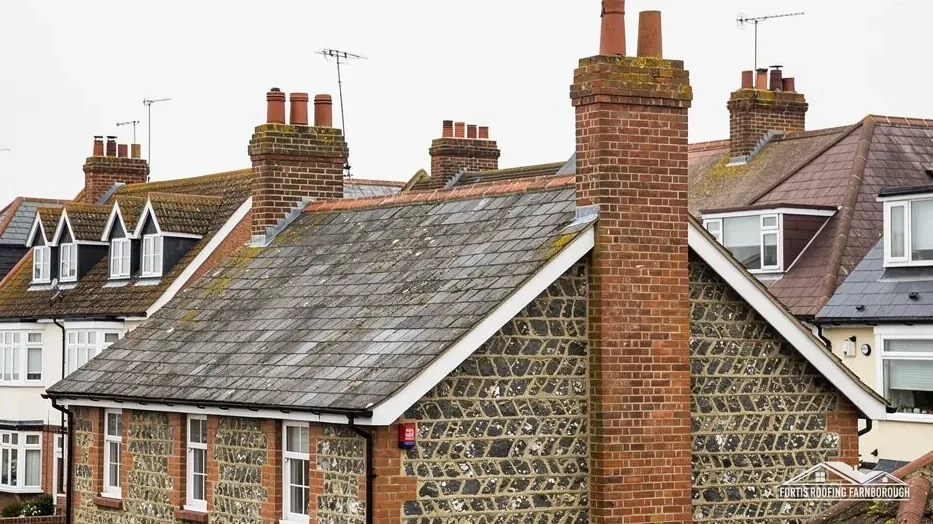
A town rebuilt after a fire in 1736 has a street plan older than most of its buildings. The roofs of that rebuilding are now close to three centuries old, and have probably been re-covered more than once. A building from the coaching years may carry tile on one slope, slate on another and a flat lead section behind a parapet, and each part has its own notes in our survey.
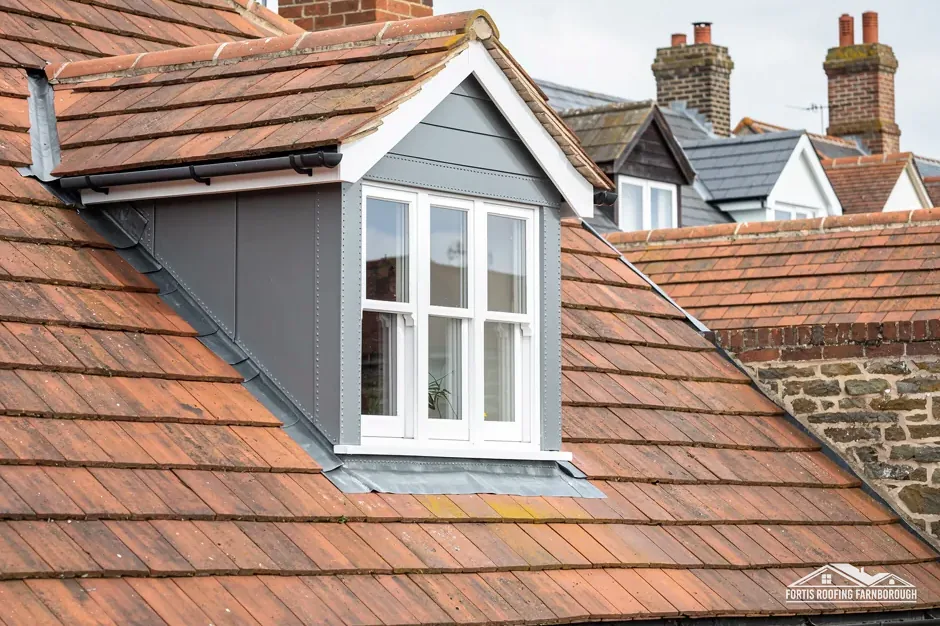
The New Alresford Design Statement of 2008 describes the town's roofs as a mixture of red tile and slate, with some thatched properties still in Mill Hill. That is a local description, and it gives the range of coverings we may have to match. It stops short of saying what any one house carries, so each slope is photographed and named.
The 2021 Census counted 5,337 usual residents in the parish. New Alresford is a small town with an old core, and a coaching town has tall frontages, narrow plots and shared walls. A scaffold frame over a pavement falls under section 169 of the Highways Act 1980, and under Hampshire County Council's rule the scaffolding firm applies for its customers.
Fire and coach road
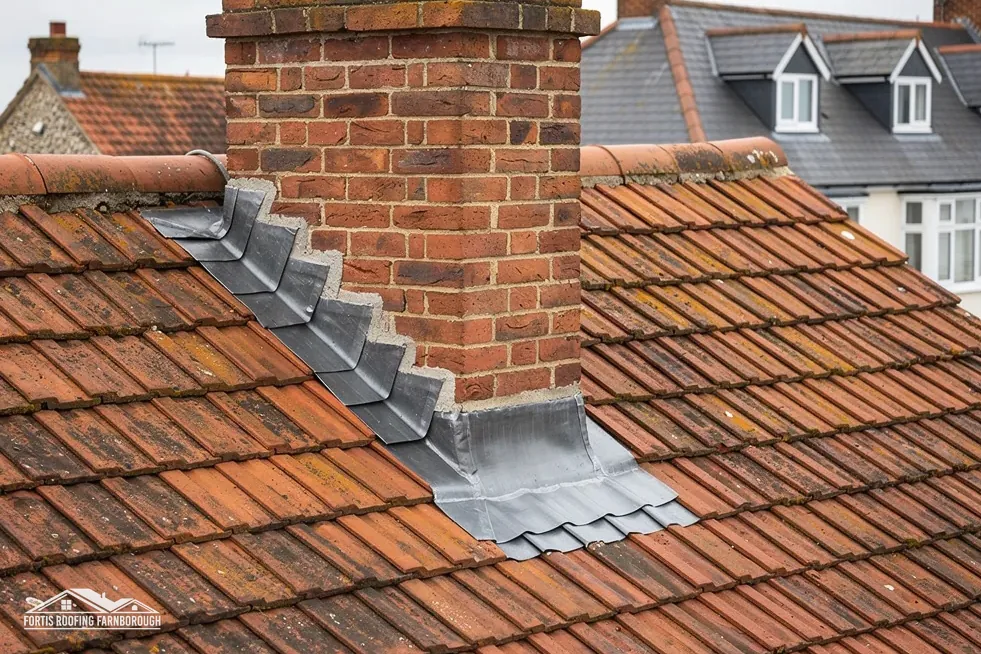
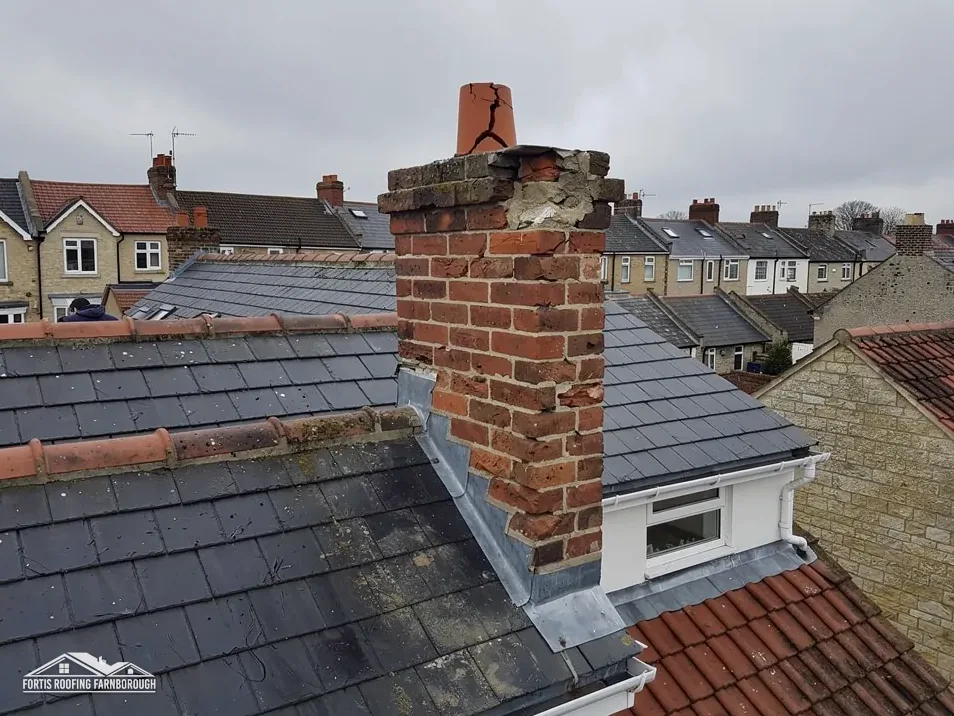
Chimney stacks rise from many of these roofs. Where two houses share a stack, we photograph our own side and describe what shows of the other, so any conversation with the neighbours can start from the same images.
Parapet gutters, the lead-lined channels behind low walls, belong on tall frontages of this kind, and they are a place where water collects. We flow-test them with water, since a blocked outlet can send water into the wall for a long time before any stain shows.
Chapter 03 of 03
New Alresford's listed buildings, in four counts
A hundred and twenty-eight listed buildings stand within 900 metres of the centre of New Alresford. The Design Statement of 2008 says the majority of houses in the conservation area are Grade II listed buildings, so a New Alresford owner should check first whether the house itself is listed. Listed building consent from Winchester City Council is needed for work that would change a listed building's character, whatever permitted development might allow. Our planning permission and roof work guide sets out the distinction between repair and alteration.
Numbers 3, 5 and 7 Mill Hill and Langtons are listed Grade II*, and 1 and 3 West Street are listed Grade II. St John the Baptist's church carries its Grade II* listing from 5 December 1955. Its congregation is Anglican, which makes its roof a matter for the faculty system and keeps the council out of it. Mill Hill is where the Design Statement places the town's remaining thatch, and Numbers 3, 5 and 7 Mill Hill are among the town's Grade II* entries.
A conservation area protects the character of a place as a whole, and one house re-roofed in the wrong kind of tile or slate can jar with an entire street. That is why matching is more than a courtesy here.
New Alresford has a conservation area, and Winchester's planning team holds the boundary. Inside it, matching materials preserve the character, and a different covering is a point to raise first. Our slate roofing and lead roofing and lead work pages cover two coverings and the flashing metal that the town's roofs rely on.
Older roofs here are photographed before the work and again afterwards, with dates, and the set stays in your file. If a planning officer asks what was there before, the pictures answer.
On a street where so many buildings are listed, a neighbour's roof is often listed too, and scaffold against a listed wall needs care. We plan the frame so that it does not fix to or load a listed fabric where it can stand clear.
If you are buying an older New Alresford house, ask for the roof to be surveyed before exchange, since a roof problem found late is expensive. A recorded roof history makes the listing conversation shorter and your solicitor's questions easier to answer.
At the edges and joints. Thatch has its own craftspeople, and what we deal with are the chimney stacks and flashings, lead abutments to walls, valleys against adjoining tile or slate, and gutters. Because a covering change can alter fire performance, we explain at the survey whether building control would need to see a change.
The 2008 Design Statement says the majority of houses in the conservation area are Grade II listed buildings, and the national list records 128 listed buildings within 900 metres of the centre. Whether your own house is listed shows on the National Heritage List, and Winchester's planners can confirm it. Consent from the council applies where work would change the building's character.
No. The church is Grade II* listed, but its worship is Anglican, which brings the ecclesiastical exemption and puts its roof under the faculty system. Listed houses such as 3, 5 and 7 Mill Hill follow a different route, with listed building consent from Winchester City Council, and we raise that before pricing.
No: scaffolding companies apply to Hampshire County Council, the highway authority, for their customers. Hampshire needs ten clear working days' notice before the licence begins and grants no extensions, so a late application delays the job. A frame on private land needs no licence, and our survey settles which case is yours.
Get your free roof quote
Give us your New Alresford address and a line about the roof, and a survey visit will be arranged.
10-year workmanship guarantee, in writing.