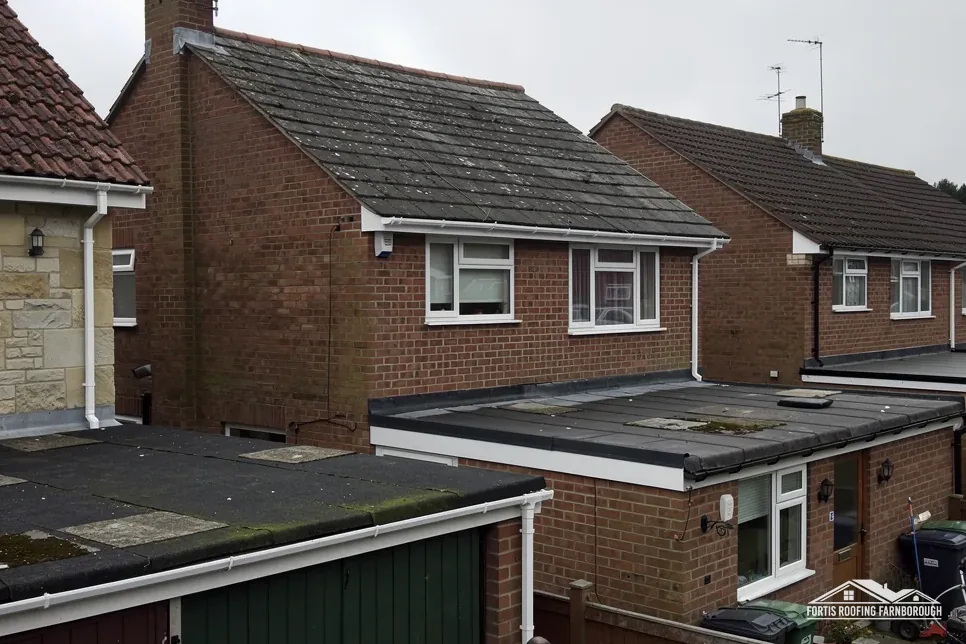
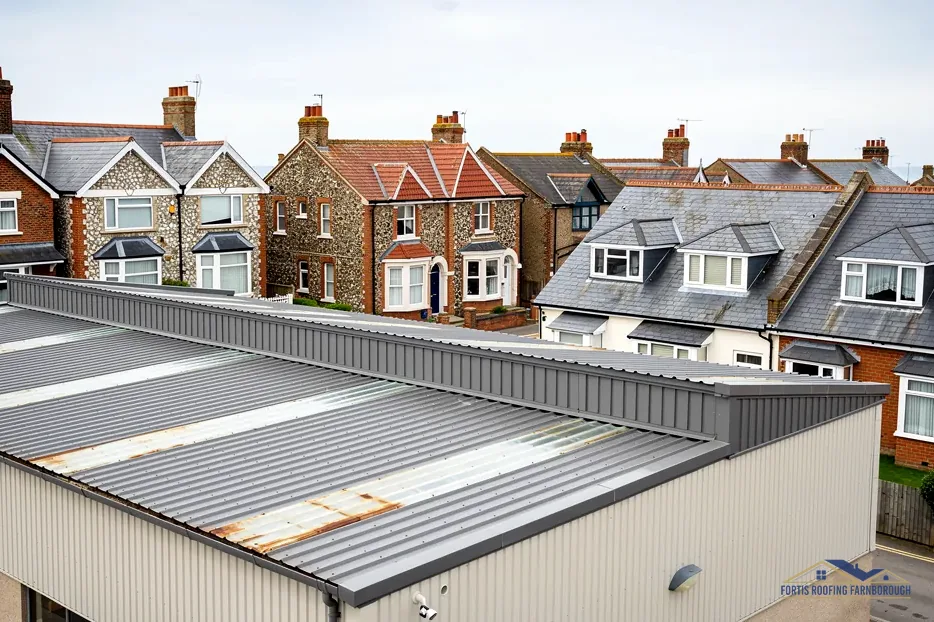
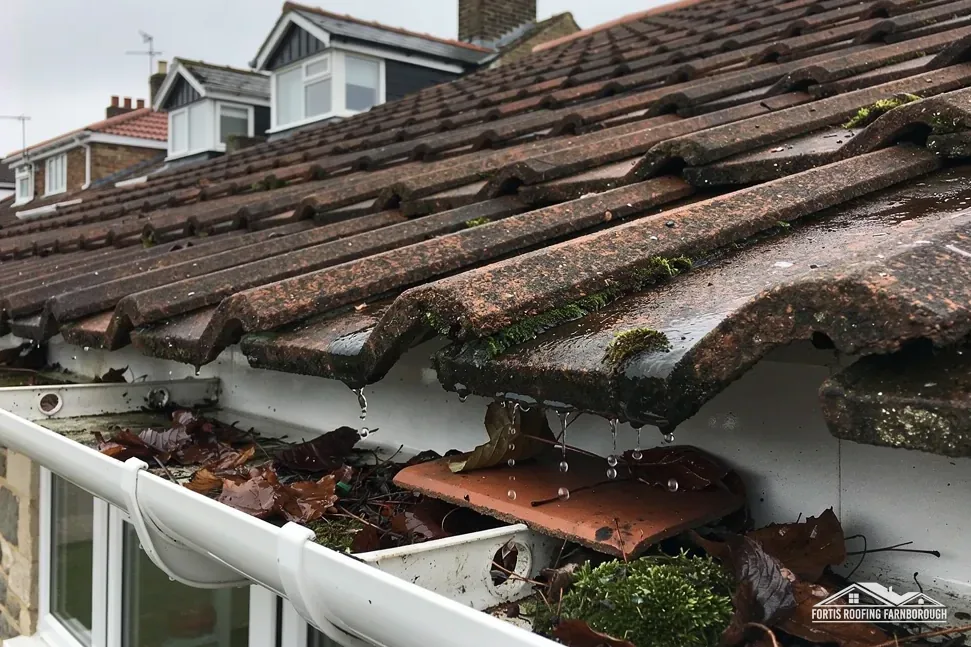
Houses on the old common
After the enclosures the village gained new houses, so roofs here come from the period of growth, not centuries earlier.
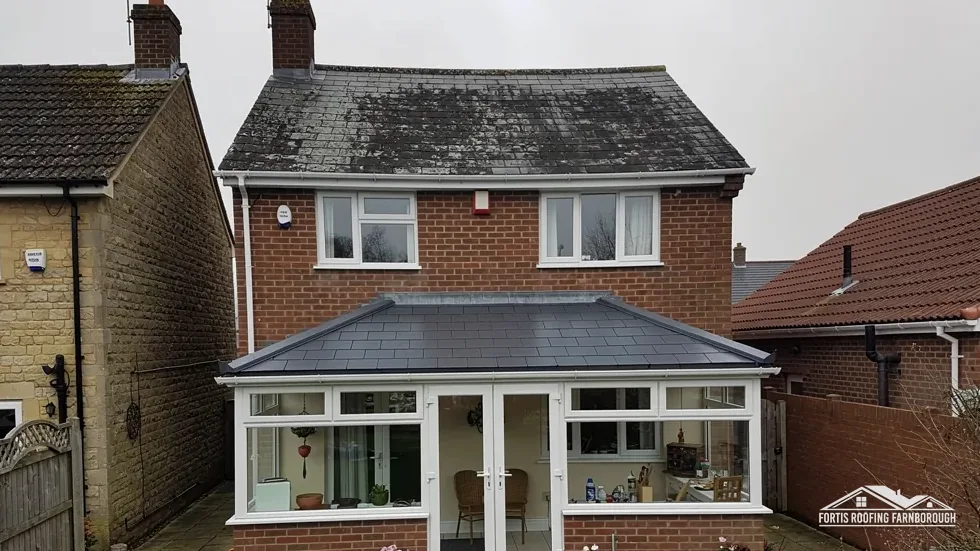
A village built on old heath, with its Broadway shops and chapel
Before the 1830s this was Farnham Heath, a few houses and open land. Later building along the Broadway means roofs of several ages on one street, each surveyed separately.
After the enclosures the village gained new houses, so roofs here come from the period of growth, not centuries earlier.

The parish council records an early cinema, a bank, a post office and new shops along the Broadway.
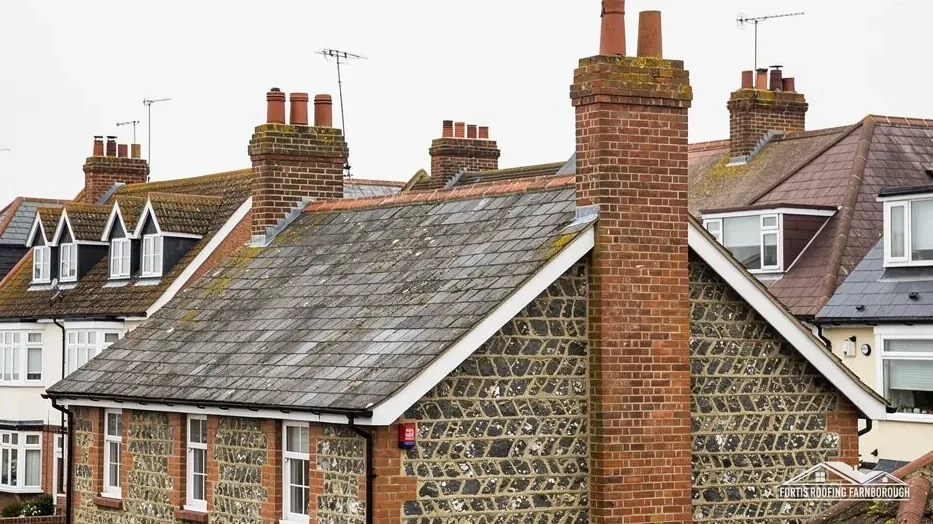
The county history of 1925 describes the church of St John the Evangelist as built of brick with stone dressings.
Map of Farnham Common with Stoke Poges, Farnham Royal, Burnham, Slough marked around it.
Map data © OpenStreetMap contributors. Loads only when you ask for it.
Stoke Poges lies to the south-east, Farnham Royal to the south, Burnham to the south-west, Slough further south, and George Green and Iver Heath to the south-east.
About 22.8 road miles north of Farnborough · Buckinghamshire Council (unitary).
Farnham Common, from heath to Broadway
Which council answers for roof work at Farnham Common, how the parish council and the county history describe the village's growth from heath, and what the nearby conservation areas mean for a repair. Sources are named.

| No. | Chapter | The figure it turns on |
|---|---|---|
| 01 | One unitary council for planning and the road | 25 per cent of the envelope |
| 02 | From Farnham Heath to the Broadway | Relatively new, before the 1830s heath |
| 03 | Nearby conservation areas, and a church to ask about | Farnham Royal and Hedgerley nearby |
Chapter 01 of 03
| Role | Body for Farnham Common addresses |
|---|---|
| Council and planning authority | Buckinghamshire Council (unitary) |
| Building control | Buckinghamshire Council building control |
| Highway authority | Confirmed for your road before scaffold is booked |
| Private building control | Registered building control approver, since 6 April 2024 |
| Distance from Farnborough | 22.8 road miles north, from the A325 |
Farnham Common has no district council in between. Buckinghamshire Council is a single unitary authority, so planning questions and building control both go to the same place. The village is 22.8 road miles north of Farnborough's A325, which is a long enough run that we put the survey, the photographs and the access plan together in one visit, so nobody has to come back for a missed measurement. Because every roof question for the village lands in one place, a conversation with the council is usually short, and our photographs make it shorter.
Two limits from the Planning Portal set the ordinary case. Stay under 25 per cent of the building envelope and under 50 per cent of the roof, and an application to building control is not normally needed for the re-roof. A few replaced tiles or a patched valley fall inside that. A whole new slope falls outside it. So does any covering at least 15 per cent heavier than the old one, which needs approval and a structural check. The survey gives the measurements those tests rest on.
You can take the job to the council's own team, or choose a registered building control approver, a private firm working to rules in place since 6 April 2024. We tell you at the survey which route a particular job needs, and we do not wait for the builders to start before asking.
The A355 runs through the village, and where a shopfront stands close to the pavement the poles may need to go on it. Section 169 of the Highways Act 1980 asks for the highway authority's licence before a scaffold occupies the footway, and the licence takes time, so the start date has to allow for it. We work out the scaffold layout at the survey, settle with the scaffolder who handles the paperwork, and confirm which body licenses the stretch of road in question.
On a quiet cul-de-sac the scaffold may stand wholly on your own drive, which needs no highway licence. On the Broadway it may need boards, lighting and a protected walkway for passers-by, and that planning is finished before any price goes in writing.
Chapter 02 of 03
What the village records say, in four figures
The parish council's own village history is blunt about it: Farnham Common is relatively new. Before the 1830s the place was known as Farnham Royal Common or Farnham Heath, and it consisted of a few houses and heathland. After the enclosures it expanded, with new houses, an early cinema, a bank, a post office and new shops, and the centre of gravity of the parish moved north from Farnham Royal to the community on the old common. The 2021 Census found 6,719 residents across the built-up area.
We cannot say from the records what covers any one house, and we do not guess. What the history does tell us is that building here came in stages, so a single street can hold roofs from several periods, with different coverings, different pitches and different fixings. Each needs reading on its own terms. A survey of one house tells you nothing reliable about its neighbour's roof, even across a shared party wall.
The Broadway adds another category. Shops and parades often have a pitched front, a flat rear roof, a parapet with lead flashings and gutters running behind it. Those parts need checking in a different way from a house roof: outlets cleared, falls measured, upstands and flashings inspected. Our flat roofing page explains how the rear roofs are repaired and renewed, and our commercial roofing page covers shops and small units.
The parish council adds that the Methodist chapel is the only original building still standing on the east side of the Broadway. That is a useful reminder of how much has been rebuilt since the heath days, and of how little of the oldest fabric survives to be matched. For the roofs here, like for like means matching the covering already on the house.
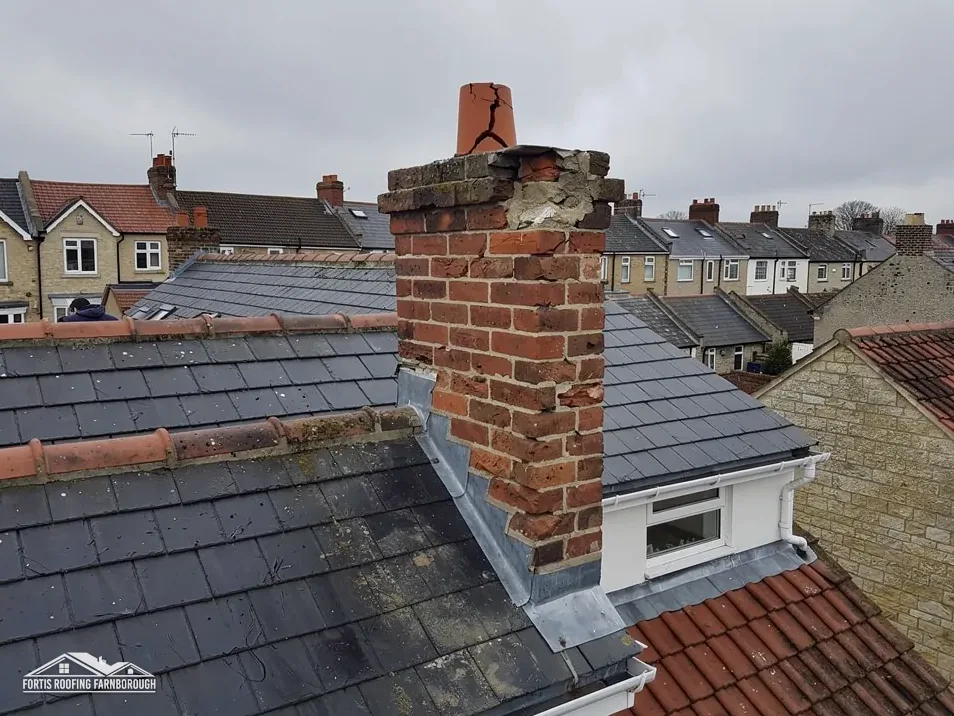
A roof from one period of building often shares its faults with neighbouring houses built at the same time: the same underlay, the same lead code in the valleys, the same fixings. That can be useful once one house has been opened up, because it tells us where to look next door, though it never replaces looking. When we find a pattern of faults on your roof, we tell you which parts are likely to repeat across the slope, so the repair covers them.
Chapter 03 of 03
| Place or building | What the records show | For roof work |
|---|---|---|
| Farnham Royal | Nearest conservation area in the national dataset | Check the boundary for your address |
| Hedgerley Green and Hedgerley Village | Nearby conservation areas, within about 2.5 km | Check the boundary for your address |
| Stoke Park and Stoke Poges West End | Further conservation areas in the area query | Check the boundary for your address |
| Church of St John the Evangelist | Brick with stone dressings, county history 1925 | The denomination decides the consent route |
| Methodist chapel on the Broadway | Only original building on the east side | A working Methodist church follows its own system |
The national planning dataset lists the conservation areas nearest to Farnham Common, within about 2.5 km: Farnham Royal, Hedgerley Green and Hedgerley Village, with Stoke Park and Stoke Poges West End also in its area query. Whether your own house sits inside one of them depends on the boundary, and the boundary is Buckinghamshire Council's to confirm. That confirmation comes before any price for work on a roof's visible parts, and we keep the answer with your survey photographs. We do not guess a boundary from the street.
Outside a designation, the usual rules for ordinary houses apply, and our planning permission guide explains how they work. Inside one, the look of the roof from the road becomes a planning question, so a different covering or an altered chimney goes to the council first. A like-for-like repair, using the same kind of tile in the same pattern, is the lowest-risk course in either case.
The county history of 1925 records the church of St John the Evangelist as built of brick with stone dressings. The route for work on a church roof turns on its denomination and use. An Anglican church in use follows the faculty system, a working Methodist church has its own denominational system, and other buildings need listed building consent if they are listed. We would ask the parish or trustees which applies before pricing, rather than assume, and keep their reply with the survey.
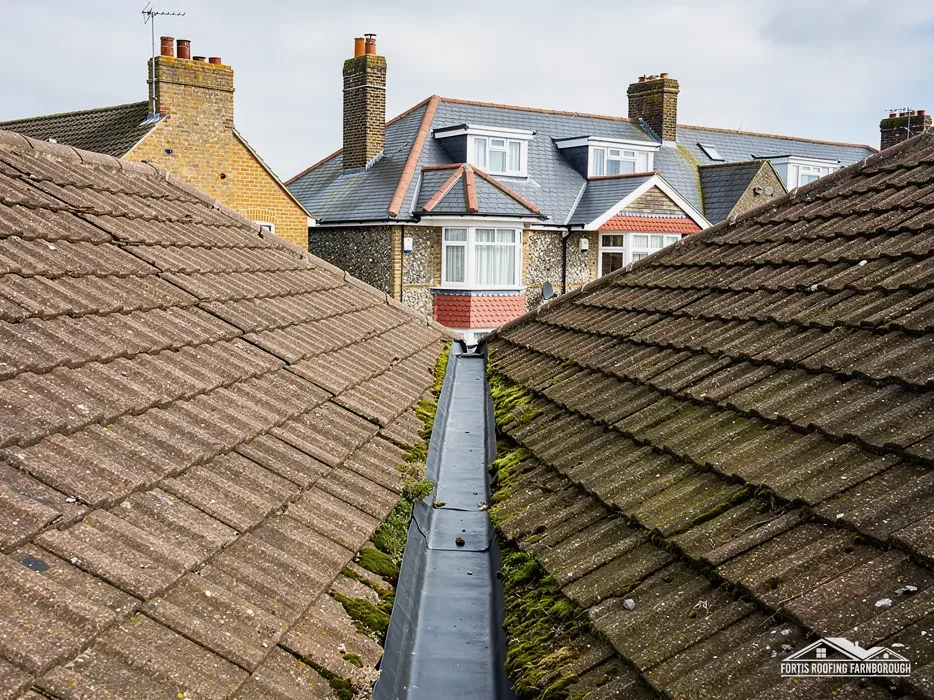
Burnham Beeches sits on the village edge, and wooded surroundings put leaf litter into gutters and valleys. Each Farnham Common survey includes those lines, gutters and valleys alike: leaves left in a valley push water under the tiles, so clearing them early costs little compared with repairing whatever the water reaches, and we show you any build-up in the photographs.
Trees close to a house matter in other ways too. Overhanging branches scour tiles, fill gutters and shade the north slope, where moss takes hold. Our roof cleaning and moss removal page covers what can be done safely, and why tile makers such as Marley do not recommend high-powered jet washing, which can damage the surface of a tile or slate.
Yes. The parish council says Farnham Common grew in stages after the enclosures, so one street can hold roofs of several ages. Coverings, fixings and flashings differ between them. We survey each house on its own evidence, slope by slope, and never assume a neighbour's roof tells us about yours.
The national dataset lists Farnham Royal, Hedgerley Green, Hedgerley Village, Stoke Park and Stoke Poges West End near the village. Buckinghamshire Council confirms boundaries by address. We ask before pricing anything that alters the roof's look, and keep its reply with your survey photographs and the written price for you.
They do. Shops often combine a pitched front with a flat rear roof, a parapet and gutters behind it. We measure the falls, clear and photograph the outlets, and inspect lead flashings and upstands. Our survey report for a parade separates those parts from the pitched slopes so each repair is clear.
The highway authority licenses a scaffold on a footway or carriageway under section 169 of the Highways Act 1980. We confirm which body that is for your road, arrange the licence with the scaffolder, and build the notice period into the start date. A scaffold wholly inside your own boundary stays off the highway.
Get your free roof quote
Tell us your Farnham Common road and the roof symptoms, and we will book your survey.
10-year workmanship guarantee, in writing.