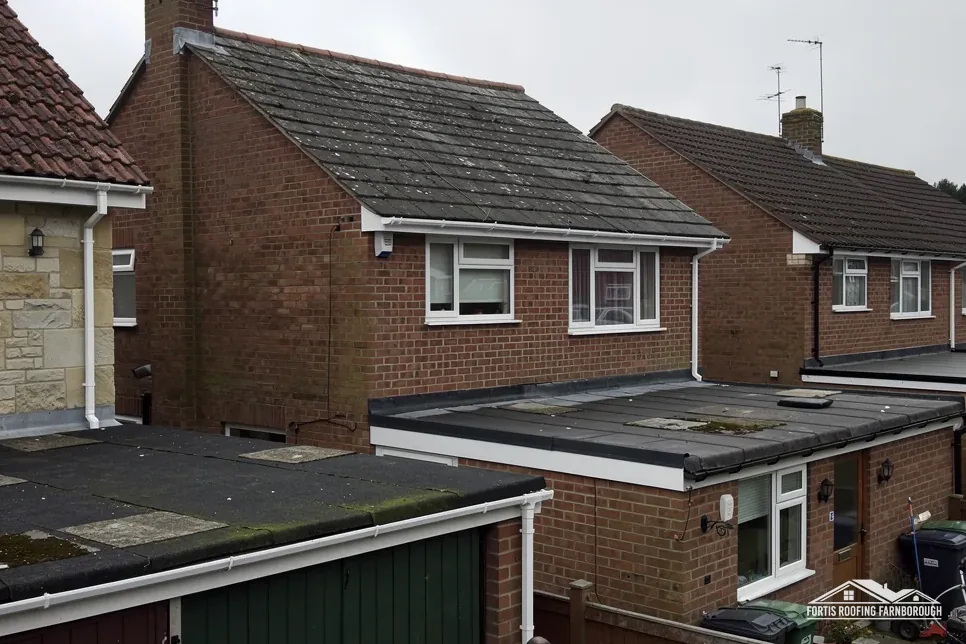
Grade II* church and manor
St Mary's church and Bramshott Manor each hold a Grade II* listing, among 13 listed buildings within 500 m.

Roofs in a Wey valley village beside Liphook
Bramshott is a village on the River Wey just north of Liphook, with a Grade II* church and manor. We survey each roof before saying what it needs.
St Mary's church and Bramshott Manor each hold a Grade II* listing, among 13 listed buildings within 500 m.

Covers Farmhouse and Adams Cottage are both listed Grade II, which brings consent into any plan for their roofs.

A description quoted in 1908 follows a stream down to the Wey past Bramshott flour-mill and paper-mill.
Map of Bramshott with Liphook, Headley, Grayshott, Lindford marked around it.
Map data © OpenStreetMap contributors. Loads only when you ask for it.
Liphook lies south, Headley and Lindford north-west, Bordon further north-west, and Grayshott and Hindhead to the north-east, with Whitehill to the west.
About 25 road miles south of Farnborough · East Hampshire District Council and Hampshire County Council.
Bramshott, roofs and records
How East Hampshire and Hampshire County Council split responsibility for a Bramshott roof, what is on record about the village from wartime camps to its mills, and what the listed church and manor mean for repairs.
| No. | Chapter | The figure it turns on |
|---|---|---|
| 01 | East Hampshire plans, Hampshire licenses scaffold | 10 working days for a Hampshire licence |
| 02 | Canadian troops, mills and a parish of two names | 9,767 residents, Bramshott and Liphook |
| 03 | St Mary's, the Manor and the Wey conservation area | 13 listed buildings within 500 m |
Chapter 01 of 03
A Bramshott roof job in four published figures
For planning, Bramshott answers to East Hampshire District Council, which also runs its own building control team. Hampshire County Council looks after the highway. Those two bodies cover most of what a roof job needs from the public side, and Hampshire is the one with the clearest published rule about scaffold. Hampshire's councils stay as they are for now, because the government withdrew in September 2026 its decision to replace them, so the arrangements below are the current ones.
On Hampshire County Council's own wording, the scaffolding firm applies for the licence on its customer's behalf, so the form is the scaffolder's task and you do not file it yourself. Hampshire County Council charges £211.90 for the first 2 weeks and £72 for each further 2-week period, and wants the application in a full ten clear working days before the licence is due to begin. It does not offer extensions, which means more time needs a fresh application.
Because the notice is fixed and extensions are refused, a Bramshott job that will overrun two weeks is planned with a second period already applied for. We agree the likely duration with you at the survey, so the licence dates are not a surprise. Scaffold on private land, such as a drive or back garden, needs no highway licence at all.
Ask your scaffolder two things before the booking is confirmed: the dates the licence will cover, and what happens if wet weather delays the roof work by a few days. The answers tell you whether the plan has any slack in it.
East Hampshire District Council publishes no percentage of its own for re-roofing, so the Planning Portal's test is what we apply. Where a job touches under 25 per cent of the building envelope and under 50 per cent of the roof, no Building Regulations application is normally needed. Fit a covering that adds 15 per cent or more to the weight and approval is needed after all, with a structural check advised.
Our measurements at the survey show where a Bramshott roof stands against those limits. Where an application is needed it goes to East Hampshire District Council's building control team, or to a registered building control approver of your choosing. We tell you which one before any date is fixed.
Chapter 02 of 03
| Record | What it says |
|---|---|
| Population | 9,767 usual residents in the civil parish of Bramshott and Liphook |
| Wartime | A strong Canadian presence in both world wars, with troops based on Bramshott Common |
| Water | A stream from Wagner's Wells runs to the Wey near Bramshott flour-mill, then past the paper-mill |
| Setting | A village on the River Wey just north of Liphook |
Bramshott shares its civil parish with Liphook, and the 2021 Census counted 9,767 usual residents across the pair. The village itself lies just to the north on the River Wey. The records that mention it are about people and water more than about buildings, and that shapes how we read a Bramshott roof: we take the setting from the record and the roof itself from the survey, never the other way round.
East Hampshire's character appraisal for Liphook records a strong Canadian presence in both world wars, with troops stationed at a base on Bramshott Common. A base of that kind is gone from the skyline today, and nothing we have read says what any house now carries on its roof. We treat the village as a place of mixed ages, which means every roof gets looked at on its own terms. A house whose ridge line has stayed straight for decades may still hide a slipped tile in a back slope that nobody sees from the road, and a ground-level glance cannot tell you which.
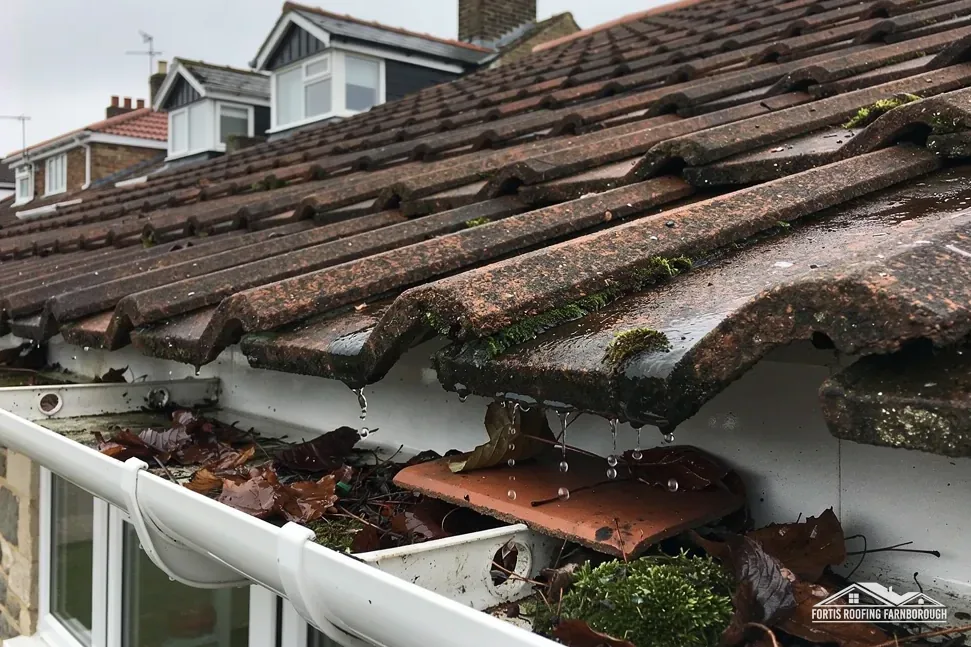
The description quoted in the Victoria County History of Hampshire, dated 1908, follows the Wagner's Wells stream down to the Wey near Bramshott flour-mill and on past the paper-mill. A river valley village is likely to have trees and damp air near its houses, and that makes leaf fall a gutter and valley matter. Leaves lodge where a roof turns a corner, behind chimneys and at the foot of dormer cheeks, and once a valley is choked the water spills to the side and finds its way beneath the tiles. We clear and photograph these points on every survey, and our gutters, soffits and fascias page explains how outlets and falls are checked.
On record
Mossy tiles are the other effect of a damp, shaded setting. Marley advises against high powered jet washing because it can damage slate and tile surfaces, and our roof cleaning and moss removal page describes gentler methods, and we look at the condition of the tile first to decide whether cleaning is worth doing at all.
When you call about a Bramshott house, tell us what is visible from inside and out: a ceiling stain, a gutter overflowing in rain, a tile on the path. Those clues tell us which parts of the roof to open first.
Chapter 03 of 03
Bramshott's heritage in four figures
The River Wey conservation area lies within about 0.75 km of the centre of Bramshott. Being close is not the same as being inside, and East Hampshire District Council holds the boundary. Ask its planning team whether a given house is covered, and whether an Article 4 direction applies to it, before a roof is altered in any way that shows from outside. The answer is quick to get and expensive to ignore, because a covering laid in the wrong material can be a costly thing to take off again.
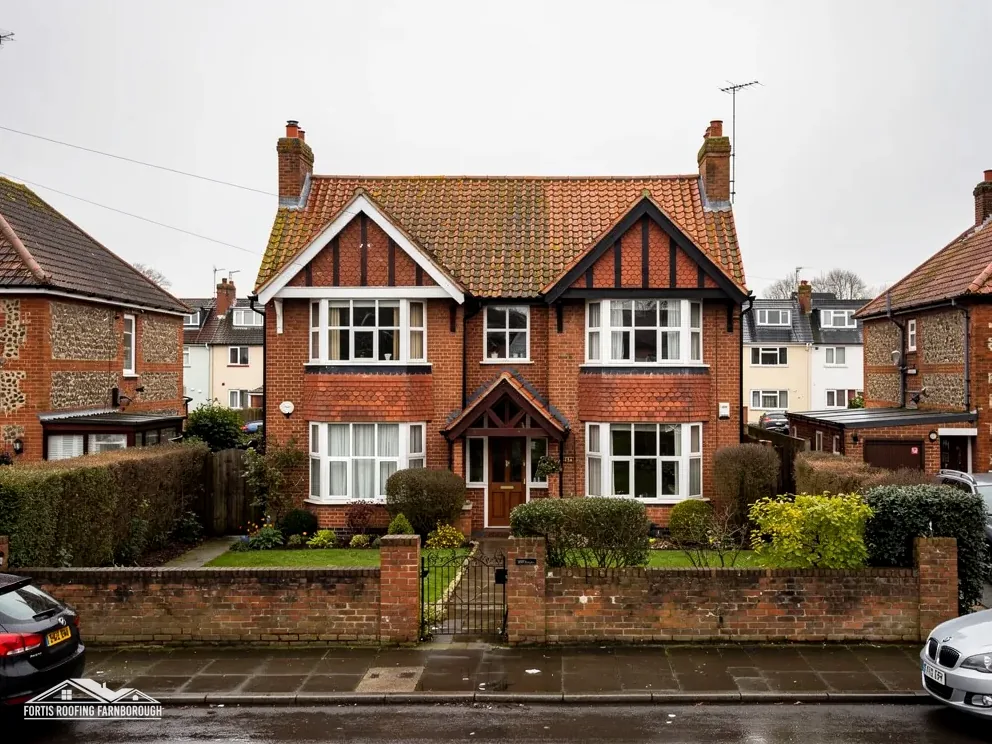
Both St Mary's church and Bramshott Manor hold Grade II* listings, the middle of the three listing grades, and the national list counts 13 listed buildings within 500 m of the centre. Adams Cottage and Covers Farmhouse are listed Grade II. A listed house needs listed building consent for any work touching its character, so we put the question to East Hampshire first and price afterwards.
St Mary the Virgin on Church Road is a Church of England church with a weekly Sunday service, so roof work there goes through the faculty system under the ecclesiastical exemption, not listed building consent from East Hampshire. The parish handles that application, and our survey notes give it the detail it needs. If you are a churchwarden or trustee asking about a roof, say so at the first call and we will survey with that in mind. A church roof has its own pattern of risks, from tall parapet gutters to lead valleys between roof sections, and the survey notes each one before any figure is discussed.
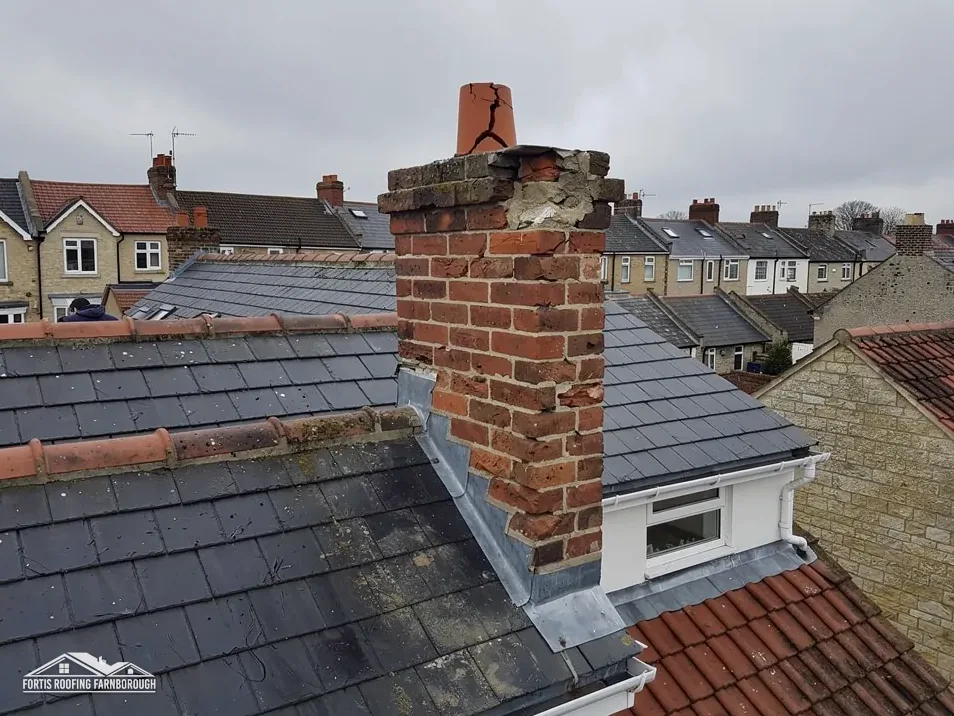
Where the house has no listing, a repair that matches what already covers the roof is the ordinary case, and our survey photographs are the proof of what was there. That record matters most when a house changes hands or a neighbour asks what was done, because it shows the roof before and after. A change of covering material, a different ridge or a new rooflight is a different matter and may need permission, which our planning permission for roof work guide explains. Chimneys are a frequent source of leaks on older houses, and our pitched roofing page describes how stacks, flashings and valleys are put right.
Trees and damp air near a river drop leaves and grow moss, and both collect where the roof turns a corner or meets a gutter. Once a valley is choked, water spills under the tiles beside it. We clear each valley, check the outlets and falls, and photograph what we find before suggesting a repair.
No. East Hampshire's building control pages give no percentage of their own, which leaves the Planning Portal's test: under 25 per cent of the building envelope and under 50 per cent of the roof usually calls for no Building Regulations application, while a covering 15 per cent or more heavier needs approval. The survey measures which side you fall on.
Only if the house is inside the boundary, which East Hampshire's planning team can confirm from its map. The area lies within about 0.75 km of the centre of Bramshott. Matching what the roof already carries is the simple case, whereas a change to its appearance is put to the council first, which lets you know where consent stands before a price is given.
The scaffold, with a second period if the job looks likely to overrun, sits inside the single written price that follows the survey. Hampshire County Council charges £72 for each further 2-week period and does not extend licences, so we plan the duration with you first, and tell you if a job could run into a second period.
Get your free roof quote
Send your Bramshott address with a line on the problem, and we will agree a survey day.
10-year workmanship guarantee, in writing.