The Anchor on The Square
The 1846 tithe map shows the Anchor with an inn, yard and malthouse, features of a coaching inn.
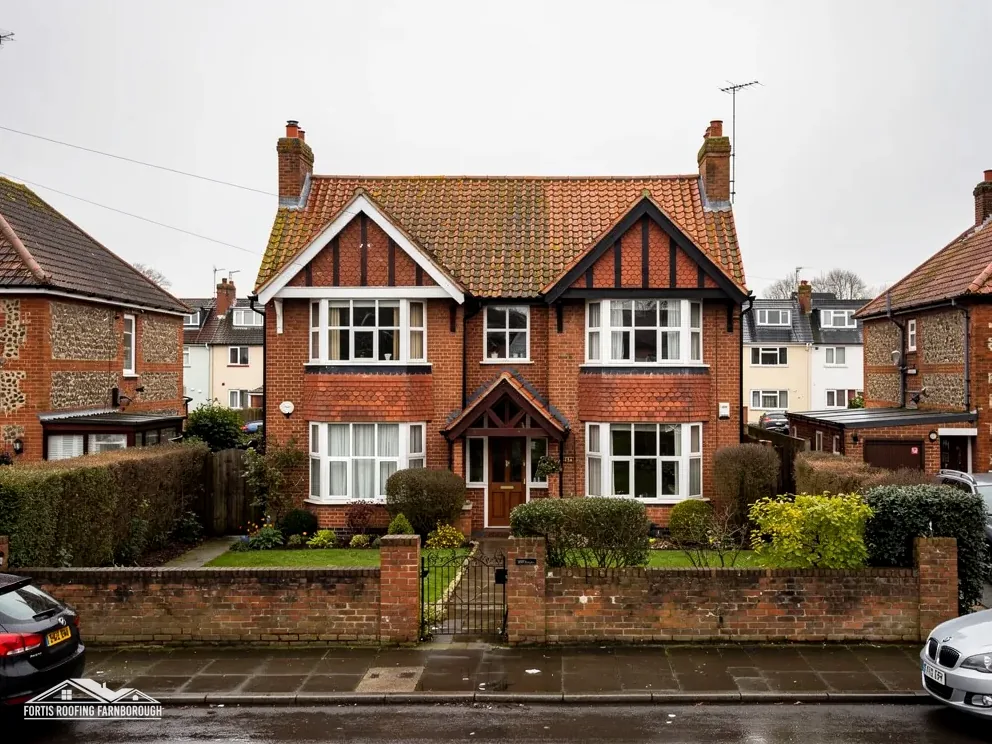
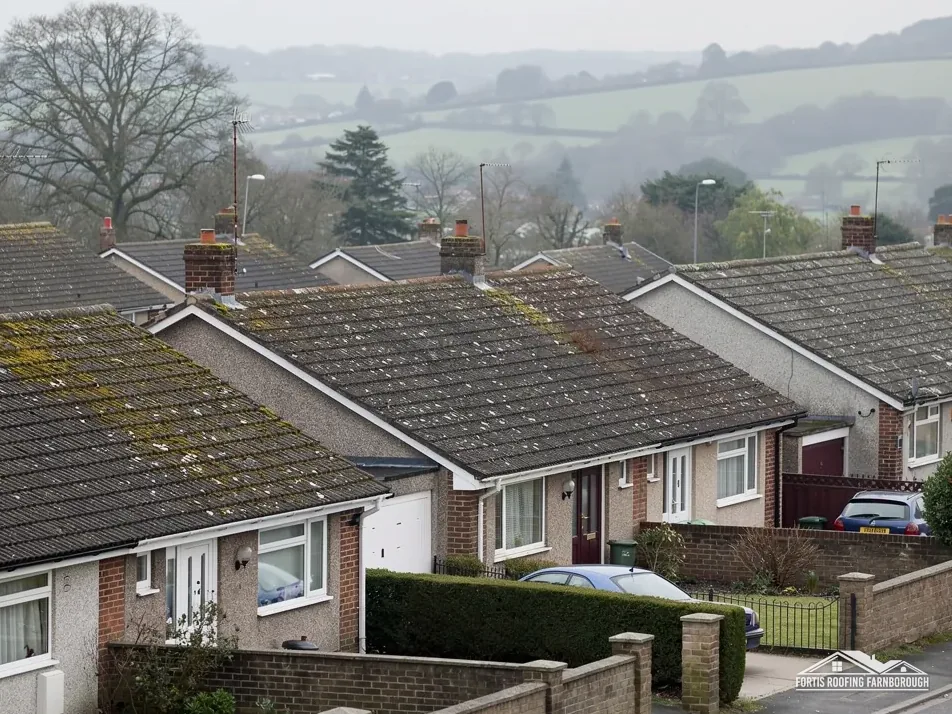
Roofs along the old London to Portsmouth road at the border
Liphook grew along the London to Portsmouth route, with a coaching inn on The Square and a railway from 1859. Our surveys read each slope, house or outbuilding.
The 1846 tithe map shows the Anchor with an inn, yard and malthouse, features of a coaching inn.

The council's appraisal calls the Hythe-formation sandstone around Liphook a distinctive local building material.

After the 1859 railway opened, Liphook grew modestly, with groups of new homes along the existing roads.
Map of Liphook with Bramshott, Milland, Headley, Grayshott marked around it.
Map data © OpenStreetMap contributors. Loads only when you ask for it.
Bramshott lies north of Liphook, Headley and Grayshott further north, Bordon and Whitehill north-west, Milland south and Fernhurst south-east.
About 25.8 road miles south of Farnborough · East Hampshire District Council and Hampshire County Council.
Liphook, road, rail and park
How East Hampshire and Hampshire County Council share a Liphook roof job, what the 2019 appraisal records about the coaching route, railway and sandstone, and what the National Park edge asks.

| No. | Chapter | The figure it turns on |
|---|---|---|
| 01 | A border village under Hampshire's rules | East Hampshire plans, Hampshire licenses scaffold |
| 02 | Coaching inn, railway and local sandstone | Railway opened in 1859, south of the centre |
| 03 | The park edge, the 1977 conservation area and listings | 43% inside the South Downs National Park |
Chapter 01 of 03
| Role | Body for Liphook addresses |
|---|---|
| Planning authority | East Hampshire District Council outside the National Park; the South Downs National Park Authority inside it |
| Building control | East Hampshire District Council's own team, or a registered approver |
| County council and highway authority | Hampshire County Council |
| Scaffold licence | Hampshire County Council; the scaffolding firm applies |
| Civil parish | Bramshott and Liphook, 9,767 usual residents at the 2021 Census |
| Distance from our base | 25.8 road miles south of Farnborough, from the A325 |
The old A3 runs through Liphook at the point where three counties touch, yet the village sits wholly in Hampshire. That settles which rules govern a roof job here: East Hampshire District Council decides planning outside the National Park and keeps a building control team, and Hampshire County Council looks after the highway. Our base in Rushmoor is Hampshire too, so the county's licensing habits are familiar, while East Hampshire's own pages are the ones we read afresh for each Liphook job.
Hampshire County Council's guidance leaves little room for doubt: the scaffolding firm, not the householder, submits the application. Hampshire County Council charges £211.90 for the first 2 weeks of a licence and £72 for each further 2-week period, and wants ten clear working days to elapse from application to start. It offers no extensions, and a private road needs no licence. For a Liphook roof we count the weeks the job will really take and plan any second period with the firm before the first one runs out.
On a re-roof, the first question is whether the work needs a Building Regulations application at all. Nothing on East Hampshire's pages sets a percentage of its own, so the Planning Portal's two figures are the guide: under 25 per cent of the building envelope and under 50 per cent of the roof. A covering that is 15 per cent or more heavier alters the answer. Whether the application goes to East Hampshire's team or to a registered building control approver is your choice.
A coaching village has big roofs and small ones, a long inn range at one end of The Square and a porch roof at the other, and the percentages come out differently for each. We measure the slopes you want worked on and write the figure into the report.
Where a roof stands on a lane with no pavement, the scaffold layout and the delivery route both need thought. The survey measures the lane and notes where a lorry can stand, and the scaffold layout is agreed with the firm before any date is fixed.
Chapter 02 of 03
Liphook in four published points
East Hampshire's 2019 character appraisal for the Liphook conservation area gives the village a clear outline. The London to Portsmouth railway opened in 1859, with a station just south of the village centre, and Liphook then grew modestly, with groups of new homes along the existing roads. Before the railway, the village had grown along the road itself, and the 1846 tithe map shows the Anchor on The Square with an inn, yard and malthouse, all features of a coaching inn on the London to Portsmouth route.
A coaching inn means long ranges and outbuildings: stables, a malthouse, a yard. Roofs of that kind are often big, plain and repeated, and the leaks that matter occur in the valleys between ranges, at abutments against walls, and along the gutters serving a long frontage. The appraisal lists hung clay tiles, red brick dressings and galletting among the village's characteristic materials, so the covering on any one range is confirmed on site. A survey of any large older building begins at the junctions. Our gutters, soffits and fascias page explains how long gutter runs and outlets are checked, and why a small blockage can soak a whole wall.
The bedrock around Liphook is mainly sandstone of the Hythe formation, which the appraisal calls a distinctive local building material. That is a statement about walls and stone, not about roof coverings, so a Liphook roof is read for what it carries. The groups of homes that followed the railway stand beside older buildings along the same roads, and one road can show several periods at once. Our pitched roofing page sets out the repair of slipped tiles, hips and valleys once the covering is known.
When you contact us, say whether the building is a house, an outbuilding, a former inn range or something else. A barn-like roof and a house roof need different access, different checks and sometimes different equipment, and knowing in advance saves a return visit.

The railway's date, 1859, is a useful anchor, since it separates the roads of the coaching age from the streets that followed. A house built on one side of that line may have had its roof re-covered since, so the date of the house is only a starting point for the survey, never its conclusion.
Chapter 03 of 03
| Designation | In Liphook | For roof work |
|---|---|---|
| South Downs National Park | Partly: 43% of the 1.5 km area | Dormers need planning permission inside the park |
| Conservation area | Liphook, designated April 1977, extended October 1992 | Ask East Hampshire before changing a roof's look |
| Grade II listed | 6 Portsmouth Road (NHLE 1094489) | Listed building consent where character is affected |
| Grade II listed | Little Boarhunt (NHLE 1236887) | Listed building consent where character is affected |
| Grade II listed | Milestone on the B2070 London Road (NHLE 1418475) | Listed building consent for works affecting it |
About 43 per cent of the 1.5 km area around Liphook lies inside the South Downs National Park, so the village sits on its edge, with some addresses in and others out. A National Park is land where the planning order removes the permitted development right for dormers. Inside the park the South Downs National Park Authority is the planning authority; outside it, East Hampshire District Council decides. Which side of the line a house sits on is worth confirming at the first call. Our planning permission for roof work guide sets out the national rules.
East Hampshire's appraisal records that the Liphook conservation area was designated in April 1977 and extended in October 1992, and that it covers the medieval village centre that grew up along the London to Portsmouth route. It lies within about 0.75 km of the centre. An address near its edge deserves a check on the council's map, together with a question about whether an Article 4 direction applies, since a direction can bring small alterations to a frontage roof or a chimney under planning control.
6 Portsmouth Road, Little Boarhunt and a milestone beside the B2070 London Road carry Grade II listings, with 5 listed buildings on the national list within 500 m of the centre. Where a listed building's character is at stake, listed building consent from the planning authority is needed, so we ask first and price second.
On an unlisted house, section 55 of the Town and Country Planning Act 1990 treats as no development any work that keeps a building looking materially as it did from outside. A repair that reproduces the existing roof is the plain case, and our survey pictures are the record of what was there. A different covering, a raised ridge or a bigger opening is a question for the council beforehand, and in a village at the edge of a National Park the council may look closely.
Chimneys are often the most visible feature of an older house, and in a conservation area they are noticed. Our chimney repairs page explains repointing, flashing and rebuilding, and we record each stack's height and pots before touching it.
On a long range the usual suspects are the valleys where ranges meet, the abutments against walls, and the gutter along the frontage. We walk the roof and the gutter, clear outlets, and photograph each joint. A leak inside is often some distance from the fault, so the survey follows the water back.
Part of the area round the village is: about 43 per cent of the 1.5 km area. The boundary map and the planning authority for your address settle it. In the park, a dormer is a planning application, and any alteration to the roof's appearance is put to the National Park Authority first.
The area, designated in April 1977 and extended in October 1992, lies within about 0.75 km of the village centre and covers the medieval centre along the old coaching route. East Hampshire District Council's planning team can confirm whether your address is inside it, and whether any Article 4 direction applies, before work begins.
The first licence period is 2 weeks, with a further charge for each additional 2-week period, and Hampshire County Council does not extend licences. Hampshire County Council looks to the scaffolders to file the application for you, and ten clear working days need to pass first. The length of the job is planned so that any second period is requested in good time.
Get your free roof quote
Tell us your Liphook address and what you can see on the roof, and we will pick a survey day with you.
10-year workmanship guarantee, in writing.