The short answer
Usually not. Foam comes off from inside the loft, so nobody needs to go on the roof. Scaffold enters the picture only when roof repairs follow, such as refixing slipped tiles or renewing a covering. Scaffold overhanging a road or pavement is covered by Highways Act 1980 s169 and needs the highway authority's licence.
Why the work is usually internal
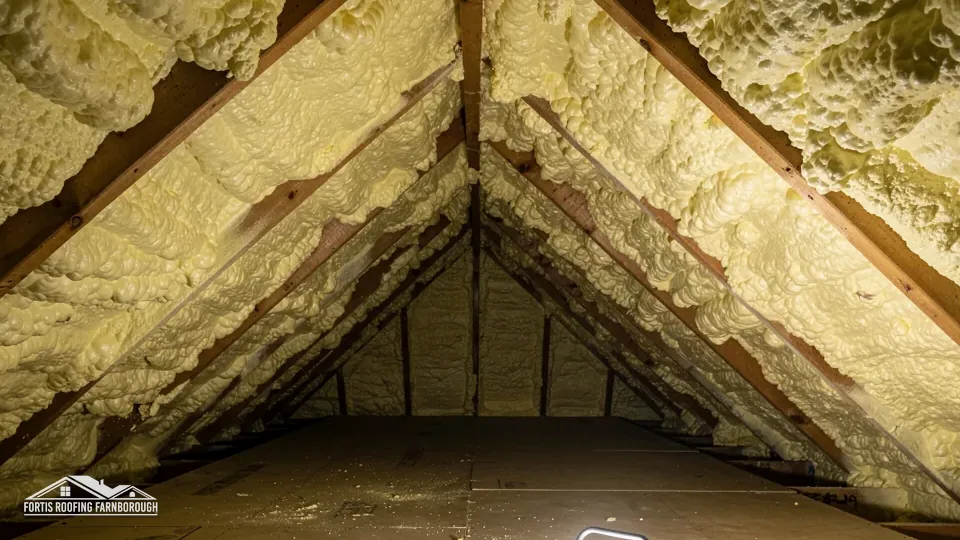
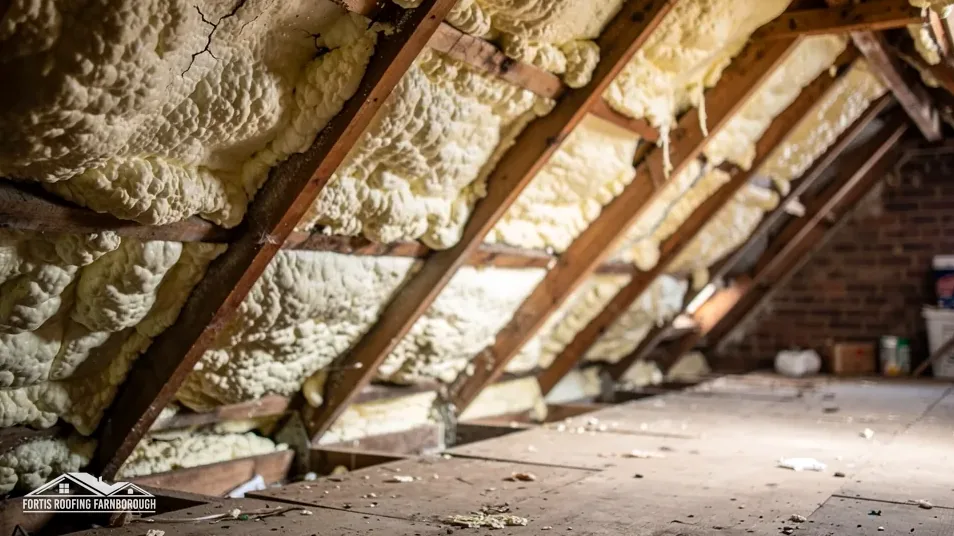
The foam sits on the underside of the roof, across rafter faces and sometimes the loft walls. To take it off, workers go into the loft and cut and scrape it from the timbers and the covering above. The roof itself stays closed, with its tiles or slates left alone.
That is a major advantage. Working from inside means no scaffold, no licence, no exposure of the house to rain and no neighbours' views to worry about. The access is the loft hatch, and the job is planned around that route.
It also keeps the cost and the programme simpler. Erecting and dismantling scaffold takes time and money, and when none is needed the removal can be priced and scheduled on its own terms.
The requirement for scaffold depends on what the survey finds. If the foam can be cleared and the timbers are sound, the roof may need nothing more. If the underlay is torn, slates have slipped, or a leak under the foam has to be traced and mended, the job moves outside. Our answer on how long spray foam removal takes covers how follow-on work affects the programme.
When scaffold does come into it
Scaffold is needed when roof work follows. Typical cases are slipped tiles or slates found once the foam is off, flashings or valleys that leaked beneath it, a failed underlay or battens needing renewal from outside, and a slope damaged by trapped damp that must be re-roofed. A re-roof is the largest example, and our answer on re-roofing after spray foam removal covers it.
Height and access decide whether a ladder will do. A single tile on a low roof may be reached with a roof ladder. A larger repair, or work on a high or steep slope or over a pavement, needs a scaffold with a working platform and edge protection, because a ladder alone is not a safe base for stripping and re-covering.
We decide this at the survey, not in the middle of the job. The loft inspection and a look at the covering from outside tell us whether roof work is likely, and the scope states it. If it turns out later that scaffold is needed, we tell you before it goes up, with the reason and the cost change.
Where roof work is not needed, you are not charged for scaffold, and the removal proceeds from inside.
The highway licence
Private land needs no scaffold licence, whereas a structure over a public road or pavement does. The law behind it is section 169 of the Highways Act 1980, and the body that licenses it is the highway authority.
Hampshire County Council licenses scaffold in Rushmoor and Hart. Under Hampshire County Council's scheme the applicant is the scaffolding contractor, acting for the householder, and a minimum of ten clear working days must separate lodging the application from putting the scaffold up. Hampshire County Council charges £211.90 for the first 2 weeks and £72 for each 2 weeks after, and grants no extensions. Other highway authorities have their own arrangements, and their pages differ on who applies, so ask the scaffolder who is lodging it. Surrey County Council, until 31 March 2027, publishes £208 per 28-day period, and Wokingham Borough Council £263 for the first 4 weeks, so the cost depends on where the house is.
For work near the airfield, the safeguarding team at Farnborough Airport looks after cranes and tall plant, and it publishes no distance, height or fee.
How we plan it with you
The survey looks at the foam and the covering, and the answer on whether scaffold is likely comes straight afterward, with the reasons. If the work is internal, the written scope says so, and there is no scaffold line to worry about. If roof work is probable, the scope names it, the scaffold that goes with it and who deals with any highway licence.
Timing matters when a licence is involved. A ten-working-day notice period, as Hampshire asks for, adds to the programme, so the roof work may be a second stage after the removal. That also gives you the timber findings before you commit to repairs.
The foam removal can proceed first, with the loft inspected and photographed. You then see what the timbers look like, decide on repairs with the evidence in hand, and we arrange scaffold only if needed.
Protection of the house and neighbours is the same in either case, and a neighbour whose garden the scaffold crosses should hear about it beforehand: access routes covered, the site kept tidy, and waste taken away. Our answer on whether spray foam removal is messy explains the containment.
See spray foam insulation removal for the service, which ends in a written total after the survey.