The short answer
It can be, which is why the plan starts with containment. The foam is cut and scraped in the loft, so the loft is closed off from the house, floors and routes are covered, dust is vacuumed up during the work, and the waste is bagged and carried out. Staying at home is usually possible, though noise and some dust are likely.
Containment in the loft
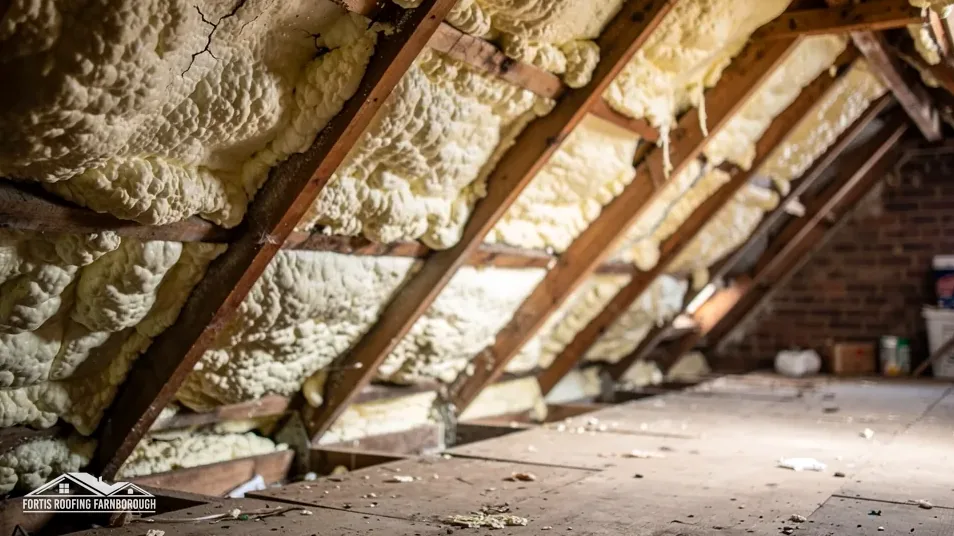
Foam removal generates fine dust and crumbs of foam, and they travel. The first step is therefore to close off the roof space. The loft hatch is sealed with sheeting and tape so air does not draw dust into the house, and any gaps around pipes and cables that pass into the rooms below are covered.
Inside the loft, the floor is protected with sheeting where boards or insulation lie. Workers wear protective clothing and breathing equipment, because the dust is unpleasant to breathe, and they work in sections so the cleared area stays small. Hand tools and scrapers do the cutting, and filtered vacuums take up dust as it falls instead of letting it settle.
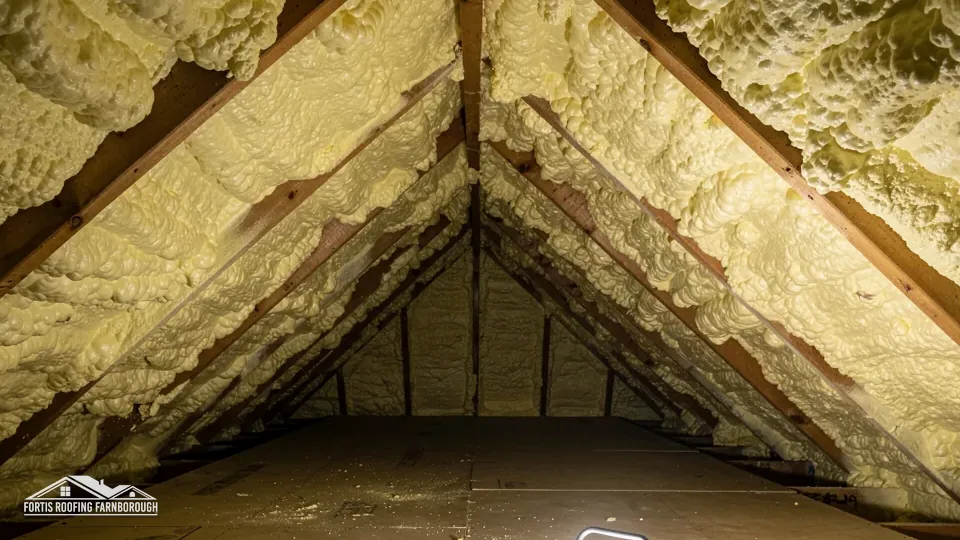
The foam comes off in lumps, strips and crumbs. Larger pieces are lifted by hand and placed in strong bags. Fine debris is vacuumed from the timbers, the underside of the covering and the loft floor, and the surfaces are left clean for inspection.
The aim is to leave the loft clearer than it was found, with the timbers visible and the floor free of crumbs. It cannot be made spotless, because the roof space is not a clean room, but a methodical clear-up leaves it in good order.
Waste and how it leaves
Foam waste is bulky but light, and a small loft can generate a surprising number of bags. It has to travel from the loft to a skip or vehicle, by way of the stair or an opening to the outside. That route is protected: floors covered, stair rails wrapped, door frames padded, and furniture on the route moved or covered.
Bags are closed before they are carried, so loose foam does not shed along the way. Carrying them down a stair with a stooped back is slow, which is one reason a long, narrow route adds time.
The waste is taken away as the job runs, not left to build up. If anything else turns up in the loft, such as a suspect board or sheet, the route changes. Our answer on what happens to the old roof explains how waste is handled, including the special rules for asbestos.
Ask the firm you hire who is taking the waste, where it is going and whether they will give you the details. You can be asked where waste from your property went, so it helps to know.
Living at home during the work
Staying in the house is usually possible, since the loft is shut away from the rooms below. That does not make the work invisible. There will be noise from scraping and bag handling above your head, some vibration, people moving through the house and a vehicle outside.
It helps to prepare. Clear the landing and any rooms under the loft, move valuables, lift rugs on the route, and cover furniture that cannot be moved. Pets and young children should be kept away from the access area, since the equipment and the dust are not suited to them.
If anyone in the house has breathing difficulties or sensitivity to dust, say so at the survey. The plan can then include more protection, and in some cases it is sensible to stay elsewhere for the days of heaviest work.
The access route needs to be usable. A hatch that is hard to reach, shelves in the way or a loft full of belongings all slow the job. Clearing the loft before the start saves time, and we explain what needs moving.
Our answer on how long spray foam removal takes covers what affects the programme.
What to expect when the foam is off
When the foam is cleared, the loft is vacuumed and the timbers are visible. At this stage we photograph the roof timbers and the covering above them, record any damp or damage and tell you what we see. If repairs are needed, we explain them and agree them before going on.
Some residual dust will remain on and around the opening, and a final wipe-down of the route and the landing removes what has travelled. Protection is lifted last, with the hatch unsealed and the floor sheeting rolled up with the debris inside it.
If new insulation goes in, that creates a little more dust, though mineral wool and similar products are generally easier to handle than foam. Our guide to insulation after spray foam removal covers the replacement.
A removal report may be needed, for a lender or a buyer. It records the work with photographs and notes. See the spray foam removal report for what it contains.
We aim to leave the house tidy and tell you at the survey what that involves. See spray foam insulation removal for the full service, which ends with one written price.