The short answer
It depends on the job, and any figure given before a survey is a guess. The main factors are the roof area covered, the foam type, the thickness applied, the ease of working in the loft and whether timber or covering repairs follow. The written plan after the survey states the expected visits.
Loft size and foam type
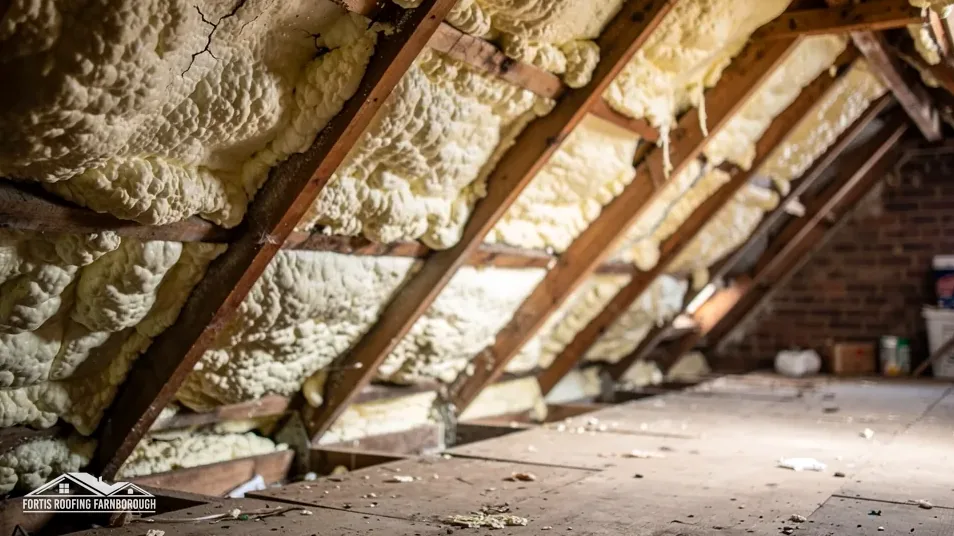
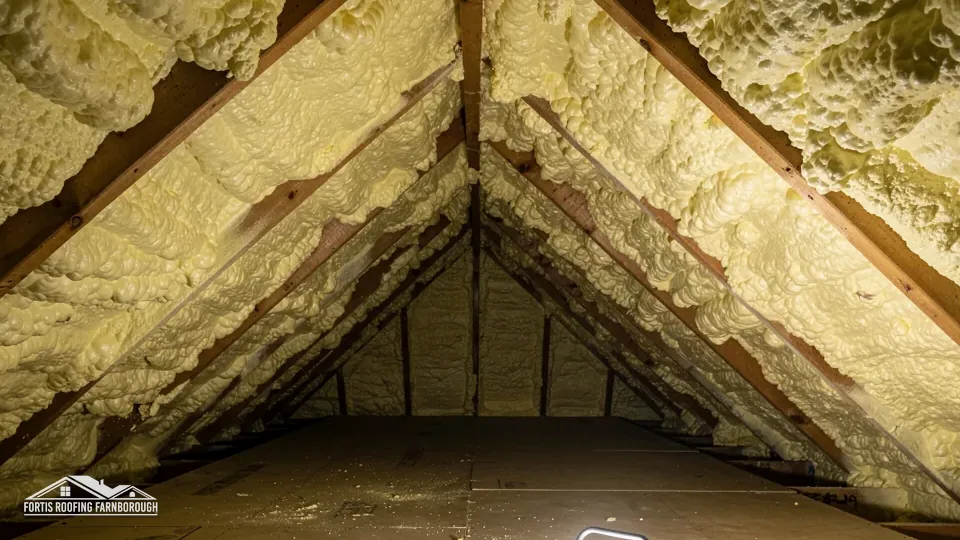
The most obvious factor is how much foam there is. A small roof space with a thin coat is quicker to clear than a large one with foam packed between every rafter. The area of roof covered, in square metres, and the depth of the foam both feed into the time.
The type of foam changes the pace as well. Open-cell foam is soft and tends to lift away in sections, which speeds the work. Closed-cell foam is firmer and bonds harder to timber and covering, so each metre takes longer to free without scoring the wood. Our guide to open and closed cell spray foam explains the difference.
How the foam was applied counts too. A thin coat beneath the covering is a lighter task than foam sprayed over rafters, battens and wall plates and into corners, and deeper burial in the structure calls for more care per section.
The work is done by hand, in sections, with the dust collected as it goes. Rushing risks damaging timber, which is where speed turns into cost, so a programme is given only after the loft has been seen.
Access and working conditions
Room to stand, kneel and move makes a large difference. Good headroom, a wide hatch and a boarded floor let workers keep equipment close and carry waste out easily, while a cramped roof space, a small hatch or a loft split by walls slows everything, because each bag passes through a narrow gap.
Lofts that have been converted bring their own constraints. Plasterboard, fixed floors and stud walls may have to be opened to reach the foam, and these are put right afterward. Our answer on spray foam and loft conversions deals with that case.
The route from loft to skip matters as well. Foam waste is bulky and light, and it is bagged and carried down through the house or out through a window or hatch. A house with a long, narrow stair or no ground-floor access to the loft hatch slows the clear-up, and protecting floors and walls on the way takes time.
Weather rarely stops internal work. If part of the job touches the roof from outside, such as refixing slipped tiles, weather and scaffold come into it.
Repairs after the foam is off
Removal is not always the end of the job. Once the foam is gone, the timbers can be seen, and what they show decides what follows. Sound timber needs nothing. Damp or stained timber may need drying, treatment or repair, and that can add days.
Typical follow-on work includes cutting out and splicing rotten rafter ends, replacing battens, refixing or replacing slipped tiles or slates, renewing torn underlay and restoring ventilation at the eaves and ridge. Each item adds to the programme, and some need materials ordered after the timbers are seen.
Then comes new insulation. The roof is re-insulated with a material suited to it, mineral wool being a common choice, and it has to allow for the ventilation the roof needs. Our guide to insulation after spray foam removal sets out the options.
If the foam has been removed because of a mortgage or sale, a removal report and photographs may be needed, which takes a little more time at the end. These add to the programme, but they make the job easier to rely on later.
We cannot know the repair work until the timbers are seen, so the plan allows for it and says how any extra is agreed with you before it is done.
What the written plan tells you
After the survey you receive a written scope with a programme. It states the area to be cleared, the method, the protection for the house, the waste route, the expected number of visits and what happens if the timbers show repairs are needed. It also says when you will need to clear the loft or the rooms below.
Living at home during the work is usually possible, as the loft is sealed from the rooms, though noise and dust reach the house and the stair route must stay clear.
Plan for the unexpected. If the foam is thicker than it looked, if rot turns up or if the covering needs work, the programme can lengthen. We tell you promptly, with photographs, and agree changes before carrying on.
If dates matter, such as a house sale or a mortgage deadline, say so at the first call. The programme can then be built around it, and you will hear plainly if the date is tight. A deadline set by a lender or a buyer's solicitor is worth confirming in writing, so everyone is working to one date.
Pricing arrives as a written total after the survey. See spray foam insulation removal for the full service.