The short answer
Tiles, battens and underlay are stripped in stages and carried off site in a skip or a loaded vehicle, while sound tiles and slates are stacked for reuse. Asbestos is different. It counts as hazardous waste, so it is sealed in wrapping, tagged, and sent with a consignment note, and householders are not exempt for it.
Skips, loads and how the roof leaves site
A strip is heavy work. The tiles, the old battens, the torn underlay, the nails and sometimes broken lead flashing all come off in a short time. A pitched roof on an ordinary house produces a large pile, and it cannot sit on the drive or in the garden for the length of the job.
The usual routes are a skip, or a vehicle loaded on site and driven away. A skip needs space, and on a street with no drive the position of a skip is a real puzzle, so the plan for waste belongs in the written scope. Ask any roofer who is arranging it, where it will stand, and where the waste goes.
Debris is carried off during the job, not left until the end. Tiles are lowered by chute or passed down by hand, never thrown, and the area around the house is swept for nails each evening. Neighbours' gardens, parked cars and the pavement are covered or protected while the roof is open.
The roofer is responsible for how the waste leaves your property, because the householder can be questioned about it too. Keep a note of who collected it, and ask for it in writing if you want it.
Asbestos waste is a separate category
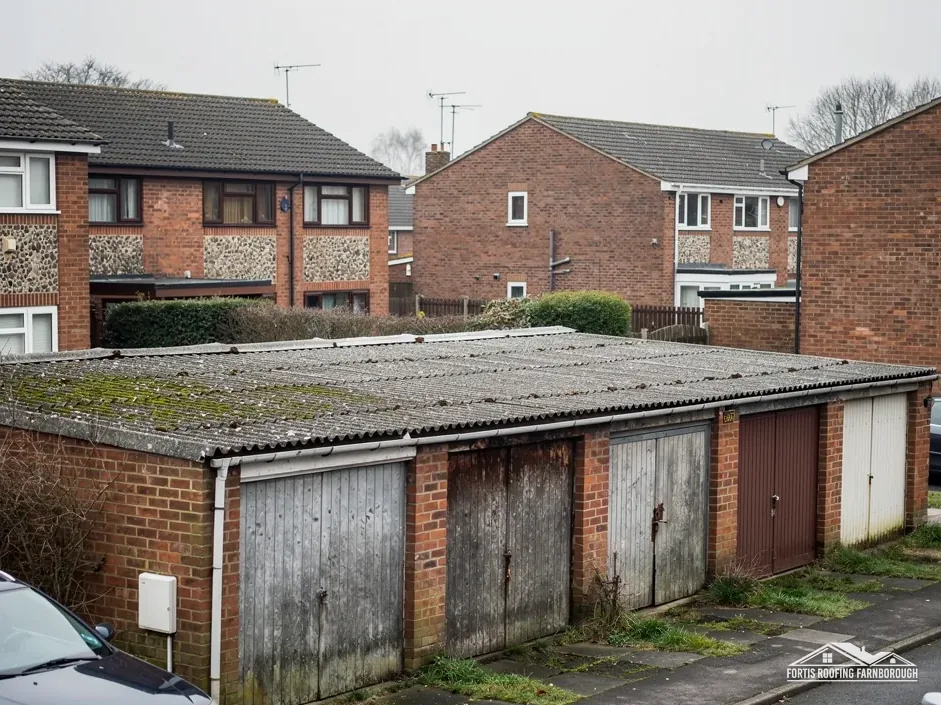
Roofs built before 2000 may contain asbestos. HSE says to assume there is asbestos in a building that was built or refurbished before 2000. Two forms turn up around roofs: asbestos cement sheeting, once common on garages and outbuildings, and insulating board, which can sit behind external soffits.
Asbestos waste does not go in an ordinary skip. HSE's EM9 guidance asks for two layers of wrapping and a label, and a hazardous waste consignment note travels with the load. GOV.UK says carriers of hazardous waste need upper-tier registration. Asbestos sits outside the household exemption, and a homeowner should ask the council which recycling centre, if any, takes it.
The HSE rules on the work itself depend on the product. Asbestos cement that is carefully removed is non-licensed, while breaking it up substantially makes it notifiable. Insulating board is stricter, because board work of more than short duration is licensable. If the survey suggests asbestos, the job pauses until a sample result is back and the removal route is settled with the right people, and the programme is reset around it. Our page on the asbestos check before a re-roof explains the survey step.
Reusing sound tiles and slates
Not everything that comes off is waste. A sound clay tile, a good natural slate or a concrete tile in a profile that is still made can be sorted and laid again. Every tile that goes back is one fewer to remove, buy and bring in, and it keeps the roof looking as it did.
The sorting happens as the covering comes off. Tiles that ring cleanly and show no cracks or flaking are stacked on pallets or in a protected area. Broken, delaminating or soft ones go with the rest to the skip. HomeBuilding (Sep 2025) puts reclaimed Welsh slate at "50-80 years" typically, so a decent second life is plausible, though that range is no promise.
The same sorting applies to metal. Lead flashings in good condition can sometimes be reworked, but lead that has split or thinned goes out as scrap, and your quote should say which route it takes.
Our page on reusing old roof tiles describes the sort in more detail. Whatever cannot be reused is carted off with the other debris, and its removal sits inside the single written total instead of arriving as a surprise later.
What to ask before the strip starts
Waste is easy to forget until the day a skip arrives in the wrong place. A few questions settle it at the start, and each answer belongs in the paperwork you receive afterwards.
- Who arranges the skip or the collection, and where will it stand?
- Does the skip or scaffold stand on a public road, and who deals with the highway authority?
- How will tiles and debris reach the ground without damage to your property?
- What happens to any reusable tiles, slates and lead?
- If the survey finds asbestos, who handles it and on what paperwork?
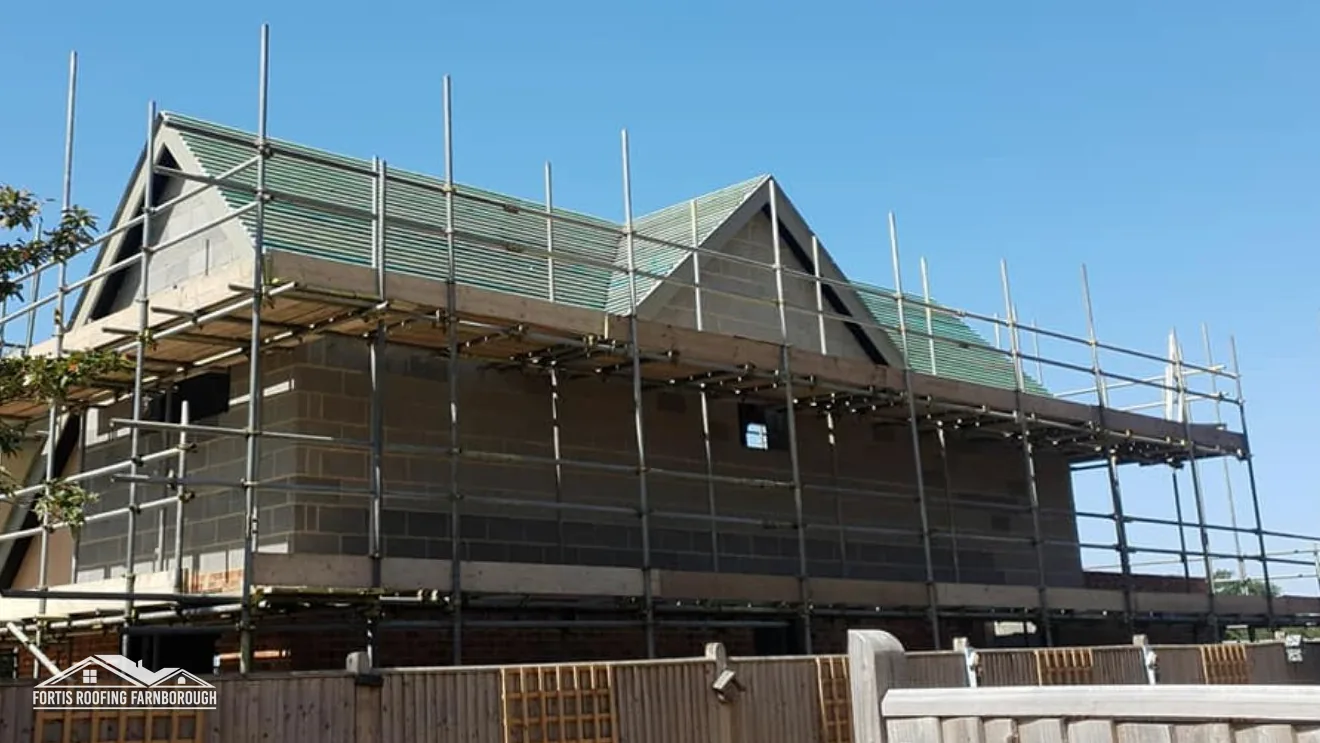
The scaffold is the part with a rule behind it, because Highways Act 1980 s169 covers scaffolding that blocks a road or pavement. Hampshire County Council runs the scheme for Rushmoor and Hart, and its own page leaves the application to the scaffold firm rather than to you. Elsewhere, ask who applies.
At the survey we walk through where the skip goes, how the garden is protected and how the site is left tidy each evening. Our roof replacement page covers the whole job, and the page on how long a roof replacement takes shows when waste leaves in the schedule.