A medieval square plan
In 1908 the county history called Petersfield a typical medieval borough, a central square with the main streets radiating.
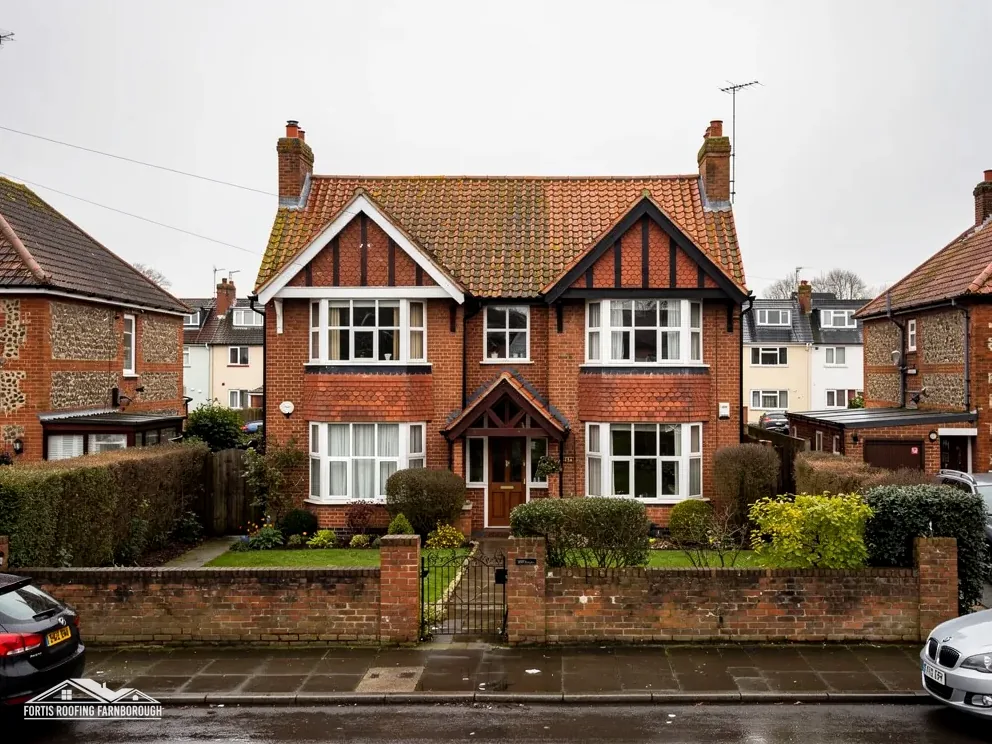
Roofs around a medieval square below the South Downs
Petersfield kept the plan of a medieval borough, a central square with streets radiating, and counts about 105 listed entries. Our surveys start with the roof itself.
In 1908 the county history called Petersfield a typical medieval borough, a central square with the main streets radiating.

Before the railway, Petersfield was a great posting centre, as the number of inns in 18th-century rent-rolls shows.

The Corn Exchange, on the corner of the square and High Street, is a white brick building of 1866.
Map of Petersfield with Sheet, Liss, Greatham, Milland marked around it.
Map data © OpenStreetMap contributors. Loads only when you ask for it.
Petersfield is a market town below the South Downs on the old London to Portsmouth road, with Farnborough 28.3 road miles to the north.
About 28.3 road miles south of Farnborough · East Hampshire District Council and Hampshire County Council.
Petersfield, grants and the Square
Which grants exist for roof work and which do not, how a medieval square, coaching inns and a Corn Exchange shaped Petersfield, and what its National Park setting and listed buildings ask of a repair.

| No. | Chapter | The figure it turns on |
|---|---|---|
| 01 | Grant help for roof work: what exists | No national grant for a new roof |
| 02 | A square, coaching inns and a Corn Exchange | About 105 listed entries, most Grade II |
| 03 | Grade I landmarks, two conservation areas and the Park | Park covers all of the 1.5 km area |
Chapter 01 of 03
| Scheme | What the published pages say |
|---|---|
| Money towards a whole new roof | No national grant exists |
| ECO4 (energy company obligation) | Runs until 31 December 2026 |
| Great British Insulation Scheme | Ended: installations had to be complete by 31 March 2026 |
| Warm Homes: Local Grant | Insulation; household income must usually be at or below the stated limit |
| Disabled Facilities Grant | Adaptations to a disabled person's home |
People often ask whether a roof can be paid for by a grant. The plain answer is no: nothing at national level pays for a new roof. What exists is a short list of schemes aimed at insulation, energy efficiency and adaptations, and each has conditions of its own. We would sooner explain them now than leave you to find out after a survey.
Ofgem says ECO4, the Energy Company Obligation, runs until 31 December 2026. The Great British Insulation Scheme is over: installations had to finish by 31 March 2026. Insulation is what the Warm Homes: Local Grant is for, with a household income ceiling that GOV.UK puts at £36,000 a year for most applicants. The wider Warm Homes Plan is described by the government as £15 billion. A Disabled Facilities Grant is for adaptations to a disabled person's home, which is a separate purpose again.
None of these promises a payout, and eligibility is for the scheme's administrator to decide, not for us. Where a loft or roof job includes insulation that a scheme covers, ask the administrator before work starts, so the rules are known before anything is ordered. Our part is to supply the survey photographs and measurements that an application may need.
East Hampshire District Council keeps building control for Petersfield, and the South Downs National Park Authority handles its planning. For the road itself, the highway authority is Hampshire County Council, and the scaffolding company applies to Hampshire County Council on its customers' behalf when scaffold must stand on a public road. Scaffold on private land is outside the licence.
On any route, the survey leads to a single written total. Where grant-funded insulation forms part of a job, the survey notes show which items are covered by it and which are the roof work alone, so that the paperwork for the scheme and the paperwork for the roof stay separate and clear.
Roof and loft work in a town-centre terrace usually involves neighbours as well as the council. Where a neighbour's chimney or wall joins yours, our photographs show the junction from our own side, we report what is visible, and the discussion next door remains yours.
Keep any letter from a scheme administrator with the roof file. It shows what was agreed, and by whom, if a question is asked later.
Chapter 02 of 03
Petersfield's market town, in four published figures
The Victoria County History's 1908 account describes Petersfield's plan as a typical medieval borough: a central square with the main streets radiating from it. Before the railway came it was a great posting centre, where coaches changed horses, as the number of inns in 18th-century rent-rolls shows. The Corn Exchange, on the corner of the square and the High Street, is a white brick building put up in 1866.
A town that grew around a market and a coaching road keeps tall buildings close together, and many of them are older than their neighbours. The 2017 Petersfield conservation area appraisal records around 105 listed entries on the statutory list, most of them Grade II. For a roof surveyor, that means valleys between buildings, parapets and shared walls are a routine part of the job, and so is the care that listed fabric deserves.
A few terms are worth explaining. A parapet gutter is a lead-lined channel set behind a low wall at the roof's edge. A party wall is one shared with a neighbour, and works to it can bring Party Wall etc. Act notices. A valley is the joint where two slopes meet and drain together. Each is a place where a leak can start, and each is photographed on the survey so you can see it.
The 2021 Census counted 14,820 usual residents in the parish, so Petersfield is a town, and a busy one, with all that implies for access. Scaffold in a market square or on a narrow street is planned with the highway authority's licence and the neighbours in mind, and we agree where materials and waste will stand before work begins.
A building from the coaching years has probably been re-roofed more than once. A covering is never assumed from a building's date. Our notes record what lies on each slope and which parts look original.
Town and Corn Exchange
Inns and shops of that period often have deep roof spaces and old chimney breasts. We look at the timbers in the loft as well as the slope outside, because a sound tile can sit on a rafter that has not fared as well.
Chapter 03 of 03
| Record | In Petersfield | For roof work |
|---|---|---|
| National Park | South Downs, all of the 1.5 km area | Park Authority plans; ask it before any dormer |
| Conservation areas | Petersfield; Petersfield Extension | Matching repairs; ask the Park Authority about changes |
| Grade I listed church in use | Church of St Peter (NHLE 1157381) | Church of England faculty system |
| Grade I listed | Statue of William III (NHLE 1093567) | Listed building consent for work affecting character |
| Grade II* listed | 1 The Square (NHLE 1093564); 9 and 11 Dragon Street (NHLE 1339229) | The same consent route |
All of the 1.5 kilometre area around Petersfield, a full 100 per cent in the national dataset, is South Downs National Park land. Planning is the Park Authority's role, and building control stays with East Hampshire, as it has all along. Because the Park guards how the town looks from the Downs, a roof extension, dormer or new loft window goes to the Park Authority's planners first, well before anyone draws it up. Our planning permission and roof work guide sets out where repair stops and alteration starts.
St Peter's church was listed Grade I on 29 July 1949, alongside the Statue of William III. Worship at St Peter's is Anglican, which puts roof work on it under the faculty system and outside the council's consent process. The statue is a monument, not a roof. Houses and shops such as 1 The Square and 9 and 11 Dragon Street are listed Grade II*, and any work affecting their character needs listed building consent.
Petersfield and Petersfield Extension are the two conservation areas the dataset places around the town, and about 105 listed entries stand within 900 metres of the centre. Within them, matching the existing materials is the easy case, and a switch of covering should go to the Park Authority's planners before anything is booked.

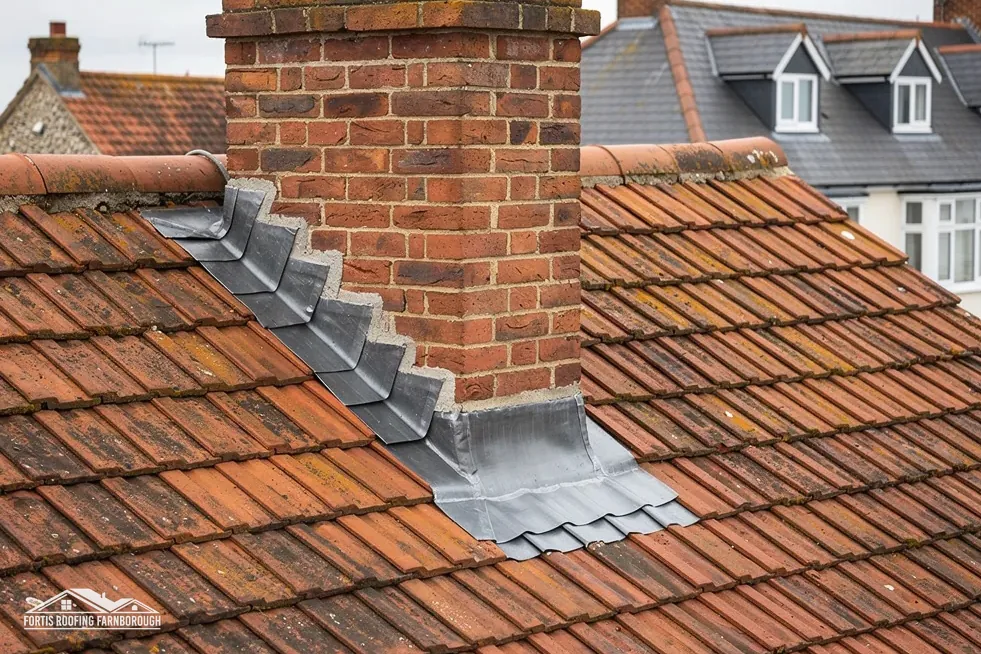
Lead turns up in many of these town-centre roofs, lining valleys and parapet gutters and dressing flashings. Lead flashing can last for over 80 years, says MyJobQuote, which is a lower bound, never a promise, so a sound old one may be worth keeping. Our lead roofing and lead work page explains the lead codes, and chimney repairs covers the stacks that rise through so many of these roofs.
Dated pictures of each older Petersfield roof, covering ridges, valleys, parapets and stacks, are taken before the job and again at the end, and handed to you with the price.
If you are planning to alter a shopfront or flat above, say so at the survey. Roof access, party walls and listing questions tend to arrive together in town-centre buildings, and it is easier to ask the Park Authority once.
We look at the lead for splits and lifted edges, the outlet for blockage and the wall behind for damp. Such a gutter handles a large volume of water and can fail without a sign, so the survey includes a hose test. Lead flashing can last for over 80 years, says MyJobQuote, so repair is often worth weighing before replacement.
Not towards a new roof, because no national grant exists for one. ECO4 is scheduled to run to 31 December 2026, the Great British Insulation Scheme closed on 31 March 2026, and the Warm Homes: Local Grant is aimed at insulation for lower-income households. Each scheme decides who qualifies, and the time to ask is before work begins.
A faculty matter. St Peter's has a Grade I listing, but it remains an Anglican church, so the ecclesiastical exemption puts its roof work under the faculty system. Listed houses and shops such as 1 The Square follow the listed building consent route instead, and the South Downs National Park Authority is the body to ask.
Both, for different things. Anything that changes the roof's appearance goes to the South Downs National Park Authority, which holds planning. Building control belongs to East Hampshire District Council, or to a registered building control approver, once a re-roof goes beyond the Planning Portal's limits, and we tell you which side of them your job falls.
Get your free roof quote
Send your Petersfield address together with any trouble you have spotted up top, and a survey date will be booked.
10-year workmanship guarantee, in writing.