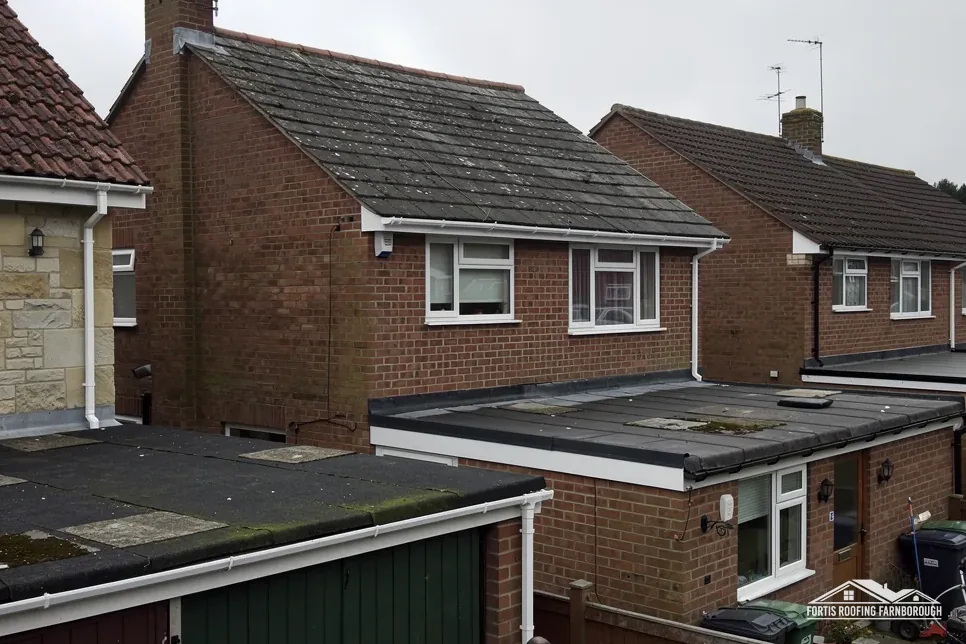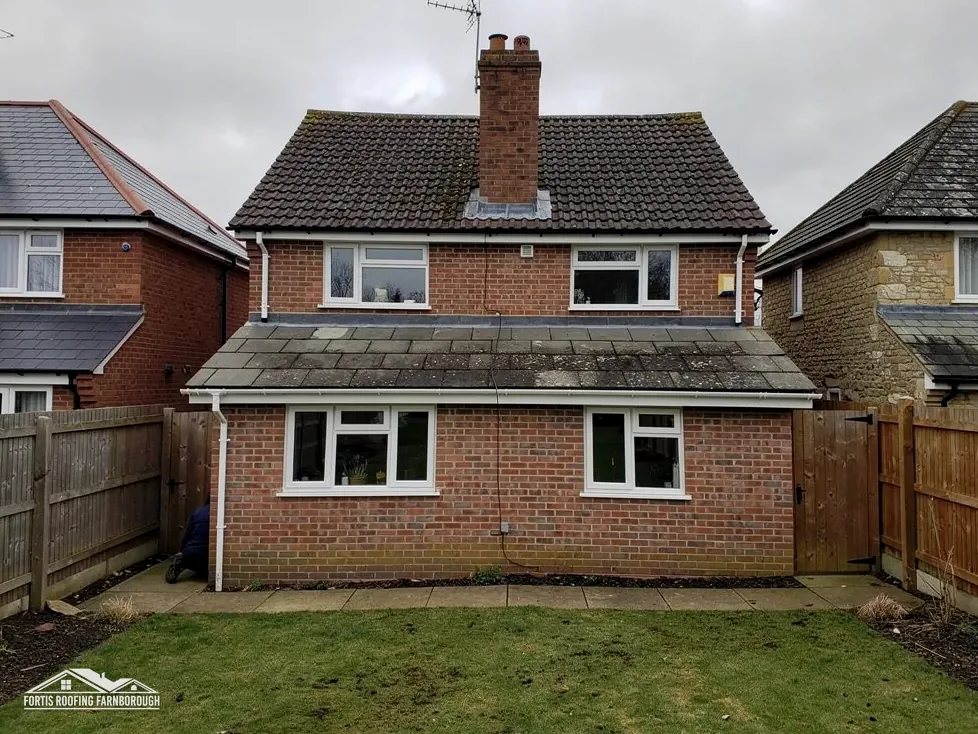
Parsonage Farm and its barns
Parsonage Farm dates from the 16th century, with 17th-century additions, two barns of that date and a moat.

Roofs on low Colne-side land, from moated farm to High Street
Iver is a Buckinghamshire village on low, well-watered land near the Colne and the Grand Union Canal, with Tudor farm buildings and a Grade I church. We read each roof.
Parsonage Farm dates from the 16th century, with 17th-century additions, two barns of that date and a moat.
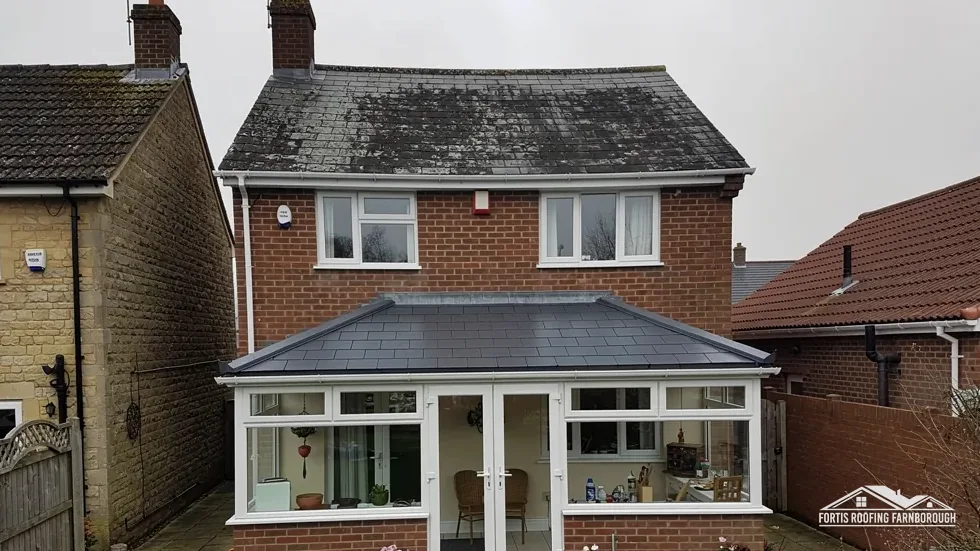
In 1925 the village's Swan Hotel was of 16th-century date, much altered and restored, with a few 17th-century neighbours.
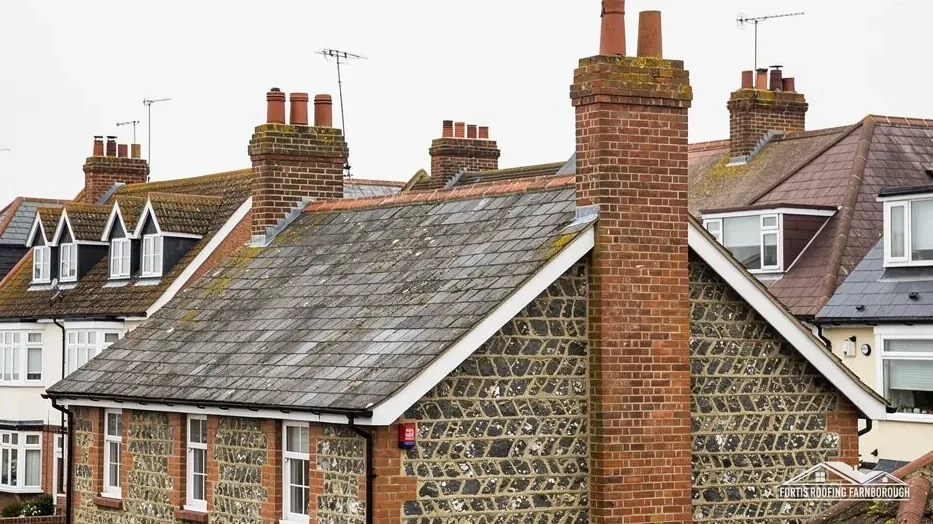
The Pagets' Elizabethan manor was pulled down about 1800; only a dove-house mentioned in 1743 survives.
Map of Iver with Richings Park, Iver Heath, West Drayton, Uxbridge marked around it.
Map data © OpenStreetMap contributors. Loads only when you ask for it.
Richings Park lies south of Iver, Iver Heath north-west, West Drayton south-east, Uxbridge north-east, Langley south-west, George Green west and Colnbrook south.
About 25.6 road miles north-east of Farnborough · Buckinghamshire Council (unitary).
Iver, moat, barns and church
What to ask before accepting any Iver roofing quote, what the 1925 history says about its brickworks, Tudor farm buildings and old inn, and what the Grade I church, the conservation area and old barns mean for work.

| No. | Chapter | The figure it turns on |
|---|---|---|
| 01 | Three questions before any Iver roof quote | VAT at 20 per cent, three quotes |
| 02 | Brickworks, a moat and a much-altered inn | Parsonage Farm dates from the 16th century |
| 03 | St Peter's, Bridgefoot House and the village conservation area | Grade I church, 17 listed buildings |
Chapter 01 of 03
Checking an Iver roof quote in four published figures
Planning in Iver is decided by Buckinghamshire Council, and the same council runs the building control team, so there is no county tier between you and either answer. That makes it easy to settle three questions that belong to any roofing quote, and we suggest putting the same three to every firm you ask, ourselves included.
The standard rate of VAT is 20 per cent. A quote that leaves it out, or leaves out scaffold, is not yet a total, and a lower figure may only be a smaller promise. Citizens Advice recommends at least 3 written quotes, a comparison that works only when each quote says what it includes. Our written price after the survey is one total with the scaffold included, so you can set it beside the others without adding anything.
The Planning Portal's test settles the first half. A re-roof kept under 25 per cent of the building envelope and under 50 per cent of the roof does not call for a Building Regulations application in the ordinary case, while a covering heavier by 15 per cent or more is the exception. Ask any roofer for the percentages and expect numbers. Should an application be needed, Buckinghamshire Council's team will take it, or a registered building control approver will.
For the second half, a scaffold on the High Street footway, or beside a canal bridge approach, stands on ground the highway authority controls, and section 169 of the Highways Act 1980 turns that control into a licence. Ask the roofer who files the form and when, because the answer sets the start date. We confirm the applicant and the lead time before booking and write both into the plan.
Low-lying land with a canal and a river close by is also worth mentioning when you ring: tell us if your roof stands near trees or water, because leaf fall and damp bear on gutters and valleys, and we plan the survey around them. A roof near the Colne may need its outlets cleared before the real cause of a leak shows.
Chapter 02 of 03
| Subject | What the history records |
|---|---|
| Ground | Loamy soil over gravel, with several brickworks and gravel pits in the parish |
| Swan Hotel | Of 16th-century date in 1925, with a few other 17th-century buildings, all much altered and restored |
| Parsonage Farm | Dates from the 16th century with 17th-century additions, has two barns of the same date and a moat round the house and garden |
| Pagets' manor | Elizabethan house pulled down about 1800; a dove-house mentioned in 1743 is the only remnant |
| Setting | Near the River Colne and the Grand Union Canal on low, well-watered land east of Slough |
The Victoria County History of Buckinghamshire, in 1925, describes Iver as a parish of loamy soil over gravel, with several brickworks and gravel pits. Brick and gravel were dug and made here, which is a fact about industry and not about roofs, and we do not take it as a guide to what any house carries today. The survey is where we find that out, one slope at a time, and the report names the covering on each.
The history says the Swan Hotel was of 16th-century date in 1925, with a few other 17th-century buildings, all much altered and restored. Parsonage Farm, about a mile and a half south-west of the village, dates from the 16th century with 17th-century additions, and has two barns of the same date and a moat round the house and garden. A building that has been altered and restored has several ages in it, and its roof can show them as patches, changes of pitch and mixed fixings. We record each one, and where a barn roof has been mended at different times, the photographs mark where one phase ends. Our pitched roofing page explains the repairs that suit each covering, once we have worked out which one it is.
A moat round a house is a reminder that water has long been part of Iver's setting. Ground that holds moisture affects the base of walls, the drainage round a house and the way a roof sheds water into it. The survey follows downpipes to the gully and notes anything discharging against a wall.
Old barns and farm buildings raise a legal point that applies to any roof. On GOV.UK's wording, all bat species and their roosts are fully protected by law, and work on a roof, repairing or replacing it, can disturb them. Where bats or signs of them turn up, work stops and advice is taken before anything else is touched. We look in the roof space for droppings and other roosting signs during the survey, and report what we find.
In the 1925 record
The setting, low and well-watered with the Colne and the canal near, also puts weight on rainwater goods. Our gutters, soffits and fascias page covers outlets and falls, and every downpipe and gully is checked during an Iver survey.
Chapter 03 of 03
Iver's heritage in four published figures
The conservation area named Iver lies within about 0.75 km of the village centre. Buckinghamshire Council holds the boundary, and its map shows whether a particular High Street or lane house is inside it. Its planning team can also say whether an Article 4 direction applies to your address, and whether adding a dormer or swapping the covering material calls for consent before any drawing is made.
St Peter's is listed Grade I and holds Anglican worship, so its roof repairs belong to the faculty system under the ecclesiastical exemption and not to the council. Bridgefoot House holds a Grade II* listing, while 56, 58 and 60 High Street and 90 High Street are Grade II. The national list counts 17 listed buildings within 500 m of the village centre. If a listed building's character is at stake, consent is required from Buckinghamshire Council, and we put the question to it before quoting.
Under section 55 of the Town and Country Planning Act 1990, an unlisted house whose outer look is materially unchanged by repairs is outside the definition of development. So in Iver a repair that matches the old roof is the simple case, with our pictures showing how the roof stood. A new covering or a new roof window is different, and our planning permission for roof work guide sets out the rules.

Houses along the High Street can share chimneys and walls with their neighbours, which means a stack repair on one side can matter to the other. Our chimney repairs page covers repointing, flashing and rebuilding, and where two owners share a stack, a party wall surveyor can settle who does what. A chimney breast that is cut away needs two months' notice, so we flag that early, and tell you what the neighbour will receive.
Old houses are easier to repair well when their history is known. If you hold earlier surveys, invoices or pictures of past roof work, send them before the visit, since they help us match materials and shorten our time on site. Old High Street roofs often carry more than one age of repair, so we photograph each slope and stack before suggesting anything at all.
GOV.UK describes bats and their roosts as fully protected, and counts mending or renewing a roof among the jobs that can touch a roost. If you suspect a roost, hold off and take specialist advice before work begins. We look for roosting signs at the survey and report what we see, so that the plan can be made properly.
An Iver conservation area reaches within about 0.75 km of the village centre, so a number of houses will be inside it. Buckinghamshire Council's map answers for your address. Any dormer idea, and any alteration to how the roof looks, is raised with Buckinghamshire Council first, so the consent route is clear before a price is given.
Not for the church. St Peter's is a Grade I church in continuing Anglican use, so the ecclesiastical exemption applies and the faculty system handles its roof repairs. For listed houses such as Bridgefoot House, the route is listed building consent from Buckinghamshire Council where work affects their character, and we ask before pricing.
It should be one total that plainly includes both. The standard VAT rate is 20 per cent, and scaffold can be a large part of a job, so a quote silent on them is not yet a total. Citizens Advice recommends at least 3 written quotes, which you can then set side by side once each states what it covers.
Get your free roof quote
Send your Iver address and the symptoms, and we will suggest a survey date.
10-year workmanship guarantee, in writing.