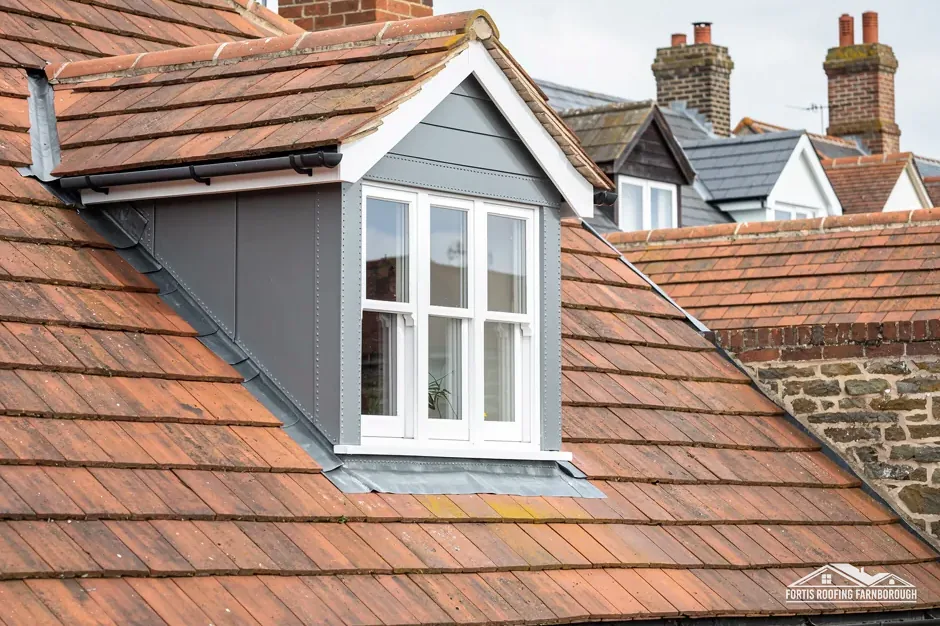
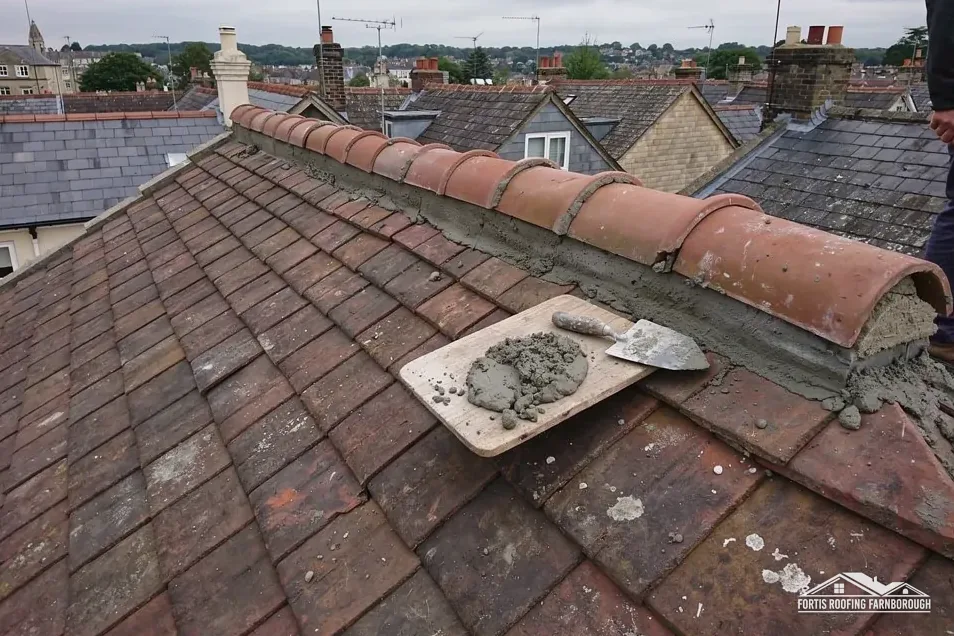
Slabs near the eaves
In 1911 the church's nave and chancel roofs had Horsham slabs near the eaves and tiles above.

Roofs on the Mole's west bank opposite Leatherhead
Fetcham stands on the west bank of the Mole, with a church roofed in slabs and tiles in 1911. We inspect the roof void as well as the slopes.
In 1911 the church's nave and chancel roofs had Horsham slabs near the eaves and tiles above.
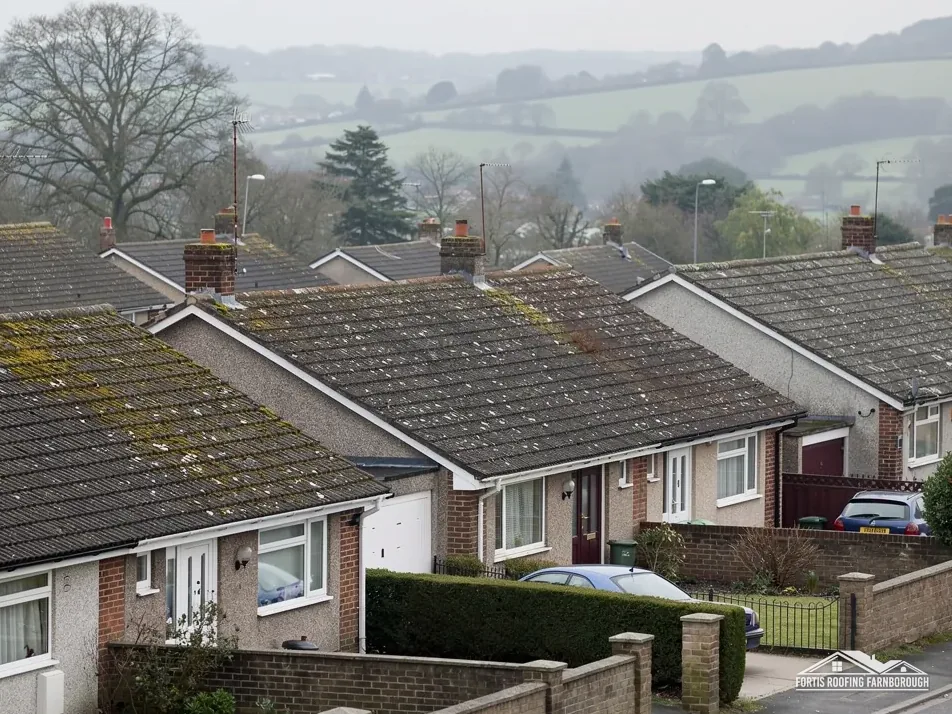
Home Farmhouse, Monks Green Farmhouse and Orchard Cottage are each listed Grade II.
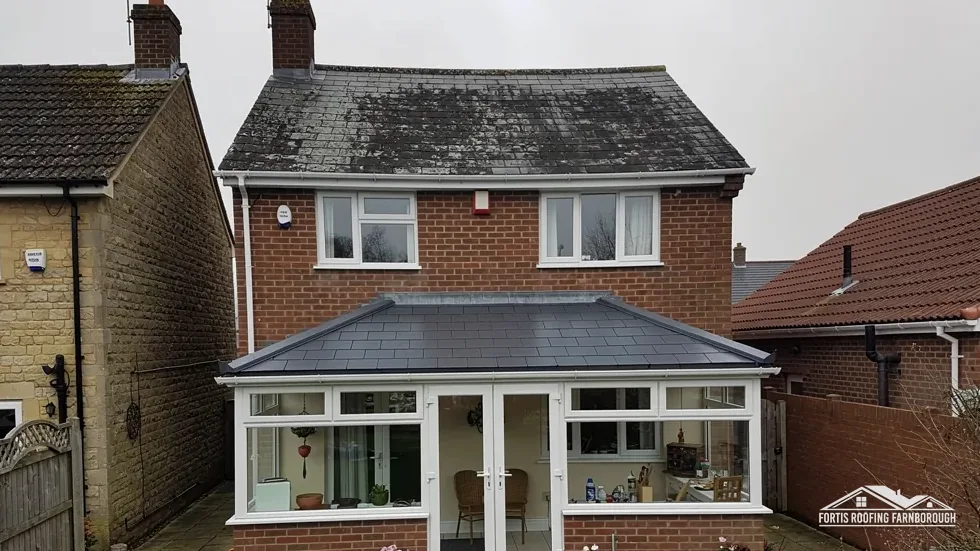
Fetcham mill was worked by the overflow of a pond fed by strong springs near the Mole.
Map of Fetcham with Leatherhead, Great Bookham, Little Bookham, Stoke D'Abernon marked around it.
Map data © OpenStreetMap contributors. Loads only when you ask for it.
Leatherhead lies east of Fetcham, Ashtead further east, Great Bookham south-west, Little Bookham and Effingham beyond, Stoke D'Abernon north-west and Oxshott north.
About 26.7 road miles east of Farnborough · Mole Valley District Council and Surrey County Council.
Fetcham, roof voids and farmhouses
What to know before spray foam goes on, or stays under, a Fetcham roof, what the 1911 history records about the church's slabs and tiles, and how a conservation area and Grade II farmhouses shape a repair.
| No. | Chapter | The figure it turns on |
|---|---|---|
| 01 | Spray foam, lenders and the timber you cannot see | Check with your mortgage provider first |
| 02 | Anglo-Saxon burials, a church of slabs and tiles | Church roofs of slabs and tiles in 1911 |
| 03 | The Fetcham conservation area and three Grade II farms | Conservation area within 0.75 km |
Chapter 01 of 03
Spray foam under a roof in four published points
Older Fetcham houses have roof timbers that deserve to be seen, and that is the first thing to weigh when spray foam is proposed, or when foam already in place is questioned. RICS published a consumer guide in March 2023 with two cautions that matter to a roofer. Once foam covers the rafters, they can no longer be checked in full, so rot or beetle activity could go unseen. And if the foam is badly installed, the guide says, ventilation can suffer and damp follow. A rafter weakened beneath foam gives no warning until a ceiling stains.
RICS's press release of 3 March 2023 recorded concern among some lenders, beginning with equity release providers, about homes with this insulation. The guide's advice is practical: ask your mortgage provider whether its policy permits it, before the work, and keep the reply in writing. The sensible step is to ask before spraying and to file the answer with your deeds, because it may be needed again when the house is sold or re-mortgaged.
The Energy Saving Trust's view of spraying foam on a roof that leaks is brief: it does not recommend it. A leak sealed under foam does not stop, and the water soaks the timber behind it. If a Fetcham roof leaks, the fault is found and repaired first, and insulation is considered afterwards.
Where foam is already on an older roof, the survey looks at what is visible, notes signs of damp at the eaves and in the rooms below, and reports plainly what could not be inspected. Our spray foam insulation removal page explains the removal question for owners who want the timbers uncovered. Mole Valley District Council decides planning, Surrey County Council keeps the roads until 31 March 2027, and East Surrey Council replaces both from 1 April 2027.
If you are buying or selling a Fetcham house with foam in the loft, a roof report can help both sides: it shows what the roof looks like, what is covered and what a buyer's surveyor might ask. We write it for a reader who is not a roofer, with a plain summary on the first page and the pictures after it.
Chapter 02 of 03
| Subject | What the history records |
|---|---|
| Anglo-Saxon burials | Found in the parish, pointing to a considerable settlement; six more found in 1906 while pipes were laid |
| Church walls | Parts of the nave walls, of plastered flint-work, may date from the beginning of the 11th century; Roman bricks are used in considerable quantities |
| Church roofs | Nave and chancel roofs had Horsham slabs near the eaves and tiles above; the other roofs were tiled only |
| Fetcham mill | Worked by the overflow of a pond fed by strong springs, unaffected by the rise and fall of the Mole |
Surrey's county history of 1911 said Anglo-Saxon burials found in the parish pointed to a considerable settlement, and that many skeletons were unearthed when a house was built there. Six more were found in 1906 while pipes were laid by the road. Parts of the nave walls of the church, of plastered flint-work, may date from the beginning of the 11th century, and Roman bricks are used in considerable quantities in the building.
The same account records that the church's nave and chancel roofs had Horsham slabs near the eaves and tiles above, and that the other roofs were tiled only. Two coverings on one slope means a junction between them. Slabs and tiles behave differently and need their own fixings, so that line is a point of attention on any roof built that way. Our pitched roofing page explains how tiles, ridges and valleys are repaired once the covering is known.
Fetcham mill, near Leatherhead, was worked by the overflow of a pond fed by strong springs, which the history noted were unaffected by the rise and fall of the Mole. With springs and a river so close, the survey of a Fetcham house always includes its gutters and downpipes, to be sure that rainwater is carried away from the walls and not left to soak them.
Those entries concern the church of St Mary and the mill; a house roof is judged on its own survey. A farmhouse, a cottage and a post-war semi in the same village will have different coverings and different problems, and the survey reads each for what it carries. If your roof is old, the survey records the battens and underlay beside the covering, since those decide whether a repair can stay small.
Two Fetcham dates
Burials, Roman bricks and an 11th-century wall are a reminder that the village is old and that building here has been going on for a long time. Houses of many centuries stand side by side, and a roof's age is rarely written on it. The only reliable way to find out is to lift tiles at several points and look at what is underneath.
Chapter 03 of 03
Fetcham's designations in four published figures
A conservation area named Fetcham lies within about 0.75 km of the village centre, and Mole Valley District Council's map tells you whether your house falls within it. Inside one, dormers lose their usual allowance, so a roof extension is a planning application, and a visible change deserves a call to the council before it is priced. The planners can also say whether an Article 4 direction applies to your address, a question worth asking before you plan any visible change to the roof.
Home Farmhouse, Monks Green Farmhouse and Orchard Cottage hold Grade II listings, with 4 listed buildings on the national list within 500 m of the centre. Changes that would alter a listed building's character need listed building consent, so the council is asked first and the price follows its reply. A farmhouse roof may be large, with several pitches and a tall stack, and the survey records each so that an application has evidence behind it.
For the church of St Mary, the consent route turns on its listing and use: a Church of England church in use takes roof repairs through the faculty system, and those who look after it will know which applies. If you are one of them, say so when you ring and we will prepare the report in the form a committee needs, with pictures and a plain written account.
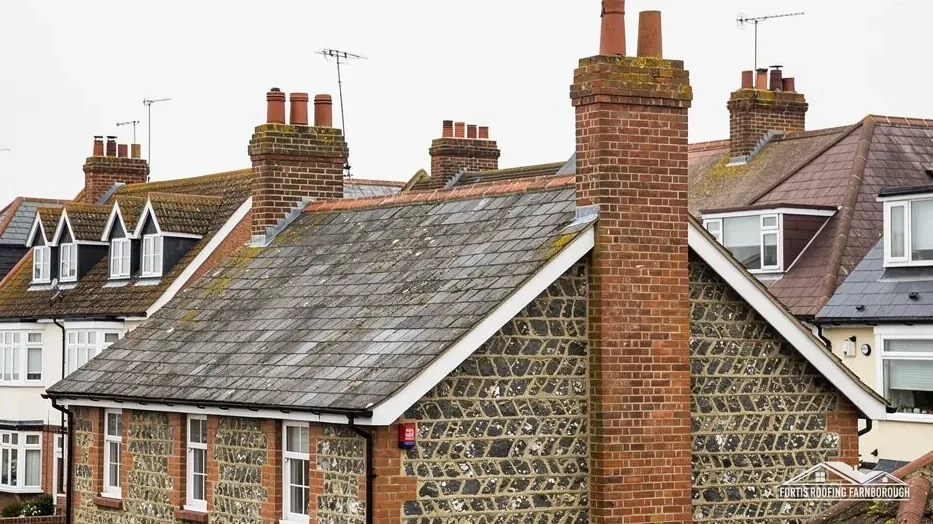
For an unlisted house, section 55 of the Town and Country Planning Act 1990 treats a repair that leaves a building's look materially unchanged as no development at all. A matching repair is therefore the plain case, and our pictures show the roof as found. Our chimney repairs page explains how stacks are repointed, flashed and rebuilt, and our planning permission for roof work guide sets out the national rules.
If your house is old, listed or not, send us any papers you have on earlier roof work. They help us match materials, and they let the council see what the roof has been through. A short history attached to a request is easier to decide than a bare drawing, and costs you only the time it takes to find the papers.
In March 2023 RICS reported concerns among some lenders about spray foam, equity release providers first, and its guide advises asking your mortgage provider whether its policy permits the product. Ask in writing before spraying, and keep the reply with your papers. The survey can show the condition of the roof timbers that foam would cover, before the decision is made and not after.
The 1911 history only records that it did, not why. For your own roof, the survey identifies each covering and its fixings, and a junction between two coverings gets a record of its own before any repair is specified, so the work is matched to what is actually there rather than to what a similar roof elsewhere might have.
The Fetcham conservation area lies within about 0.75 km of the village centre, so some houses will be inside it. Mole Valley's planners hold the map and can confirm your address. Inside, a dormer is a planning application, and any change to a roof's appearance goes to the council before we give a price, so you hear what is likely to be allowed first.
Home Farmhouse, Monks Green Farmhouse and Orchard Cottage are listed Grade II, so work that would alter their character needs listed building consent from Mole Valley. A like-for-like repair may need less, and the council can say. We raise the question before pricing and supply pictures of the existing detail, with measurements of the ridge, verges and chimneys to go with an application.
Get your free roof quote
Give us your Fetcham address and any damp or foam in the loft, and we will arrange a visit.
10-year workmanship guarantee, in writing.