Widdington's brick porch
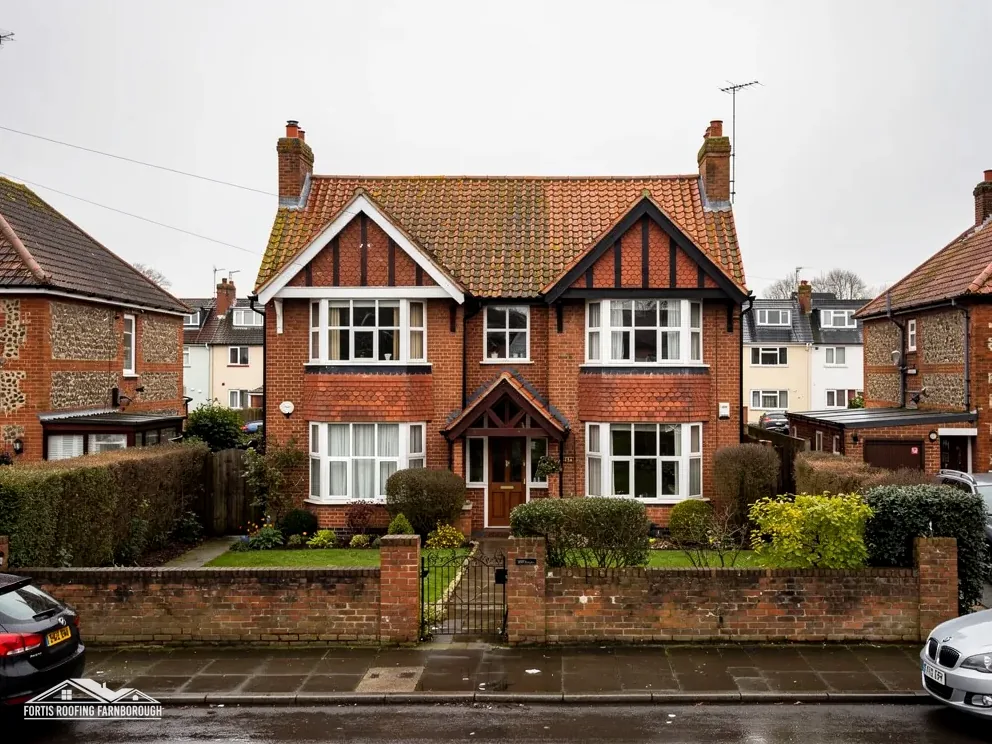
Widdington, opposite the Plough Inn, has a projecting brick porch of about 1600 to 1620 with brick pilasters.

Chimneys, brick porches and homes below the North Downs
Effingham lies on the A246 at the foot of the North Downs, enclosed from open fields in 1800 and 1802. We study each roof here carefully, from stack to gutter.
Widdington, opposite the Plough Inn, has a projecting brick porch of about 1600 to 1620 with brick pilasters.
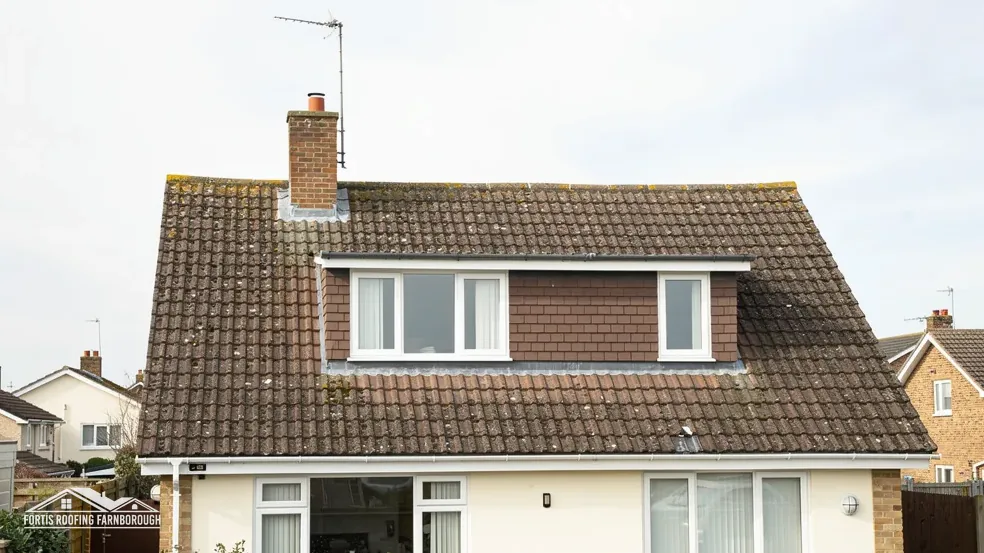
Guildford's settlement profile places the older houses in the north-western part of the village.
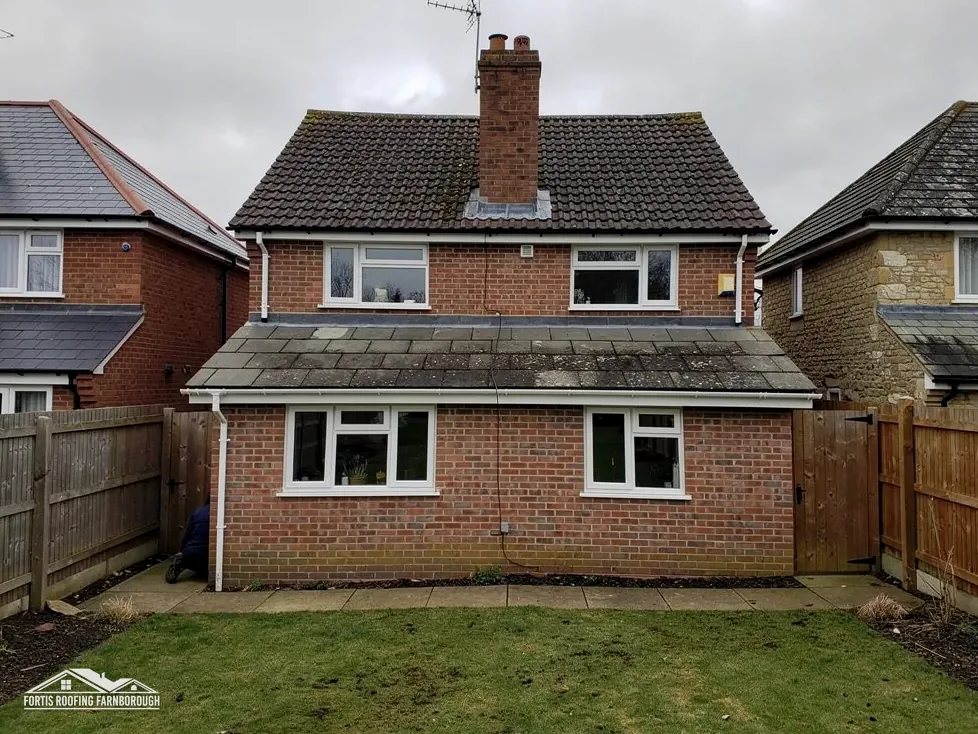
The same profile records a large share of post-1945 housing south of the A246.
Map of Effingham with Little Bookham, Great Bookham, East Horsley, Fetcham marked around it.
Map data © OpenStreetMap contributors. Loads only when you ask for it.
Little Bookham lies to the north-east, Great Bookham to the north-east beyond it, East Horsley and West Horsley to the west, and Leatherhead to the north-east.
About 24.2 road miles east of Farnborough · Guildford Borough Council and Surrey County Council.
Effingham, chimneys and enclosure
What Guildford says about chimneys where an Article 4 direction applies, how enclosure and the chalk shaped Effingham's housing, and what the church, the vault and the conservation areas mean for a repair.
| No. | Chapter | The figure it turns on |
|---|---|---|
| 01 | Guildford, Article 4 and the chimney | Where a direction applies, chimneys are controlled |
| 02 | Open fields, enclosure and houses on the chalk | Enclosed by Acts of 1800 and 1802 |
| 03 | St Lawrence's Church, Bogle Vault and the village | St Lawrence's is Grade II*, first listed 1967 |
Chapter 01 of 03
| Matter | Position at Effingham |
|---|---|
| Borough council and planning authority | Guildford Borough Council |
| Building control | Guildford Borough Council, its own service |
| Where an Article 4 direction applies | A chimney cannot be removed or altered without permission, Guildford |
| How to check an address | Guildford's map, layer: Article 4 Direction |
| From 1 April 2027 | West Surrey Council replaces Guildford and Surrey County Council |
Effingham sits in Guildford's borough, and for roof work the council to know is Guildford Borough Council, which runs its own building control service. The county tier is Surrey County Council. Both are due to be replaced on 1 April 2027 by West Surrey Council, and nothing changes in the meantime.
Guildford uses Article 4 directions to control changes in conservation areas. Where one applies, chimneys come under it: removal or alteration needs permission, and so do frontage works such as windows and doors, changes of size or shape, hard surfaces, boundaries, dishes and painting. The council tells owners to check each address on its map by selecting the Article 4 Direction layer, because not every house in a conservation area is covered.
That rule matters because a chimney is a frequent subject of change: a stack that leans, a pot that has cracked or a breast that someone wants out. Each is a roofing job and a planning question together. We ask Guildford's map first. If a direction applies at your address we tell you before pricing, and we separate work that restores what exists from an alteration needing the council's permission.
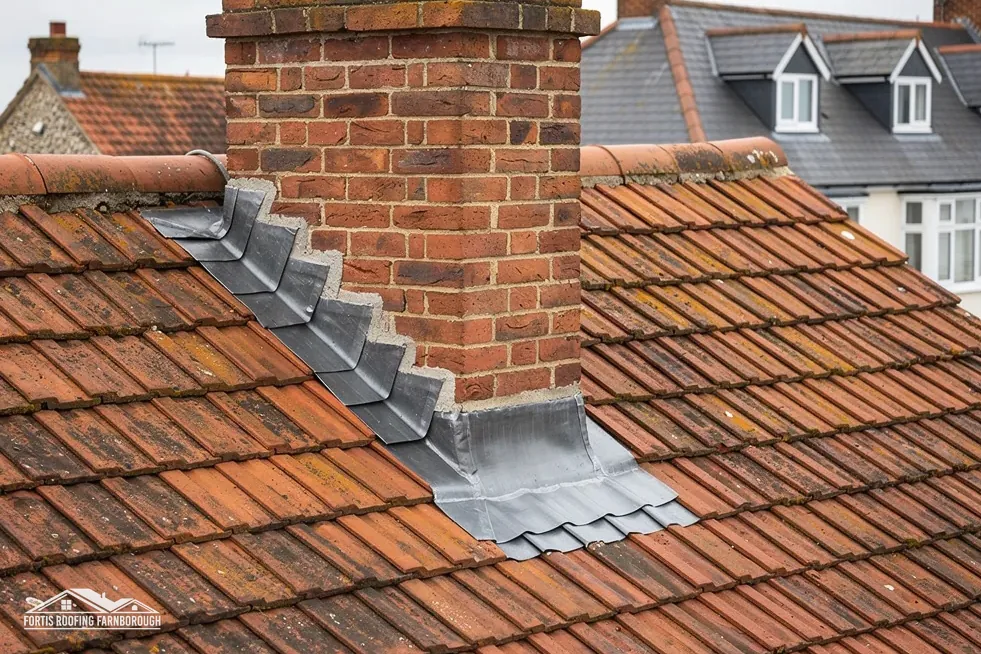
A chimney stack has three weak points. The pointing between bricks loosens, the flaunching, the sloped mortar bed that holds each pot, cracks, and the flashing at the stack's base lifts or splits. On the survey we photograph each from above and from the loft, and tell you which need work. Our chimney repairs page explains how a stack is assessed.
Lead is what usually seals the base of a stack. MyJobQuote gives full chimney leadwork as between £350 and £920, depending on the scaffold, and puts the life of lead flashing at over 80 years, a floor and not a limit. Those are national guides. Our own total follows from the number of faces, the lead code and the access, and the survey records each before a figure is given.
Where scaffold has to stand on a public road, Surrey County Council licenses it as highway authority until 31 March 2027, and that paperwork is settled with our scaffolding contractor before a date goes in the diary. Farnborough is 24.2 road miles away, so each visit is arranged in advance and the whole roof is surveyed in daylight.
Chapter 02 of 03
Effingham's record in dates and figures
The Victoria County History of 1911 said Effingham was still almost entirely an open 'champion' parish little more than a century earlier, a parish of open fields, and that it was enclosed by Acts of 1800 and 1802 and by further inclosures in 1814 and 1815. The 2021 Census counted 2,722 usual residents. Guildford's settlement profile adds that the main village has two parts, separated by the A246.
The county history says the church and village stood on the beds between the chalk and the London Clay, but that by 1911 houses had spread up on to the chalk. Different ground puts different demands on a roof only indirectly: it changes how scaffold bases are set and how water drains from a plot, but the sky is the same. The survey therefore looks at the roof as a roof, and notes the ground only where it affects access.
Guildford's 2013 settlement profile says the southern part of the village, south of the A246, has a large share of post-1945 housing, while the north-western part holds most of the older houses. Post-war roofs and old ones fail in different places. On the older houses it is lead, ridges and flashings, and on later ones it is often fixings, underlay and gutters. We note the age of each house and read the roof for the faults typical of that age.
On postwar roofs the commonest failures are fixings and mortar. HomeBuilding gives fibre-cement tile 30-40 years and plain concrete 40-50 years as typical lives, which are published ranges and no promise. Mortar-bedded verges and ridges are where such roofs weaken, and BS 8612 tests dry-fixed alternatives. MyJobQuote gives a dry verge system as between £500 and £2,000 and a ridge between £225 and £550, typical national figures.
Enclosure dates
Widdington, an old house opposite the Plough Inn, has a large projecting brick porch of about 1600 to 1620 with brick pilasters, like those at Slyfield House. A porch roof is small but busy: its verges, ridge and the lead at the house wall take water from both sides. Our lead roofing and lead work page covers how that lead is renewed, and the slopes themselves are covered by the work above.
Chapter 03 of 03
| Designation | At Effingham | For roof work |
|---|---|---|
| Conservation areas | Effingham; Little Bookham nearby | Check the council's map for your address |
| Grade II* listed church in use | Church of St Lawrence (NHLE 1294793) | Faculty system |
| Grade II listed | Bogle Vault north of the church (NHLE 1029427) | Listed building consent |
| Grade II listed | Brown's (NHLE 1377820) | Listed building consent |
| Grade II listed | Crosslands (NHLE 1029393) | Listed building consent |
The national dataset names the Effingham conservation area, which Guildford's settlement profile places at the north-western end of the village, and the Little Bookham area across the borough boundary. Guildford does not state how many conservation areas it has, so the answer for your own address comes from its map, which shows conservation areas and Article 4 directions. A proposal that alters how a roof looks should reach the planning officers before pricing. Our planning permission for roof work guide covers what to ask.
The Church of St Lawrence is Grade II*, a listing Historic England places on 14 June 1967. With regular Anglican worship, St Lawrence's has its roof settled by faculty, not by the borough council. Bogle Vault, 25 feet north of the church, is listed Grade II and dates from the listing of 25 November 1985. Brown's and Crosslands are also Grade II. A listed building needs the council's consent for works that would change its character.
The list records 16 listed buildings within 500 m of the centre, so we look each address up before pricing. Where a house is listed, roof work waits until consent is in hand, and the survey photographs go with the application. In a conservation area the same photographs become the record of what was there.
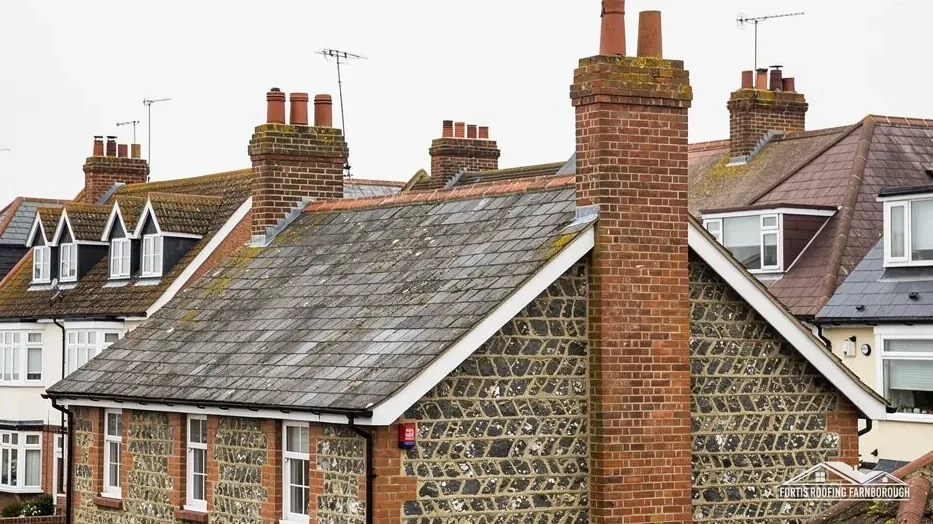
Chimneys and eaves are where nests turn up. Section 1 of the Wildlife and Countryside Act 1981 makes it an offence to intentionally harm a nest that is in use or half built. We look for nests at eaves and in chimneys before work begins, and if we find one in use we pause and talk to you about timing.
Where a house is listed, the listing text is the document a conservation officer will read. We either ask you for it or find it on the National Heritage List, and read it first, so the survey photographs answer the points it raises, and those answers go in the file. That makes any consent application quicker to prepare and easier to understand.
On older roofs a good repair is one a later reader of the file can compare with the original. We record tile or slate size, ridge detail, verges and lead, then file it. If a gutter has failed, our gutters, soffits and fascias page covers the roofline, which matters for any chimney stack too, since a stack is only as sound as the water that runs past it.
Check first, because the answer depends on your address. Where a Guildford Article 4 direction applies, permission is needed for chimney removal or alteration, and the council's map shows which houses are covered. Mending a stack to its existing form is another matter. We confirm the position before quoting any change to a stack.
Guildford's online map has an Article 4 Direction layer, and the council tells owners to check each address that way. Not every house in a conservation area is covered. If you are unsure, send our survey photographs and your address to the council's planners and ask them to confirm.
No. St Lawrence's has a Grade II* listing, though as an Anglican church in regular use its roof work goes through the faculty system and not through the borough. The Grade II Bogle Vault next to it is a separate listing, and works to listed buildings elsewhere in the village follow the consent route.
On 1 April 2027 West Surrey Council replaces Guildford Borough Council and Surrey County Council, and until then services run as they do now. We write to whichever council holds your job on the day, and our paperwork names it. Guildford's own building control service, or a registered approver, handles inspections, and we tell you which your job needs.
Get your free roof quote
Tell us your Effingham road and what is wrong; we survey, photograph and quote one price.
10-year workmanship guarantee, in writing.