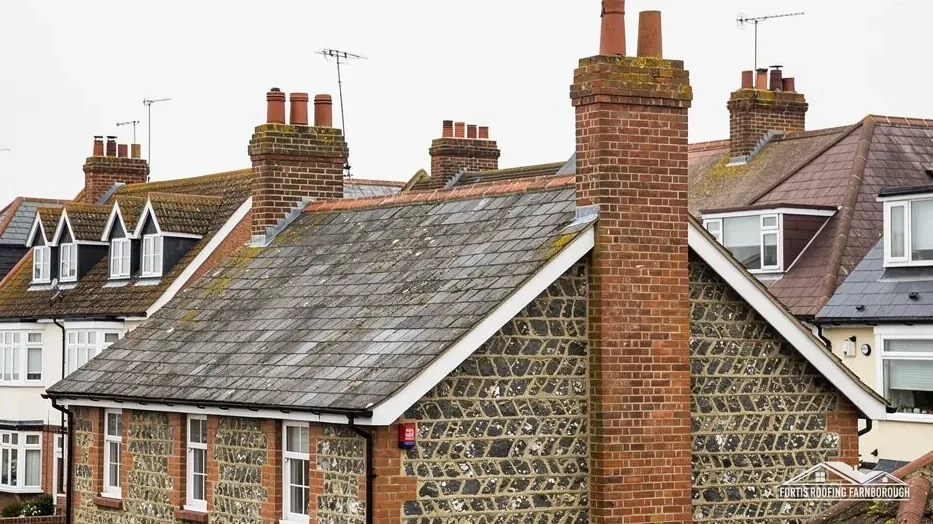
Brick cottages of 1923
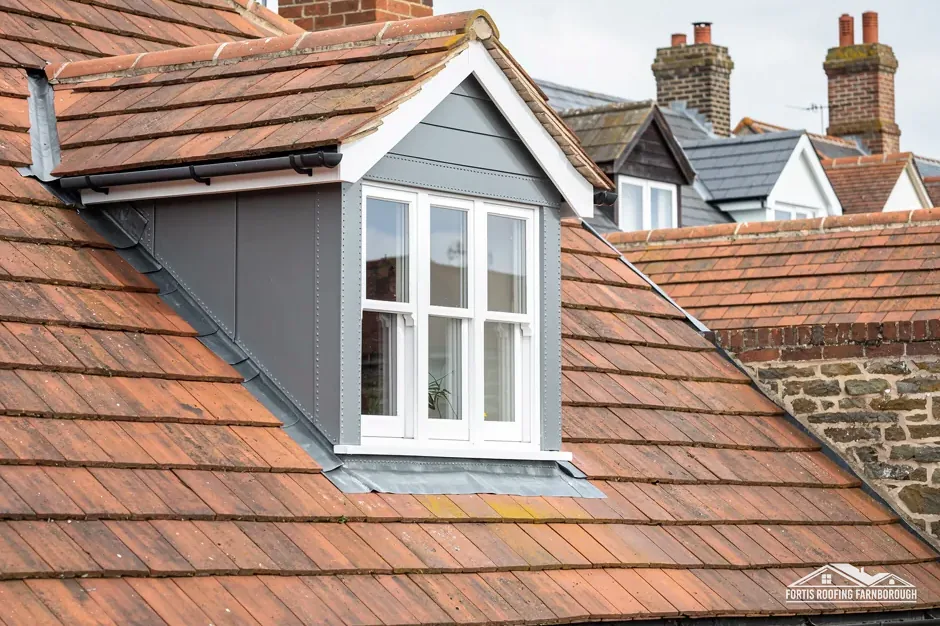
The county history of 1923 found most village cottages of no great age, brick-built with slate or tile roofs.
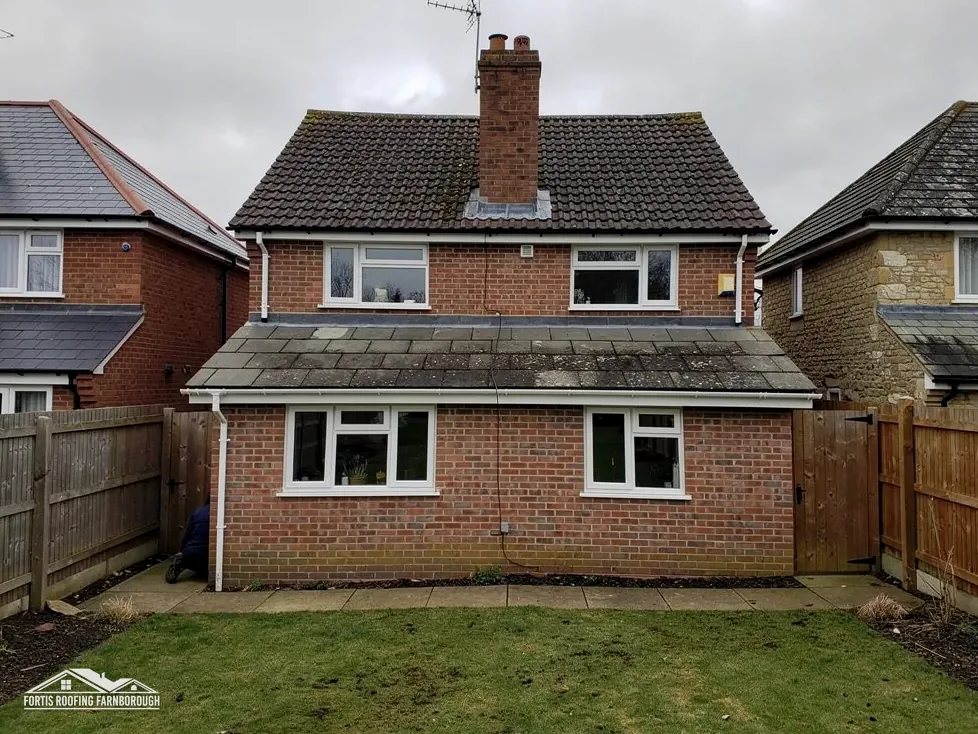
Roofs in the Pang valley, from cottages to college houses
Bradfield lies in the valley of the River Pang, with brick cottages, a church listed Grade II* and a college founded in 1850. We survey every slope.
The county history of 1923 found most village cottages of no great age, brick-built with slate or tile roofs.

Two probably 17th-century half-timbered cottages stand at the north-west corner of the churchyard.
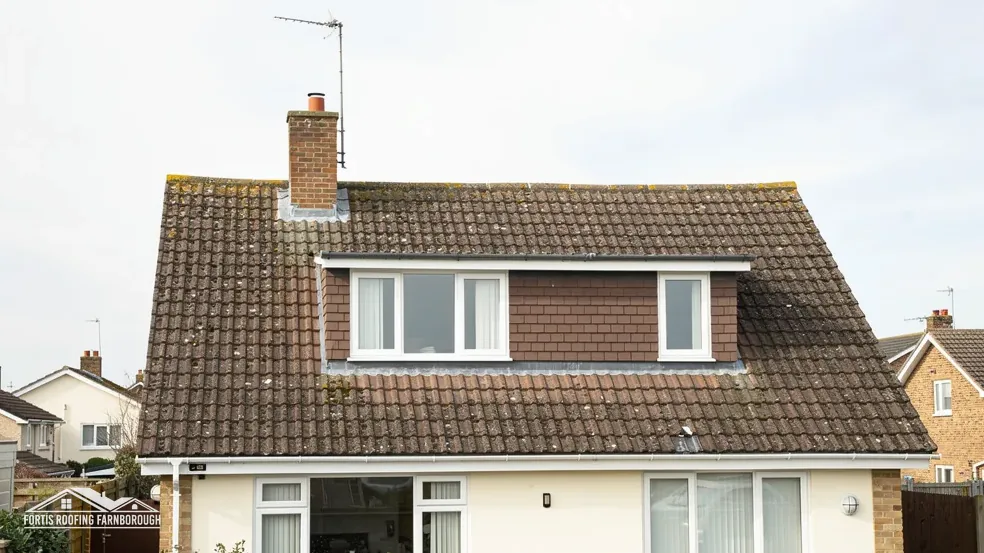
Founded in 1850 around an 18th-century manor house, with a chapel opened in 1892 and several houses listed Grade II.
Map of Bradfield with Beenham, Theale, Pangbourne, Whitchurch-on-Thames marked around it.
Map data © OpenStreetMap contributors. Loads only when you ask for it.
Bradfield stands in the valley of the River Pang west of Reading, inside the North Wessex Downs, and Farnborough is 28 road miles to the south-east.
About 28 road miles north-west of Farnborough · West Berkshire Council (unitary).
Bradfield, valley and college
Who inspects and plans a Bradfield roof job, what the 1923 county history records of its cottages and college, and how the North Wessex Downs designation and listed houses affect a repair.

| No. | Chapter | The figure it turns on |
|---|---|---|
| 01 | West Berkshire and the Building Control Solutions team | West Berkshire plans; BCS inspects |
| 02 | A college, a churchyard and old cottages | College founded in 1850, chapel in 1892 |
| 03 | North Wessex Downs, a conservation area and listed houses | St Andrew's church, Grade II* |
Chapter 01 of 03
| Role | Body for Bradfield addresses |
|---|---|
| Council and planning authority | West Berkshire Council (unitary) |
| Building control | Building Control Solutions (BCS), with Wokingham |
| Designated landscape | North Wessex Downs National Landscape |
| Scaffold licence on the highway | The highway authority; we arrange it with the scaffolder |
West Berkshire Council is a unitary council, so one authority is the planning authority for Bradfield and the party to ask about the road outside. Building control is a separate matter. Building Control Solutions, known as BCS, describes itself as the Local Authority Building Control service in Berkshire, run jointly by West Berkshire Council and Wokingham Borough Council. A re-roof that goes beyond a repair therefore reaches BCS, unless you pick a registered building control approver instead.
Most owners know that area matters. The Planning Portal's test is that a re-roof needs no application while under 25 per cent of the building envelope and under 50 per cent of the roof is affected. Fewer know that weight counts as much. A new covering that makes the roof 15 per cent or more heavier brings approval into play whatever the area, and a structural check is the sensible first step. Slate and tile do not weigh the same, so a change from one to the other is exactly the case that figure exists for.
On a cottage with a slate or tile roof of the sort the county history describes, we weigh that question before anything is priced. Our visit records what covers the roof now, measures its area, and then gives you a straight reading on whether a matching re-cover stays inside the limits or whether a different covering would cross them.
A licence from the highway authority is the price of putting scaffold over a public road or footway, as section 169 of the Highways Act 1980 provides, and scaffold standing on your own land is outside that. Whoever files the form, the plan has to exist first, so the layout is settled with the scaffolding firm at the survey and the licence follows from it.
Houses set back from a lane can often be scaffolded wholly on their own land. Cottages that open straight onto the road usually cannot, and for those the licence becomes the first job of the project rather than the last. Either way you are told the timetable before work is booked, and the scaffold stays up only as long as the roof needs it. When the work is finished, the scaffold comes down and the site is left tidy.
Chapter 02 of 03
Bradfield in four published figures
The Victoria County History's 1923 entry for Bradfield describes a village in the valley of the River Pang. Most of its cottages were of no great age, built of brick with slate or tile roofs. The exceptions were two probably 17th-century half-timbered cottages at the north-west corner of the churchyard. The hamlet of Southend, to the south, was recorded as modern suburban-type houses of that day.
Bradfield College was founded in 1850 by the Rev. Thomas Stevens, lord of the manor, around an 18th-century manor house, and its chapel opened in 1892. The college gives the parish a group of larger buildings with their own roofs, valleys and parapets, and several of its houses are listed. Our work on a house near them starts from the same question as everywhere: what is on the roof now, and how was it fixed?
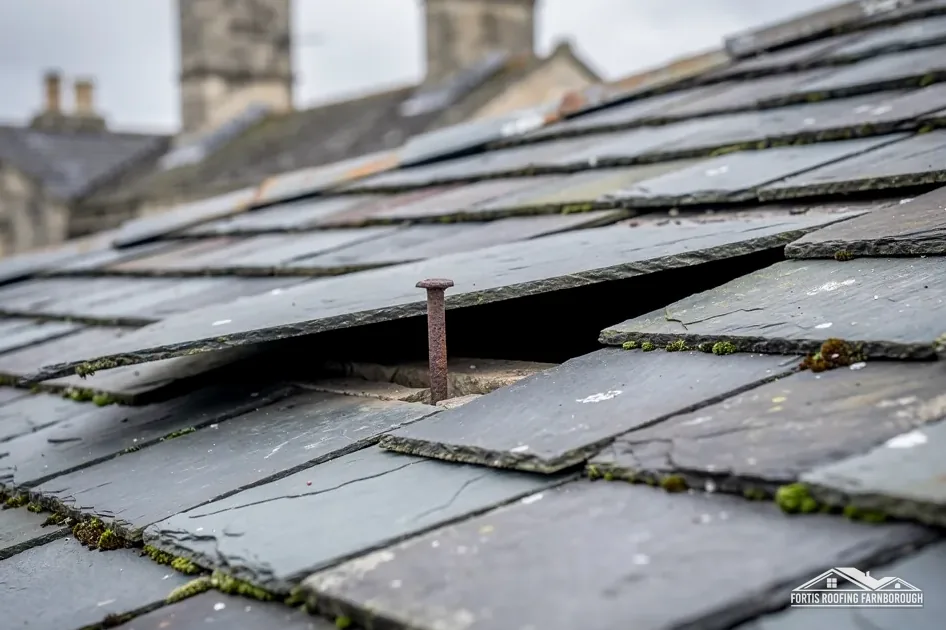
Cottages that were already of no great age in 1923 are a century older today. A brick-built cottage with a slate or tile roof can have had its covering renewed several times since the history was written, so the 1923 description is a starting point and not a record of what is there. On the visit we name each slope's covering, photograph the battens and underlay where the loft shows them, and measure the affected area.
Half-timbered cottages behave differently from brick ones. Their frames move seasonally, their walls are rarely square, and their roofs often have an irregular pitch. A repair that would be simple on a modern brick house needs more thought, and sometimes a smaller intervention, on a frame of that age. We would rather patch a sound old roof well than strip it for the sake of a tidy specification, and the photographs let you see why.
College and parish
Southend's modern houses of 1923 are now old houses too, and a roof from that period could by now have had two or three coverings, and each leaves its own mark in the battens. If a roof meets a neighbour's, the junction is photographed from our side and the visible part of the other slope described, without stepping onto it, and the conversation with next door is yours.
Chapter 03 of 03
| Record | At Bradfield | For roof work |
|---|---|---|
| National Landscape | North Wessex Downs, all of the 1.5 km area | Ask West Berkshire before any dormer |
| Conservation area | Bradfield Conservation Area | Matching repairs; ask West Berkshire about changes |
| Grade II* listed | Church of St Andrew (NHLE 1289580) | Sold to the college in 2021: listed building consent |
| Grade II listed | Army House, Bradfield College (NHLE 1289643) | Listed building consent for work affecting character |
| Grade II listed | B and C Houses, Bradfield College (NHLE 1289482); Stevens Obelisk (NHLE 1212321) | The same consent route |
The North Wessex Downs National Landscape, once an AONB, takes in the whole 1.5 kilometre area around Bradfield, 100 per cent of it in the national dataset. That designation raises the bar for visible change, so a dormer or a new loft window is put to West Berkshire's planners before anything is drawn. Our planning permission and roof work guide explains where the permitted routes stop.
The Bradfield conservation area lies within about three quarters of a kilometre of the village centre. Inside it, a repair that keeps the same materials and details is the straightforward case, while a change of material belongs with the planning team. West Berkshire can say whether an Article 4 direction applies, and the question goes to it before any Bradfield roof is priced, so the figure you see already reflects the reply.
Twenty-one listed buildings stand within 500 metres of the village centre. The Church of St Andrew has been listed Grade II* since 14 April 1967, and the Stevens Obelisk near its chapel is listed Grade II. Army House and B and C Houses at the college are listed Grade II as well. A listed house calls for listed building consent whenever work would touch its character. The church is a different case from most. Bradfield College bought it from the Oxford Diocese in 2021 to become a learning centre, since keeping it as a place of worship was not considered viable, so the ecclesiastical exemption no longer covers it and roof work needs listed building consent from West Berkshire.
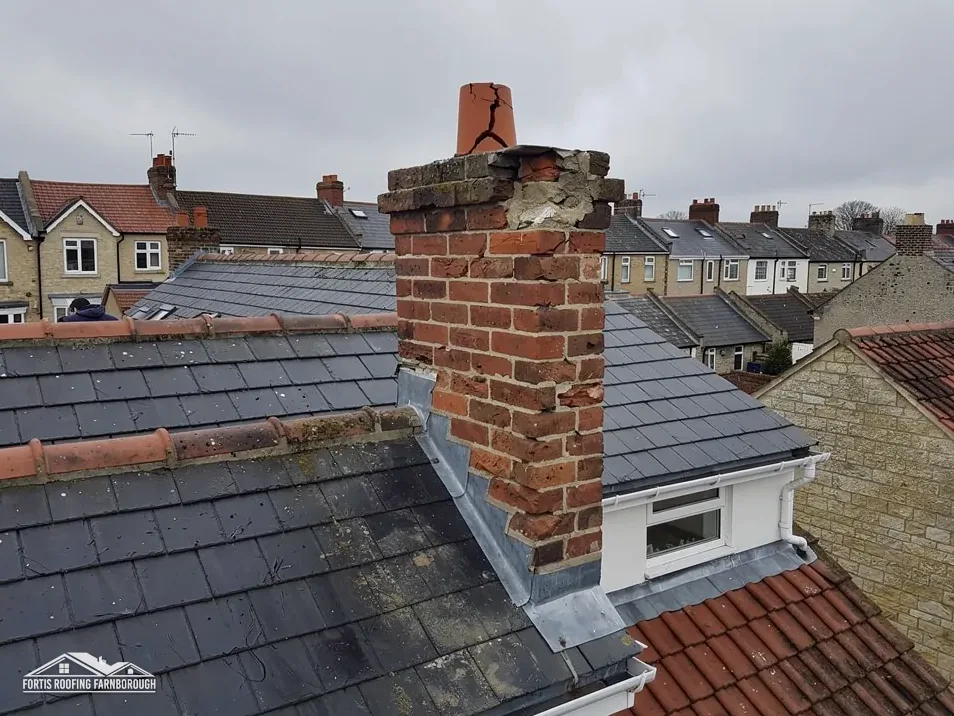
Valleys deserve particular mention on a Bradfield roof. On older houses with an extension or a wing, the valley gutter where two slopes meet is often lined with lead, and it carries water from both. If it splits or silts up, the damp shows on a ceiling far from the cause. We open up and photograph each valley, check the lead and clear what has gathered in it, and tell you what the evidence supports.
A college building and a village cottage can stand within sight of each other and need quite different treatment. For each Bradfield roof we write down what is retained, what is replaced and why, and the record goes with the written price. That habit pays off years later, when someone needs to show the council what was done and when.
Our slate roofing and lead roofing and lead work pages explain how older coverings and flashings are renewed.
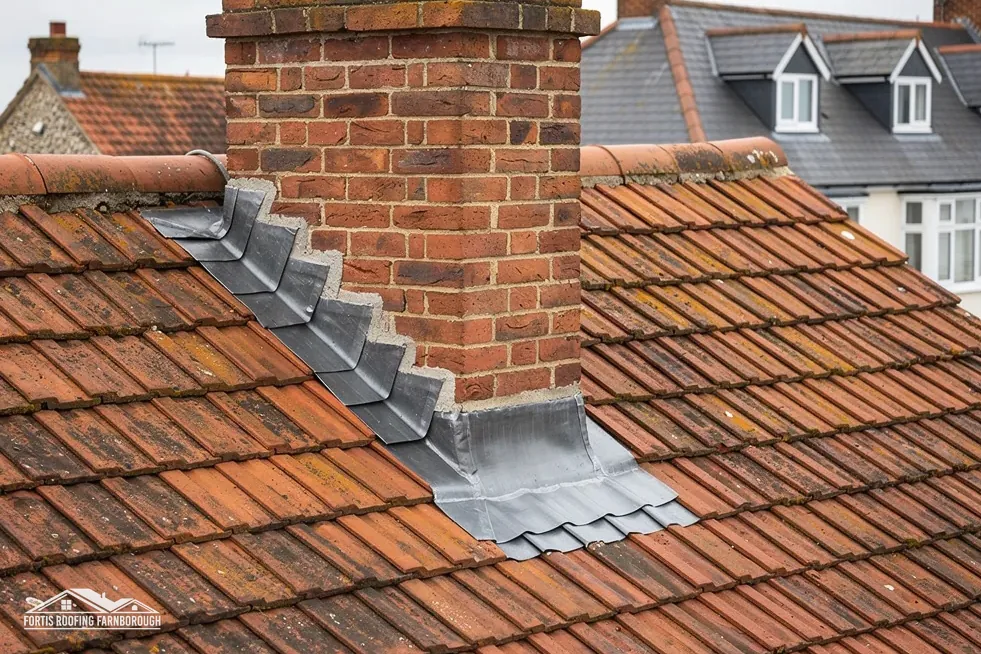
Yes, if the junction is detailed properly. Where a slate slope meets a tiled one, water is carried over the join by lead soakers, small folded sheets of lead set between courses, and by a flashing along the wall. We inspect that joint closely, because it is where a mixed roof tends to fail first, and we photograph it for you.
That is West Berkshire Council's decision. Inside the North Wessex Downs National Landscape we put any dormer to its planners before drawings are made. Repairs and like-for-like re-roofs are different and carry no such restriction. If your plans would alter the roof's shape, we put the question to the council first.
Army House and B and C Houses carry Grade II listings, so any work altering their character requires listed building consent from West Berkshire Council, on top of other approvals. Matching what is already there is the straightforward case, and we photograph the existing details first. St Andrew's, bought by the college in 2021 and no longer kept for worship, needs the same consent.
Building Control Solutions, known as BCS, runs the building control service through West Berkshire Council and Wokingham Borough Council, while West Berkshire stays the planning authority. A registered building control approver is the private option. The survey shows whether your roof passes the Planning Portal's limits, and that decides which route applies.
Get your free roof quote
Give us your Bradfield address and what you have noticed on the roof, and we will book a survey.
10-year workmanship guarantee, in writing.