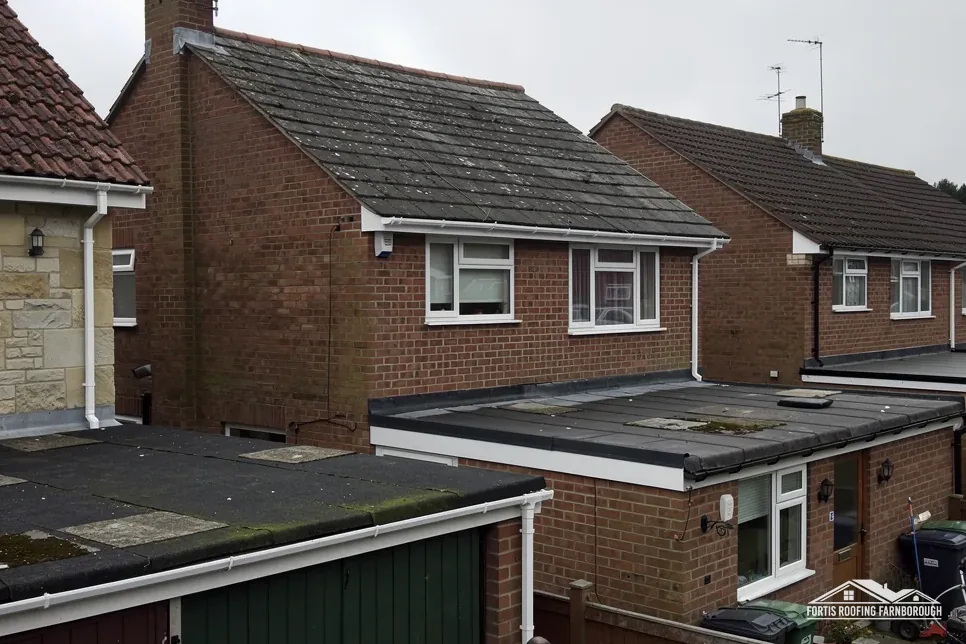
A district beside the Thames
The county history of 1925 called Bourne End, in the south-west of Wooburn parish, a residential district by the Thames.
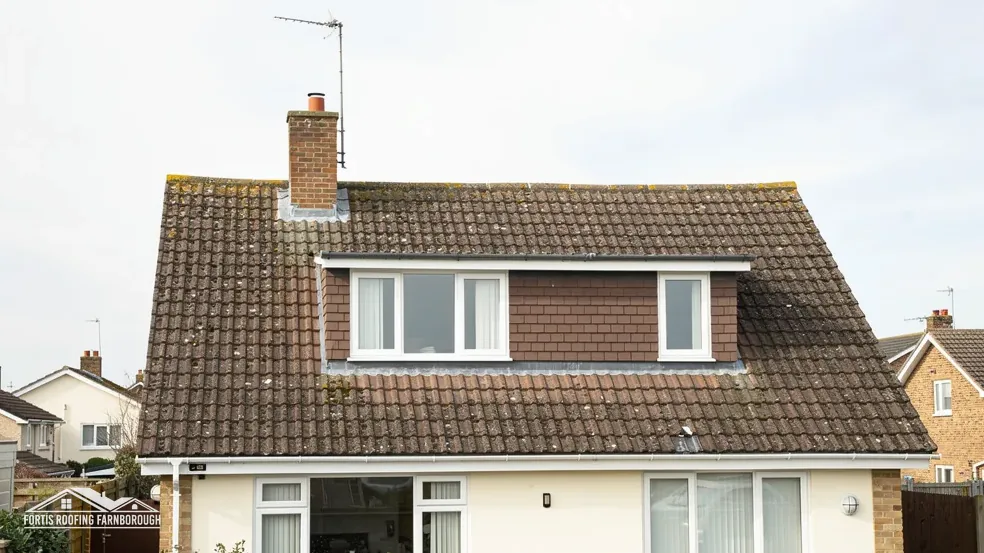
Roofs where the River Wye meets the Thames opposite Cookham
Bourne End was the Burn End in 1222 and a residential district by the Thames in 1925. We survey every roof and put the contract in writing.
The county history of 1925 called Bourne End, in the south-west of Wooburn parish, a residential district by the Thames.
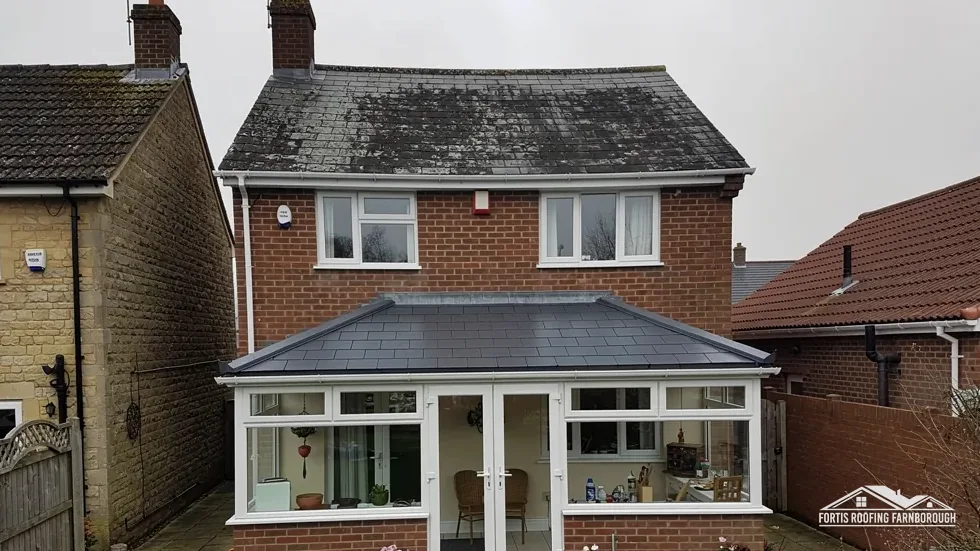
In 1925 there were brickworks and a gravel pit near Wooburn Green and a chalk quarry near the station.

Cottages at Deyncourt Farm, built partly of flint and clunch and partly of brick and timber, have tiled roofs.
Map of Bourne End with Little Marlow, Cookham, Marlow, Bisham marked around it.
Map data © OpenStreetMap contributors. Loads only when you ask for it.
Bourne End is a Thames-side village where the River Wye meets the Thames, opposite Cookham, and Farnborough lies 28.2 road miles to the south.
About 28.2 road miles north of Farnborough · Buckinghamshire Council (unitary).
Bourne End, contracts and clay
What a signed roofing contract gives a Bourne End homeowner, how the Wye, the Thames and the old brickworks shaped the village, and which designations around it affect a roof repair.

| No. | Chapter | The figure it turns on |
|---|---|---|
| 01 | Signing at home: your 14 days | 14 days to cancel at home |
| 02 | The Wye, the Thames and the old brickworks | Known as the Burn End in 1222 |
| 03 | The Chilterns edge and the nearest conservation areas | Chilterns covers 4 per cent of the area |
Chapter 01 of 03
| Question | The published answer |
|---|---|
| Contract signed at your house after a survey | An off-premises contract with a right to cancel |
| Length of the cancellation period | Ends 14 days after the day the contract is entered into |
| A visit you request to carry out urgent repairs | No cancellation right (regulation 28) |
| Free advice if a job goes wrong | Citizens Advice consumer helpline, 0808 223 1133 |
Bourne End belongs to Buckinghamshire Council, a unitary council that decides planning and also runs building control, so the usual roof questions have a single address. What owners tell us they find harder is the contract. A roofer arrives, surveys the roof and quotes, and you sign at the kitchen table. The law has a name for a deal struck that way, and a set of rights goes with it.
The Consumer Contracts Regulations 2013 treat a contract made anywhere but the trader's business premises as off-premises. You can cancel such a contract without giving a reason. For services the window closes 14 days after the day on which the contract was entered into, and Citizens Advice says it starts counting the following day. Should the trader fail to supply the cancellation information, the window can stretch by as much as 12 months.
Two points catch people out. A trader who begins work inside the 14 days must have your request in writing or another durable form, a signed sheet or an email being typical. And the right is lost where you yourself asked for a visit to deal with something urgent. A ceiling dripping at breakfast and a call to a roofer the same morning is that situation, and the regulations treat it differently from a planned job.
The Consumer Rights Act 2015 expects reasonable care and skill from anyone providing a service. If you are unhappy with a result, the Citizens Advice consumer helpline, 0808 223 1133, offers free guidance. It also recommends collecting written quotes from at least 3 traders before you choose, and we would sooner you did that than signed in a rush.
The same Planning Portal test applies in Bourne End as anywhere. Work touching under 25 per cent of the building envelope and under 50 per cent of the roof needs no building control application, whereas a larger re-cover goes to Buckinghamshire's team or a registered building control approver. When the contract is drawn up, the price in it is one written total, so the figure you sign is the figure you pay.
Keep your copy of the contract, the survey photographs and any receipts together in one folder. If anything is disputed later, that folder is the best evidence you can have.
Chapter 02 of 03
Bourne End's river village in four figures
The county history of 1925 puts Bourne End in the south-west of Wooburn parish, a place known in 1222 as the Burn End and by then a residential district beside the Thames. The River Wye flows through Wooburn from Wycombe and enters the Thames at Bourne End, where a toll bridge carried the road across to Cookham. The soil of the parish is loam and gravel over chalk and sand, and the account notes brickworks and a gravel pit near Wooburn Green and a chalk quarry near the station.
At Deyncourt Farm in Wooburn village, cottages incorporating remains of a 15th-century manor house are built partly of flint and clunch in a chequer pattern, and partly of brick and timber, with tiled roofs. Clunch is a hard chalk, and a chequer pattern alternates squares of stone and flint. Walls of mixed materials move at different rates, and a tiled roof sitting on them meets the wall at joints that need careful flashing.
Those cottages are in the next village, not in Bourne End itself, and they show what a surveyor in this part of Buckinghamshire may meet, not what a given house carries. The 2021 Census counted 7,166 people in the built-up area, and most of them live in houses built long after 1925. For each of those the survey opens with the same question: what is on the slope now?
A river meeting the Thames is a reminder that drainage matters. Gutters and downpipes on a house near flowing water must still clear rain quickly. The Environment Agency's Flood Map for Planning shows parts of the land within about 250 metres of the centre in Flood Zone 3. That is a statement about ground levels, and we do not turn it into a roofing claim. It is, though, a reason to leave the drainage no weak points, so every outlet is photographed and flow-tested on the survey.
Place and people
Brickworks and a chalk quarry near the station in 1925 also mean that clay and chalk were close at hand, and that the older housing here grew up beside industries that used them. How that translates into any particular roof is something we read from the roof itself.
Chapter 03 of 03
| Designation | At Bourne End | For roof work |
|---|---|---|
| National Landscape edge | Chilterns, partly: 4% of the 1.5 km area | Ask Buckinghamshire about dormers at your address |
| Conservation area | Abbotsbrook, within about 0.75 km of the centre | Matching repairs; ask about changes |
| Conservation areas, also touched | Hedsor Road and Riversdale; Well End | Check your own address |
| Listed buildings | None recorded within 500 m of the centre | No listed building consent question on the record |
Bourne End sits at the edge of the Chilterns National Landscape, which used to be an Area of Outstanding Natural Beauty. The place point we use lies outside it, but about 4 per cent of the 1.5 kilometre area around it falls inside, so whether your house stands in the designated part depends on your street. On the designated side, Buckinghamshire Council's planners judge any dormer against the landscape, and they keep the boundary map too. Our planning permission and roof work guide explains what the designation changes.
Abbotsbrook is the conservation area lying within about 0.75 km of the middle of Bourne End, and that search also reaches Hedsor Road and Riversdale, and Well End. A conservation area does not block roof repairs. It asks that a repair keep the look the designation protects, so an identical covering, ridge and chimney detail is the straightforward case. Whether an Article 4 direction applies to your address is the council's to say, and we ask before a roof is priced.
The National Heritage List records no listed building within 500 metres of the centre, so a Bourne End house is less likely to raise a listed building question. A neighbour's older cottage can still be a different matter, and we check before scaffold goes up.
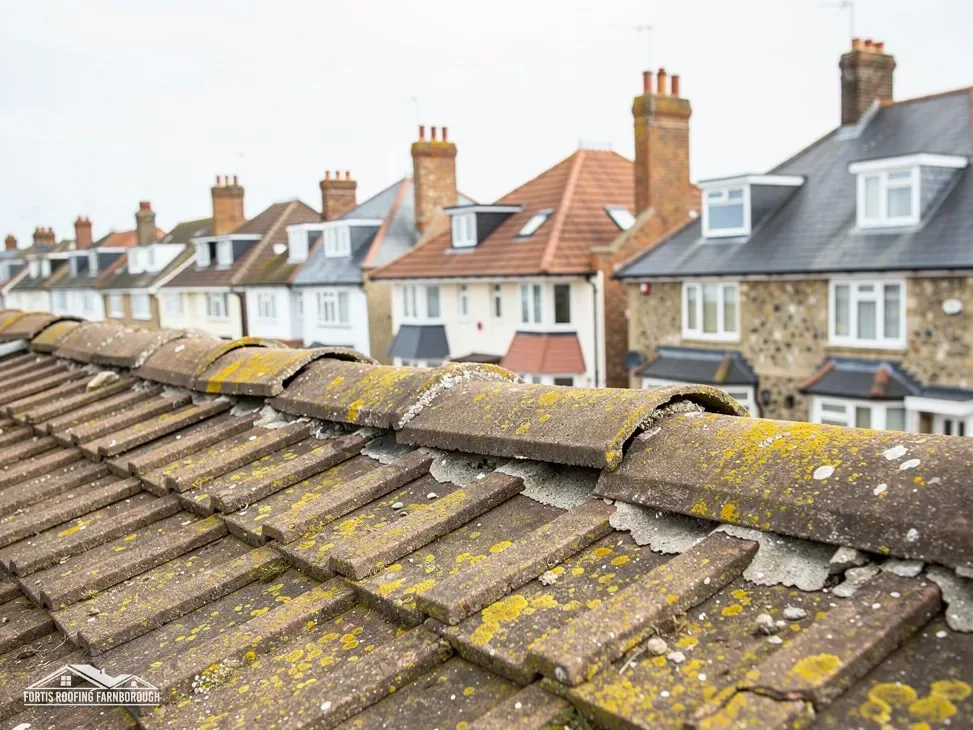
For a house in or near a conservation area we photograph the ridge, verges, valleys and chimney before and after any repair, and the pictures go to you with the price. If the council later asks what stood on the roof, you can show it. Our chimney repairs page covers the stacks, and pitched roofing explains tiled slopes.
A roof on a street near the river or a road bridge may also need access planned with care. We agree where materials will be stored, where waste will be loaded and how long the scaffold will stand, so that neighbours and passers-by know what to expect and the site is left tidy at the end of each day. If you may add a dormer or roof window later, say so at the survey, because it affects how the roof is repaired now.
Mixed walls move at different rates, so the joint where the roof meets the wall is the part to watch. We photograph each flashing, check the tiles beside it and the mortar or lead that seals it, and repair what has failed. A like-for-like repair keeps the roof's look, and we say plainly what we found.
Normally, within 14 days after the day you signed, with no reason needed, because the contract was made at your home. A visit you asked for specifically to deal with urgent repairs is the exception. Citizens Advice, on 0808 223 1133, can tell you how the rules apply to your own paperwork.
Partly. About 4 per cent of the 1.5 km area around Bourne End falls inside it, although the place point we use lies outside, so it depends on your street. Buckinghamshire Council holds the boundary map. It matters if you plan a dormer, so we put that question to the council's planners before any drawings are made.
The Abbotsbrook conservation area lies within about 0.75 km of the centre, and the area query also touches Hedsor Road and Riversdale, and Well End. Which one covers your address is for Buckinghamshire Council to say. We check, and ask whether an Article 4 direction applies, before any Bourne End roof is priced.
Get your free roof quote
Send your Bourne End address with a short description of the problem, and a visit will be booked.
10-year workmanship guarantee, in writing.