The short answer
It should not if the work is done carefully by hand, but foam is bonded to what it covers, so some marking of timber or tearing of an underlay can happen. Weak timber and old membranes are at most risk. A good firm works slowly, photographs what it exposes and tells you what it finds, including any damage the removal revealed or caused.
What can go wrong with the underlay and the covering
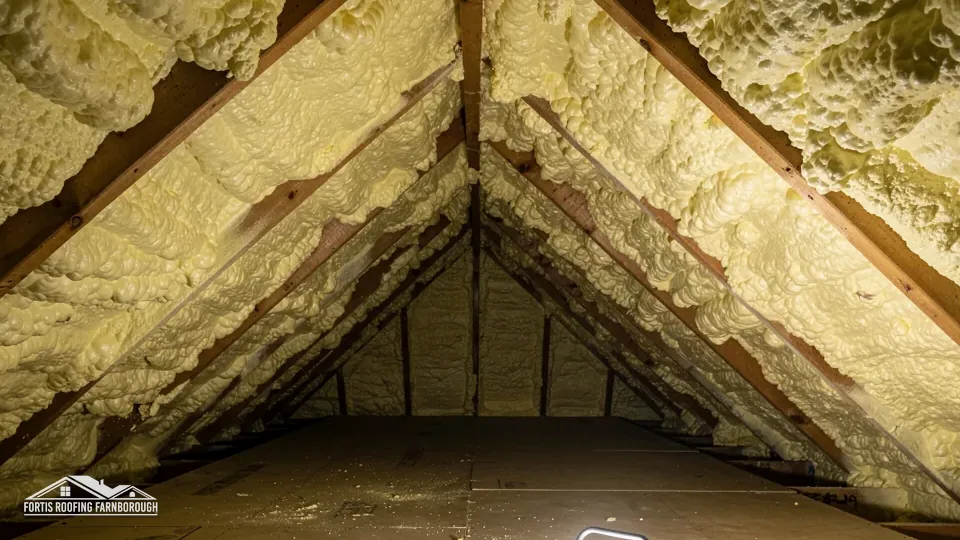
Foam applied under a roof touches the underlay, where there is one, and sometimes the tile backs and battens. It bonds as it cures. Taking it off means separating it from those surfaces, and the surfaces can come with it.
A thin membrane is the most vulnerable. A breathable underlay is a thin fabric, and foam stuck to it can rip it as it peels off. A tear weakens the roof's back-up against rain driven under the covering, so the section is patched or replaced, which can involve lifting the covering. Our answer on spray foam on a breathable membrane covers this.
Tiles and slates can also be disturbed. If foam has run through gaps and set between them, or bonded to the tile backs, prising it away can shift a tile or crack a brittle slate. Battens fixed through the foam may be loosened.
The roof can be protected. Working from inside, slowly, in small sections, with the covering supported from above where needed, keeps the risk low. After the work, the covering is checked from outside for anything that moved, and any displaced tile or slate is refixed.
Timbers: what removal can mark
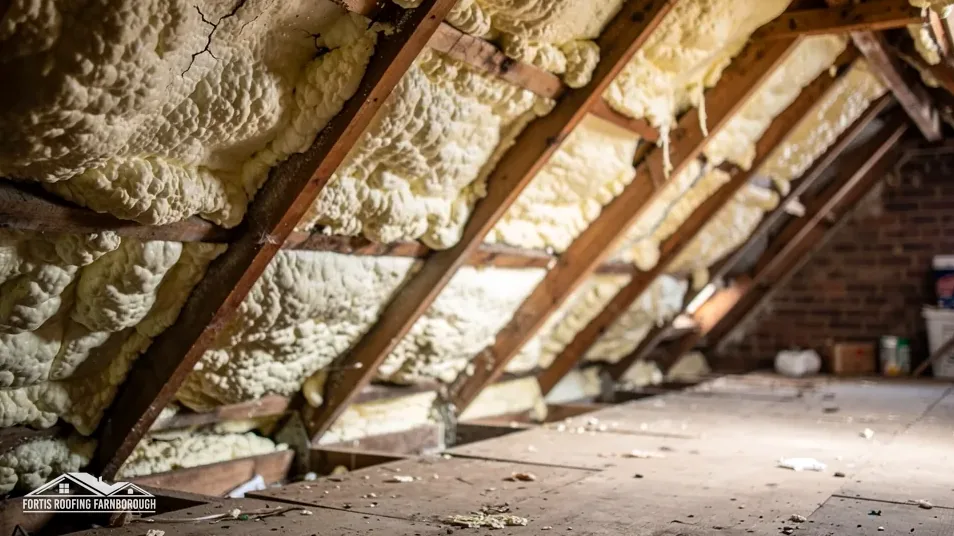
The timbers are the next concern. Foam grips the surface of rafters and battens, and in removing it, tools can score the wood or lift a layer of fibre with the foam. Most scoring is shallow and does not affect strength, but repeated or deep cuts weaken a member, and so does damage to an already thin batten.
Timber that was damp or decayed under the foam is at more risk, because soft wood tears more easily. Much depends on what the foam was hiding. If rot is present, it is weaker than it looks, and the removal reveals it, which is not the same as causing it. A damaged rafter foot was probably failing before the foam came off.
Careful methods reduce the risk. Blunt-edged scrapers are used rather than blades on sound timber, foam is cut away from the wood instead of being pulled off it, and tools are held at a shallow angle. Where foam will not release without damage, a thin layer may be left on the timber rather than risk the wood. That is a trade-off, and the report records it.
Photographs of the timbers as they are exposed form the record. RICS notes that foam-covered timbers resist full inspection, and removal is when they can be examined, so what is found is described plainly.
Repairs that removal may reveal
Removal often uncovers faults that were already there. Typical findings are stained or damp timber, rotten rafter ends or wall plate, corroded nails, torn or missing underlay, slipped or cracked tiles and slates, and old leaks that were sprayed over. The Energy Saving Trust (updated May 2026) discourages foam on a leaking roof, because water held under it can rot the structure.
We separate what was found from what the removal did. Photographs taken as each area is exposed show the condition at the moment of discovery, so a rotten rafter foot is recorded as it was and a scored batten as it is. You are told which is which.
The repair follows from the finding. Sound timber needs nothing. Damp timber may be dried and monitored. Rotten ends may be cut out and spliced, battens replaced, underlay renewed and tiles refixed. A re-roof of the slope is the largest response, and our answer on re-roofing after spray foam removal sets it out.
Each repair is explained and agreed before it is done, with an indication of the extra cost, because the original quote could not know what lay under the foam.
Outside repairs may call for scaffold.
How we reduce the risk
The risk is managed before work starts. We survey the loft to see the foam type, its thickness and how it was applied, and we look at the covering from outside. If the underlay is breathable and thin, or the timbers look soft, we plan a slower method and tell you why.
During the work, the roof is never left open. The foam is removed from inside, so the covering stays in place, and any outside repair is done with a temporary cover ready. Protection for the house below goes down first, with the loft closed off.
At the end you receive photographs and a report covering findings, work done and anything outstanding. If some foam is left on a timber to avoid damage, the report says so, giving a lender or buyer a true picture.
Marks on old timber cannot be ruled out where foam has bonded. What you get is care, a record and a straight account, with any repair decided on the evidence.
See spray foam insulation removal for the service. A single written price follows the survey.