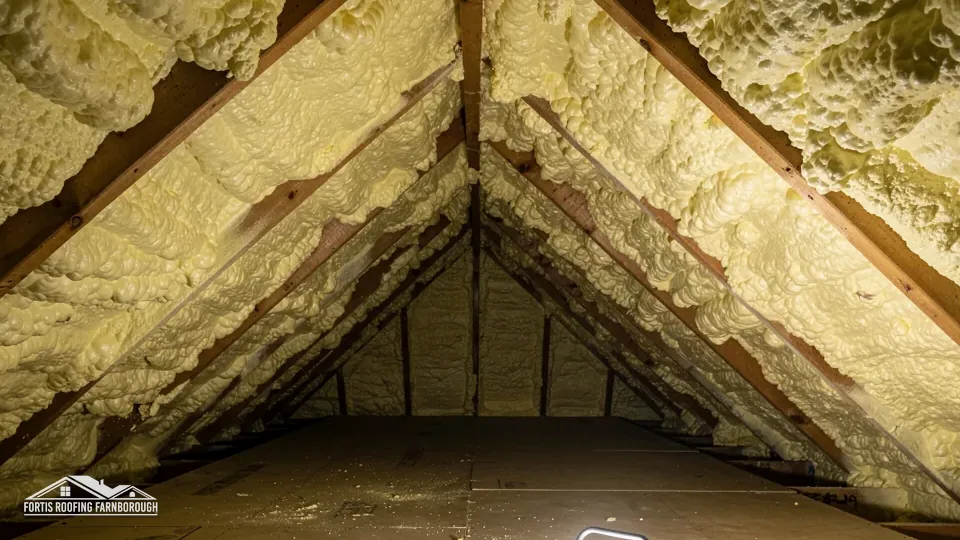
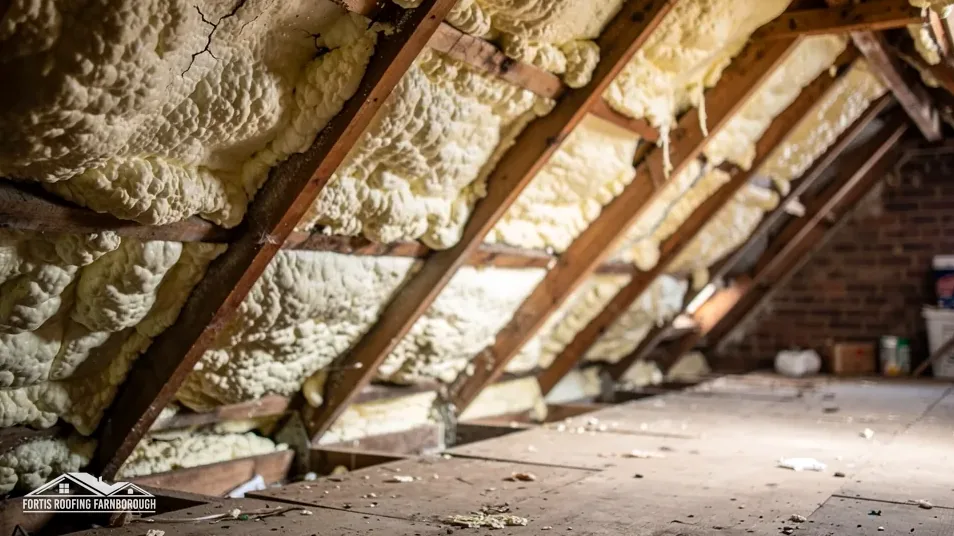
The short answer
Both specialist insulation firms and roofers take foam off, and the choice depends on what the job needs. If the roof timbers and covering may need repair once the foam is gone, a roofer can inspect and fix them in the same visit. Whoever you choose, ask who inspects the timbers, what records you receive and how the waste is handled.
Insulation firms and roofers
Two kinds of firm commonly offer removal. Insulation specialists deal with foam as their trade: they know the products, have the equipment for stripping and clearing, and may also sell replacement insulation. Roofers deal with the structure and covering the foam is stuck to, and they can see what is wrong with the roof as it is exposed.
Each has strengths. An insulation firm may be quick at the stripping and may have a set method for it. A roofer is better placed when the foam has hidden damp timber, slipped tiles, failed flashings or a torn underlay, because the repair follows straight from the discovery.
For many roofs the best answer is one firm that can do both: remove the foam, inspect the timbers, report on them and carry out repairs. That avoids a gap between the stripping and the repair in which the roof sits exposed, and it keeps one person responsible for the whole job.
We are roofers, and we approach foam removal from the roof's side. We survey first, say what the foam is hiding, and explain what we would do about the timbers and the covering. Our answer on whether spray foam removal will damage the roof describes how the roof is protected as the foam comes off.
Why the condition of the roof matters
Removing foam exposes what the foam covered. Dry, sound timbers need nothing. Wet or rotten ones need action, and the sooner the better. A contractor who strips the foam and leaves, with no inspection or repair capacity, leaves the owner with an open question about the roof.
The roof's covering also matters. Where foam was applied to tile or slate backs, stripping it may disturb the covering, and a roofer can relay what comes loose. If the underlay is torn, it has to be replaced, which involves lifting the covering. If the eaves or ridge ventilation is blocked, it needs reopening.
A lender or buyer will want to know the outcome. Lender caution over foam began in equity release, RICS reported in March 2023, and providers differ. Evidence of sound timbers after removal is the most helpful thing to show any lender.
That is why the inspection step is worth asking about when you compare firms. Who looks at the timbers? What do they look for? Do they take moisture readings? Will you receive photographs? And what happens if they find something?
Our answer on whether spray foam can be removed describes the method and what turns up.
Questions to ask any firm
Citizens Advice recommends at least 3 written quotes, and the comparison is only fair if each firm priced the same job. Give each the same information and let each see the loft. Then ask the same questions.
- Who will inspect the roof timbers after the foam is off, and what will they record?
- What happens if rot, damp or damage is found, and who repairs it?
- How is the loft sealed from the house, and how is dust collected?
- Where does the waste go, and who takes it?
- Is scaffold needed, and who arranges any highway licence?
- What report and photographs do I receive at the end?
Check the answers are given in writing and in the quote. A scope that describes the work in plain words is more useful than a page of general assurances.
Treat claims with care. Accreditations, memberships and guarantees are easy to claim and hard to check, so ask for evidence and verify it independently, or give the evidence less weight. A firm that shows you photographs of its work on a comparable roof is giving you something concrete.
Citizens Advice's consumer helpline is 0808 223 1133.
Reports and records
The end product should include a record. A removal report states what was found, with photographs of the foam before and after, the exposed timbers and the covering, moisture readings where taken, the method used, the repairs made and the replacement insulation and ventilation. It is the document a lender, buyer or surveyor will ask for.
A report is worth more when it is honest about limits. If some timbers could not be reached, or if the foam was only partly removed, it should say so. Our guide to the spray foam removal report sets out what a good one holds.
The price should be a single written total, with VAT stated and the scope setting out what is included. VAT stands at 20%, so check whether the figure already contains it.
If you want to see how we work, we start with a survey of your loft. We photograph the foam, the visible timbers and the covering, then explain what we found and what we would do, in plain words. If the roof needs nothing beyond removal, that is the advice.
See spray foam insulation removal for the service. The written total follows the survey.