The short answer
Often, yes, though it is slow work. Foam sprayed onto roof timbers bonds to them, so removal means cutting or scraping it away while protecting the wood underneath. How hard it is depends on the type of foam, how thickly it was applied and the state of the timbers. A survey in the loft decides what is practical.
Why it is possible but not simple
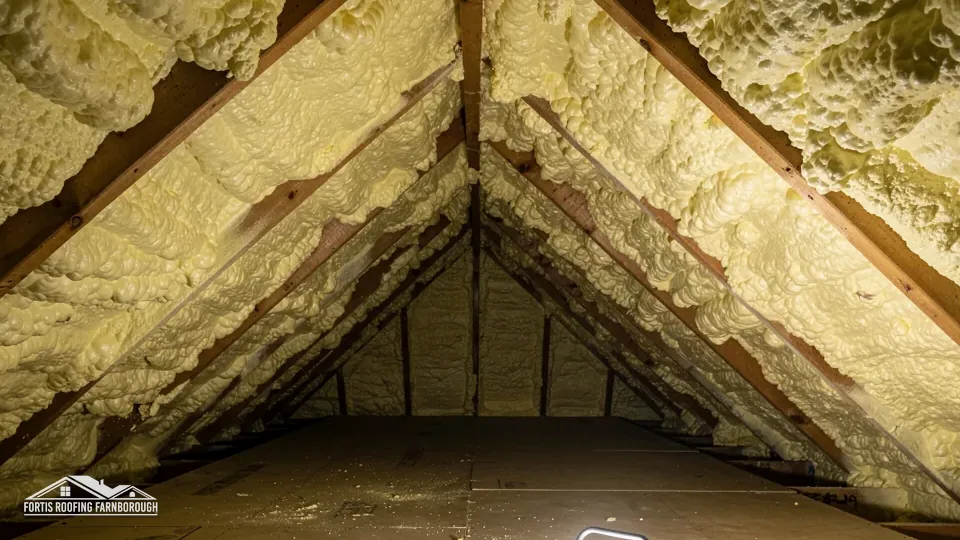
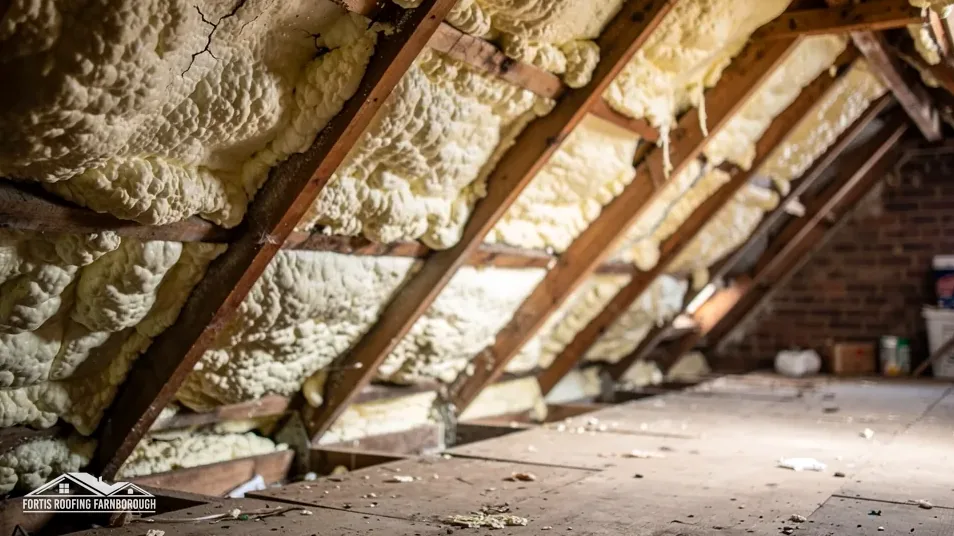
Spray foam goes on as a liquid and expands, filling gaps and sticking to whatever it touches. Under a roof it clings to rafters, battens, the back of the covering and the underlay. That grip is the point of the product, and also what makes removal slow.
The foam type matters. Open-cell foam is soft and lightweight, and it tends to come away in sections. Closed-cell foam is firmer, grips harder and costs more effort to shift. Our guide to open and closed cell spray foam explains the difference.
Thickness and coverage change the job too. A thin coat on the underside of the covering is a different task from foam packed solid between rafters and over their faces. The more of the timber is buried, the more care is needed.
Removal is also easier in some lofts than others. A loft with good headroom and clear access lets people work in comfort. A cramped roof space or one with a cut-up structure, such as a loft conversion, is slower, and the cost follows the time.
The honest answer to the question is therefore yes in principle, and a survey in practice. We look at your loft before saying what can be done.
How the foam is taken out
Removal is mostly done by hand, working in sections. The roof space is prepared first: the floor is protected, the loft is sealed off from the rest of the house and the working area is set up for dust and debris. Workers wear protective equipment, since the material and the dust are unpleasant to breathe.
The foam is then cut, scraped or peeled from the timbers and the underside of the roof covering. Hand tools, scrapers and specialist equipment do the work, and each section is cleaned back to bare timber where possible. Solid foam is lifted out in lumps, and dust is collected as the work goes.
The aim is to take the foam off without damaging what is under it. Rafters and battens can be scored by a scraper, and old tiles and underlay can be disturbed if the foam is stuck to them. The work is therefore slow and careful, and it leaves the roof in a condition to be inspected.
The waste is bagged and removed from site. Our answer on whether spray foam removal is messy explains the containment and clean-up.
When the foam is off, the new insulation, which could be mineral wool or another material suited to the roof, is fitted, and the ventilation path is restored where it is needed.
What is found underneath
A reason people remove foam is that it hides the roof. RICS makes two points in its consumer guide: roof timbers buried in foam cannot be fully inspected, and badly fitted insulation can disturb ventilation and bring moisture damage. Removal is when the timbers can finally be looked at properly.
What turns up varies. Many roofs prove to be in sound condition, with dry, clean timber. Others show staining, damp patches, rot at rafter ends or the wall plate, or corroded nails, where moisture has been trapped by the foam. Old leaks that were sprayed over are another discovery. The Energy Saving Trust (updated May 2026) does not recommend putting foam over a roof that leaks.
We photograph the timbers as they are exposed, so the evidence is on record. Sound timber is left alone, and damaged timber is reported, with a view on whether it needs treatment, repair or replacement. A good removal report keeps that record.
Repairs are then a separate decision. Rotten ends may be cut back and spliced, battens replaced and slipped tiles refixed, and the cost depends on the findings.
Deciding whether to remove it
Removal is not always necessary. Whether foam has to come out depends on your mortgage lender, the type of foam, the condition of the roof and what you plan to do. RICS reported in March 2023 that lender caution had begun with equity release, and its guide directs owners to their mortgage provider. Our answer on whether spray foam always has to come out works through the factors.
If you are selling, buying or remortgaging, the lender's view is usually the first question. If you are worried about the timbers, an inspection tells you the condition before any decision. If the foam is on a roof that leaks, the leak needs fixing whichever way you go.
The loft survey comes first: the foam is photographed, measure the roof space, note the access and check the covering from below, then explain what removal would involve and what we expect to find. Nothing is promised about the timbers until they are seen.
The survey ends with one written total for the work as described. See spray foam insulation removal for the full service, and the scaffold question is dealt with there too.