The short answer
RICS, the Royal Institution of Chartered Surveyors, put out a spray foam consumer guide in March 2023. Its press release carries 3 March 2023 and the guide itself 31 March 2023. The release reports lender concern in certain parts of the market, and the guide sends owners to their mortgage provider.
The release and the guide, with their dates
There are two documents. The first is a RICS press release, headed as dated "03 March 2023", announcing a new consumer guide on spray foam insulation. The second is the guide itself, a downloadable document that RICS lists as published on 31 March 2023. The two dates sit within a month of each other, and each deserves quoting correctly, because they are often mixed up.
RICS describes the guide as impartial, meaning it takes no side between installers and critics, and it is aimed at consumers. It sits on the RICS website with a consumer guide page. RICS is a professional body for surveyors, and its guidance carries weight with lenders and valuers because they rely on its members' reports.
The release gives its reason. RICS speaks of "concern" in "specific sectors" of lending, and names equity release mortgages as the example, adding that RICS now sees a wider effect on lenders. The wording is careful: it names a sector, and nowhere does it say all lenders turn such homes away.
Neither document is law or regulation. They are guidance from a professional body, and their value to an owner is as a statement of what surveyors and lenders are looking at. Our answer on spray foam and equity release looks at the sector named first.
What the guide asks owners to do
The guide gives practical advice, and three points matter most. The first is about lenders. RICS urges owners to "check with your mortgage provider" about "lender policy" on "the installation of such products". It does not say what any lender will decide, only that the owner should ask, and the sensible time is before the work, not after.
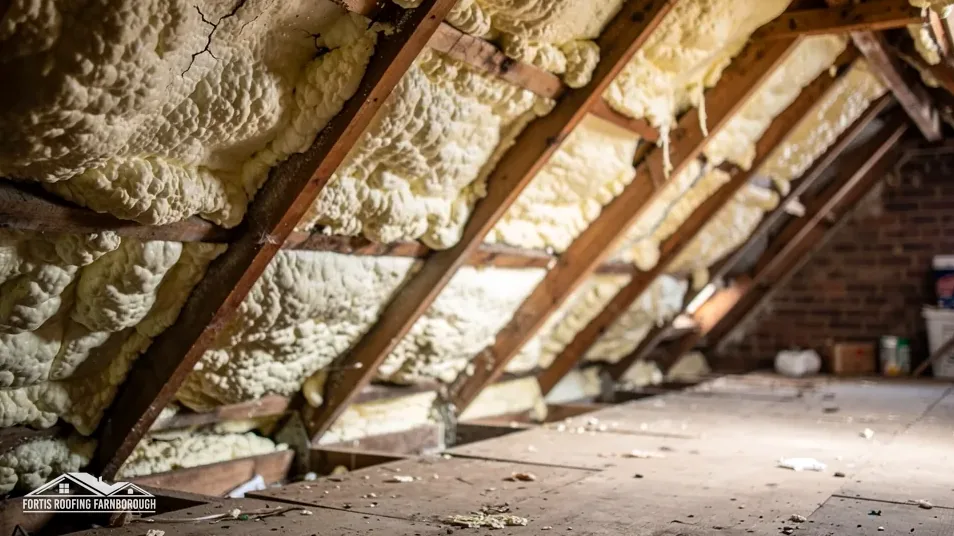
The second point concerns inspection. RICS observes that a timber roof structure under foam "cannot be fully seen" or inspected. That is the core of the surveyor's difficulty: a report on a roof can only describe what can be seen, and foam hides the timbers that matter most.
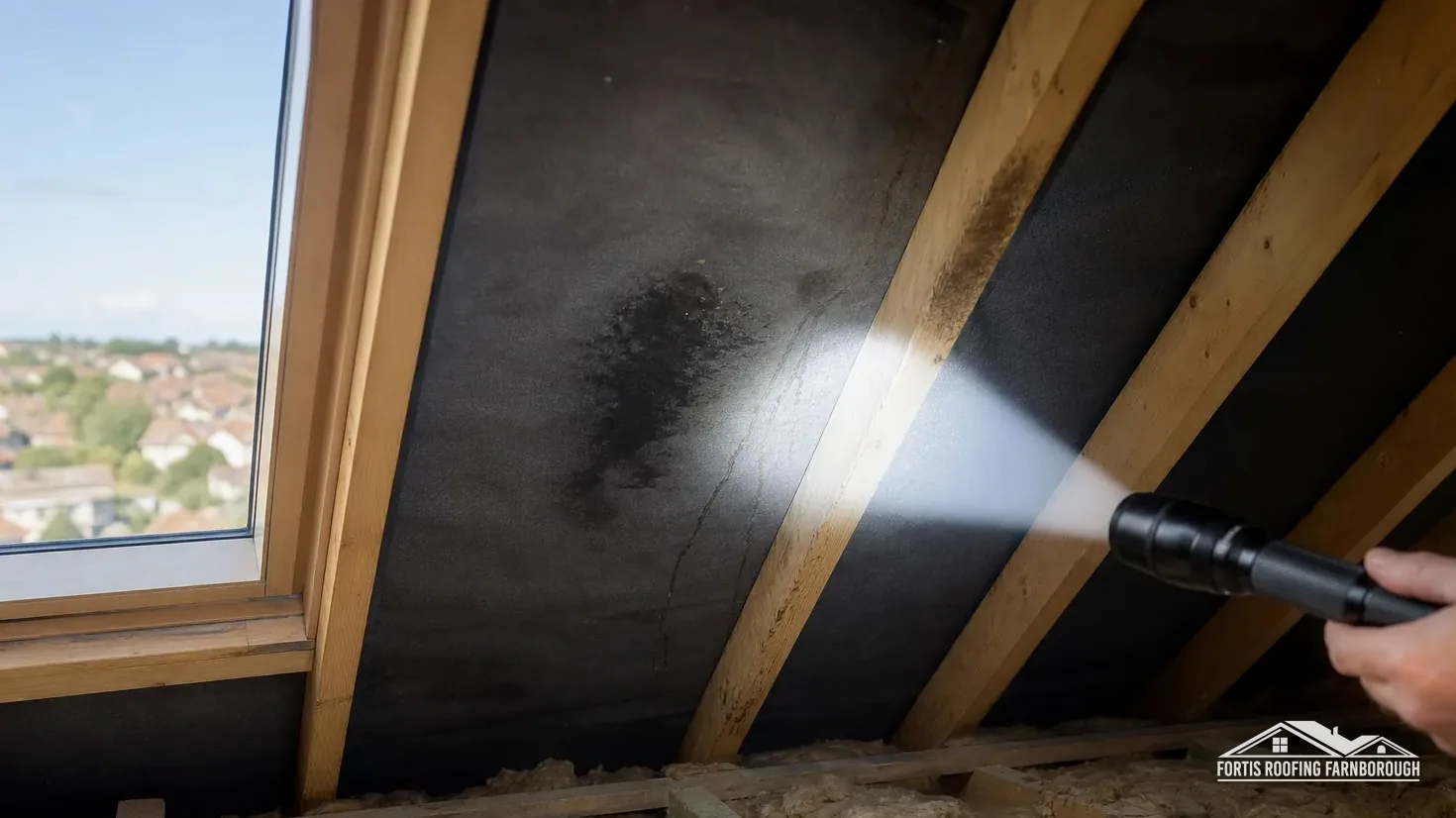
The third point is moisture. RICS warns that insulation "incorrectly installed" can harm ventilation and bring moisture damage. That is a warning about poor installation and not a condemnation of the product as such, a distinction worth keeping.
Together these points explain the cautious approach of surveyors and lenders. Foam can be fine, but it is hard to check, and a problem under it may go unseen. The guide's answer is to ask first and to keep records, not to assume.
Our answer on whether spray foam always has to come out works through what follows.
What it means for owners and buyers
For an owner, the guide's message is to talk to your mortgage provider, preferably in writing, and to keep the installer's paperwork, photographs and any survey. If you plan to sell, remortgage or borrow against the house, the lender's position matters most. If you are staying put, it matters less, though the timber question remains.
For a buyer, the point is to ask the seller what was installed, when, by whom and whether anything has been inspected since. Ask the lender early, and ask your surveyor to state in the report what could not be seen. Our answer on buying a house with spray foam works through the checks.
The guide does not order any owner to strip foam, and it should not be read that way. It names no lender either. Claims that lenders refuse to lend, or that every roof must be cleared, go beyond it. Policies differ and change, so the safe reading is to ask your own lender.
RICS is not the only voice. The Energy Saving Trust (updated May 2026) separately advises against foam over a leaking roof. That is a separate point about installation, and it fits with the RICS concern about hidden damp.
How we use the guidance
We treat the RICS documents as a statement of the questions to answer, not as a verdict on any one roof. A survey in your loft looks at the foam, its type and thickness, the visible timbers, signs of damp, and the ventilation, and records everything with photographs.
Where timbers are hidden, the report states that, as the RICS guide itself does. We can recommend opening a small area or removing a section so the timbers can be inspected, and we explain what that would show and what it would leave unanswered.
If removal is chosen, whether partial or full, a report with photographs gives you evidence to show a lender or buyer. A removal report records the content.
We cannot say what your lender will do, and we cannot interpret your mortgage terms. The lender and your solicitor or adviser do that. We provide the facts about the roof.
The page for the service is spray foam insulation removal. The survey ends with one written price for the work, and no pressure to remove foam that does not need to come out.