The short answer
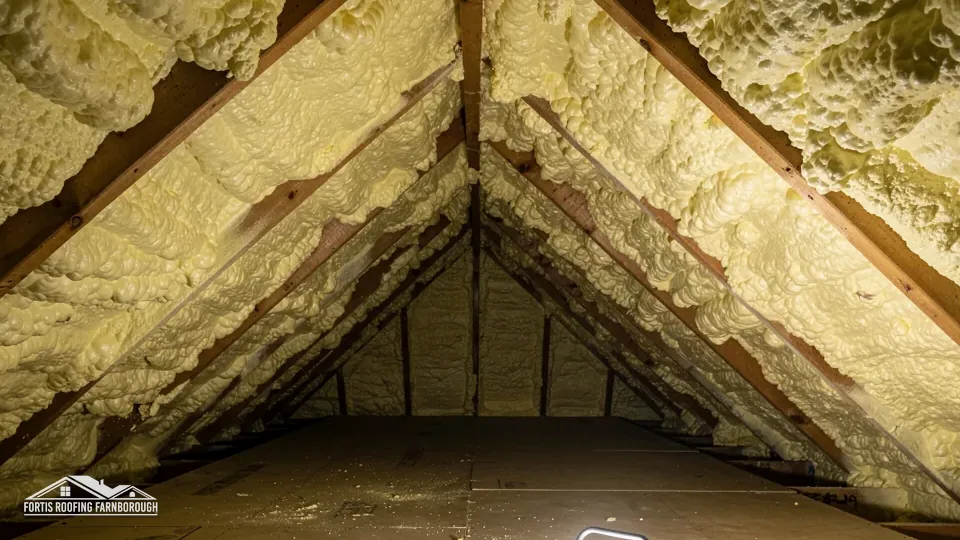
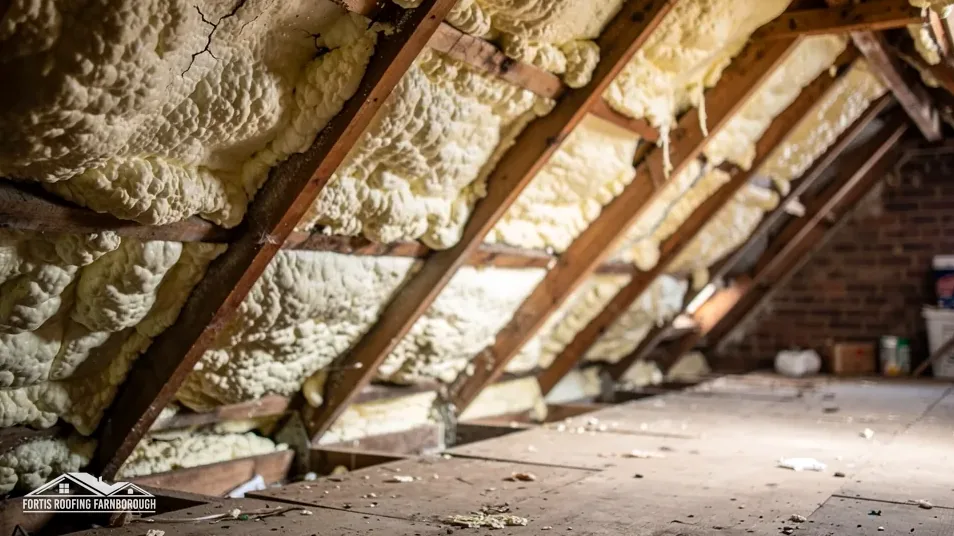
Spray foam under a roof does not stop a purchase, but it adds questions. In March 2023 RICS reported lender unease that started in equity release, and its guide sends owners to their own mortgage provider. Foam over the timbers also hides them, so ask the survey to say what could not be seen, and ask the seller for any removal report.
What RICS said and what it means for buyers
The Royal Institution of Chartered Surveyors (RICS) put out a spray foam consumer guide, announced by a press release dated 3 March 2023, with the guide itself showing 31 March 2023 as its published date. The release described unease among some mortgage lenders, equity release first, which it said had grown to touch lenders at large.
For owners the guide gives two practical points. One is to check with your mortgage provider that its lending policy accepts such products. The other is a warning about inspection: timber hidden beneath foam cannot be fully examined, and a poorly installed layer can harm ventilation and bring moisture damage.
For a buyer, the lesson is timing. A lender may have a view on a house with foam in the roof, and the moment to find out is before money goes on surveys and legal work. Policies differ between lenders and change over time, so a mortgage adviser or the lender itself is the right source, and the reply is best kept in writing.
Our answer on what RICS says about spray foam sets out the guidance in more detail. Nothing here is mortgage or legal advice.
Survey and lender checks
Begin with the lender. Say plainly that the property has spray foam in the roof space and ask whether it will lend. Do this before the survey fee is paid.
Next, read the survey you commission with care. A surveyor reports only on what can be seen, so if foam coats the rafters and the underside of the covering, the report should state that the timbers could not be inspected. Ask for the limits to be spelled out, including whether moisture readings were possible.
The seller may hold papers. Useful ones name the installer, the date, the foam type, any guarantee and any tests since. Ask for them, and expect some to be missing.
If you can reach the loft, look for staining on the foam, a musty smell, foam sprayed over an old leak, and timber ends that look damp where the foam stops. The Energy Saving Trust (updated May 2026), on spraying foam onto a leaking roof, says only that it does not recommend it.
Foam types behave differently from each other, so find out which one was used, since the answer shapes both the survey and any later removal.
Negotiating in general terms
Foam in the roof can affect price and terms, and how is for you and your advisers to decide. Some general points hold. An inspection or removal, if one proves necessary, has a cost worth raising, and so does the delay while a lender or surveyor is consulted.
Removal is not automatic. Whether foam must come out depends on the lender, the type of foam, the state of the timbers and your plans. Our answer on whether spray foam always has to come out works through those factors.
A sensible buyer gathers the facts first: the lender's position in writing, a survey that states its limits and the seller's papers. With those in hand the options are clearer. You might proceed on the lender's terms, ask for a price adjustment, ask the seller to commission a roof inspection, or decide the risk is not for you.
No one can promise how a lender will treat a house after removal, and nobody can honestly say that foam must always be taken out. Each step needs checking with the people whose decision it is.
Citizens Advice runs a consumer helpline on 0808 223 1133 for general advice on consumer problems.
Removal reports and what to ask for
Where foam has been stripped, or removal is planned, a report is valuable. A good one records the roof before and after: photographs of the foam, the state of the timbers once it is off, any rot or damage, the method, the waste route and the replacement insulation. It gives a buyer or a lender something solid to read.
Questions to put to the seller include who did the work, whether the timbers were inspected after the foam came off, and whether the roof was ventilated and insulated again to current standards. Our guide to the spray foam removal report explains the contents.
Pictures carry the most weight. Timber under foam cannot be judged by eye, so images taken as the foam is stripped are the evidence of its condition. A report without them amounts to an assurance.
If you want a roof space looked at after purchase, we inspect it, photograph what is there and explain it simply, and you choose the next step with the evidence in hand.
We are not purchase surveyors and give no mortgage advice. See spray foam insulation removal for the service, which ends with one written price.