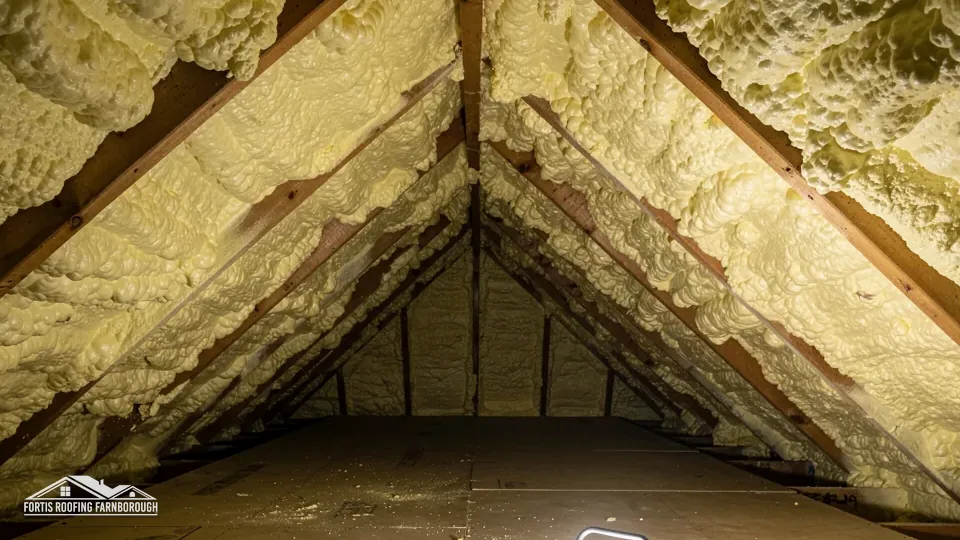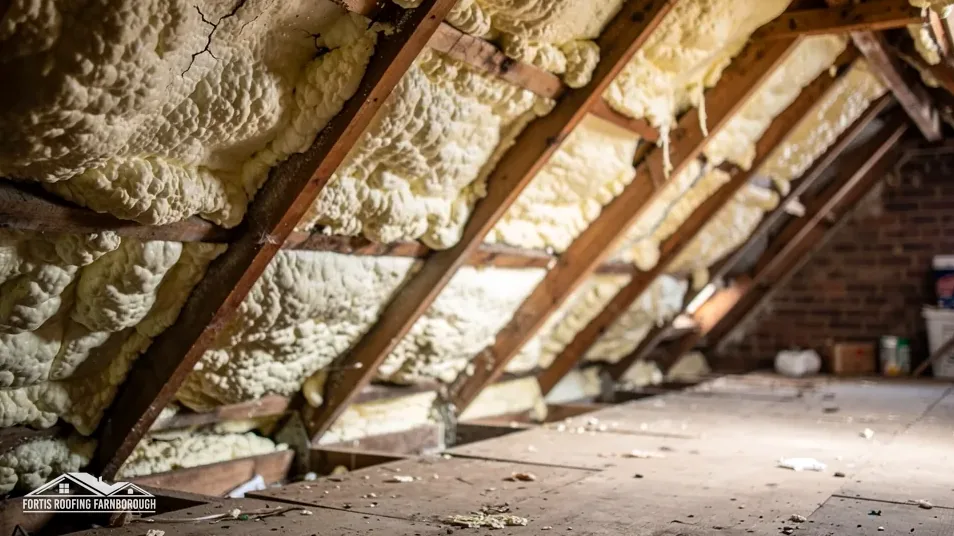
The short answer
Foam applied to the roof of a listed building can affect its historic fabric, because it bonds to old timbers that are part of what is protected. Works that affect a listed building's character normally need listed building consent under section 7 of the 1990 Act, and that can apply to removal as well as installation. Ask the council's conservation officer before acting.
Historic timbers and why foam matters more
In many listed buildings the roof structure is original or very old. Oak rafters, collars, purlins and ridge timbers may carry marks, joints and character that belong to the building's significance. The roof was also designed to behave in a particular way: breathing through lime mortar, open joints and gaps between slates or tiles, with air moving through the roof space.
Spray foam changes that. It bonds to the timber, seals gaps and alters how moisture moves. RICS observes that foam-covered timber resists full inspection, and warns that wrongly installed insulation can upset ventilation and bring damp damage. On a historic frame, hidden damp can mean the loss of timber that cannot easily be replaced.
Conservation bodies generally favour insulation that can be removed without harm to the fabric. Foam is hard to take off old timber without scoring or lifting surface fibre, and what is left can disfigure carved or jointed members. That is why foam in a listed roof gets a more cautious reception than in a modern house.
The Energy Saving Trust (updated May 2026) discourages foam where a roof already leaks, and an old roof may leak at the joints between slates. Our answer on spray foam and condensation explains the moisture side.
Listed building consent
Listed building consent is a separate permission from planning permission. Under section 7 of the Planning (Listed Buildings and Conservation Areas) Act 1990, it is an offence to carry out works that alter a listed building so as to affect its special interest unless the works are authorised. Insulating a roof can affect character, and so can taking insulation out.
Foam installation in a listed building may therefore have needed consent when it was done. If it was installed without, the problem passes with the building, and a future owner or buyer's solicitor may ask for the consents. Whether a given foam installation needed consent is for the council to say.
Removal is a similar question. Taking foam off historic timbers is work that affects the fabric, and the council may want to approve the method, particularly if it involves opening the roof. Repairs to timber and any new insulation can need consent as well.
Listed houses keep their Class B and C permitted development rights for planning, since the Order has no listed-building exclusion for them, but consent is needed in addition. One permission never replaces the other. If a conservation area or Article 4 direction also applies, more layers need checking.
The council decides, and this page is not legal advice.
Putting the question to the council
Begin with the conservation officer. Most councils have one, and many offer a pre-application conversation. Describe what is there and what you are considering: the building's grade if you know it, the type of foam, where it is, whether you know when it was installed, and what you hope to do.
Useful questions are whether the foam needed consent, whether removal needs consent, what the council would want to see in a method statement, how timber should be treated and repaired, and what insulation they would accept in its place. Written answers are best, and a conservation officer's reply in an email will do.
An application may need photographs of the foam and timbers, a description of the proposed method and a note explaining the reason for the work. A loft survey with photographs from us gives the factual basis: how the foam was applied, the visible condition of the timbers and covering, and any signs of damp. The application and decision are for you and the council.
If a lender is involved, ask them too, because RICS reported in March 2023 that caution among lenders began in equity release. A listed building adds a further layer to a valuer's report.
If the building is a church in use, other systems apply: faculty for a Church of England church, and the denomination's own approvals for Roman Catholic and some other churches.
How removal is done on a historic roof
Care is the watchword. The work is by hand, in small sections, with soft tools where the timber is old or carved, and nothing is levered against a joint. Dust is contained and collected. Photographs record each stage so the council can see what was done and what the timbers looked like.
When the foam is off, the timbers are inspected. Sound old oak needs little. Decayed ends may need conservation repair, which a carpenter experienced in historic work can do, often by splicing in new oak and leaving as much original as possible. Any repair is agreed with the council first where consent is required.
New insulation is chosen to suit the building. Breathable materials that let the roof manage moisture, fitted so as not to block ventilation, are generally preferred in old roofs, and the council may specify them. Our guide to insulation after spray foam removal covers the options.
We survey first, report what we find and describe the work in a scope you can show the council. Pricing arrives as a single written total once the survey is complete. See spray foam insulation removal for the service as a whole.