The short answer
In principle yes, but it is slow, dusty and easy to get wrong. Foam bonds hard to timber, so scraping can score or splinter the rafters you are trying to protect. Work in a loft carries its own risks: falls through the ceiling, dust and awkward posture. Many owners start with a survey in the loft, then decide how much to do and who should do it.
Why it is harder than it looks
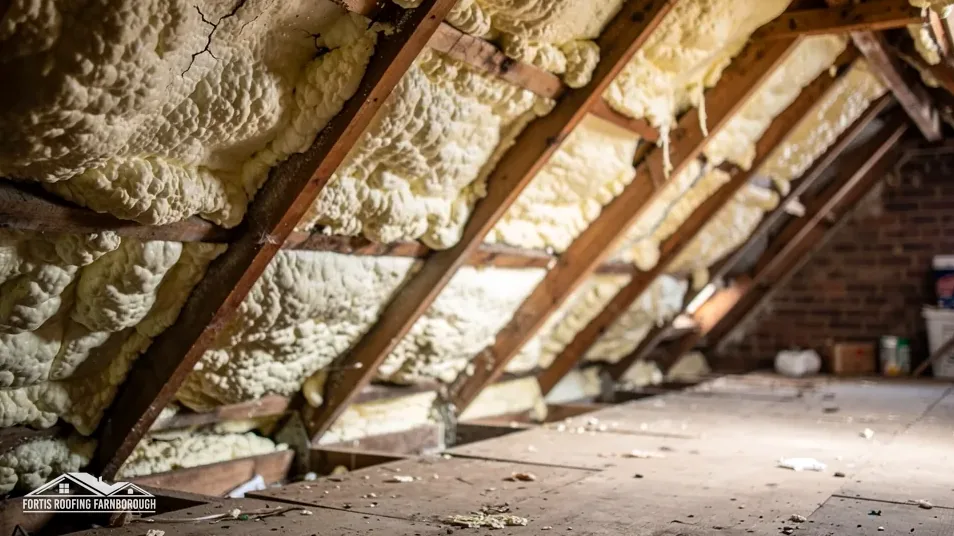
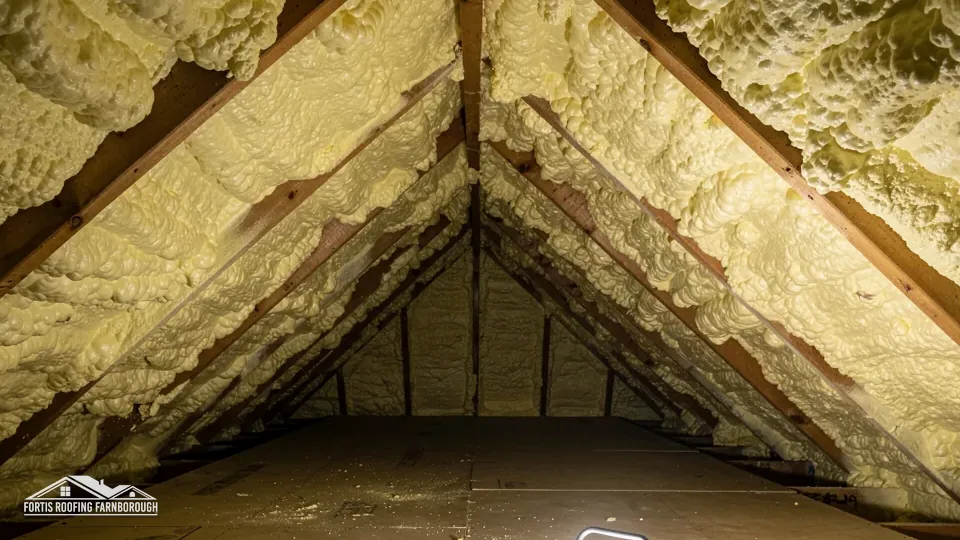
Spray foam is designed to stick. It expands as it goes on, fills gaps, and bonds to timber, tile and underlay. When you try to take it off with a scraper, the foam comes away in resistant strips, often tearing at the surface of the wood. Hard foam can need a good deal of force, and the tool slips.
The roof space is awkward. Low headroom, rafters at an angle, a floor you cannot always stand on and poor light all slow the work. An owner without experience of working in a roof space may find a small area takes a long time.
Dust and particles are another problem. Cutting and scraping foam produces fine material that hangs in the air, and breathing it is unpleasant. Proper protective equipment, including suitable breathing protection and eye cover, is needed, together with a way to seal the loft from the house and collect the dust.
Then there is the volume. Foam is bulky, and a small loft yields many bags. Getting them down a loft hatch, through the house and out to a skip is a task of its own. Our answer on whether spray foam removal is messy describes the clean-up professionals plan for.
Risks to the timbers
The risk that matters most is damage to the roof structure. A scraper or knife that digs into a rafter leaves a score, and repeated scoring weakens the timber. Prising foam off can lift fibres from the surface, and a tool slipping can chip or split a batten or damage the underlay and the back of the covering.
There is a second danger: you may not see what is under the foam. The RICS consumer guide notes that when roof timbers are covered, they cannot be fully inspected. If the timbers are already damp or rotten, they will be weaker than they look, and force applied to them may break what is soft.
Hidden damage can also be missed or made worse. Nails that have corroded, rafter ends that have gone soft and old leaks sprayed over are all easier to spot with experience. Opening a section and misreading what you see can lead to the wrong decision about the rest of the roof.
Care with the covering matters too. Tiles and slates can be dislodged from below, and a misplaced push can crack one or open a gap that lets rain in. A professional works slowly, from a platform, and photographs what is exposed.
Our answer on whether spray foam removal will damage the roof covers the risk further.
Safety in the loft
A loft is one of the more dangerous places in a house to work. The ceiling below is usually plasterboard fixed to thin joists, and it will not take a person's weight. Stepping between joists is how many falls through ceilings happen. A boarded walkway and good light reduce the risk, but they do not remove it.
Heat and ventilation matter. Temperature and airflow matter, because a cramped roof space is stuffy and adds to the dust problem. Electrical cables run through lofts, and cutting or pulling at foam near a cable is a hazard, as is working near a light fitting or a junction box. Switching off the supply and checking the cable run first is sensible.
Old lofts may contain other materials. HSE advises assuming asbestos may be present in a house built or refurbished before 2000, and ceiling boards, soffits, old lagging and flue pipes are places it turns up. Disturbing it is hazardous, and its waste is wrapped twice, labelled and sent with a consignment note. Our answer on the asbestos check before a re-roof explains.
The foam itself is not a chemical to be burned or dumped. Take advice on the waste route before you start.
When to call a professional
A sensible first step is a survey. A roofer or building surveyor can look at the loft, photograph the foam, judge how it was applied and say how hard removal would be. That tells you whether to attempt any of it, and which parts to leave alone.
Professionals bring method and equipment: containment, filtered vacuums, protective gear, platforms to spread weight, and experience of reading timber as it is exposed. They also produce a record. Where a lender, buyer or surveyor needs convincing, photographs and a report from a competent firm carry weight that your own may not.
That matters because RICS reported in March 2023 that lender caution, starting in equity release, was growing, and its guide points owners to their mortgage provider. A lender may want evidence of how the work was done, so check what it needs before you begin.
If you do some of the work yourself, such as clearing the loft of belongings, preparing access or lifting floor boards, you can lower the cost without risking the roof. We explain at the survey what is safe to do.
See spray foam insulation removal for the service, which ends with one written price after the survey.