The short answer
Yes, a roofer can remove foam from part of a roof, for example to open an inspection area, to cure a damp patch or to repair a leak. Whether a lender will accept a partly cleared roof is not something anyone can promise, so ask your mortgage provider before choosing partial work. Full removal is the cleaner answer when the aim is to satisfy a lender.
Why people ask for partial removal
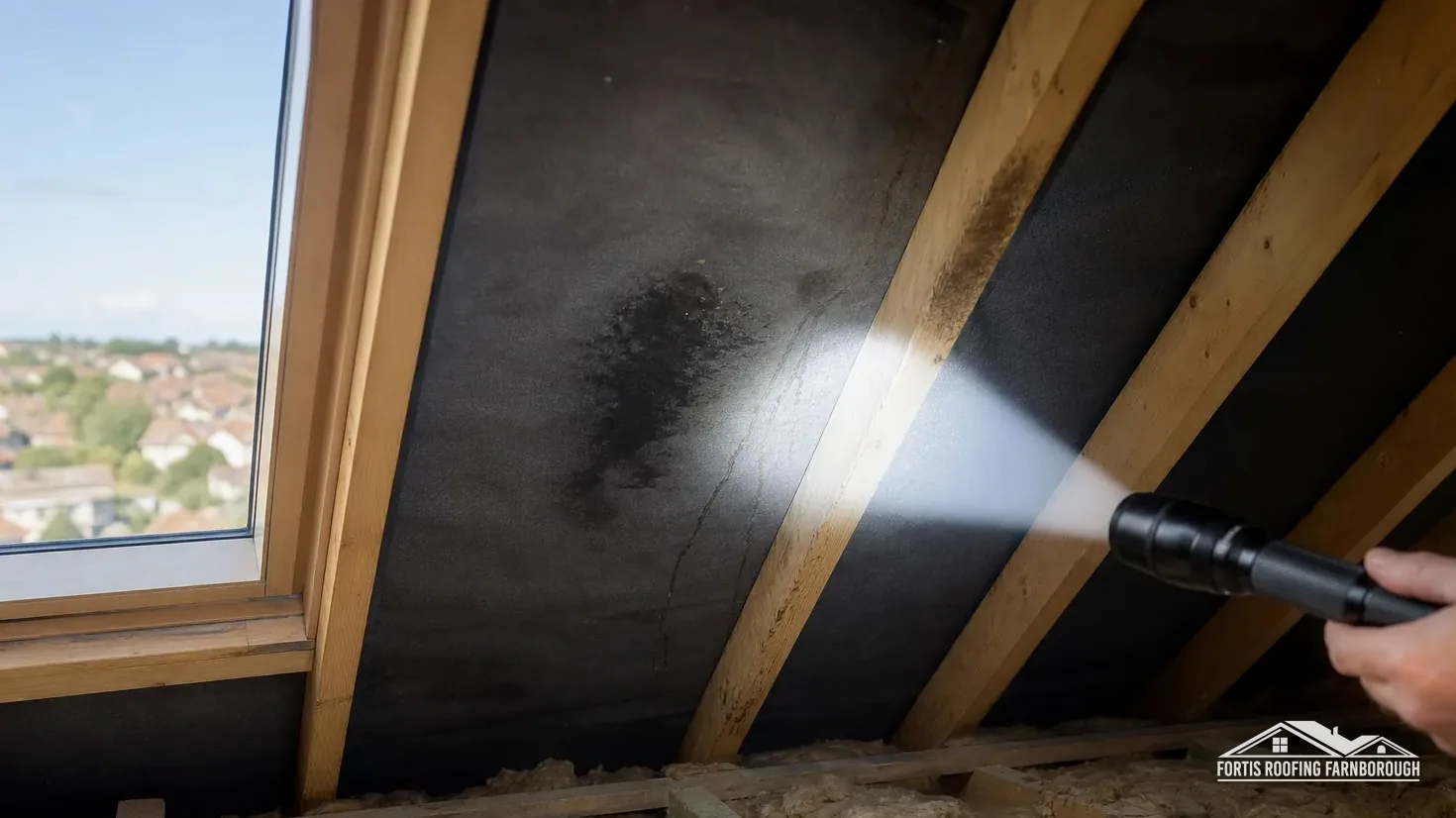
Removal is a big job, and many owners hope a smaller one will do. There are sensible reasons for taking out only part of the foam. A damp patch on a ceiling may call for the foam to come off one area of the roof to find the source. A leak in the covering needs access to the underside to fix it. A surveyor may want a section opened so the timbers can be seen.
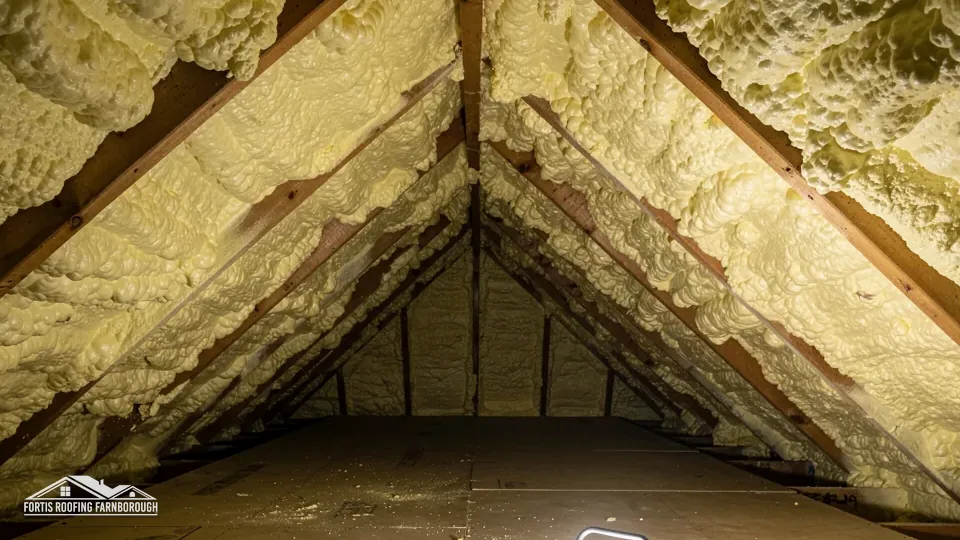
Partial removal also suits a case where only part of the roof was sprayed, or where foam has been put over a single slope. Clearing that slope deals with the area of concern and leaves the rest alone.
The Energy Saving Trust (updated May 2026) advises against foam over a leaking roof, which makes a leaking area a natural candidate for clearing and repair. If water has been trapped against timber, the quickest way to know is to open it up.
Price and disruption are lower than for a whole roof, with less waste, less dust and a shorter job, which can suit an owner with no plans to move.
Against that sits a plain fact: a roof that is part foam and part clear is neither one thing nor the other, and it may satisfy nobody who has to judge it.
The lender question to ask first
RICS reported in March 2023 that lender caution, which began with equity release, was spreading, and its owner guide names your mortgage provider as the one to ask. Nobody outside the lender can say how it will treat a partly cleared roof. Some may focus on whether timber has been inspected, others on whether foam remains at all, and policies change.
The sensible order is to ask first. Tell your lender or mortgage broker what foam is on the roof, what you are considering, and what evidence you could provide. Ask whether partial removal with an inspection and photographs would be acceptable, or whether they need the whole roof cleared. Get the answer in writing.
If the answer is uncertain, treat partial work as a risk. Spending money on a limited job that a lender then rejects means paying twice. Where a sale or a remortgage is the driver, full removal is the safer course, and the lender's reply tells you which applies.
Our answers on whether spray foam always has to come out and on spray foam and equity release go into the lender side. We cannot promise what a lender will accept.
How patches are cleared and recorded
Clearing a patch follows the same methods as full removal, on a smaller scale. The area is marked, the loft is sealed and protected, and the foam is cut and scraped away from the timbers and the covering. The edge of the remaining foam is trimmed neatly, so the cleared area is a clean window and not a ragged hole.
What counts then is the record. We photograph the exposed timbers, the covering and the edges of the foam, and measure and mark the cleared area on a simple plan. Moisture readings are taken where they are useful. The photographs show what was found and where, and they are evidence for a lender, surveyor or buyer.
If the patch reveals damage, the repair is dealt with there: drying, treating or splicing timber, replacing battens, fixing the covering. A report can say what was done and what remains under foam, which is honest about the limits.
The edges need care. Foam left at the margin of the cleared patch should not trap water against timber, and a gap at the eaves that blocks ventilation can cause a new problem. We look at the airflow around the patch before closing the work.
Our guide to the spray foam removal report describes what a good record holds.
Partial or full: how to choose
Choose partial removal when the aim is to inspect, to cure a particular fault, or when the lender has said in writing that it is content. It is a sound answer to a local problem.
Choose full removal when a lender has asked for it, when a sale or remortgage depends on a clean roof, when timbers beneath the foam cannot be judged any other way, or when the foam covers a roof that is leaking in several places. It costs more, takes longer and produces a result that is easy to explain to a buyer.
In between, there are staged options. A first stage opens a few sample areas to check the timbers. If they are dry and sound, the owner may stop there with a record. If not, the work extends. That order avoids paying for more than the evidence supports.
The decision follows the survey. We look at the foam in the loft, mark where an inspection window would tell the most, and explain the options in plain words with photographs. You then choose, knowing what a partial job can and cannot show.
See spray foam insulation removal for the service. Each route gets a written total once the survey is done.