The short answer
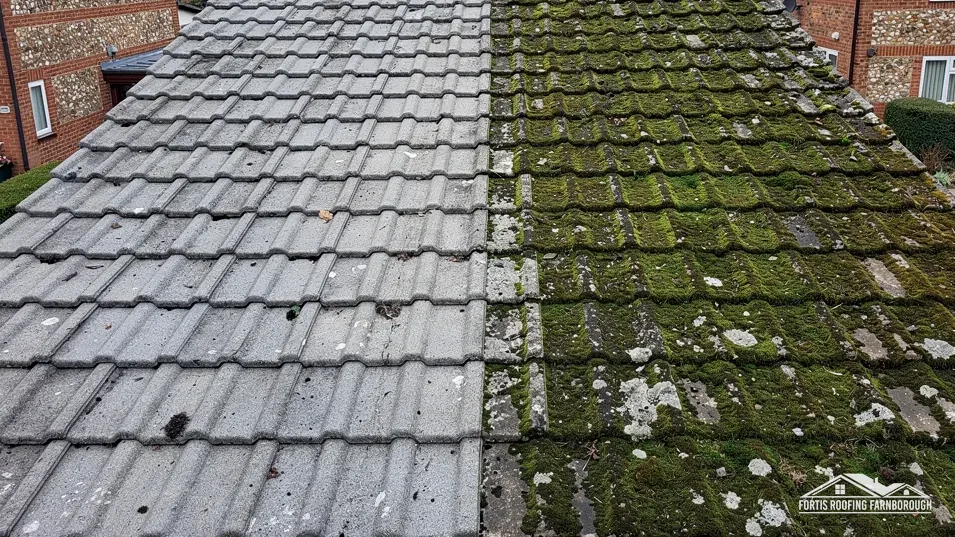
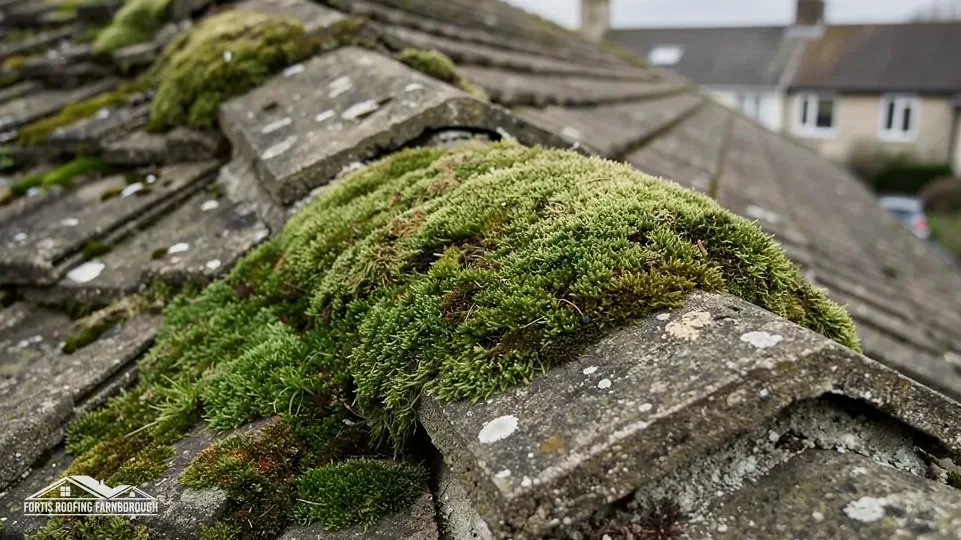
Moss returns where the roof stays damp, so stopping it means reducing the damp. Cut back overhanging branches to let in light and air, keep gutters and valleys clear of leaf litter, and treat early growth while it is thin. No treatment prevents regrowth for ever. A yearly look from the ground tells you when it is time to act again.
Shade, trees and light
Moss needs damp, and a roof stays damp where little sun and air reach it. Of all the causes, shade is the one most within reach.
Overhanging branches do three things at once. They block sun and wind, which would otherwise dry the tiles. They shed leaves, twigs and seeds onto the slope and into the gutters, where they rot and hold water. And they drip long after rain has stopped.
Trimming back branches that touch or overhang the roof lets light and air through. It is the single most effective step on a shaded slope, and it costs nothing in chemicals. Trees in your own garden can be pruned, ideally by someone qualified, and if a tree is protected by a Tree Preservation Order or stands in a conservation area, you should check with the council's planning team before any work.
A tree in a neighbour's garden is a matter for a friendly conversation. Branches that overhang your property can cause the very problem you are trying to prevent.
Other sources of shade include tall hedges, a neighbour's wall and nearby buildings. Not all of these can be changed, which is why some roofs, particularly north-facing ones, need more attention than others. Our page on moss on a north-facing roof covers the commonest case.
Gutters, valleys and litter
Debris on a roof is food and a sponge for moss. A mat of leaves in a valley, a drift of silt at the foot of a slope or a gutter full of rotting matter keeps the roof edge wet and spreads spores along the course of the water.
The remedy is routine. Clear the gutters after leaf fall and again in spring. Clear leaf litter from valleys and from flat sections. Check that water reaches the downpipes freely and cannot back up beneath the lowest course of tiles.
Watch the gutters in the next downpour. If water pours over the lip or trickles down behind the gutter, something is blocked or out of line. Our page on moss in gutters goes through the problem in detail.
A gutter guard or mesh can reduce the build-up in some situations. It does not remove the need to look, since fine debris can still collect on top, and it must be fitted so that it does not hold water against the tiles.
Keep ladders off the tiles and work from the ground, a tower or a proper platform. A cracked tile from clearing a gutter lets in more water than any moss.
Make a note of any early green patches when you look from the garden.
Treating early and managing expectations
The best time to treat moss is when it is a thin film or a few small patches. A light treatment on young growth is gentler on the tiles and cheaper than clearing thick cushions years later.
Treatment uses an approved biocide, applied at low pressure and used as its label directs. HSE guidance is that householders should never use biocides intended only for professionals. Runoff has to be managed, and the label's conditions on rain, drains and ponds apply.
High-powered jet washing is not part of prevention. Marley advises against it for the harm to tile surfaces, and a scoured, rougher tile holds moss more readily, which works against you.
Be realistic about results. A treatment kills what is there and slows regrowth, but it does not make a roof immune. Where the site is damp and shaded, growth will come back over time, and how fast depends on the factors above. Met Office averages for South Farnborough (1991 to 2020) show about 118 wet days a year, so the damp that feeds moss is never far away.
Preventive coatings and metal strips are sometimes offered. Ask the supplier for proof of results on your type of tile before paying for them.
A yearly routine
A simple routine does most of the work.
- Spring: inspect the slopes from the garden, clear the gutters and valleys, and prune back branches if needed.
- Autumn: clear leaf litter again after the fall, and check that gutters run clear.
- After storms: look for lifted tiles, fallen branches and debris on the slope.
- Every year or two: photograph the roof and compare, so early change is easy to spot.
Thick growth, blocking gutters or lifting tiles call for a survey. The tiles under the moss are checked, and the answer comes back as clean, repair or leave for now, backed by photographs.
Cleaning more often than needed wears the tiles, so a clean is done when the signs return, not on a timetable, as our page on how often a roof should be cleaned explains.
A single written total follows, set by the roof's area, pitch, access and the weight of growth. More on the service is on the roof cleaning and moss removal hub.