The short answer
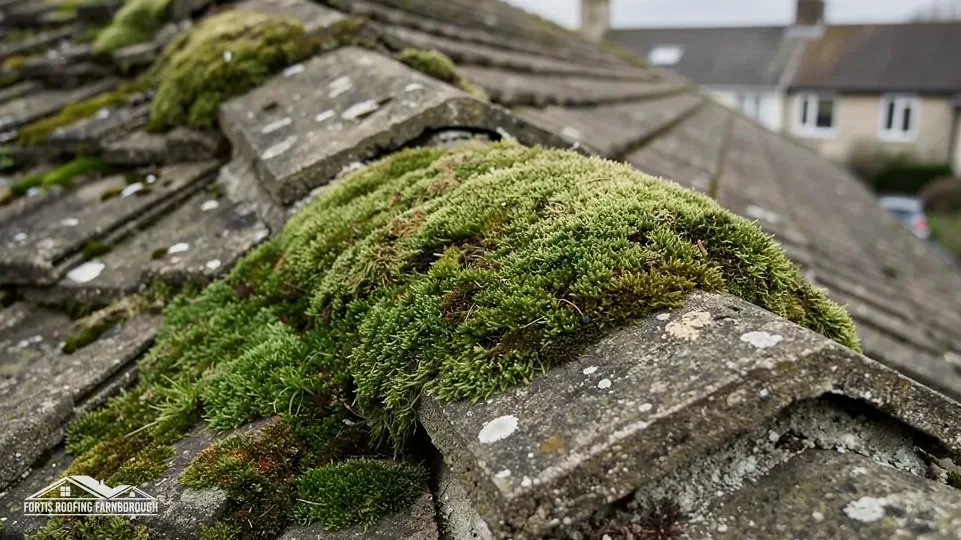
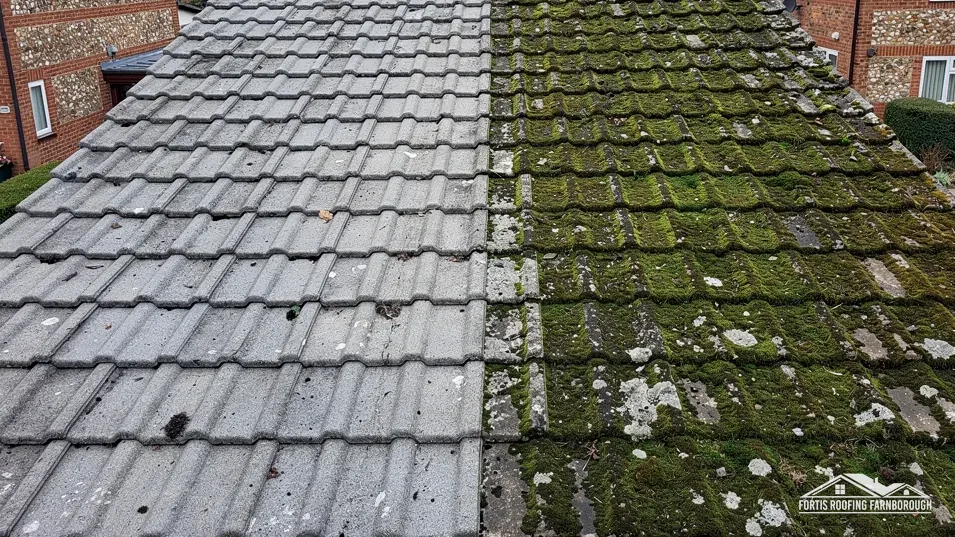
Moss can damage a roof, but slowly and not always. It holds water against the tiles, adds weight, drops into gutters and valleys and feeds frost damage in winter. A thin, light growth on sound tiles is more a matter of looks. Heavy cushions, blocked gutters and lifting tiles call for action. Whether a clean is worth it depends on the roof's condition.
How moss does harm
Moss settles where a roof stays damp, and then keeps it damp. A cushion of moss soaks up rain like a sponge and holds it against the tile for days after the rain has stopped.
That has several effects. A tile that stays wet takes in more water, and water that freezes in a tile expands and can crack it or flake its face. Met Office averages for South Farnborough (1991 to 2020) record around 53 air-frost days a year, so the cycle recurs through the winter.
Moss also gets its roots into the surface. As it spreads, the roots work into the pores of concrete and the fine cracks in clay, and tear away flakes when the growth is pulled off.
Weight is a minor factor. A wet carpet of moss adds load, though the amount is small compared with the covering itself.
Where moss gathers at the edge of a tile or in the lap between courses, it can lift the tile slightly and let wind-driven rain past the overlap. Thick moss along the ridge or hips can break up bedding mortar.
It does not do all this at once. On a sound roof, the effects build over years. On an already weak roof, moss can speed matters up. Our page on roof moss removal covers how it is taken off.
Gutters, valleys and drains
Moss on the slope does not stay there. Lumps of it, along with spores and grit, wash and fall down into the gutters, and blocks follow. A blocked gutter overflows over the fascia and down the wall, or backs water up under the bottom courses of tiles and into the eaves.
In a valley, the channel where two slopes meet, moss and debris can dam the flow and push water sideways beneath the tiles that edge the channel. That is a common route for leaks.
Flat roofs and outlets suffer in the same way. A mossy surface sheds into the outlet, and a blocked outlet leaves standing water.
Water that spills where it should not will stain walls, soak the fascia and, over time, rot timber at the eaves. That cost can outweigh the cost of the moss itself.
So the question is not only what moss does to the tiles. It is what moss does to the drainage. Our page on moss in gutters goes through that side.
Look at the gutters after a heavy shower. Water spilling over the front, or running down the wall below a joint, tells you something is blocked.
When it is a looks problem
Not every mossy roof is in trouble. A thin, patchy growth on a north-facing slope, on tiles that are otherwise sound and well fixed, may be doing little harm. The tiles still shed water, the gutters run and the roof is simply less tidy than it was.
Signs that it is a looks problem rather than a serious one include tiles that are intact under the moss, clear gutters, no damp in the loft and no tiles slipping. Checking from the garden and from the loft will tell you.
Signs of more serious damage include these.
- Thick moss over a whole slope, holding water for long periods.
- Tiles flaking, crumbling or cracked when the moss is lifted.
- Blocked gutters or damp patches under the eaves.
- Moss in laps and valleys, with stains inside the roof space.
Be careful with DIY removal. Scraping harms the tile surface, so avoid it, and avoid high-powered jet washing too, as Marley advises. Treatments must be approved products used as their labels direct.
It is a fair decision to leave a thin growth alone, and clean when the roof is repaired or the house is going on the market. What slows regrowth is covered on our page about stopping moss coming back.
Is cleaning worth it?
Cleaning is worth it when it protects a roof that has years left in it. Removing moss from sound tiles stops the water-holding effect, clears the drainage and slows frost damage. If the roof is tired, cleaning is poorer value, since it does not repair a worn tile.
The decision rests on evidence. We survey the roof, measure and photograph it, check the tiles from the slope and the loft, and tell you what the moss has done. The pictures come with a plain account of what they show.
Then the options are put plainly: leave it, clean it, or clean and repair. If the roof needs a new covering, cleaning is not recommended. Our page on clean or replace roof tiles sets out when each makes sense.
The price depends on the roof's size, pitch, access and the amount of growth, so we give it after the survey, as one written total. Check whether any quote includes scaffolding and VAT.
The roof cleaning and moss removal hub explains the service for roofs in Farnborough, Aldershot and Fleet.