The short answer
There is no single interval that suits every roof. How often a roof needs attention depends on shade, nearby trees, pitch, the tile and how damp the site is. A yearly look from the ground, plus a check after storms, tells you when it is due. Clean when growth is holding water or blocking gutters, not on a fixed date.
What sets the pace
Moss, algae and lichen need damp, and they spread fastest where a roof stays wet. So the question is not how many years have passed but how long the roof stays damp.
Several things decide it.
- Shade. A slope that gets little sun dries slowly. North-facing and tree-shaded slopes grow growth sooner than south-facing ones.
- Trees. Overhanging branches drop leaves, seeds and shade, and a damp mulch builds up in valleys and gutters.
- Pitch. A shallow slope drains and dries more slowly than a steep one, so it holds growth more readily.
- The tile. Rough, porous surfaces such as aged concrete take growth more readily than smooth ones.
- The site. Low ground, nearby water and sheltered gardens keep the air damp.
Rain matters too, though not as much as drying. Met Office averages for South Farnborough (1991 to 2020) are about 715 mm of annual rain over 118 wet days, with around 53 air-frost days. Those are averages, and the effect depends on your own plot.
Two houses in the same street can need cleaning years apart. A tree on one side, a wall that shades a slope or a leaking gutter beside a roof edge can change the pattern entirely. Our page on moss on a north-facing roof covers the commonest case.
Signs that a clean is due
Look at the roof twice a year, in spring and autumn, from the ground. A phone with a good zoom or a pair of binoculars is enough. Note what has changed since last time.
Signs worth acting on include the following.
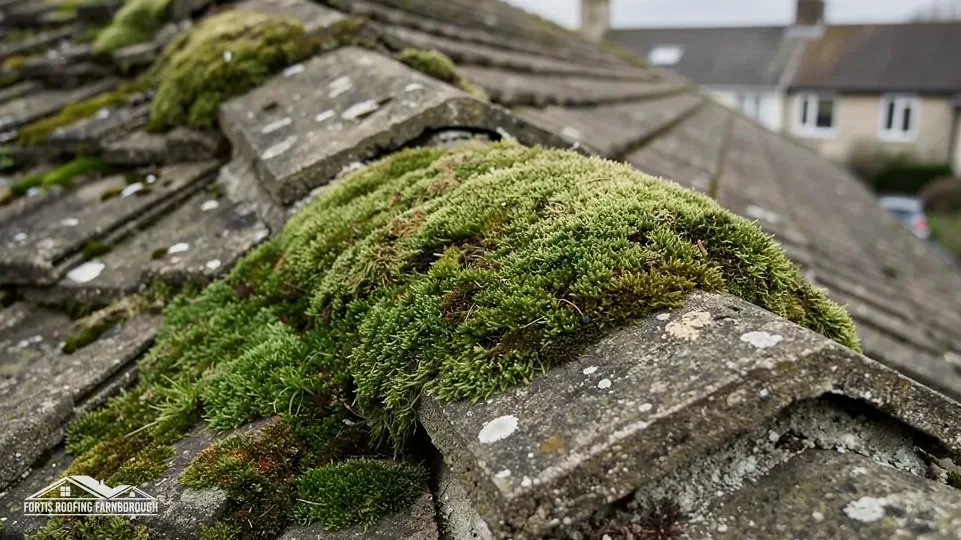
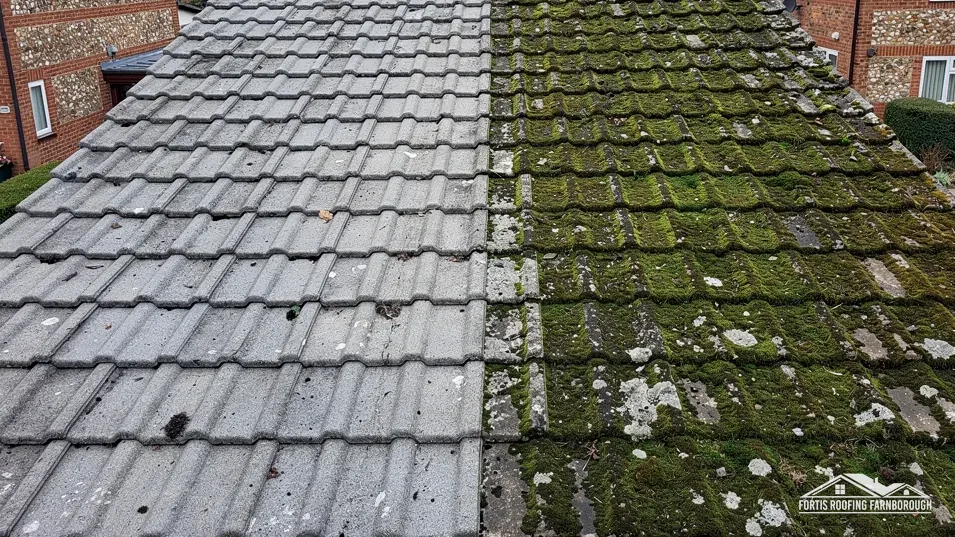
- Moss in cushions along the lower courses, the edges or the valleys.
- Dark streaks spreading down the slope.
- Tiles that look green, orange or grey and crusty with lichen.
- Gutters full of moss, grit and seed, or overflowing in rain.
- Damp patches or algae on the fascia and walls below the roof edge.
- Tiles that are lifting at the edges with growth under them.
A thin stain and a few patches of moss are not an emergency. Heavy growth that holds water and blocks drainage is. The difference is whether the roof is staying wet and whether the water is getting where it should not.
Do not climb a roof to check. The photograph from the ground is enough. Whether it matters depends on whether the growth is holding water.
After a storm, look again, because wind can lift tiles and drop branches onto the slope.
Treatment intervals in general terms
After a clean and a treatment, regrowth does not return at once. It builds back over time, and how quickly depends on the same factors as before: shade, trees, damp and the tile. A roof in open sun may stay clean for a long while. A shaded one may show regrowth sooner.
The interval is set by the signs above, not by a standard number of years, because every site differs. A treated roof should be looked at each year and cleaned again when those signs return, not before.
Cleaning more often than needed can do harm. Every clean puts a tile through some handling, scrubbing or chemical exposure, and a roof that is cleaned too often is worn faster. Avoid high-powered jet washing in particular, as Marley advises, because it can damage the surface.
Keeping the cause down helps more than frequent cleaning. Trimming overhanging branches, keeping gutters clear and removing leaf litter from valleys all reduce the damp. Our page on stopping moss growing on a roof covers prevention.
Treatment products must be approved ones used as their label directs, and HSE says householders should never use professional-only biocides.
A sensible routine
A simple routine keeps the roof in good order without overdoing it.
Once a year, in spring or autumn, look over the roof from the ground and clear the gutters. Photograph the slopes, the ridge and the valleys, so that next year you can compare. After any storm, look again.
When growth is thick, or the gutters are blocking, or tiles are lifting, get a survey. We inspect the roof, check the tiles and tell you whether it needs a clean, a repair or nothing yet. You see the photographs and decide.
If the roof is sound, a clean is straightforward. If it has faults, the faults come first, and our page on repairs after moss removal explains why.
Where a roof needs frequent work because of trees or shade, it is worth discussing the cause. Cutting back a branch can do more than any treatment.
Price follows the survey as a single written total and depends on the roof's size, pitch and access. The roof cleaning and moss removal hub explains the service for homes around Farnborough, Aldershot and Fleet.