The short answer
It can, but not because cleaning is wrong in itself. A jet of water driven up under the overlap of the tiles can push rain-proofing aside, a walker's weight can crack tiles, and clearing thick moss can reveal slipped or broken tiles it was hiding. Gentle methods, careful access and a check of the roof before and after keep the risk low.
Water driven under the laps
A tiled roof sheds water by overlap. Each tile sits partly over the one below, so rain runs down the surface and off the bottom edge. The system is built for water falling from above, running downhill. It is not built for water arriving sideways or upwards under pressure.
A pressure lance changes that. Aimed along the roof, it can drive water up under the overlaps, past the joints between tiles and onto the underlay. The underlay is a second line of defence, but it is not designed to take a jet, and in an older roof it may be tired or torn. The result can be a damp loft or stains on a ceiling within days of the clean.
Marley, a major maker of roof tiles, does not recommend high-powered jet washes at all, since they can damage the tile surface and cut its expected life. The water-ingress risk is an extra reason to leave the lance alone.
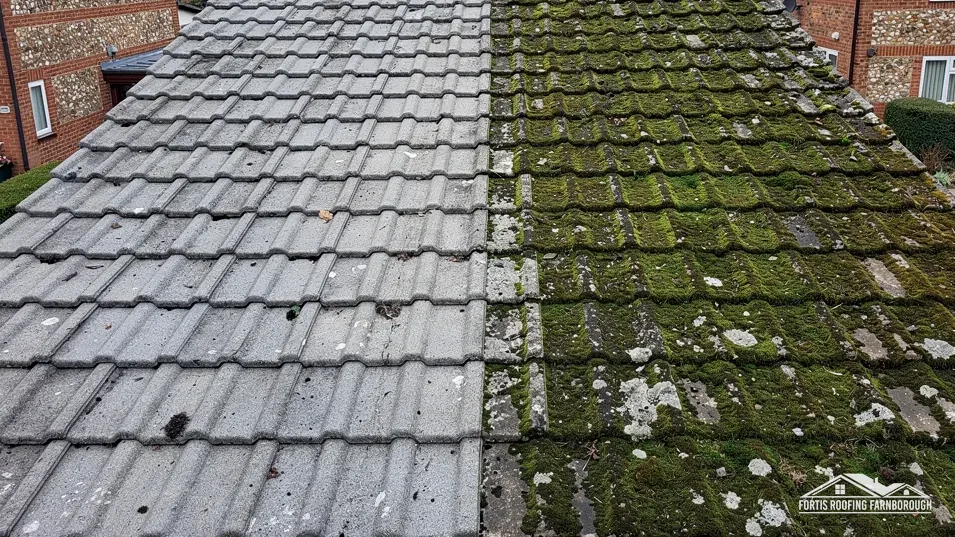
The gentler way is soft washing, where a low-pressure flow carries a treatment onto the roof and the growth is left to die and weather away. Our soft wash page sets out the method in more detail.
If a leak appears after a high-pressure clean, tell the firm that did it at once, with photographs.
Broken tiles from walking
The second cause is plain weight. Cleaning a roof means standing on it, and tiles are not built for that. A boot placed on the middle of a tile can snap it, and a hairline break may not show until frost opens it up. Moss makes things worse, because it hides cracks and makes tiles slippery.
A cleaner who works from a roof ladder or crawl board spreads the load and keeps feet off the tiles. One who walks across the slope in work boots will leave a trail of damage. The cracks may let water through for months before anyone notices a stain.
That is why the roof should be looked at before and after the clean. A set of photographs from before shows what was already broken. A set after shows whether anything has changed. Without the first set, it is hard to say which party is responsible for a crack.
Access for the cleaner should be planned. A low roof from a ladder is one thing. A high or steep slope needs proper equipment, and sometimes scaffold or a tower. Our page on repairs after moss removal covers what is commonly found once the growth has gone.
Moss that was hiding faults
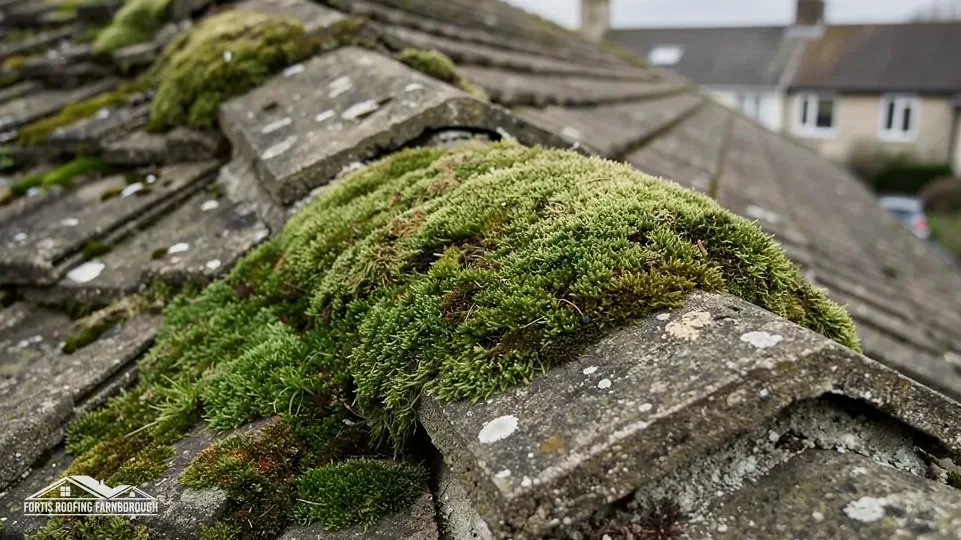
The third cause is not caused by cleaning at all. Thick moss can plug gaps. It sits in the joints between tiles, fills cracks and holds slipped tiles in place. When it is removed, those faults are exposed and the roof leaks, so the cleaning gets the blame.
This is common on a neglected roof. The moss has been doing a job of sorts for years, and the tiles beneath may be cracked, slipped or porous. Taking the moss off reveals a roof that was already failing.
It is worth knowing in advance. A roofer who inspects the roof before cleaning can warn you which tiles look suspect, and can recommend repairs to be done with the clean, not after a leak.
That is no argument for leaving moss alone. Left in place it holds water against the tiles and, in winter, against frost. Met Office averages for South Farnborough (1991 to 2020) count around 53 air-frost days a year. The point is to clean with eyes open and a repair plan ready.
If the roof is old and the tiles are brittle, cleaning may not be the wisest spend. Our page on clean or replace roof tiles looks at that choice.
Preventing leaks from a clean
A few simple steps reduce the chance of a leak after cleaning.
- Have the roof inspected first, with photographs, so existing faults are on record.
- Choose a low-pressure method, not a jet, and keep the lance away from the laps.
- Insist on proper access: roof ladders or crawl boards, not boots on the tiles.
- Agree what happens if tiles are found broken, and who repairs them.
- Walk the property with the roofer afterwards, and photograph the loft ceiling and slope.
HSE guidance bars householders from biocides intended for professionals alone, so any treatment applied during a clean must be an approved product used as its label directs.
We look at the roof, record its condition, tell you what we expect to find when the growth is gone and quote one total. If repairs turn out to be needed, you hear that before anything is done.
The roof cleaning and moss removal hub explains the full service. If a leak has already appeared after cleaning, send us photographs and we will look at the cause.