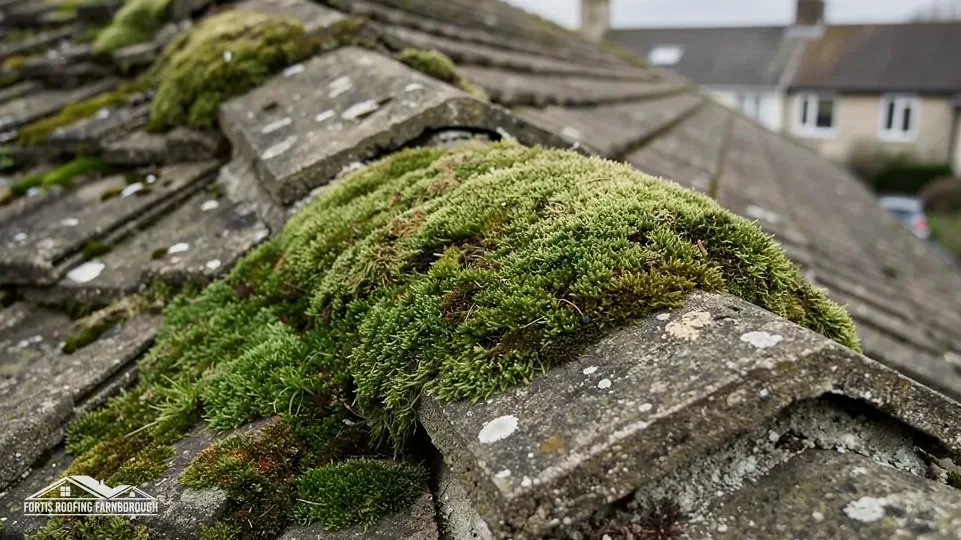
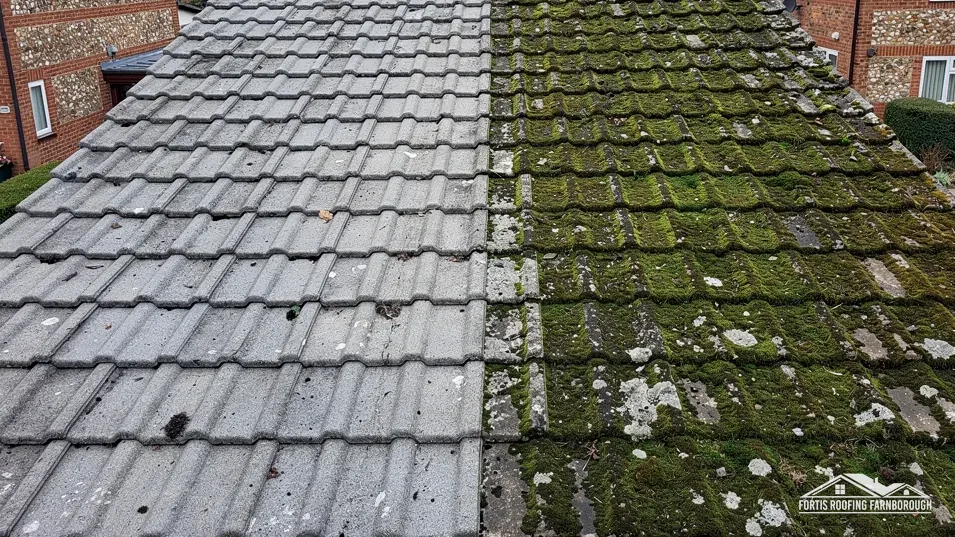
The short answer
A north-facing slope gets less direct sun than the others, so it dries slowly after rain, and moss needs damp more than anything else. Add shade from trees or a taller neighbour, and the growth gets a head start. Treating the roof clears it, and clearing the damp sources, such as overhanging branches and blocked gutters, slows its return.
Shade and slow drying
Moss, algae and lichen do not need warmth or soil. They need moisture, and they need it for long stretches. A roof surface that stays wet for days after a shower suits them well.
A north-facing slope in this country gets the least direct sun of any elevation. In winter, when the sun is low, it may get almost none. After rain, the water sits on the tiles instead of evaporating, and the surface stays damp for much longer than on a slope that catches the sun.
That is the mechanism. The slope itself is no more fertile; it simply stays wet.
Shade makes it worse. A tall hedge, a mature tree, a neighbour's gable or the roof's own extension can cast shadow over a slope for much of the day. A north-facing slope in the shadow of a tree is the textbook setting for heavy growth.
Lower pitches suffer more, because water drains more slowly from a shallow slope. Rough, old tile surfaces hold more moisture than smooth new ones.
So when you see a green slope, the useful question is why it stays wet. The answer is usually a combination of aspect, shade, pitch and a surface that has aged. Our page on whether moss damages a roof explains why it matters.
The wet days at Farnborough
The local weather supplies the water. Met Office averages for South Farnborough (1991 to 2020) show annual rain of about 715 mm over 118 wet days, meaning days with 1 mm or more. Add the damp air between showers and the dew, and a shaded slope may seldom dry out fully through the autumn and winter.
The same averages show around 53 air-frost days. Freezing is not what moss wants, but a tile that is wet when frost arrives can suffer, so a roof carrying a damp mat of moss is at more risk of surface damage.
None of this says Farnborough is an unusually wet or exposed place. The averages tell you that rain is frequent enough for a shaded slope to stay damp. A south-facing slope with the same rain dries out between showers, which is why it stays clean.
It also helps to know that the pattern repeats. A slope that is cleaned and left alone, with its shade and damp unchanged, will grow moss again. The cause is the site, not the roof.
That is the reason prevention matters as much as cleaning, and our page on stopping moss growing back on a roof goes through it.
Check the gutters on this side as well, because a blocked gutter spills water onto the tiles.
Treating a north-facing slope
Treatment follows the usual steps. Thick moss is eased off gently, with a soft brush and no scraping of the tile face. An approved biocide then goes on at low pressure, used as its label requires. The growth then dies and weathers away over the following weeks.
The product must be approved for roofs, and professional-only biocides are not for householders. Applying a product without approval is an offence. Runoff down the slope has to be managed so it does not reach plants, ponds or drains.
High-powered jet washing is not the answer. Marley advises against it, because tile surfaces suffer and the roof's life shortens.
Access to a north-facing slope can be awkward. It may face the back garden, a narrow side passage or a neighbouring wall, and the ladder or tower position has to be planned. Cleaning is only worth doing if the slope can be reached safely.
The survey looks at the tiles under the growth. If they are sound, cleaning pays. If they are flaking or cracked, the tile is the issue and our page on clean or replace roof tiles applies.
You get photographs and a plain explanation, and the price follows as one written total.
Keeping it from coming back
The most effective step is to reduce what keeps the slope wet. Trim overhanging branches, so more light and air can reach the roof. Trees in a neighbour's garden are a matter for a polite conversation, and your own can be pruned.
Keep gutters clear, especially on the north side, so water drains away from the tile edge. Clear leaf litter from valleys and flat sections. Spring and autumn are good times to look from the ground and note any early patches of green.
Treat early, when growth is a thin film. A light treatment on a young patch is cheaper and gentler than a hard clean on thick moss years later.
Do not expect permanent results from any treatment. On a shaded north slope, regrowth is likely over time, and the interval depends on the site. Look each year, and clean when the signs return.
Metal strips fitted below the ridge are sometimes offered to discourage growth. Ask any firm suggesting them for the maker's own evidence of what they achieve.
Our roof cleaning and moss removal hub covers the wider service for roofs around Farnborough and Fleet.