The short answer
Black streaks on a roof are a surface growth, usually described as algae, that darkens tiles in bands running down the slope. They are mostly a cosmetic problem at first, but the damp they hold can feed moss and wear at the surface. Do not jet wash them: Marley does not recommend it. Treatment should be careful and carried out with approved products.
What the streaks are
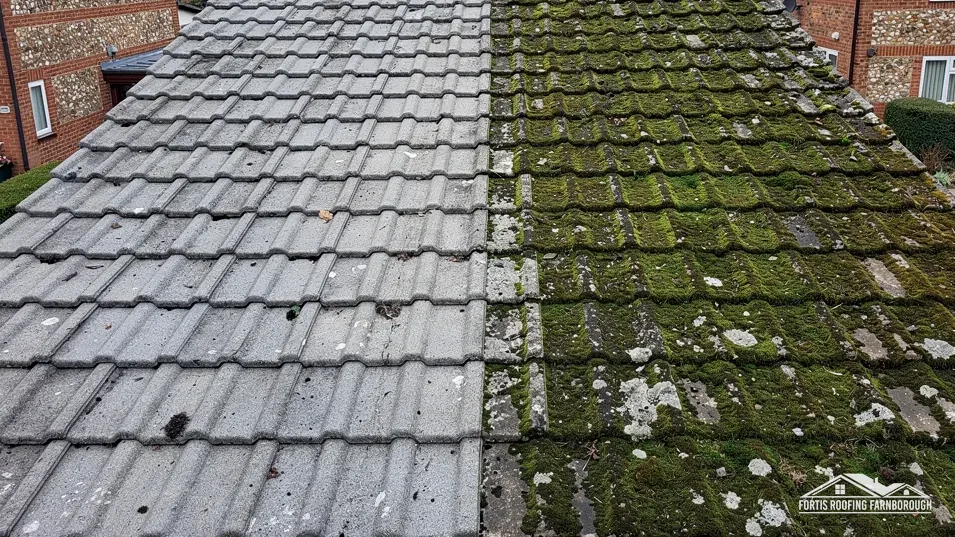
The dark bands that appear on tiled roofs are a living film on the surface. They are generally put down to algae, tiny organisms that settle on damp mineral surfaces and darken as they grow. Rain washes spores and nutrients down the slope, which is why the stain forms streaks that run with the water.
They often show first on the side of the roof that stays damp longest and gets least sun. A north-facing slope, a shaded roof under trees and the area below a chimney or a ridge are typical places. The streaks usually follow the path of rainwater, starting just below something that collects it.
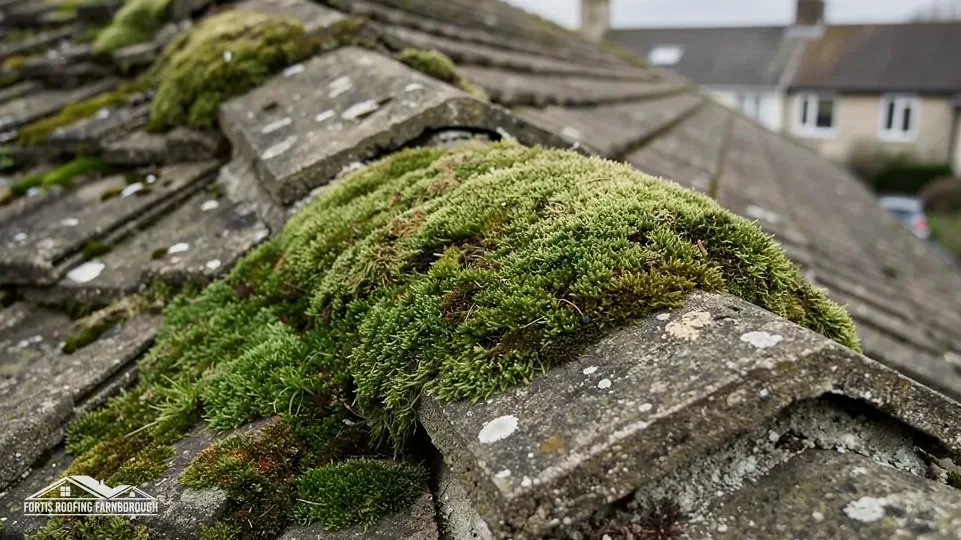
It is worth separating them from other growths. Moss is a raised, green or brown cushion. Lichen is a flat, crusty patch in grey, green or orange. Black streaks are a thin dark film with no raised texture. The three can occur together, and a roofer can tell them apart close up.
Streaks are also not the same as dirt. Washing the roof once will not stop them returning if the damp remains. Our page on lichen on a roof explains the crusty kind.
None of this is dangerous to the household. It is a surface matter, and the question is whether it is worth treating.
Do they harm the roof?
In the early stages, black streaks are mostly about looks. A tile with a dark film still sheds water. The roof does not leak because it is stained.
The longer-term picture is less comfortable. A growth on the surface holds moisture against the tile, and a tile that stays wet is more vulnerable to frost, to moss taking hold and to surface wear. Met Office averages for South Farnborough (1991 to 2020) record around 53 air-frost days a year, so freezing and thawing of damp tiles is routine in winter.
The effect varies with the tile. Concrete tiles are coated and the coating can wear, and clay tiles can lose their face in frost. A heavily colonised roof is more likely to need attention sooner than a clean one.
Appearance matters in its own right too. A stained roof makes a house look neglected, and it can raise questions when selling. That is a fair reason to clean it, provided the method is safe for the roof.
If you are not sure whether the marks are streaks, moss or a sign of something else, send a photograph. The gentler low-pressure method is set out on our soft wash page.
Why a pressure lance does harm
Reaching for a pressure washer is the obvious move, and one to avoid. Marley, a major tile maker, advises against high-powered jet washes, because the blast risks damage to the tile surface and wears down the useful life of the roof covering.
That is a firm warning from a manufacturer, and it makes sense. The surface of a concrete tile carries a coating and a clay or slate tile has a skin that jet pressure can strip. The water can also be forced under the tiles, past the laps, and into the underlay and loft.
A roof cleaned this way can look pristine for a while, then show patchy ageing as the exposed surface weathers faster. It can leave the roof more prone to regrowth, not less.
It is also hazardous to the person doing it. Standing on a wet tiled roof with a pressure lance is how accidents happen.
So the cleaning method matters more than the cleaning. The gentler route is low-pressure soft washing, or treatment with an approved product left to do its work, which keeps the tile intact.
Should a quote name pressure washing as the method, ask why not a gentler one, bearing in mind Marley advises against it.
Treatment and the rules on biocides
A biocide is a treatment that destroys living growth. Used correctly, it clears the streaks and slows their return, and the dead growth weathers away.
The rules are firm. HSE says householders should never use a biocide made for professional users only. The Biocidal Products Regulation ties every product to the conditions of its authorisation, and under the Control of Pesticides Regulations, selling, storing or applying an unapproved product is an offence.
That is why a homeowner should not order a strong treatment online and spray it. Read the label, and be wary of anything not approved for the purpose. Runoff can also affect plants, ponds and gutters, so a professional controls where it goes.
The cost is priced after a survey, since it depends on the roof area, the access and how heavy the growth is. We look at the roof, photograph the streaks and tell you whether treatment is worthwhile, or whether the tiles are past it.
You see the evidence, and one total price follows in writing. The roof cleaning and moss removal hub covers the full process.