The short answer
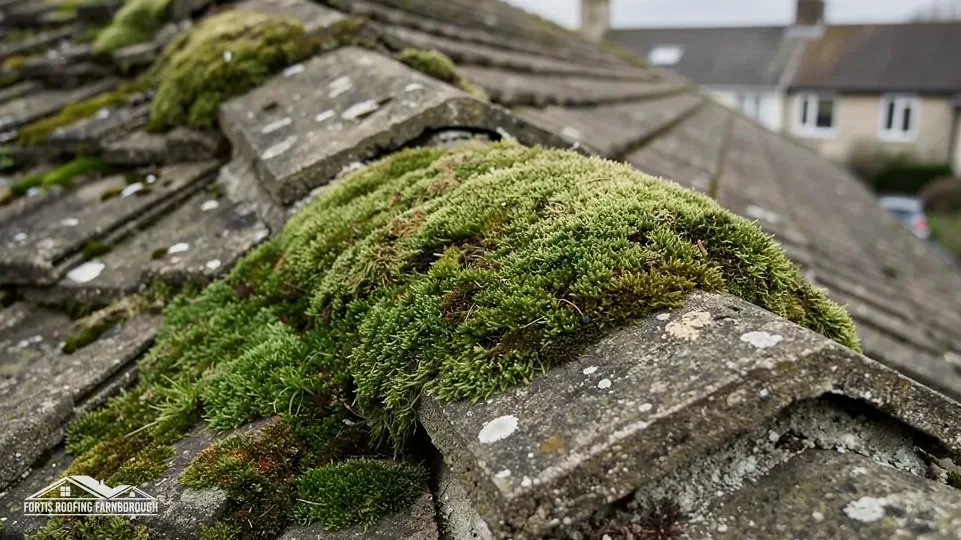
There is no fixed time, because it depends on the size and pitch of the roof, the method used, how the roof is reached and how heavy the growth is. The work on site is only half of it: with a soft-wash treatment the growth dies and weathers off over the following weeks. A survey gives the plan for your roof, and any repairs found can add to it.
Size, pitch and method
Surface area is the starting point. A small bungalow with a single plain slope is a different job from a large detached house with several slopes, valleys, dormers and a chimney. More surface means more brushing, more treatment and more clearing up.
Pitch counts too. A shallow roof can be worked from a ladder and a platform with relative ease. A steep one needs more care, slower movement and often more equipment, and everything takes longer when each step has to be secure.
The method sets the shape of the job. Manual removal of thick moss comes first where the growth is heavy: the bulk is lifted away with a soft brush or gloved hands and the roots are cleared. A treatment then goes on gently and is given time to work. Gutters and valleys are cleared at the same time.
A high-powered jet might seem faster, yet Marley warns against it for the harm it does to tile surfaces, so speed is no reason to choose it.
A roof with a lot of detail, such as chimneys, hips, valleys and dormers, takes longer than a plain one of the same area. The roofer has to work round each of these with care.
That is why a good quote follows a survey, not a phone call.
Access and the weather
Getting to the roof is the next factor. A low roof reached by a ladder from a clear path is quick to set up. A tall house, a roof over a conservatory or a narrow side passage can require a tower or scaffold, and building and taking it down is part of the time.
Parking, neighbouring buildings and garden obstacles all matter. If the roofer cannot get a ladder or tower close to the work, equipment has to be carried further and set up in awkward positions.
Weather decides the days. Cleaning and treatment need a safe, dry surface, and a roof slick with rain, frost or ice is not a place to work. Wind affects ladders and towers, and fine rain makes tiles slippery. So the day can move.
Met Office averages for South Farnborough (1991 to 2020) record around 118 wet days a year, so a clean usually has to be fitted around the weather, not the other way about. A short dry spell is enough for some jobs. Others take a few attempts.
Our page on roof cleaning access explains how reach is planned, and the one on roof cleaning in winter covers the colder months.
Results take time too
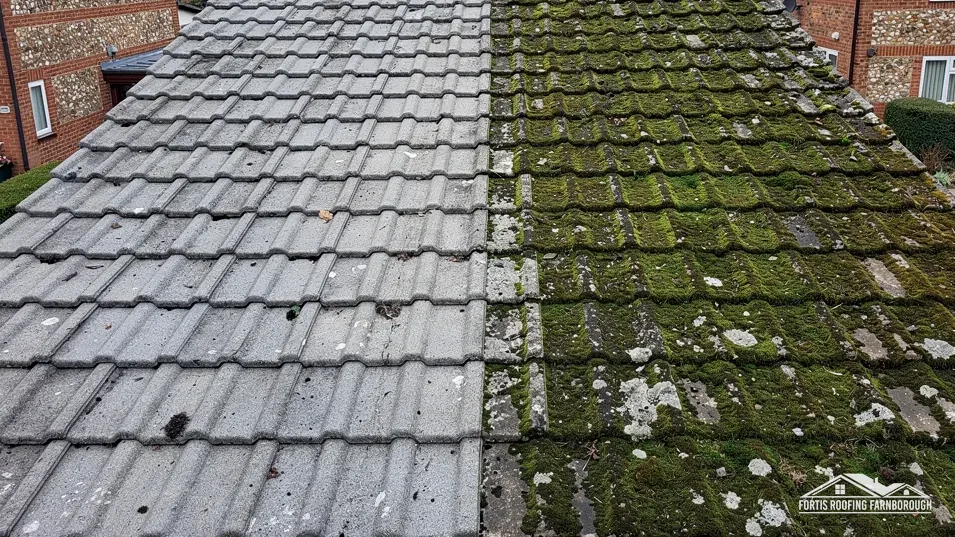
When the roofer leaves, the roof does not always look clean. With a soft-wash treatment, the product kills the growth and the dead material then weathers off with rain over the following weeks. The roof lightens in stages and not all at once.
That surprises people who expect an instant result from a pressure jet. The trade-off is that the tiles are not damaged. Marley's warning against high-powered jetting is based on the harm to the surface and to the tile's life, so a gradual result is the better one.
How quickly the clean shows depends on the weather, the amount of growth and the tile. Concrete, clay and slate respond differently, and a shaded north-facing slope may be slower than a sunny one.
The treatment itself is an approved product used to the label. HSE guidance keeps professional-only biocides out of householders' hands, which is one reason to leave application to a firm that has the right products.
Gutters, valleys and flat sections are cleared on the day, because debris sits there and is not washed away by rain.
Tell the roofer if you are selling or have an event planned, so expectations match. A finish date is confirmed once the roof has been seen.
Repairs found along the way
Cleaning often shows faults that moss was hiding: slipped or cracked tiles, worn ridge bedding, failed flashings and blocked outlets. Each one can add to the time on site, and some need materials to be ordered.
A small repair such as replacing a few tiles can be done on the same visit. A bigger one, a ridge to re-bed or a flashing to renew, may need a second visit and a dry spell.
This is the reason for starting with a survey. The tiles, ridge, hips, valleys and gutters are photographed, and the likely condition under the growth is explained before booking.
If repairs look likely, the plan allows for them. Our page on repairs after moss removal sets out what is commonly found.
After the survey the price comes as a single written sum, covering the cleaning and any repairs agreed beforehand, with scaffolding and VAT stated.
The roof cleaning and moss removal hub explains the full service for homes in Farnborough, Fleet and Camberley, and how we plan each job around the roof in front of us.