The short answer
A small flat roof, such as a garage or single-storey extension, is a job of days and not weeks, but the exact number depends on size, access, the covering and what the old roof is hiding. Weather can stop work on any day, and rotten boards found on stripping add time. We give the expected programme in writing after the survey.
The stages of a replacement
A flat roof replacement follows a set order. First comes access and protection: ladders or a tower, sheets over plants and the surfaces below, and a check of how materials will reach the roof. Then the old covering comes off, down to the deck.
With the deck bare, the roofer inspects the boards, the joists where they can be seen, the edges and the outlets. Damaged boards are cut out and replaced, and any rot is traced to its cause. This is also the point at which falls are checked and corrected, using firring pieces or tapered boards if the existing slope is too flat.
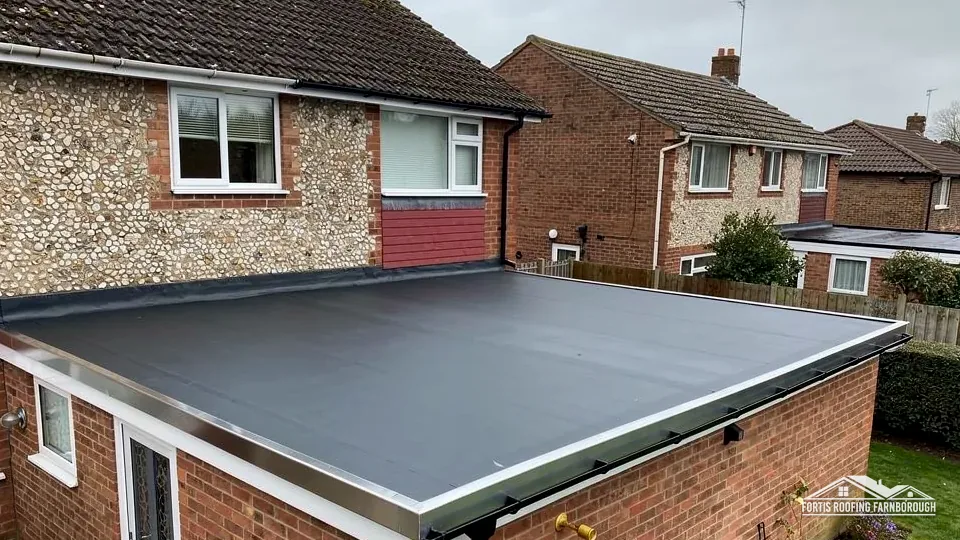
Next the build-up goes on. For a warm roof, that means a vapour control layer, insulation boards and then the waterproof membrane. For a cold roof, it means ventilated spaces and the membrane over the deck. The membrane itself is laid: felt in layers, EPDM in a large sheet bonded down, or GRP in resin and glass matting.
Finishing is slower than it looks. Upstands where the roof meets walls are formed and flashed, edge trims and drip details are fitted, outlets are connected, and the surface is checked for laps and seams. Last come clearing away waste and a final inspection with you.
Each stage depends on the one before it, so a delay early on carries through.
Weather, curing and temperature
Flat roofing is open-air work, and the coverings differ in what they tolerate. A bonded EPDM sheet needs a dry deck and adhesive that can bond, while GRP resin has a working temperature range and will not cure properly if it is too cold or damp. Torch-on felt is laid with a flame and needs dry conditions and fire precautions. Lead is less sensitive but still cannot be fixed to wet boards.
The main practical rule is that nothing should be left open to the weather overnight. A sensible roofer lays only as much of the build-up as can be sealed before dark, and fits temporary protection if rain threatens. A forecast of heavy rain can move a start by a day or more.
Met Office averages for South Farnborough (1991 to 2020) record about 118 wet days a year, so allowance for weather is normal and not an exception. Frost, wind and low temperatures each limit certain tasks, and a programme that assumes perfect conditions is optimistic.
Curing time is a factor with GRP and some adhesives. The roof may be waterproof within hours but not ready for foot traffic, and final topcoats need a further dry period.
Our page on replacing a flat roof in winter covers the cold months in detail.
What the old roof hides
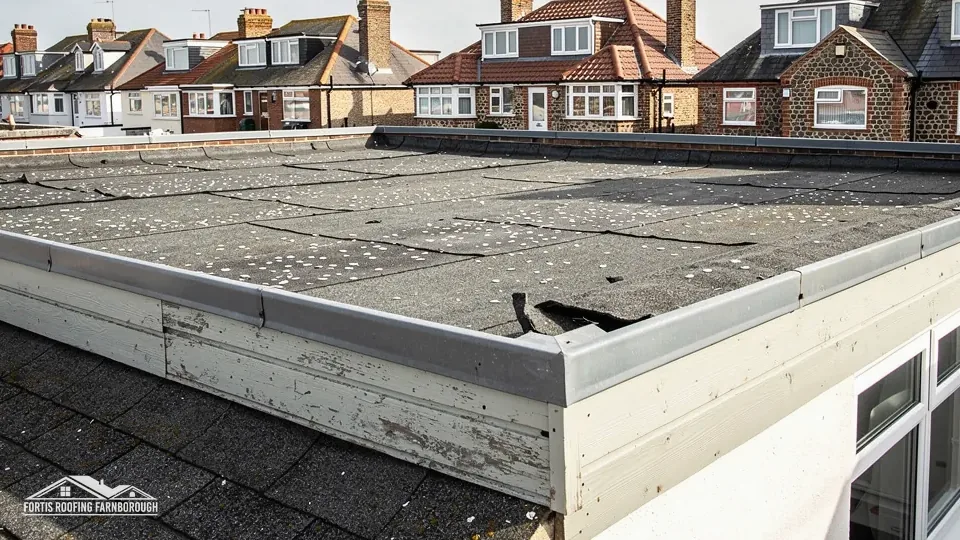
The biggest source of delay is not visible until the covering is off. Boards that have been wet for years may be soft or rotten, and the joists beneath can be affected. Replacing a few boards is a small addition. Finding that a large part of the deck needs renewing is a different job.
Insulation can be a surprise too. A cold deck roof with wet insulation needs it stripped out and replaced, and the cause of the moisture traced. If a vapour control layer is missing or torn, it needs to be added or the problem will return.
Outlets and rainwater goods may need renewing, and walls and upstands may be in poor condition where the roof meets them. Flashings that look fine from outside can be corroded or loose beneath.
The Building Regulations may bring requirements as well. Under Approved Document L, a flat roof given a fresh waterproof layer is being renovated, and Table 4.3 sets an insulation target of 0.16 W/(m²·K), so extra insulation may be added, which affects upstand heights and detailing. Our page on insulating a flat roof when replacing it explains the rule.
We tell you which discoveries would change the plan, and settle what to do with you if one turns up.
Scaffold, licences and what we put in writing
Access can add days before the roofing starts. If the roof is high or the building is hard to reach, scaffold is booked and built first. Scaffold over the footway or road needs a licence, and councils ask for warning. Hampshire County Council, for one, asks that ten clear working days pass before a scaffold goes up. A frame kept entirely on your own ground needs none.
For a single-storey roof such as a garage, a tower or ladders are often enough and the access stage is short.
The expected programme comes with the price after the survey: the stages, any lead time for scaffold or materials, and the points that depend on weather. It is an expectation and not a guarantee of a date, because the sky and the licence office are outside anyone's control.
If the old roof turns up a surprise, work pauses while we show you the evidence and settle a plan together. Nobody should pay for hidden extras without seeing why they are needed.
Our quote arrives as one figure in writing. The flat roofing hub covers the coverings and options, and the page on patch repair helps if a smaller job might do.