The short answer
Yes, where the damage is confined to one spot and the rest of the covering is sound. A split seam, a punctured area or a failed edge on felt, EPDM or GRP can usually be patched. A patch will not last on a roof that is cracked, hardened or leaking in several places, or where the deck beneath is wet, because the weakness simply moves to the next point.
Patching by material
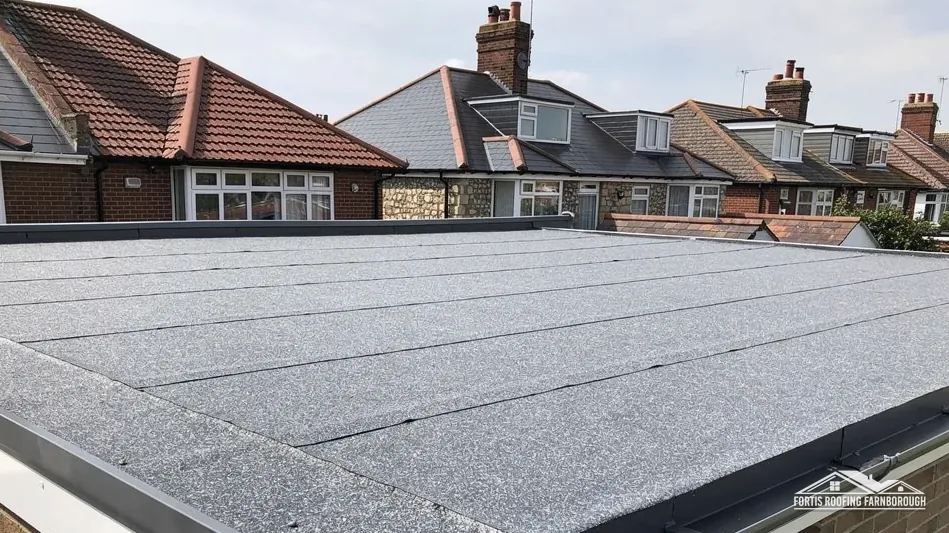
Each covering takes a patch differently. Felt is the most patchable: a damaged area is cut out or cleaned back and a new piece of felt is bonded over it, overlapping the edges by a generous margin. It works best on a surface that is still flexible, and it is the quickest repair for a split, a blister or a puncture.
EPDM, the synthetic rubber sheet, is repaired with a primer, patch of matching rubber and adhesive or tape designed for it. Small tears and failed seams respond well, provided the surface is clean and dry, and the repair is made to the manufacturer's method.
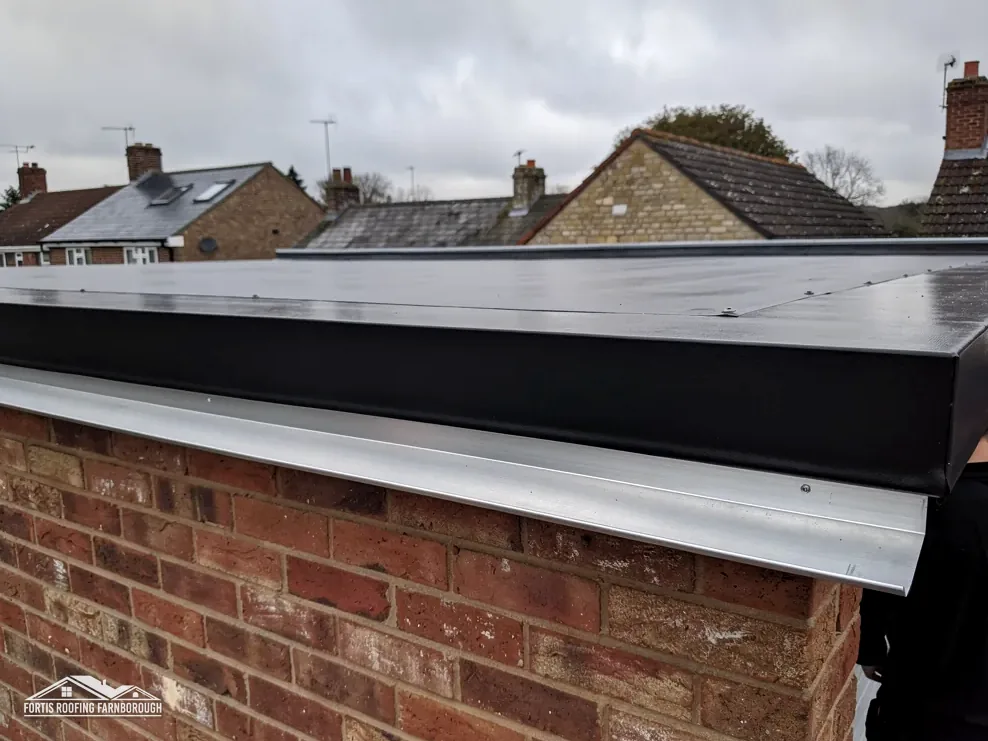
GRP, glass-reinforced plastic, is repaired by grinding back the damaged area, laying new glass matting and resin and finishing with a topcoat. A crack caused by a local knock can be fixed that way. Cracks caused by movement in the deck come back unless the movement is dealt with.
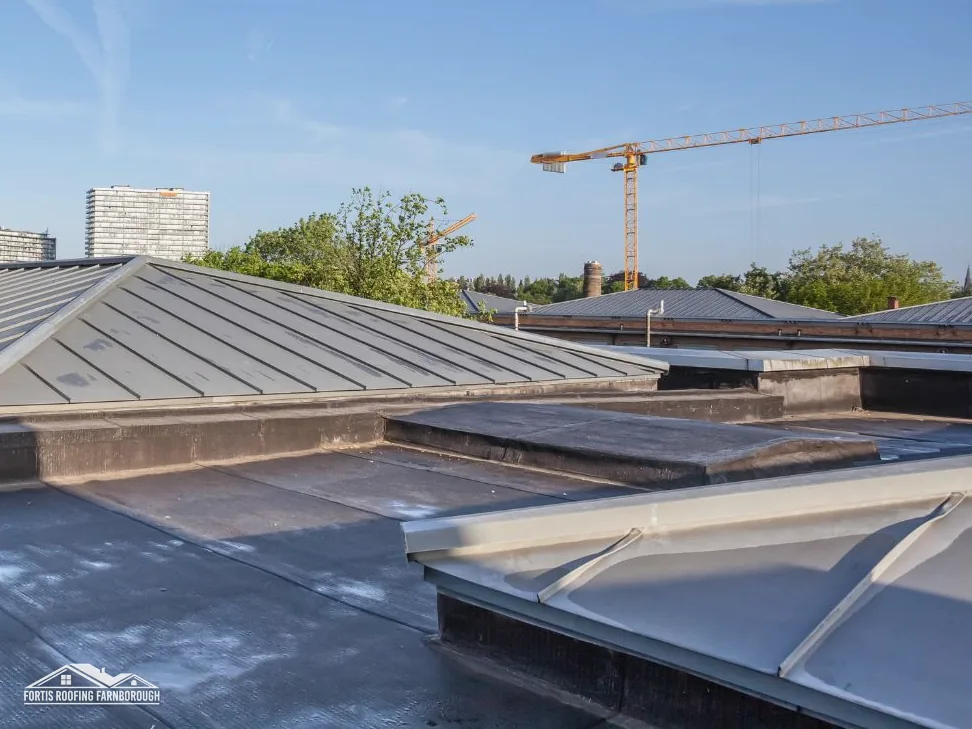
Lead, which can last 60-100 years according to HomeBuilding, is repaired differently, usually by welding or by replacing a damaged section. Cracks in lead sheet often point to thermal movement or insufficient allowance for expansion.
Whatever the covering, the first step is finding why it failed, since a patch over an unresolved cause will fail again.
Signs a patch will not last
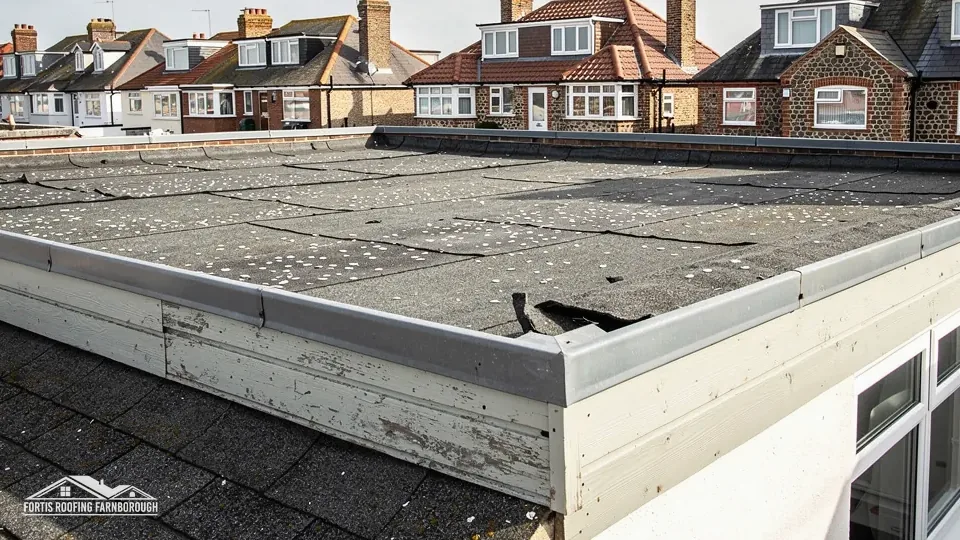
Some roofs have passed the point where patching makes sense. Warning signs include a surface covered in cracks or crazing, felt that is brittle and splits when lifted, widespread blistering, seams lifting in many places and several earlier patches within the same area.
A wet deck is the clearest sign. If a cut-out section shows damp or rotten boards, the covering cannot be made good until the deck is repaired, and patching over a wet deck traps the moisture. Look also at ponds. A roof that holds water around a patch will keep stressing the repair.
Age matters. HomeBuilding gives felt 10-15 years and Less 10 to 20 years, EPDM 25-30 years or 30 to 50 years, and GRP 25-30 years or 25 to 40 years. Treat these as typical ranges and not promises: a roof in the last stretch of its range is a poor home for new patches.
Repair cost versus replacement cost counts too. If patches are needed every year or two, the repeated bills can add up to a good part of a new roof.
Our page on why a felt roof blisters explains one of the commonest causes of repeat repairs.
Getting the patch done properly
A lasting patch depends on preparation. The area is cleared of debris, moss and loose material, and dried completely. Any wet insulation or rotten deck is cut out and replaced before the covering goes back. A repair done in the rain, or on a damp surface, often fails within a season.
The patch itself must be big enough. A small patch laid hard over a split leaves the edges to lift. The new piece should extend well beyond the damage in every direction, with the edges sealed and rounded or tapered so water cannot get under them.
Compatibility is important. Felt patches go on felt, rubber patches on EPDM, and GRP repairs use matching resin. Mixing systems, such as bitumen over EPDM, can cause adhesion failure or damage. A roofer who knows the covering chooses the right product.
Temperature and weather matter. Adhesives and torch-on work need suitable conditions, and the data sheet gives the working range. Do not let anyone use a naked flame on a roof without a proper fire-safe method.
If the leak is urgent, a temporary cover or sealant stops the water first, and the neater patch follows when the weather suits. The roof repairs hub covers temporary measures.
Our approach: repair when repair will do
We inspect the whole roof, not just the leaking spot. That means the surface, seams, upstands, outlets, edges and falls, and the ceiling below where we can see it. We photograph the defects and measure the roof, then tell you whether a patch will hold.
If one fault is the only problem, we recommend the repair and price it. If it has aged out, we tell you, show you the evidence and set out the options, from a partial re-cover to a full replacement. We would rather you pay once for the right job than pay several times for patches.
A candid conversation about life expectancy helps. A patch on a roof you plan to replace in a couple of years is a sensible stopgap, while one on a roof you hope will last another decade should be done to a higher standard.
Our quote is one total in writing. For larger jobs, our page on how long it takes to replace a flat roof sets out the programme, and the flat roofing hub describes every covering we handle.