The short answer
Only if it was designed for it. A flat roof is built to keep water out, not to be a floor, and many coverings are damaged by foot traffic or can be fragile. Occasional light access for maintenance is often possible on a sound roof with proper walkway pads, while regular use, such as a terrace, needs a purpose-built deck.
Covering, deck and condition
Three things decide whether a flat roof can take your weight: what the covering is, what lies beneath it, and what state both are in.
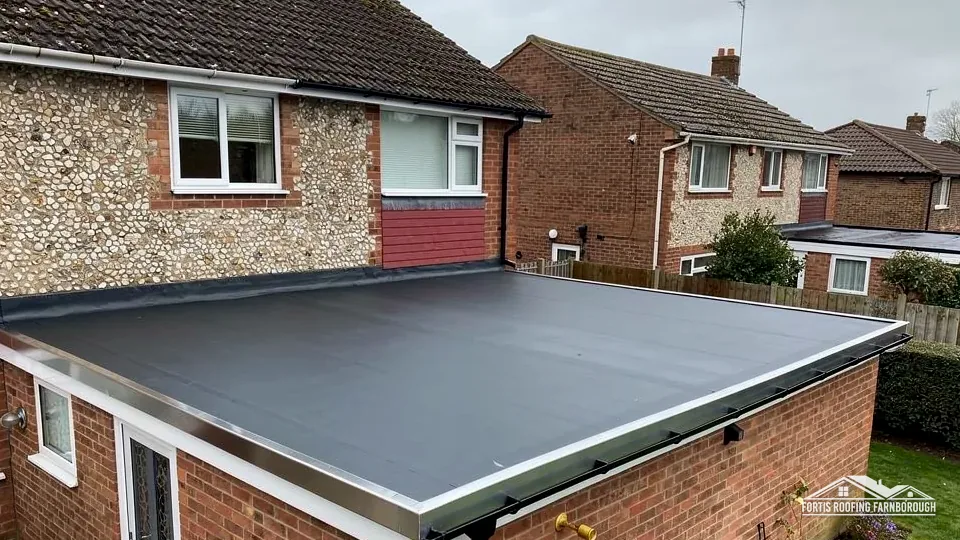
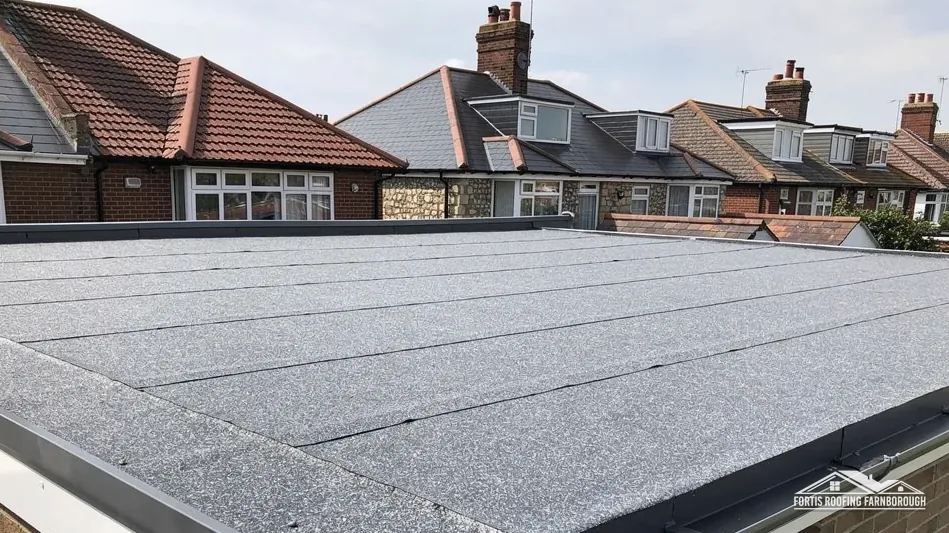
Coverings differ. Felt, particularly an older and brittle one, can crack or puncture under a heel. EPDM is tough and flexible but can be cut by sharp objects or worn by repeated traffic, and its surface can be slippery when wet. GRP is hard and often takes foot traffic well, though a cracked or thin laminate is fragile. Lead is soft and dents. Each maker states what its product will take.
The deck matters just as much. Timber boards on joists spread your weight, but boards that are thin, rotten or poorly supported can give way, and insulation boards under the covering may crush. A warm roof with soft insulation under the membrane is less forgiving than a roof with a hard deck.
Condition is the third. A roof with blisters, soft spots, ponds or hairline cracks is already compromised, and walking on it can finish the job. Roofs that look fine from the ground may be weak in places, and you cannot tell from the surface.
Start from the assumption that a flat roof was not made for foot traffic until you know otherwise. HomeBuilding's lifespans for felt, 10-15 years, show that coverings age.
Walkways and light maintenance access
Many roofs need occasional visits to clear outlets, inspect seams or service equipment such as an aerial or a rooflight. For this, manufacturers offer walkway pads or paving: tough tiles or sheets laid on the membrane to spread the load and protect it. They give a defined route, so people step in the right places.
Walkways should be fitted by the roofer who laid the covering, or bonded to a compatible system, because the wrong adhesive or a pad with sharp edges can damage the membrane. They are not a licence for heavy traffic, and the manufacturer states the load they suit.
Where regular use is wanted, such as a roof terrace or balcony, the roof is designed for it from the start. That means a stronger deck, a membrane suited to traffic, a protective layer and proper edges with guarding, and often paving on supports. It is not something that can be bolted on to an ordinary roof. A change like this may also need planning permission and building control approval.
Safety comes first. A fragile roof can fail under a person's weight, and falls from roofs are a leading cause of serious injury. Do not step onto a roof you are unsure of, and use a tower or access equipment when work is needed.
Our page on a blocked flat roof outlet explains clearing one from a ladder.
Damage that foot traffic leaves
If people have been walking on a roof, the evidence shows. Scuffs and worn patches along a route, crushed or flattened mineral granules on felt, small cuts or punctures, and cracks in a rigid surface are all signs. Soft spots or a springy feel underfoot may point to a damaged deck or crushed insulation.
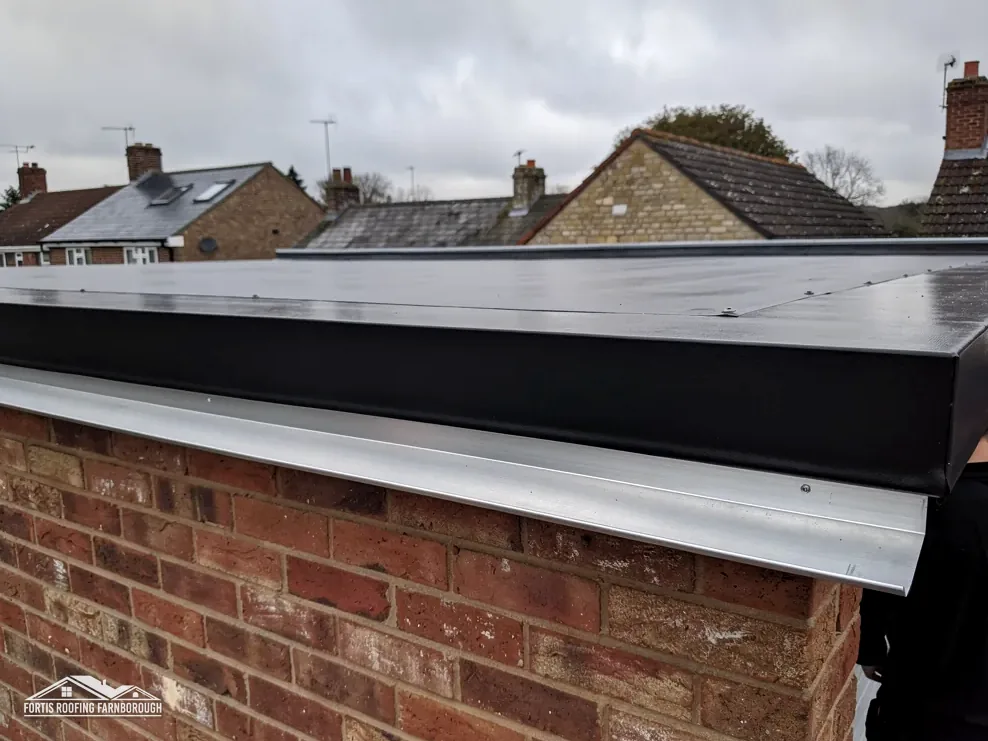
Damage often appears at edges and details, where people step over upstands or around outlets. A bent trim, a lifted edge or a corner that has split can start a leak.
The effects take time to show. A puncture may not leak until a heavy shower, and a crack may widen through frost. A ceiling stain after a period of use is a prompt to check the roof.
With around 53 days of air frost a year at South Farnborough (Met Office, 1991 to 2020), freeze-thaw cycles open up small defects, so damage left alone tends to get worse.
If you think the roof has been damaged, photograph the areas from a safe position and have a roofer look. Small repairs, such as a patch or resealing a split, are straightforward when caught early, and our page on patch repair for a flat roof explains the options.
What we advise
We start by asking what you need the roof for. If you only need occasional access, we survey the covering and deck, say whether it will take light traffic, and suggest walkway pads where they would protect it. If you want a terrace, we explain what is involved in designing one, including structure, waterproofing, drainage, guarding and consents.
On a survey we examine the surface, press for soft spots, check the falls and edges, and photograph what we find. You see the evidence and a straight answer on whether it is safe to walk on.
If the roof is not safe, we tell you plainly and explain the alternatives: repair, strengthening or a different covering. We do not recommend a bigger job than the roof needs.
The price for any work comes as one total in writing. The flat roofing hub covers every covering we lay and repair, and the details of life, cost and care vary by material.
Until you have an answer, treat the roof as off limits, and use a ladder or tower from outside for anything you need to reach.