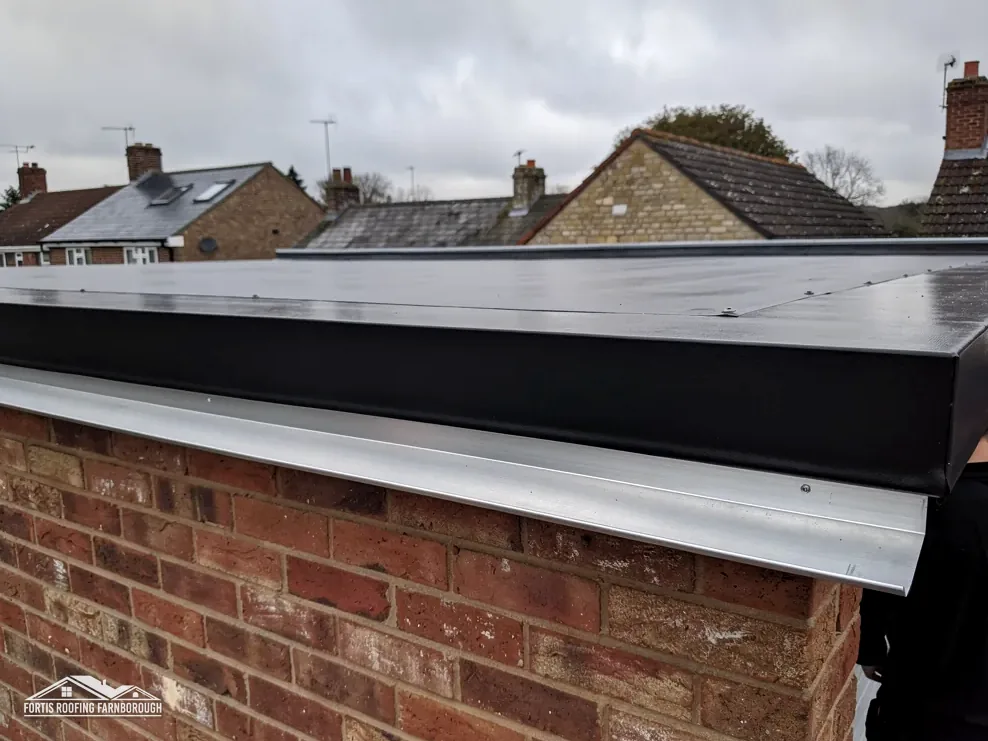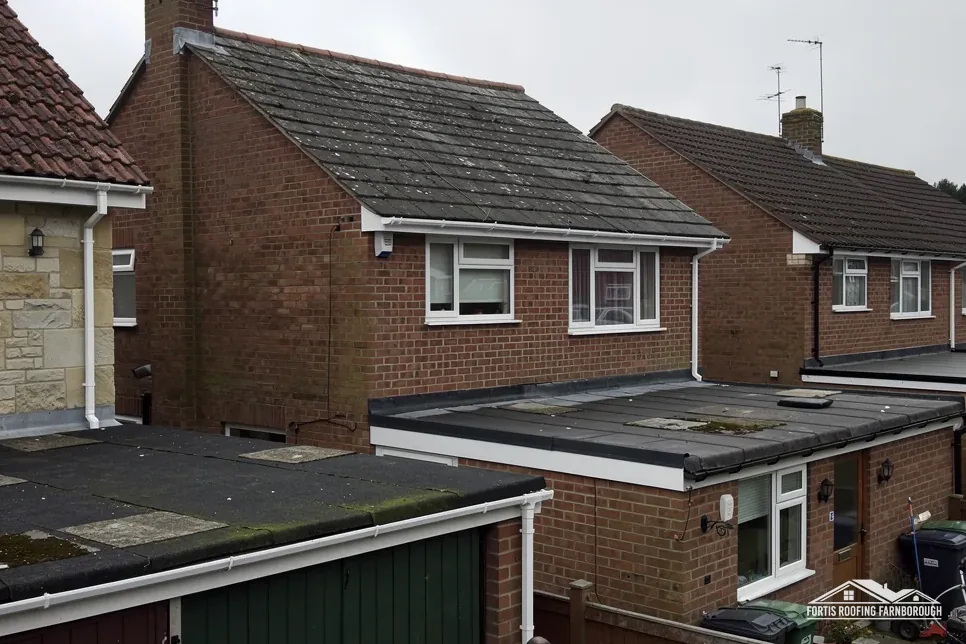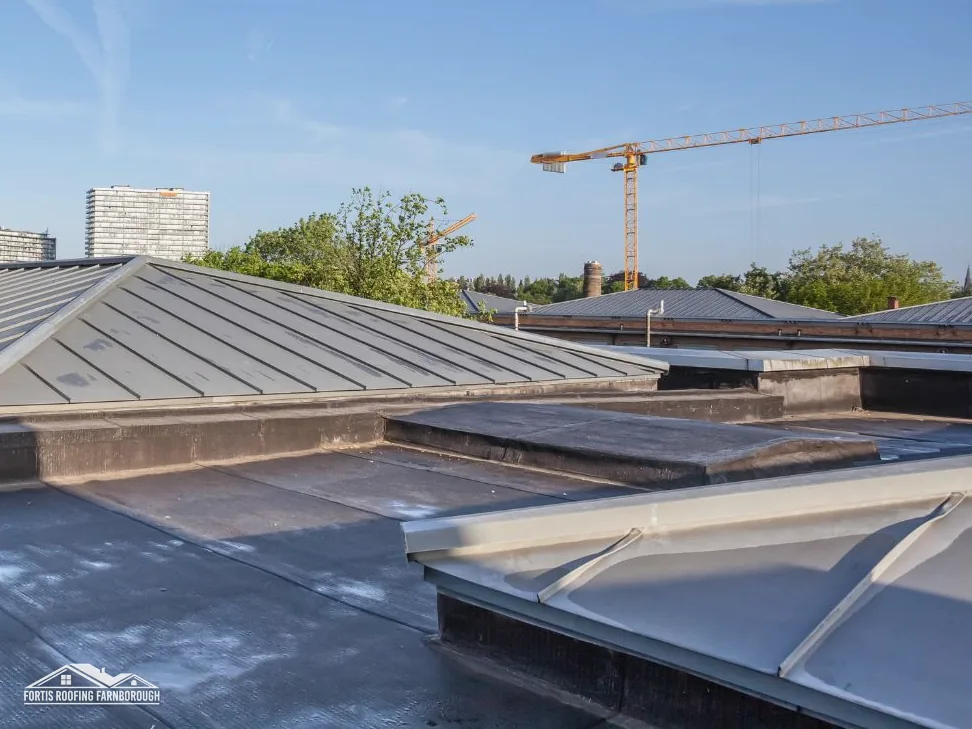
If the only goal is to spend as little as possible today, the answer is felt. Every published list we use puts bitumen felt at the bottom on price, and it is the covering most often chosen for garages and sheds. But the lowest price on the day and the lowest cost of owning a roof are different questions, and a budget choice that has to be redone in a dozen years can end up the dearer of the two.
This post is the budget post in our flat roof cluster. It sets out the published prices for each covering, sets them against published lives, and explains what to check so that a low quote is a good quote and not just a thin one. The numbers below come from published guides and carry their dates. They are not our prices; ours is written after a survey, as one total.
Other posts in the cluster answer different questions. Which covering lasts longest is in the longest-lasting flat roof material, and the weaknesses of the whole type are in the main drawbacks of a flat roof. Our flat roofing page explains the work itself.
The published prices, covering by covering
Two kinds of number help here: materials-only prices for each square metre, and totals for a small garage.
Materials only
HomeBuilding & Renovating (30 September 2025) prices the sheet or membrane alone, without labour. Felt comes out at £65 a square metre, EPDM at £105, GRP at £110 and lead at £170. Felt is the lowest by a clear margin, and lead the highest.
A garage, fitted
- Which? (November 2025, ex VAT): £1,400 to £3,500 for felt on a single garage of 6 m by 3 m; £1,950 to £4,000 if PVC or EPDM is chosen or the boards need renewing.
- Less (27 October 2026): £1,200 to £2,500 for a garage of 15 square metres.
- MyJobQuote (26 October 2026): £750 to £3,500 for a garage roof, averaging £1,500.
Rubber
MyJobQuote's rubber roof page gives around £60 a square metre and an average job of about £1,050 (9 October 2026).
What the figures say together
Felt sits lowest on materials, and the Which? range for felt starts below the range for the others. But the ranges overlap, which tells you that a keen price for a better covering can match a poor price for felt. The deck, the access and the details move the total as much as the covering does.
One more point: a low price for a covering says nothing about the quality of the preparation under it. Two quotes for felt can differ by a large amount if one strips and relays a failed deck and the other simply goes over it. Ask which you are being offered before you let the number decide.
These are national ranges, and a figure for your roof has to wait for the survey.
Up-front price against price per year
A roof is bought once but used for years, so the fairer comparison sets the price against the life.
Published lives
HomeBuilding gives felt 10-15 years, EPDM 25-30, GRP 25-30 and lead 60-100. Less gives felt 10 to 20, EPDM 30 to 50 and GRP 25 to 40. The two disagree on EPDM and GRP, so both are named wherever they appear.
What the two lists suggest
Felt costs least to put down and is the first to need replacing. A membrane that costs more for each square metre but lasts much longer can work out cheaper per year in use. For lead the gap is widest: the price is the highest, and so is the life.
When the low price is the right answer
- The building is temporary or short-term.
- You plan to sell, demolish or rebuild within a few years.
- The budget is fixed and the roof is small.
- The deck is sound and the details are simple.
When it is not
If you intend to keep the building for decades, a short-lived covering means paying for access and disposal again and again. Neither is in the materials-only price, and both add up over time. A homeowner who re-covers a garage with felt three times in thirty years will have paid for three sets of labour, three skips and three rounds of disruption, where one longer-lived covering would have needed one or two.
No life is a promise. A felt roof laid with care can beat a careless one in a better material, which is why the quality of the work counts as much as the choice of covering.
What a low quote may leave out
A low figure is welcome only when the job matches the others. These are the usual ways a quote comes in low.
Scope gaps
- The old covering is left on and a new one laid over it, when it should be stripped.
- The deck is not checked or repaired.
- Edge trims, outlets or upstands are kept to a minimum.
- Waste removal or scaffold is not included.
- VAT is not included.
Why each one matters
A new covering over a wet or damaged deck has a shorter life. Skimped details are where flat roofs leak. Waste and access are real costs, and a quote that leaves them out has only moved them to later.
Check the fall
BS 6229:2025 sets the finished-fall minimum for flexible membranes at 1:80, and IKO advises designing to 1:40. A bargain job that ignores the fall will pond, so ask what fall is being achieved and how.
Ask every firm for the same scope
Citizens Advice recommends comparing at least three written quotes. Hand each firm an identical brief, then read the scopes before the totals, since a low total that buys less work is a poor bargain.
Our own price
It arrives after the survey as a single written total, with the job described in the same document, so you can see exactly what it covers.
Where money can be saved safely
A budget job does not have to be a poor one. Some choices save money without storing up trouble.
Repair instead of replace
A single local fault in an otherwise good covering costs far less to repair than a new roof. A survey shows whether a patch will do, and the repair is the lowest-priced route when it is the right one.
Keep the deck if it is sound
Stripping the covering and keeping a dry, firm deck costs less than replacing both. Whether the deck qualifies is judged on the day, from above and from below.
Match the covering to the plan
For a building you will keep a short time, felt is a sensible choice. For a long-term home, paying more for a longer life can work out less expensive in the end.
Combine jobs
If gutters, fascias or other work are needed at the same time, doing them together saves repeated access, and a single visit by the same crew is easier to manage than two. Ask each firm whether a combined price is possible, and whether the work can be sequenced so that the roof is never left open while you wait for the next trade to arrive.
Keep it maintained
Clearing outlets and looking at the roof after storms costs very little and can add years to any covering. A minute with a torch in the loft each autumn, looking for new stains, is the least expensive inspection there is, and it can reveal a failing seam early.
What not to economise on
Do not skimp on the deck, the falls or the details. They decide whether any covering reaches its range, and a few hundred pounds saved there can cost far more later.
For how the guides price a rubber roof in particular, the post on EPDM rubber roofing costs explains why they differ.
The roof you already have
The roof that costs least of all can be the one you already have, kept in good order. A survey establishes whether it can be.
What the survey looks at
Splits, blisters and lifted seams come first, then the upstands and flashings, the outlets and gutters, the deck from inside and the fall, which shows in the pond marks. Each defect gets a photograph and the area is measured, which gives any later price a factual base.
Three ways it can go
- Repair: one local fault, and the rest in good order.
- Re-cover: a worn-out membrane on a deck that is still firm and dry, so only the covering changes.
- Replace: a damaged deck as well as a failed membrane.
Older roofs and asbestos
An old garage or outbuilding may be roofed in asbestos cement sheets. HSE's presumption covers construction or refurbishment before 2000, and such roofs are fragile. Taking one off is a different and dearer job that can change the budget entirely, so identify the material first.
One price
The survey ends in a written price for the option the evidence supports. A roof that needs only a repair gets a repair price.
The comparison with a pitched roof is in our post on whether a flat roof is cheaper than a pitched roof.
A short checklist for a budget flat roof
A few questions keep a budget job honest, and they take only minutes to ask.
Before you accept a quote
- What covering is it, and what is its published life?
- Is the old covering stripped, and what happens to the deck?
- What fall will be achieved?
- How are the upstands, edges and outlets formed?
- Is scaffold or access included?
- Are waste removal and VAT included?
- What does the contractor do if the deck proves damaged?
On price
Ask what share of the total is covering and what share is preparation, but look for one written total for a clearly described job.
What the written price should say
It should describe the job, state the total and say how long it stays valid. Keep it with the survey photographs, because together they are your record of what was agreed, and they make any later conversation about the roof short and factual. If the contractor changes the scope on site, ask for the change in writing before you agree to it.
Test a quote against the published ranges
A quote far below the published figures invites the question of what has been left out, and one far above invites the question of what is included. There may be a good reason either way, but you are entitled to hear it.
When you are ready, the survey comes first, and the price comes after it.