People say Velux the way they say hoover or biro, for the whole class of thing and not for one maker. That is natural, and it causes small muddles, such as a householder asking for a Velux on a flat roof, where the usual pitched-roof window would not suit. The brand name tells you something about how the product looks, but it does not say what kind of window it is or whether it is the right one for the roof.
Skylight is the broader term. It covers pitched-roof windows that open, fixed panes, domes over flat roofs and tubes that bring daylight into a stairwell. A Velux roof window is one kind of skylight, made by one manufacturer, and other manufacturers make comparable products under their own names.
In this post we separate the brand from the type, describe the main kinds of skylight, set out the rules that apply to a window in a roof, and give a way to read a quote that names a brand. It is the brand post in a small group; our companion piece on rooflight against skylight deals with the technical vocabulary and the Part L rows.
A brand and a category
It helps to put the two words on different levels. Skylight names the category, and Velux names a maker within it.
What the brand name tells you
It tells you the supplier and, usually, the look: a framed glazed unit set into a pitched roof, often with a pivot opening. It points you to the maker's own range of spare parts, data sheets and flashing kits.
What it does not tell you
It does not give the size, the opening type, the glazing specification, the flashing kit or the roof it suits. Those are the things that decide whether a window works in your house, and they sit in the model reference and the maker's data. A quote that says only "Velux" has left them out.
Other makers
Other manufacturers produce roof windows of the same general kind. A fitter may recommend one over another for good reasons, such as availability, the roof covering or an existing opening that needs a matching size. A replacement window has to fit the opening already there, which can narrow the choice. For a new opening there is more freedom, and the decision comes down to the specification, the supply and the price.
Judging the fitter
A brand on a quote describes the product and says nothing about who fits it. Judge a roofer by the survey, the photographs and the written price.
Whether a given roof can take a roof window at all depends on its pitch, its covering and its frame, and the survey answers that before anything is ordered.
The kinds of skylight
Several products share the name, and they suit different roofs. Knowing the types helps you ask for the right one.
Opening roof window
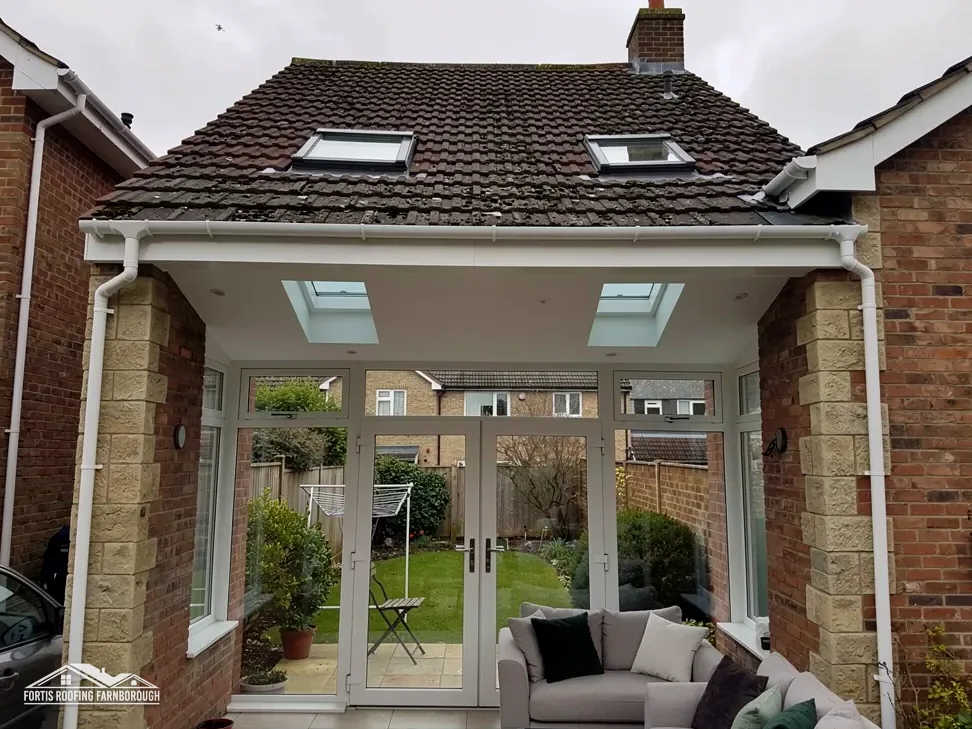
A glazed unit in a pitched roof that pivots or hinges. It lights and ventilates a room, and some can serve as an escape window. This is what the Velux name usually refers to.
Fixed roof window
The same kind of unit with no opening sash. It lights a room but does not ventilate it, and it cannot be an escape route. It can be a good choice where an opening unit would be out of reach.
Flat-roof rooflight
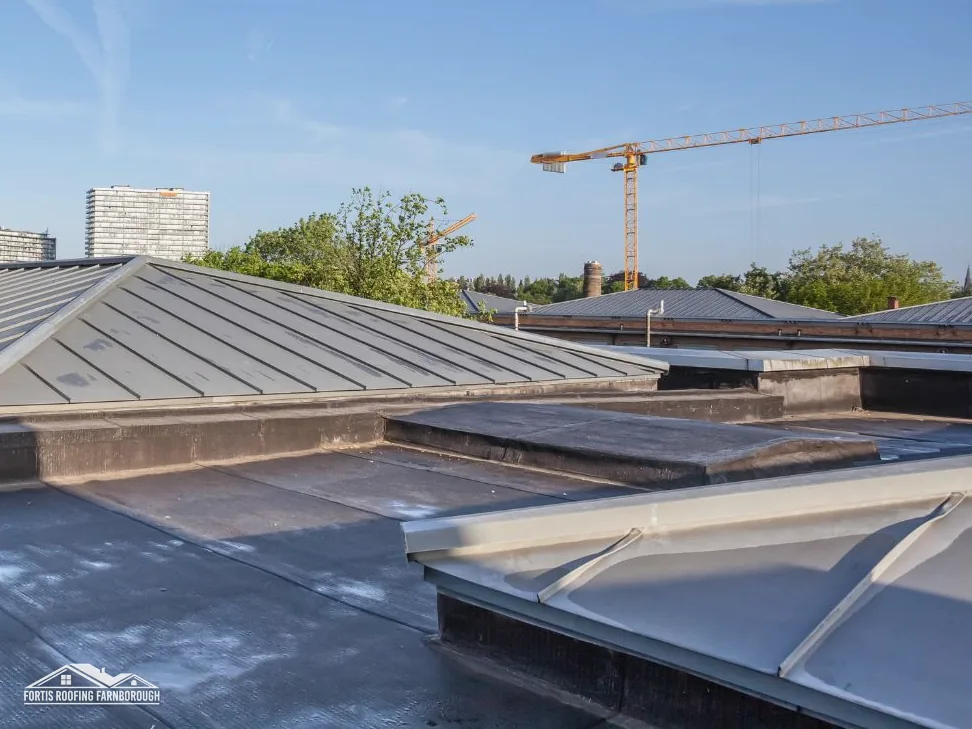
A dome, pyramid or flat glazed unit standing on a kerb above a flat roof, where the junction between the kerb and the roof membrane decides whether it stays watertight. Ponding around the kerb, or a membrane that has lifted from it, is where a unit on a flat roof usually fails.
Roof lantern
A raised glazed structure with pitched sides, usually on a flat roof extension. It brings in more light and adds to the look of the room.
Sun tunnel
A tube with a reflective lining that carries daylight from a small dome to a ceiling fitting, used in landings, bathrooms and cupboards where no window will fit.
Electric and sensor units
Some roof windows open by motor and close themselves when rain is detected. They suit high or hard-to-reach positions. Check where the power supply and the control will go before choosing one.
Which to ask for
Start from the roof and the job: pitched or flat, light only or ventilation too, within reach or not. The product follows from those answers.
The rules that apply whatever the name
The brand does not change the rules. A roof window from any maker is held to the same standards, and the building control body will ask the same questions.
Insulation
Approved Document L, the 2021 edition with the 2023 amendments, puts a window, roof windows included, at a target of 1.4 W/(m²·K), with Band B of the Window Energy Rating scale as the other route. Rooflights are on a separate row at 2.2, and a pitched-roof window is judged as a window. Ask the supplier for the product's U-value or its rating, in the data sheet, before you order.
Structure
A new opening means cutting rafters and framing the gap, which is structural work. Building control can say whether an application is required, and for Rushmoor and Hart that means calling 01252 398715.
Escape
Where the window is the escape route from a loft room, Approved Document B sets the clear opening at 0.33 square metres, with 450 mm as the least height and width and 1100 mm as the highest the bottom of the opening may sit above the floor.
Planning
Class C normally permits a roof window on a house, within its limits. The planning side is set out in our post on planning permission for a skylight.
Cost
MyJobQuote's typical UK figure for a standard mid-range Velux is around £1,100, with a straightforward swap about £100 lower (September 2026).
Replacing, repairing and matching
Once a window is in, the brand matters in a practical way, because spare parts and replacement units are made to fit particular models.
Replacing the whole window
A new window has to fit the opening. If the old unit is a Velux of a given size, a new one of the same size drops into the same trim. A different maker's unit may not match the opening and could need it altered, which adds work. That is the main reason people stay with a brand on a swap. Our guide to replacing a Velux window explains the steps.
Replacing just the glass
If the glass unit has misted or cracked but the frame is sound, a replacement glass unit alone can solve it, and that costs less than a new window. The maker's reference number, usually on a label on the frame, identifies the right one.
Leaks
A leak is often the flashing or a failed seal and not the window. Looking at the surrounding covering and flashing before replacing the unit can save money.
Condensation
Moisture on the glass is usually room humidity meeting cold glass, and it is a ventilation matter before it is a product fault.
Old windows
An older unit may no longer be made, and its parts may be hard to find. The survey says whether repair is sensible or whether a new window is the better buy. Where a frame is sound and only a seal or a glass unit has gone, repair usually costs less. Where the frame is warped, the timber round it is soft or the opening has been leaking for years, a new window with new flashing and a repaired surround is the better choice, and we show the photographs that led to the advice.
Fitting and flashing differences
A skylight is only as good as its weatherproofing, and the detail changes with the product and the roof covering.
The flashing kit
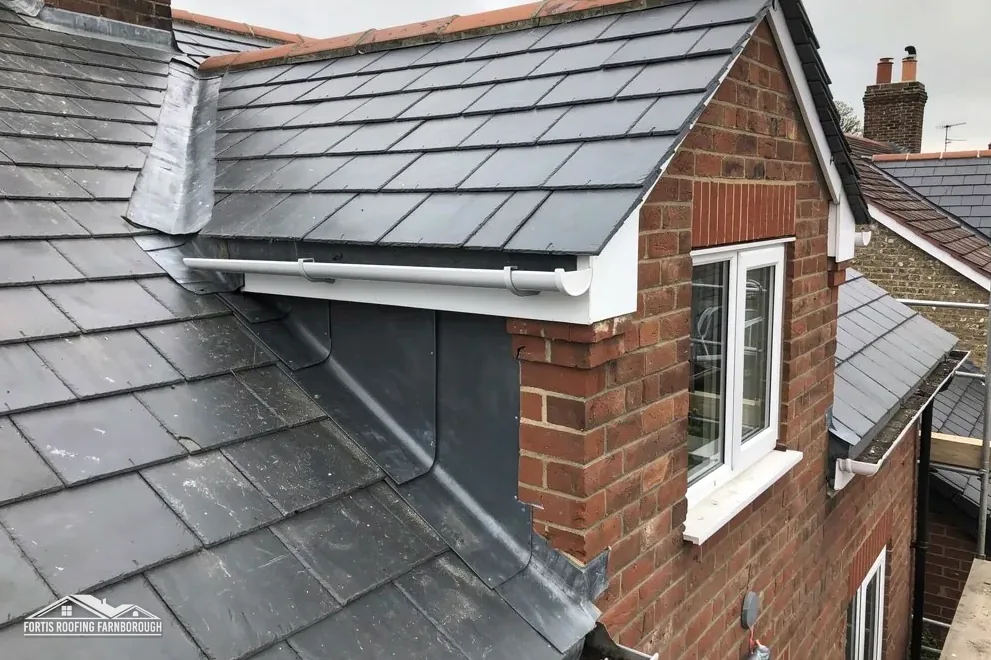
A pitched-roof window comes with a flashing kit made for the roof covering: plain tile, interlocking tile or slate. The kit lets the covering overlap the window frame and sheds water round it. The wrong kit gives leaks. Our guide to the roof window flashing kit explains the choices.
Slate and clay
Slate and clay roofs need more cutting and care around the unit, so the work takes longer. On a slate roof, ask how the slates round the unit will be cut and fixed.
Flat roofs
A flat-roof unit sits on a kerb, and the membrane is dressed up to it. The fall of the roof matters; BS 6229:2025 keeps a finished fall of 1:80, and IKO advises designing for 1:40.
Inside the room
The opening needs a lining that finishes the reveal and keeps warm air from condensing on cold surfaces. A good lining is part of the product, not a decoration.
Sequence
The covering is opened, the frame set, the flashing dressed, the covering made good, and the lining fitted inside. We take photographs at each stage, so what lies under the finished covering is on record. The time it takes varies with the roof, the way it is reached and the forecast, so ask for the plan before the start.
How to read a quote that names a brand
When a quote names a brand, it should still tell you everything the brand name leaves out. A short checklist makes it worth the paper.
The model and size
Ask for the full model reference and the size. The reference identifies the opening type, the glazing and the flashing kit, and it is how you check the product against the maker's information. A model reference is easy to write down and costs nothing, so a quote that leaves it out is a quote with something unsaid.
New or like for like
Ask whether the quote is for a swap into an existing opening or for a new one, because the work differs.
The flashing and the covering
The quote should say which flashing kit suits your covering.
What is included inside
Check the lining, plastering and decoration.
Access and tax
VAT is 20% at the standard rate, and the quote should show whether it is in. On a high roof, check whether the scaffold is also included.
Comparison
Citizens Advice suggests at least 3 written quotes, which are only comparable if they name the same product. After a survey, where we measure the opening and photograph the rafters and the covering, you receive one written price. Our roof windows and skylights page covers the windows we fit and repair.