A new roof sounds like the kind of job that empties the house. In practice, the rooms below the roof stay usable, because the work happens above the ceilings and the roof is opened and closed in stages, so no part of the house is exposed overnight. What changes is the day: scaffold on the front and back, people on the roof from the morning, deliveries, a skip and a good deal of noise.
What matters is preparation. If the loft is cleared, the access is set up, the neighbours know and the household understands the routine, a re-roof is an inconvenience and not an upheaval. If none of that is in place, the same job feels much worse than it needs to.
Below we walk through what the days are like, what to move and protect, how the scaffold and its licence work, the checks that come before any old covering is touched, and the legal side of keeping the site safe. The detail on any job changes with the house, so the survey is where the plan for yours is made.
What the days are like for the household
Most of the work happens outside, and you can carry on in the rooms below, but a few things change from the first morning.
The noise
Stripping an old covering is loud. Tiles are lifted and dropped into a chute or a skip, battens are pulled with bars, and new ones are nailed. If you work from home, expect to take calls in a back room or at a neighbour's, and expect the loudest hours at the start, when the old roof comes off.
Movement on the roof
You will hear people overhead and see the scaffold boards from your windows. Vibration shakes pictures on walls and loose items on shelves in the rooms directly below, so take down anything fragile, especially in the top floor and the landing.
Deliveries and waste
New materials arrive on a lorry and are lifted to the scaffold. Old tiles and battens go into a skip or a collection vehicle. Space on the drive or the road has to be agreed, and the skip may need a permit if it stands on the highway.
Pets and children
Children and pets should stay clear of the scaffold, the chute and the area below them. A secured side gate and a note for visitors help, and so does a word with anyone who collects the children from school about where to park.
Power and water
The work does not need your power to be off for long periods, though a power point outside is often asked for. Tell the roofer about any services in the loft, such as a water tank or cabling, and the way they run.
The loft comes first
The loft is the room directly under the work, and what is in it determines how the job goes. A re-roof lifts the covering and the battens over your stored belongings, and dust and debris come with it.
Clearing it
Move boxes, furniture and anything fragile out of the loft before the start date, or to the middle of the floor so that sheets can cover them. Our answer on clearing the loft before a roof replacement sets out what to move and what can stay.
Dust and debris
When old underlay and battens come away, loose dust, old insulation fibres and bits of mortar fall into the loft. Sheeting under the working area catches most of it, but a fine layer still settles. Cover items you must leave and plan to clean afterwards.
Loft insulation
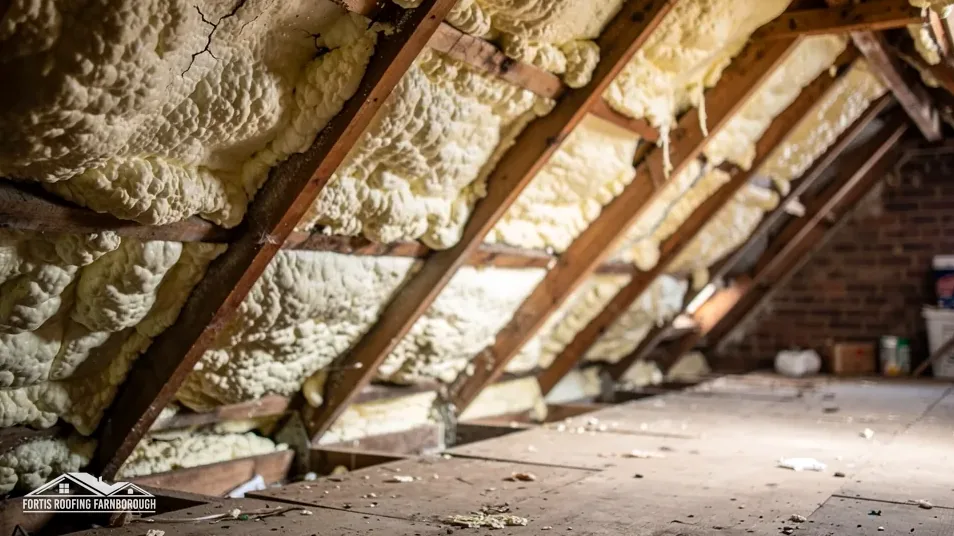
Insulation lying on the ceiling joists can be disturbed. We note its condition at the survey and will say whether it should be topped up or replaced while the roof is open. If a roof is being renovated, Approved Document L's figure of 0.16 W/(m²·K) may apply, so ask your building control body.
Checking the ceilings
Take a look at the ceilings below once the old covering is off. If a stain or sag appears, point it out so that the cause is looked for, and keep a dated photograph of it for your records.
Asbestos
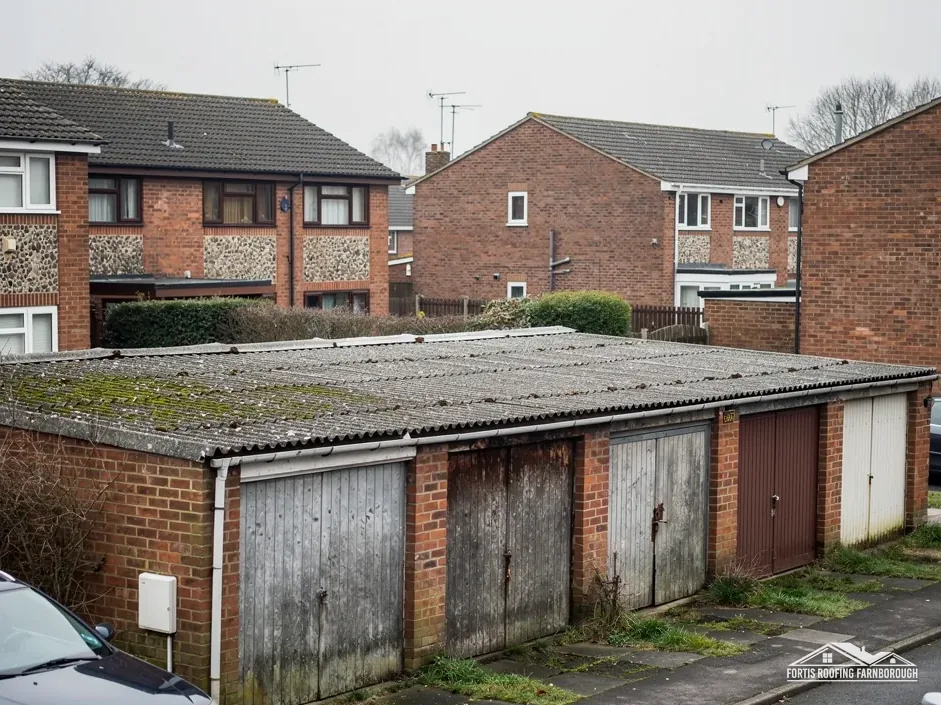
HSE advises assuming that a house built, or last refurbished, before 2000 contains asbestos until a check shows otherwise, and it names external soffits as a place where asbestos insulating board can be found. A check before a re-roof is sensible,.
Scaffold, licences and the street
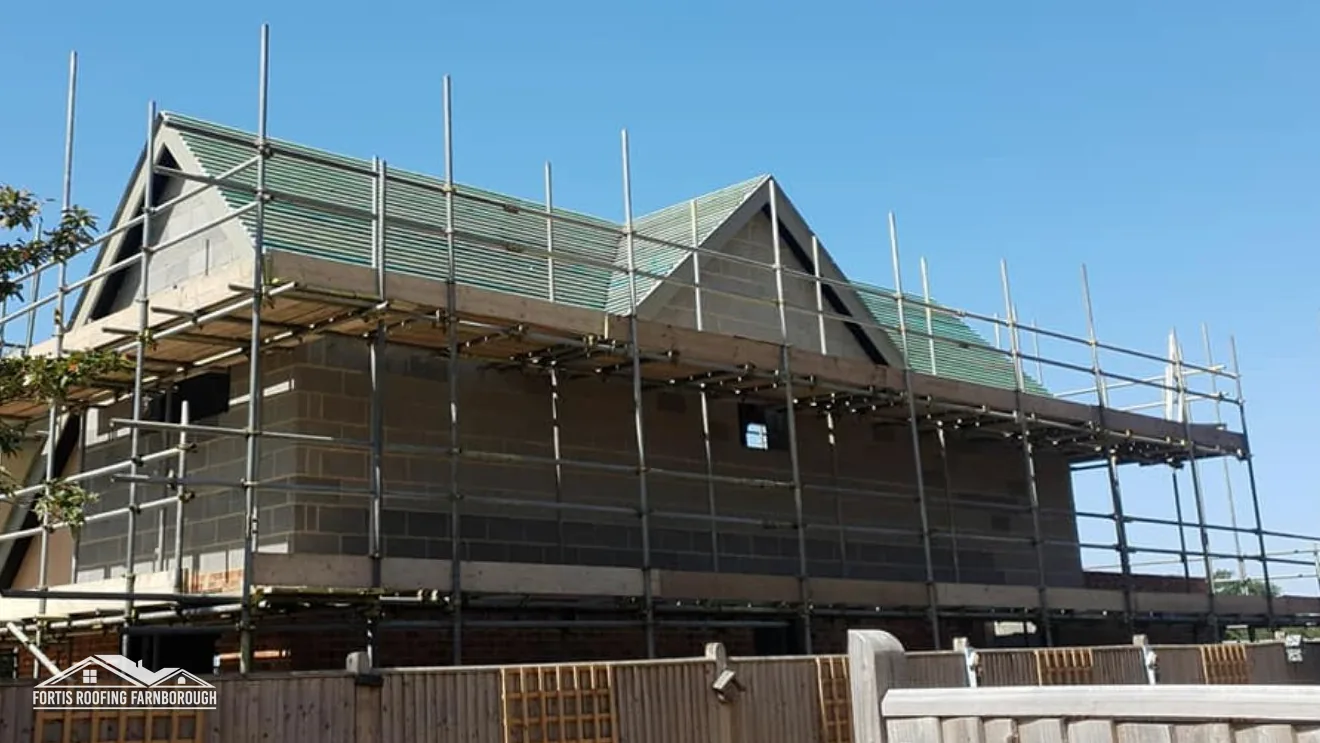
A re-roof is worked from scaffold, which stands on your plot or on the pavement in front of the house. Where it stands decides the paperwork.
On private land
No licence is involved if the whole scaffold is on your own plot. Bracknell Forest Council and Wokingham Borough Council both say structures on private land are outside their licensing, and Hampshire County Council says the same for private roads.
On or over the highway
Section 169 of the Highways Act 1980 forbids scaffolding that obstructs a highway without the highway authority's licence. In and around Farnborough that authority is Hampshire County Council. Hampshire County Council says the scaffolding company must make the application for the customer, charges £211.90 for the first 2 weeks and £72 for every extra 2-week period, and needs 10 clear working days in hand before the scaffold goes up. Extensions are not offered, which means a long job calls for a second application.
Elsewhere
In Surrey, Bracknell Forest and Windsor and Maidenhead each council has its own page and fees. There we arrange it with the scaffolder, then give you the cost and timing for your street.
What it means for you
The 10 working days are the reason a start date cannot always be moved at short notice. The scaffold stands for the length of the job, so ask how long that is expected to be, and whether the quote includes it.
Farnborough Airport safeguards the area around its aerodrome for cranes and tall plant. That safeguarding is aimed at cranes and tall plant, so if a lift is planned we raise it early with the operator.
Keeping the roof closed overnight
The worry that comes up first is an open roof and a night of rain. It is a fair one, and it is why a re-roof is planned slope by slope and not all at once.
Working in sections
Stripping and re-covering go ahead one section at a time. The area opened in a day is the area that can be covered by the evening with underlay and tarpaulins, and the rest of the roof stays as it was until its turn comes.
The weather
The forecast sets the plan. A day of heavy rain is not a day to open a slope.
What you can do
Check the ceilings the next morning if rain fell, and tell the roofer promptly about any drip. A small leak in the first hours is far easier to deal with than one left for days.
How long it takes
The time depends on the size of the roof, the covering, the access and the weather. The question of how long it takes is covered in our answer on how long a roof replacement takes. We tell you the plan before the start and update you as the days go by.
If there are repairs underneath
Opening a roof shows the battens, rafters and wall plate. If timber is rotten it is repaired, and we show you the photographs so that you can see why.
Who is responsible for site safety
When work is done to your home, the law places duties on you as well as on the builder. It is worth knowing what they are, because they shape the paperwork.
You as a domestic client
The CDM Regulations 2015 (Construction, Design and Management) count you as a domestic client for work on your house, or a family member's, so long as no business of yours is involved. HSE publishes a page for domestic clients, and the regulations shift much of a client's load to the contractors.
One contractor or several
If a second contractor joins the job, say an electrician or a builder, regulation 5 requires both a principal designer and a principal contractor to be named. A single contractor working alone still owes you a construction phase plan under regulation 15(5). What switches on the extra roles is the headcount of firms, and notification has nothing to do with it. On a straightforward re-roof by one roofing firm, the plan is that firm's job.
What a plan covers
A construction phase plan sets out how the site will be run: access, edge protection, the scaffold, waste, deliveries, the protection of the public and of your household, and what happens in an emergency. You are entitled to ask to see it.
Your own part
Tell the roofer about asbestos you know of, buried services, the position of loft tanks and any access limits. Keep children and pets clear of the working area.
The contract
A contract you sign in your own living room after a survey is off-premises, and a 14-day cancellation period normally starts the day after you sign. Citizens Advice sets out how the cooling-off rules work, and an urgent repair you ask us to visit for is excluded.
Making it easier on the household
A few small steps cut the strain on the household, and most cost nothing but a conversation with the people involved.
Tell the neighbours
A scaffold on the front or a skip on the drive affects the street, and a word beforehand goes a long way. Scaffolding can also affect a shared passage or a party wall, so mention it to anyone who shares one.
Plan the car
Deliveries and the skip need space. Move cars before the start and keep the drive clear on the days materials arrive.
Choose your rooms
If you work from home, shift to the back of the house on the loud days. If a child sleeps in the day, use a room away from the roof.
Windows and washing
Keep windows near the scaffold shut, since dust drifts. Do not dry washing outside on the days of stripping.
Ask for a daily update
A short talk at the start and end of each day lets you know what is open, what is covered and what happens tomorrow. We tidy as we go, and waste is taken away.
The written price
Citizens Advice suggests at least 3 written quotes. When we visit we measure and photograph the roof, talk through the household plan, and send one written price afterwards. The roof replacement and new roof installation page sets out what a full re-roof involves.