The short answer
Yes, in suitable conditions. Winter work is possible if the deck is dry, the temperature suits the chosen membrane and adhesives, and the roof can be sealed each day. Rain, frost and low temperatures stop some tasks, so the programme needs slack. Some coverings, such as GRP and torch-on felt, are more weather-sensitive than others.
What winter does to the work
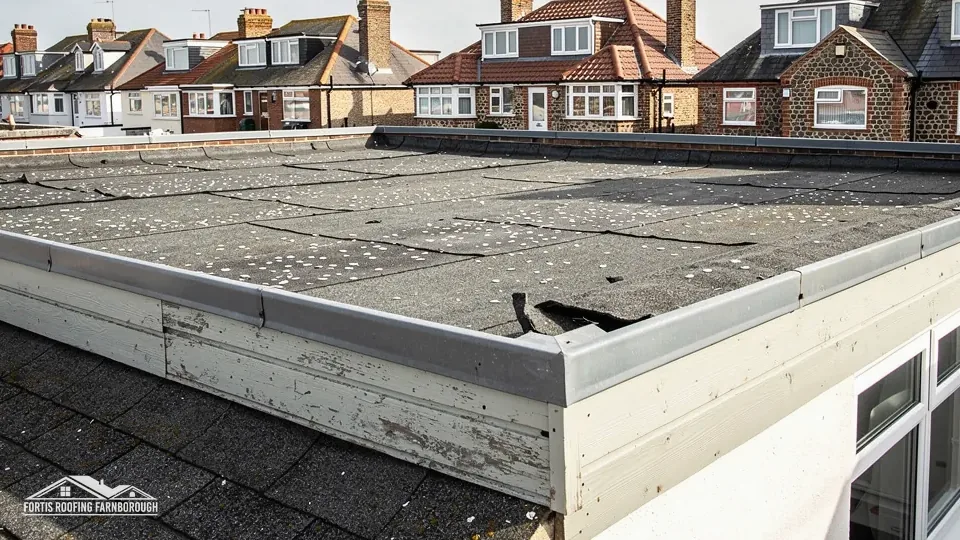
Flat roofing is open-air work that depends on dry surfaces and sensible temperatures. Three conditions matter most: rain, frost and cold.
Rain stops most tasks. A wet deck cannot be bonded to, insulation boards soak up water, and adhesives and resins need clean, dry faces. Even light drizzle can ruin a day's work if the surface is not covered.
Frost leaves ice on the deck and the boards, makes surfaces slippery and stops some products working. A hard overnight frost can mean a late start while the roof thaws and dries.
Cold slows curing and bonding. Adhesives, resins and sealants carry working temperature ranges in their data sheets, and below those ranges they cure slowly or not at all. GRP is a good example, since its resin needs a minimum temperature and dry conditions to harden properly. Torch-on felt also needs dry conditions and care with the flame.
The Met Office figures for South Farnborough (1991 to 2020) show about 118 wet days a year and around 53 days of air frost. That is a real winter, but it does not make work impossible. The programme has to be built around the forecast and not the calendar.
Coverings and their weather limits
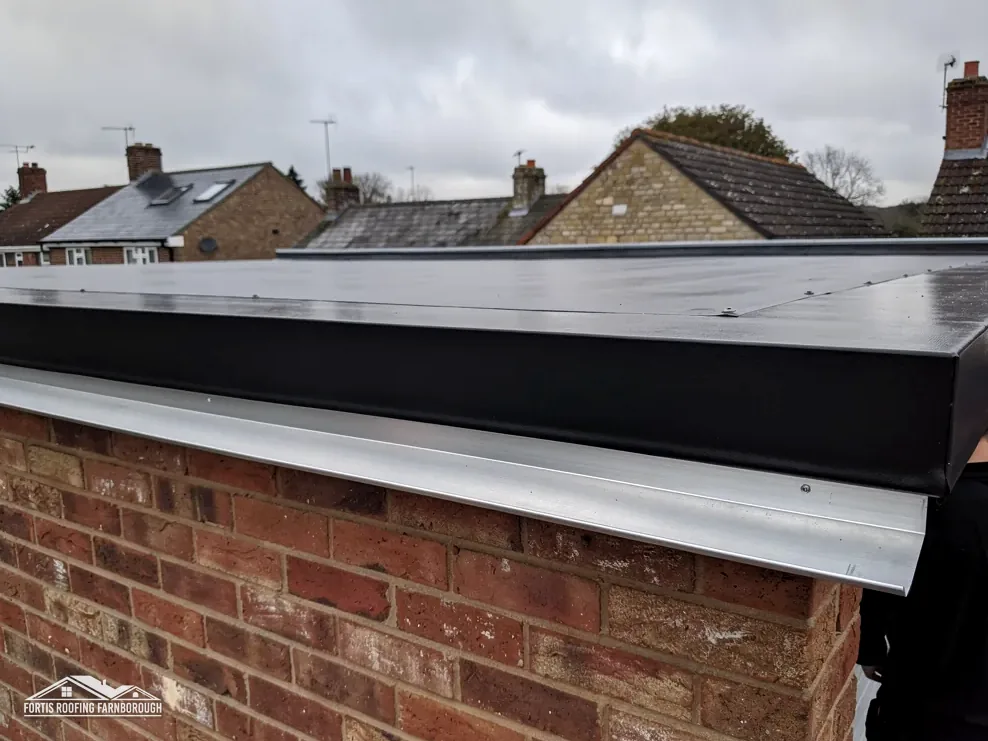
Different coverings cope differently. EPDM is a single sheet that is bonded down with adhesive, and the adhesive needs dry, mild conditions to work. Mechanically fixed systems are less sensitive to temperature, though still not suited to wet decks.
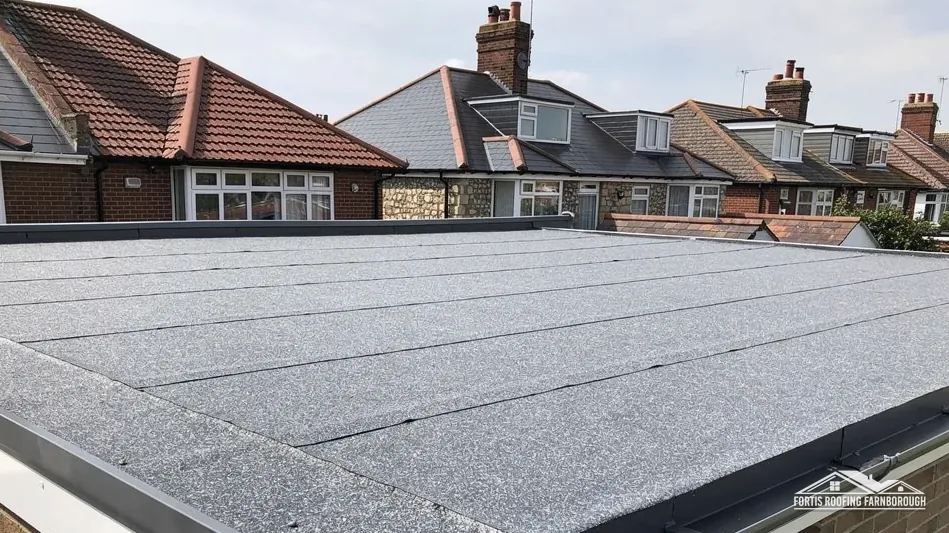
Felt in layers needs a dry deck and, for torch-on, calm and dry conditions with fire precautions. Cold felt is stiffer and harder to form around details, so roofers may warm rolls before laying.
GRP is the most sensitive: rain on uncured resin can ruin it, and cold slows the cure. Most GRP laying waits for suitable days.
Lead is the least affected by temperature but needs dry boards beneath it, because trapped damp can corrode the metal and rot the deck.
Product data sheets set out the limits, and a good roofer reads them. If the sheet says no laying below a given temperature, that is the rule, and the work waits.
Quality matters more than speed. A flat roof laid in poor conditions can fail within a season, and the fault rarely shows until the next wet spell. Our page on how long it takes to replace a flat roof covers the stages and what can delay them.
Temporary cover and staging
Good winter practice is to split the roof into sections, each of which can be completed and sealed within one working day. The roofer strips only as much as can be re-covered before dark, lays the new build-up in sections and keeps a temporary cover of sheeting and battens ready for when rain threatens.
Staging also protects the building. The interior below is covered, furniture moved and the floor protected, and the roof is never left open overnight. An unexpected downpour is the hazard that ruins ceilings and insulation.
Materials need care. Insulation boards, rolls of felt and rubber sheet are stored dry and off the ground, and adhesives are kept at a workable temperature. Cold, damp materials are harder to use and can bond badly.
Allow for the unexpected. A forecast can change, and a day lost to rain pushes the whole programme back. Slack in the schedule is part of a realistic plan and not a sign of delay.
For a leaking roof that cannot wait for a perfect window, a temporary repair stops the water first and the full replacement follows when conditions suit. The temporary roof repair page explains the options.
Deciding between winter work and waiting
Waiting for spring is sometimes right and sometimes not. A roof that leaks, or a deck that is getting wetter by the week, is better dealt with now, because delay lets damage spread to insulation, boards and ceilings.
A roof that is merely ageing, with no leak, can wait for the warmer, longer days. GRP and bonded-membrane jobs in particular go better when temperatures are kind, and a roofer who suggests waiting is giving you a reason, not an excuse.
Other points count. In winter many roofers have more availability, and the household may be using a garage or extension less. Against that, shorter days limit what can be done, and a delayed start due to weather can run on.
We survey the roof in any weather, photograph the condition and share what the evidence shows. If the roof can safely wait, we tell you. If it needs action now, we plan stages around the forecast.
You receive the price as one total in writing, with the expected programme. The flat roofing hub lists the coverings, and the page on patch repair helps if a smaller job could carry you to spring.