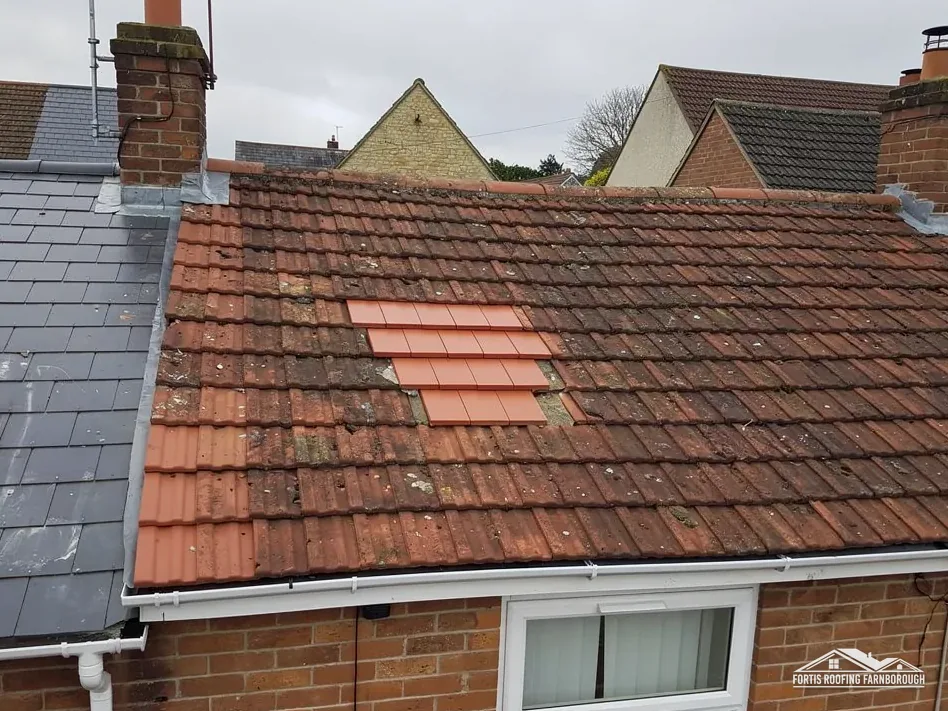
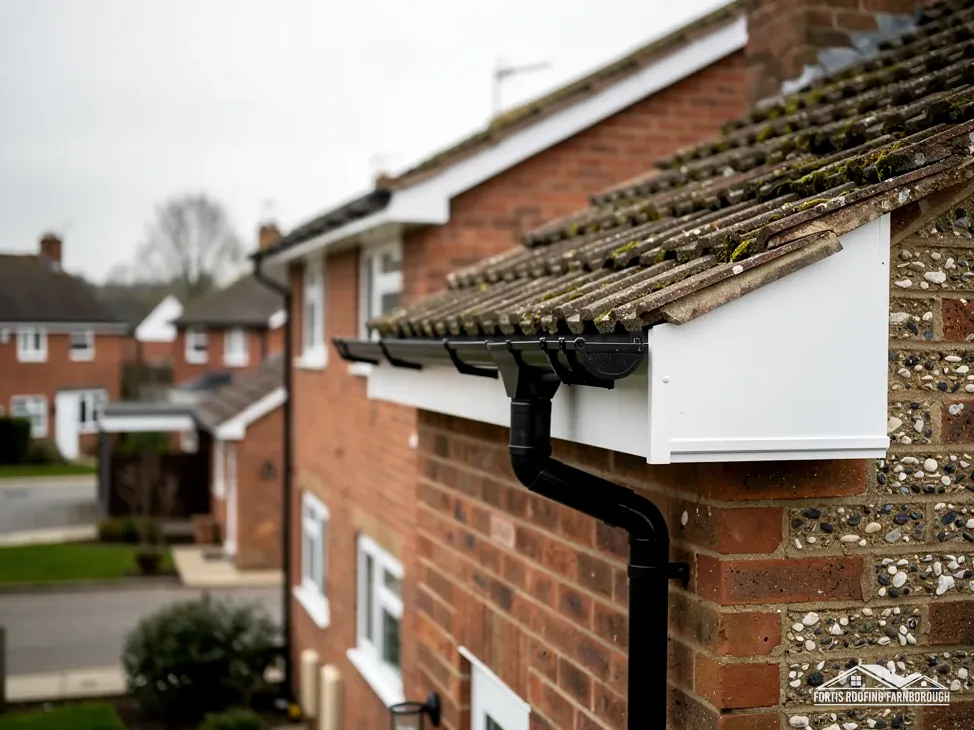
A temporary roof repair is a short-term fix that keeps rain out while the lasting work waits for dry weather or materials. It might be a tarpaulin pinned across a damaged slope, some slipped tiles put back, flashing pressed down against a wall or a patch of membrane laid over a hole. Its job is to protect the inside of the house, and it buys time for the weather to improve, for materials to arrive and for an insurer or a buyer's surveyor to see the damage.
What a temporary repair is not is a cure. It treats the symptom, which is water getting in, and leaves the cause, which is the failed tile, flashing or underlay, to be dealt with properly. That difference matters, because a patch that is left in place for months can trap moisture, rot timber and cost more to unpick than the original fault would have cost to fix.
This guide covers what works as a temporary repair and what does not, how tarpaulins are fixed safely, how long a temporary fix can be expected to hold, what insurers generally expect and how the move to a permanent repair is made. It is written for homeowners, and the roof work itself is a job for a roofer with proper access.
What a temporary repair is for
The purpose of a temporary repair is narrow and practical: to stop further damage. When a roof is open to rain, every shower soaks insulation, stains ceilings and can carry water into electrics. The temporary fix breaks that chain.
The three aims
- Keep the water out: a covering over the opening that sheds water downhill, not into it.
- Make loose material safe: refix or remove tiles, ridge sections or flashing that could fall on people below.
- Preserve the evidence: photograph the damage before anything is covered, so that the permanent repair and any claim have a record.
What it is not
It helps to be clear about the limits.
A temporary repair is not a way of avoiding the permanent one. It leaves the cause of the failure in place. If a roof leaks because the underlay has torn, a tarpaulin stops the water getting into the house on the day, but the underlay is still torn. If a flashing has lifted, a smear of sealant over it will hold for a short time, and then fail,, and the lead hub explains why sealant is not a lead repair.
Who does it
Temporary repairs on a roof are dangerous for anyone without the right access and fall protection. A roofer works from a secured ladder, a tower or scaffold, with edge protection where needed. With a leaking roof, the make-safe comes first, and the explanation of a lasting repair follows. Homeowners should stay off the roof, and do what they can from inside: move belongings, catch drips and photograph the stain.
Tarpaulins: when they help and how they are fixed
A tarpaulin is the best-known temporary cover, and the one most often done badly. A tarp that is nailed loosely over a slope will flap, tear and let in more water than it keeps out.
Done properly
A roofer fixes a tarpaulin so that it works with the roof, not against it. That means:
- Running it from the ridge down and over the damaged area, so water runs off its surface.
- Lapping it over the ridge or fixing it high enough that rain cannot run under the top edge.
- Securing it on battens fixed to the roof, not by pinching it under tiles, which can crack them.
- Keeping it taut, with all edges fixed, so wind cannot get under it.
- Leaving gutters clear, so water has a way off.
Why DIY tarps fail
Wind is the problem. A loose tarp acts as a sail, tearing at its fixings and lifting tiles beneath it. Fixing one means working at height in difficult weather, which is a good reason to leave it to a roofer. Our answer on tarpaulin on a roof goes through the points to check.
When a tarp is the wrong answer
One slipped tile is better refixed than covered. A tarp over a small area traps damp and hides what is happening underneath. A tarp suits damage that is too large or too awkward to fix at once, such as a storm-damaged slope or a section opened by a fallen branch, where the weather means the permanent repair has to wait.
Quick fixes that hold, and those that fail
Beyond tarps, there is a range of quick fixes. Some are sound short-term measures when done by a roofer. Others look like repairs and fail.
Fixes that can work for a while
- Refitting slipped tiles: a tile that has slid and not broken can often be put back and clipped.
- Patching with a section of membrane or lead: a small hole or tear can be covered with a piece fixed under the tiles above and lapped over the tiles below, so water runs over it.
- Securing a loose ridge or verge tile: held with a mechanical fixing until it can be re-bedded or dry-fixed.
Fixes that tend to fail
- Sealant over a failed joint: it cracks and peels as the roof moves, and it can hide the leak for a time while water travels.
- Bitumen coatings over tiles or flashing: they can trap moisture and make a proper repair harder.
- Foam sprayed into a leaking area: the Energy Saving Trust advises against spraying foam over a leaking roof, and RICS has noted that some lenders have concerns about spray foam. Foam can also make a roof harder to inspect later.
Why some work and some do not
A good temporary fix works with the roof's way of shedding water. It laps, so water runs off it. It does not rely on adhesive alone. A poor one relies on a seal that the weather will break within a season.
If you see a patch from an earlier owner, treat it as a warning. It marks where water once got in and may still be doing so, and a survey will show what lies beneath it.
How long a temporary repair lasts
There is no honest standard answer, because the life of a temporary repair depends on the fix, the weather and the roof. There is a useful general rule: it is measured in weeks or a few months, not years.
What decides it
- The method: a mechanically fixed patch outlasts a stuck one, and a well-secured tarpaulin outlasts a loose one.
- The weather: wind, hard rain and frost work at fixings and seals, so a winter repair is tested harder than a summer one.
- The location: a patch on an exposed ridge or at a gable edge has a harder life than one on a sheltered slope.
- The roof beneath: a patch on sound battens holds better than one on rotten timber.
Signs it is failing
Flapping or torn tarpaulin, lifted edges, new staining inside, damp insulation and daylight at the patch all mean it is time to act. Look from the garden and from the loft hatch after each bout of heavy weather.
Why delay is costly
Water trapped under a patch can rot battens and rafters, soak insulation and mould ceilings. The longer it stays, the larger the permanent repair may need to be. Put a date on getting the permanent repair done when the temporary one is fitted. Our guide to emergency roof repair cost sets out how make-safe and permanent work are priced.
Where weather or materials delay the permanent work, the roofer should tell you how long the temporary fix can reasonably be expected to hold and what to watch for in the meantime. Ask for it in writing, so that you and any insurer know what was promised for the interim.
Insurance and temporary repairs
Where a claim is in prospect, a temporary repair is not only sensible but normally expected. Insurers generally ask the policyholder to take reasonable steps to prevent further damage, and to keep receipts for doing so. The exact terms are in your policy, which is the document to read.
The sensible order
- Tell your insurer about the damage, and ask what they need.
- Photograph the damage, and the area around it, before any covering goes on.
- Have the roof made safe and weathertight, and keep every receipt.
- Keep any damaged materials if the insurer asks to see them.
- Arrange a survey of the lasting repair, with the price on paper.
Why photographs help
The Institution of Structural Engineers stresses photographs in any claim, since they show an insurer what the damage looked like. Once a tarpaulin is on, the damage is out of sight, so the pictures must be taken first. We photograph the damage during the survey as a matter of course.
What not to expect
No roofer can guarantee how an insurer will decide a claim, and the Financial Ombudsman Service gives little weight to a complaint where the owner knew the roof was already failing. Make-safe costs may or may not be covered by your policy, so ask. Our answer on whether a roof leak is covered by insurance goes further.
Photograph the damage before the temporary repair goes on, because afterwards it will be hidden.
From temporary to permanent
The temporary repair is the start of the process, and the next step needs a plan. A survey tells you what the permanent repair involves and what it costs, and it records the state of the cover which shows how well it has stood up.
What the survey looks at
With the temporary cover in place, the roofer can inspect the damage carefully, often removing the cover to do so. Covering, battens, underlay and structure are each checked, and each gets its own photograph. We note whether the damage is local or part of a wider failure.
Choosing the permanent repair
The options range from refixing tiles to re-bedding a ridge, renewing a flashing, relining a valley or re-covering a slope. The survey shows which is justified, and the choice between repairing and replacing stays with you.
Timing
The permanent work needs dry weather and sometimes ordered materials. A rare tile or a lead flashing can take time to arrive. If that is so, the temporary repair has to be maintained, and the roofer should say when to expect the work.
Price
The permanent repair is priced as a whole after the survey, as one total in writing. It is separate from the make-safe in time, and you can see what each did. Our roof repairs page sets out how we approach this.
If you are weighing up the cost, MyJobQuote's emergency page gives a typical call-out of £150 to £300 and extensive storm repairs at £1,200 or more (Oct 2026). Those are national figures, and the survey gives yours.