An emergency roof repair is normally two jobs, and each has its own price. The first is the make-safe: stopping water coming in, securing loose material and getting the roof through the next rain. The second is the permanent repair, done once the damage is understood and the weather allows. MyJobQuote puts a typical emergency call-out at £150 to £300 (Oct 2026), and extensive storm repairs at £1,200 or more. Those are national typical figures, not Fortis Roofing Farnborough prices.
The urgency is what makes emergency work hard to price fairly. With water dripping through a ceiling, anyone will agree to almost anything to stop it, and that is the moment a vague quote does most harm. A clear explanation of what is being done and what is being left for later protects you.
This guide explains what a call-out price covers, how a make-safe differs from a permanent repair, what pushes storm repair figures up, and what to ask before you agree. It also covers the consumer rules that apply when you ask a trader to come to your home for an urgent job.
What the national guide says about emergency visits
MyJobQuote's emergency roofer page, last updated in October 2026, gives typical call-out figures and a separate figure for storm repairs. A typical call-out sits between £150 and £300, and extensive storm repairs run to £1,200 or more. Its broader roof maintenance page, updated earlier in October 2026, gives an average roof repair of around £650 in 2026.
| Type of work | Typical figure | Source and date |
|---|---|---|
| Emergency call-out | £150 to £300 | MyJobQuote, Oct 2026 |
| Average roof repair | Around £650 | MyJobQuote, Oct 2026 |
| Extensive storm repairs | £1,200 or more | MyJobQuote, Oct 2026 |
How to read the table
The call-out figure is the cost of getting someone to your roof and making it safe. It is not the cost of fixing the damage. A storm repair figure covers bigger damage than a call-out does, and the word "or more" tells you there is no ceiling: it depends on what the storm did.
Read them as national figures from a guide, describing the middle of a broad market. Your own roof, your access and the damage found decide the number you are asked to pay. Planned repairs have their own wider ranges, which sit in a separate guide.
If a quote is far outside those figures, ask for the reason in plain words and look at the photographs.
Make-safe first, permanent repair second
When a roof is leaking, the first priority is to stop the damage spreading. That might mean covering a hole, securing a loose ridge or sealing a broken valley temporarily so that the loft and the rooms below stay dry. The first aim is to halt the water; the permanent repair is planned after the cause is clear.
What a make-safe is
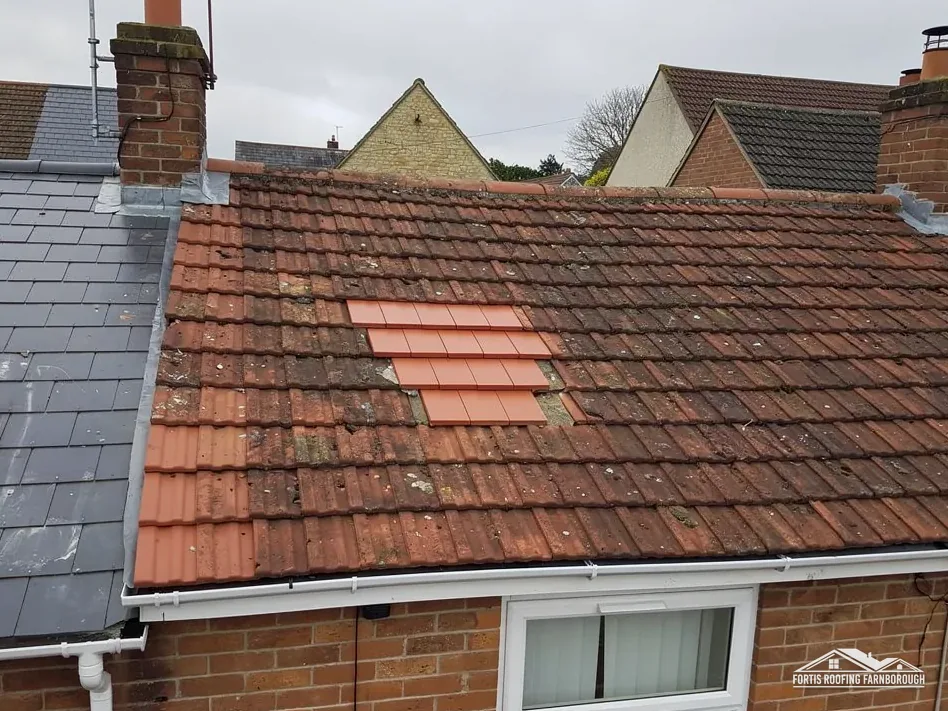
A make-safe is a short-term fix. It may be a sheet fixed over a gap, a tile refitted, a section of flashing pressed back or a tarpaulin secured over damaged slopes. It buys time. It does not replace the repair, and a good roofer says so plainly.
What a permanent repair is
A permanent repair deals with the cause: the broken tile or slate replaced, the flashing renewed, the valley relined, the failed underlay patched, or the rotten batten cut out. It usually needs dry weather, proper access and sometimes materials that have to be ordered.
Why separating them helps you
If one visit does both, you get one invoice and the roof is fixed. If the weather or the damage means the permanent work must wait, you should be told what the temporary fix will and will not hold. Our guide to temporary roof repairs explains what works and how long it lasts.
The photographs from the make-safe also help if you need to show an insurer what happened, which is worth knowing before you phone anyone.
What pushes an emergency price up or down
Emergency prices vary for reasons you can understand once they are named. None of these is a surprise charge; each is something you can ask about before you agree.
The damage itself
A single slipped tile and a storm-damaged slope are different jobs. The more roof that is affected, the more material and time it takes. Damage to the structure underneath, such as wet or broken battens, rafters or ceilings, adds work.
Access
A low garage roof is reached from a ladder. A third-storey roof, or one over a conservatory, a valley or a steep pitch, may need a scaffold tower or a full scaffold. Any scaffold standing over a road or pavement needs a Highways Act 1980 section 169 licence with notice, so an urgent job may be secured from a ladder or platform and scaffolded later for the lasting repair.
Materials
A common tile or slate is in stock. A rare clay tile, a lead valley or a specialist ridge may be ordered, which changes how the job is split.
Time and conditions
Work in heavy rain or wind is slower and riskier, and a roofer will sometimes only make safe in poor weather and return when it is dry. That is a sound decision, not a way of increasing the bill.
Our guide to storm damage to roofs explains why a storm job carries its own, larger figure than a one-off failure.
Ask what is included in the figure, what is deferred, and what the permanent repair will involve, before the work starts.
Why extensive storm repairs reach £1,200 or more
MyJobQuote's figure for extensive storm damage is £1,200 or more, nearly twice its average roof repair. The reason is scope. A storm rarely damages one thing. It lifts ridge tiles, tears at verges, slips tiles in a line and drives rain under the covering, so a single call can turn into several repairs on several parts of the roof.
What a storm tends to do
- Lift or dislodge ridge and hip tiles.
- Loosen verge tiles at the gable ends.
- Slip a run of tiles or slates.
- Tear flashing away from a wall or chimney.
- Send branches or other debris onto the roof.
Why the first visit is not the full price
On a first visit the roofer sees what is visible and secures it. Hidden damage, such as wet insulation, a rotten batten or a displaced underlay, may only be found when the covering comes off for the repair. A fair quote says so at the start and gives the assumptions behind the figure.
Insurance and storms
If you plan to claim, the usual order is to phone the insurer, secure the roof, then hold on to photographs and every receipt. For the Financial Ombudsman Service a storm usually means fierce wind with rain, hail or snow, though a severe fall of rain, hail or snow alone may be enough. Its approach gives little support to a claim where the roof was already in poor repair. Check your policy's own storm definition and what it excludes, because wording varies. We cannot say whether a claim will be paid.
A storm-damaged roof is not a reason to accept the first quote you are given, but it is a reason to have the make-safe done before the next rain.
Consumer rights on an urgent call-out
People call a roofer in a stressful moment, and consumer law has particular rules for that. It is worth knowing them before you phone, not after you have signed.
Cancelling a contract
A 14-day cancellation right exists for off-premises contracts, such as one signed at your home after a survey, but it has an exception. Regulation 28(1)(e) of the Consumer Contracts Regulations 2013 removes the right where you asked the trader to visit for urgent repairs or maintenance. Citizens Advice puts it in its own words: inviting a business in for an urgent repair means no automatic cooling-off. Ask for an emergency visit, then, and you should not count on cancelling afterwards.
Reasonable care and skill
Section 49 of the Consumer Rights Act 2015 requires a trader to carry out a service using reasonable care and skill, and that duty cannot be contracted out of. If the work falls short you have remedies, so keep the photographs, the written price and any messages.
Getting more than one view
Citizens Advice recommends collecting three written quotes for building work. An emergency leaves little room for that, so one practical route is to agree a make-safe now and gather quotes for the permanent repair while the roof is secure. The Citizens Advice consumer helpline is 0808 223 1133 if you need advice on a dispute.
Our answer on whether you can cancel an emergency roof repair sets out the position in more detail.
What a clear emergency quote contains
A good emergency quote is short, and it answers questions before you have to ask them. It comes as one total, in writing, even if it arrives as a message or an email, and it says what the figure covers.
What to look for
- A plain description of the problem found, in words you understand.
- What is being done now, and what is being left for later.
- Whether the figure covers scaffold or access equipment and VAT.
- The materials being used, such as the tile, the lead or the membrane.
- What the roofer will do if more damage is found once the covering is off.
What to be careful of
Be wary of anyone who knocks after a storm to say your roof is dangerous, asks for full payment up front or will not put a price in writing. Ask to see photographs of the damage on your own roof, and read them against the quote.
What we send you
After a survey of the damage, with photographs and measurements, you receive one written total price. If the make-safe has to happen before the survey is complete, we tell you what it covers and what the permanent repair will add. When we can reach the roof depends on the weather and the damage, so we agree the plan with you at the first call.
If the visit is only to make safe, the price should say that, and the permanent repair should be quoted separately once you have seen the evidence. For more on routine repair figures, start at our roof repairs page.