The short answer
Sometimes. Buildings insurance tends to respond to sudden damage, such as a roof damaged in a storm, and to exclude gradual deterioration and wear and tear. A leak from an ageing covering therefore often falls outside cover, while one caused by a covered event may not. Your own policy wording decides, and nobody can know the result before the insurer rules.
Sudden damage and gradual decline
Insurers separate two kinds of roof problem. The first is a sudden event: a storm that strips tiles, a tree that lands on the roof, or a burst tank that floods a room. The second is slow decline: nails that corrode, tiles that become porous and a membrane that cracks with age.
The Financial Ombudsman Service explains its approach to storm claims, and its questions are a useful guide for other leaks. It asks whether there really was a storm, whether the damage fits storm damage, and whether the weather was the main reason for it. Its guidance also lists gradual damage among exclusions policies often contain, alongside general wear and tear.
A complaint is hard to win if the roof was already failing, you were aware of it, and the weather simply brought an older fault into view.
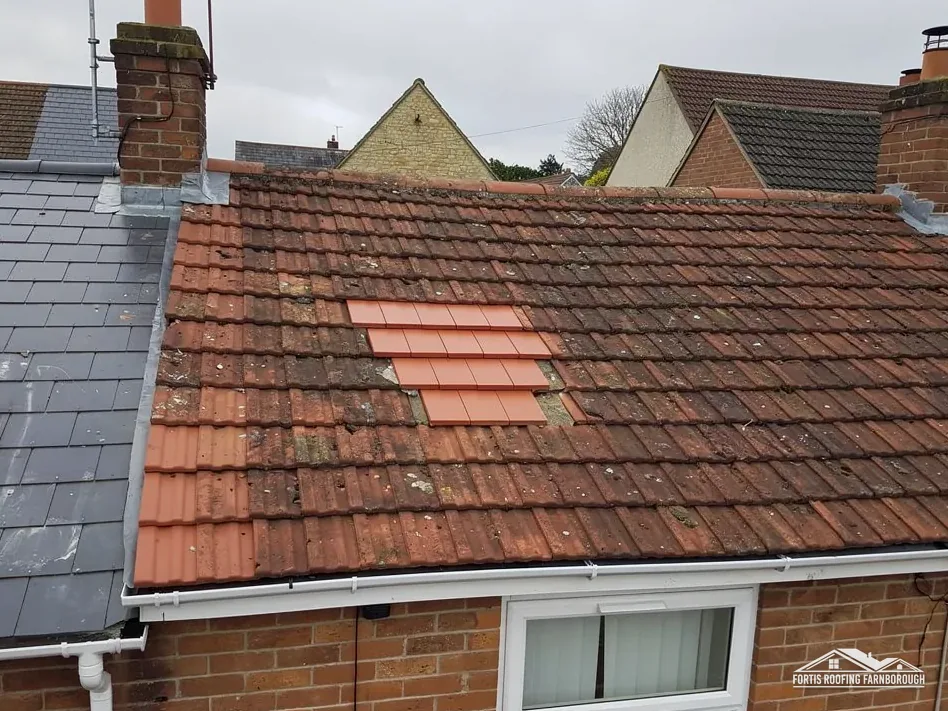
A leak at a flashing that has slowly failed is therefore a difficult claim, while a leak from tiles blown off in a gale may be a covered one. The same wet ceiling can come from either, so the source needs to be traced and written down before anything is mended.
What your policy says
There is no single national definition of what insurers cover. The policy is a contract, and the schedule and the wording set out what is in and what is out. Read the section on storm, the section on escape of water and the list of exclusions.
Look in particular at how the policy defines a storm. The Ombudsman says some insurers set a threshold for wind on the Beaufort scale, and that it takes the scale into account. Use your policy's own storm definition as the test, and do not rely on a figure quoted online, because wording varies.
Check also whether there is an excess, whether any conditions apply to the state of repair of the roof and what the policy says about making temporary repairs.
Which? reported that only 32% of storm-related claims made in 2024 resulted in a payout (Which?, storm claims report). That figure is a reminder that claims are tested, and that preparation helps. It does not mean yours will fail, and it is no promise that it will succeed.
If you are unsure how a clause reads, ask the insurer or a broker before you accept a repair quote that assumes cover.
Evidence that helps a claim
A claim is won or lost on evidence of cause and timing. Start with dated photographs of the damage, with the date on each: the wet ceiling, the room around it, the roof seen from the garden and any debris on the ground, shot from somewhere safe. The IStructE says photographs are vital to a claim for this reason.
Keep a written note of when you first noticed the problem, what the weather was doing and what steps you took. If a storm is involved, note the date.
Then bring in a roofer's survey. A report that identifies the cause, with photographs and measurements of the failed area, gives the insurer something specific to assess. It also records the condition of the rest of the roof, which matters if the insurer asks whether the damage was sudden.
Keep every receipt, including those for a temporary repair, and keep any damaged parts that were removed if you can. Our page on how to photograph roof damage for insurance explains what to capture safely, and storm damage to a roof covers the other steps.
Order of steps and when to complain
Tell your insurer first. Stop further damage with a temporary repair, since most policies expect you to protect the property, and keep photographs and receipts. Let the insurer give its view before permanent work starts, unless conditions leave no choice.
Our part is limited to the roof: we stop the water coming in, photograph what we find and record the condition accurately. The claim itself is a matter for you and the insurer, and we cannot say whether it will succeed. The record is yours to hand over, and it is worth keeping a copy.
If the insurer refuses and you disagree, use its own complaints procedure first. Where its final answer leaves you unhappy, or eight weeks pass with none, the Financial Ombudsman Service will look at the complaint. Its helpline is 0800 023 4567, and its service is free. You normally have 6 months from the date of the final response.
Whatever the outcome, the leak still needs fixing. Our roof repairs hub covers how we survey and repair, and our work is priced as a single written total after the survey visit.