The short answer
You can, because there is no rule against an owner doing the work. The roof still has to meet Building Regulations, the frame has to carry the new covering, and working on a conservatory roof is one of the more dangerous home jobs, because panels can be fragile. A like-for-like panel swap is within some owners' reach, and a solid roof is not.
The structure and building control
A new conservatory roof is a building control matter. A replacement roof is judged on structure, heat loss and ventilation, and where the rules apply the judge is a building control body, not the person doing the work. A registered building control approver or the council's own team can do the checking.
The checks bite hardest when the new roof is heavier. According to the Planning Portal, approval is needed once the new covering is 15 per cent heavier or more, and a structural opinion should come before the work. Swapping polycarbonate for glass, or either for tiles, can cross that line.
The frame is the other question. The eaves beam, the base frame and the dwarf walls were designed for the old roof. Fitting a heavier one without checking them risks bowing and cracked glazing, a problem our page on a sagging conservatory roof explains.
Around Farnborough and Fleet, the Hart and Rushmoor Building Control Partnership (01252 398715) is the body to ask. Other councils run their own services.
Working at height on a conservatory roof
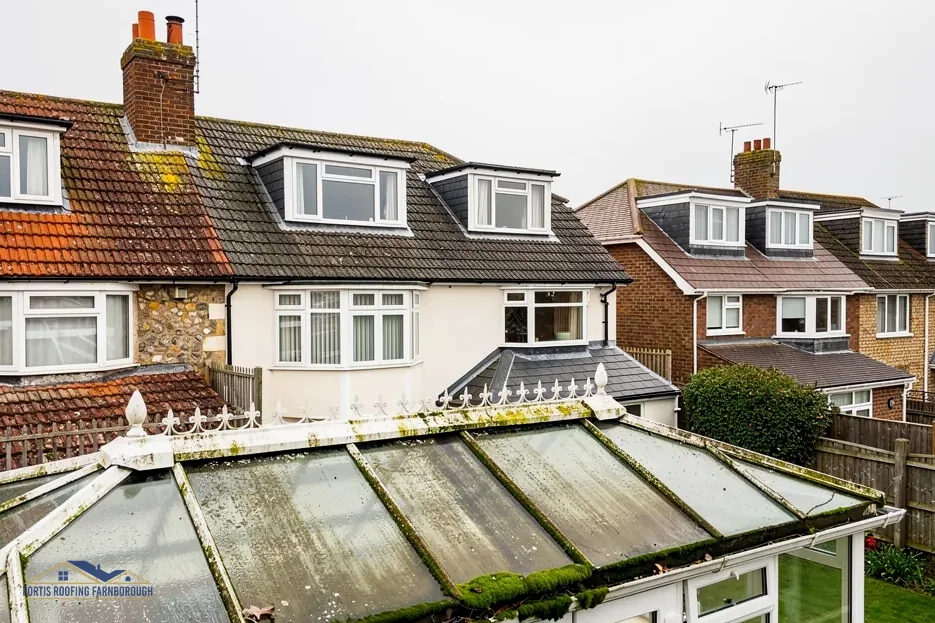
The roof itself is the hazard. Old polycarbonate becomes brittle and glass breaks under weight, so a person can fall through a roof that looks sound. Standing on the bars is not a safe way to work, and a roofer uses crawling boards or a tower to spread the load and reach the surface without leaning on it.
Reaching the roof is a problem too. The slope is often reachable only from a ladder on a patio or from the roof of the main house, and the ground around a conservatory is often uneven or paved. Ladders are suited to short, light tasks and not to carrying large panels.
Panels themselves are awkward. A single pane of sealed glass is heavy and unwieldy in any wind, and polycarbonate sheets act like sails. Two or more people with proper lifting kit handle them far more safely than one.
Where you hire someone for work on your own home, the HSE explains the duties of a domestic client, meaning someone who has building work done on their own home. A roofer you hire works within a framework of duties, and an owner doing the job carries the risk personally. Our page on a conservatory roof repair covers jobs that can sensibly stay small.
Jobs an owner can sensibly take on
Some tasks sit comfortably within reach from the ground or from a tower, and they make a real difference:
- clearing the gutter and the outlet at the eaves;
- cleaning the glass or sheet with a soft brush and a bucket;
- refreshing worn silicone at the inside edge of the roof;
- checking for cracked panels or loose caps from a ladder placed at the side.
Replacing a single polycarbonate sheet on a sound frame is also something a confident owner may try, provided the roof is reached safely, the old sheet is not walked on and the new one is the right thickness for the bars.
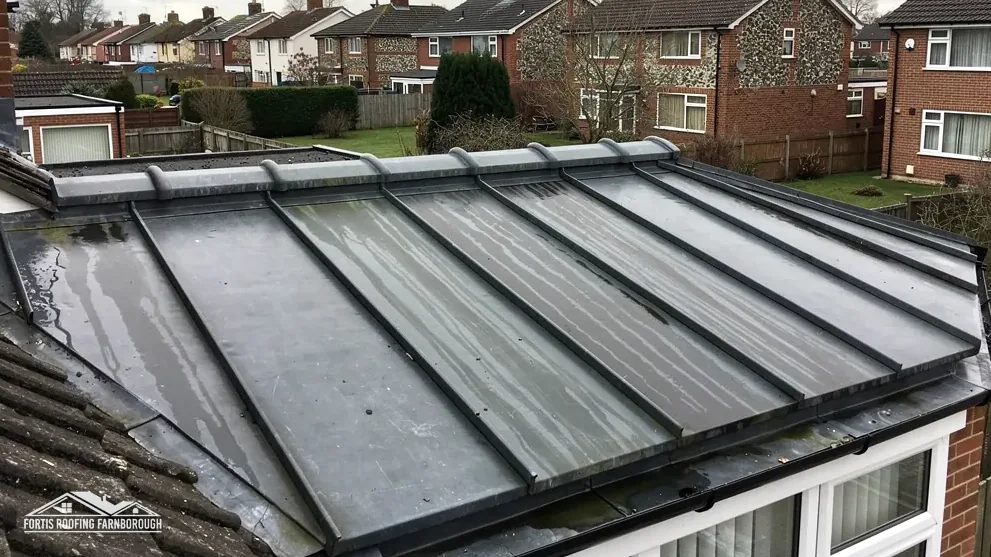
Beyond that, the risk and the consequences rise quickly. A complete re-roof, a change of covering, new flashing at the house wall and anything solid are better left to a roofer. A leak that is badly fitted shows up months later, usually at the wall junction or around the eaves, and it is harder to fix then than it would have been to do properly at the start.
Where you are unsure about a roof you plan to fit, ask a building control body before buying materials. That one call avoids buying a roof that cannot be approved.
When to ask a roofer to take over
The signs that a job has passed beyond a weekend are fairly clear. If the frame is rotten or the base is out of level, the roof cannot be fitted properly until that is put right. A new covering that weighs more than the old one needs a structural check. If a solid roof is planned, a building control application and inspections come with it.
A roofer also brings equipment an owner rarely has: a tower or scaffold, glazing lifts, the right flashing material and the experience to detail the wall junction. Where a scaffold is needed on the highway, a licence from the highway authority applies under the Highways Act 1980, section 169, and we arrange it with the scaffolder. A tower on your own drive needs none.
A survey of a conservatory from us means measuring the roof, photographing the frame and talking you through the results. If a smaller repair would solve the problem, we explain that, because the right fix is not always the biggest job.
Our conservatory roof options page lays out the coverings, and the conservatory roofs hub covers the full range of work. The price comes as one written total afterwards.