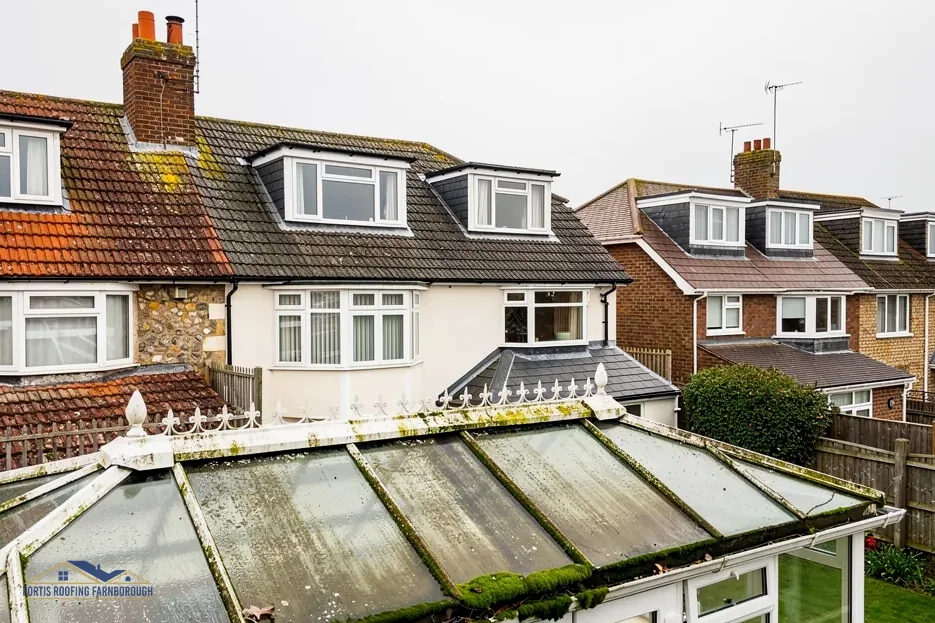
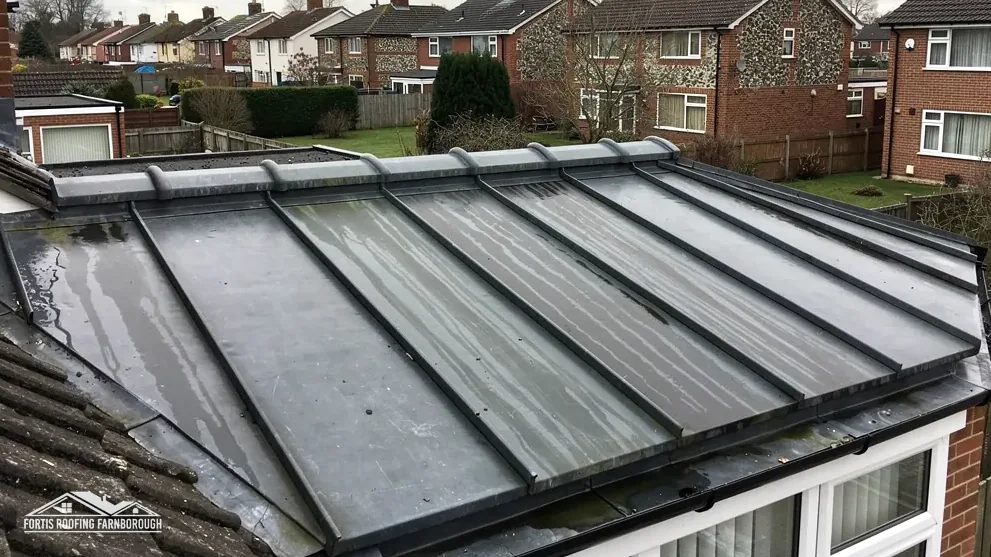
You can insulate a conservatory roof from inside, by lining the existing roof, or by replacing the covering with a solid, insulated roof. The first route is cheaper and keeps the old frame. The second changes the room more, brings the Building Regulations into play and usually gives the bigger gain. Both can work, and both can go wrong if the damp that collects on cold surfaces has no way out.
A glazed or polycarbonate roof is thin, so warmth escapes through it in winter and sun heats the room in summer. People often reach for foam boards or foil quilting to fix both. Those products can help in the right place, but fixed over a roof that already gathers condensation, they can hold the moisture against the frame and make a small problem a larger one.
This guide sets out the options in general terms, explains the condensation risk, covers what Part L of the Building Regulations asks of a solid roof, and finishes with the questions to put to anyone offering to insulate. It does not give a price, because the roof, the frame and the room all change the answer.
Two routes: line the roof or replace it
The first decision is whether to keep the roof you have. Lining it adds a layer of insulation on the inside face of the existing glazing or sheets. Replacing it swaps the covering for a solid roof that has insulation built in, usually with a plastered or boarded ceiling underneath.
Lining the roof you have
Internal lining suits a roof that is sound and dry. Thermal boards or quilting are fixed to the underside of the rafters or glazing bars, with a finished ceiling below. The room loses some light, because the glazing is covered, and you lose some height. Done carefully, it reduces the heat that passes through the roof. Done carelessly, it leaves cold, damp pockets behind the lining where nobody can see.
Replacing with an insulated roof
A solid roof, such as a lightweight tiled system, carries its insulation inside the roof build-up and lets you finish the ceiling to match the house. It is the more complete answer to winter cold and summer glare. It also weighs more than polycarbonate, which makes the frame and base walls part of the decision. Our guide to the condensation in a solid conservatory roof picks up what to watch for after the change.
On a survey we photograph the underside of your current roof, the frame joints and the eaves, because those decide which route is realistic. A frame that leaks, or glazing bars that are rotten, should be put right before insulation covers them. Ask to see those photographs before you agree to anything, because they are the evidence for the choice. If the roof is sound, lining may be all you need. If it is tired, replacing the covering now saves paying for the same access twice.
What internal insulation can and cannot do
Insulation slows the movement of heat. It cannot make an old roof watertight, and it cannot make a draughty frame airtight. If rain is already getting past the seals, insulation placed under the roof will take the water in, hold it and stay damp for a long time.
Where it helps
- Winter warmth: less heat lost through a large, thin surface.
- Summer comfort: less sun heat passing straight through the roof.
- Noise: some boards and quilts soften the sound of rain on sheets.
Where it falls short
Glazing bars and ridge beams act as a thermal bridge, a path that carries heat straight through the insulation because the material of the bar conducts it. Thin foil-faced products make big claims on the packet, but their real effect depends on an air gap and a tight fit, and on the gaps around the edges being sealed. The ridge, the eaves and the wall junction are where lining is hardest to do well.
Cost aside, insulation under a roof also hides what is above it. You cannot see a small leak behind a lined ceiling until a stain forms. That is the strongest argument for checking and, if needed, repairing the roof before lining it. Our answer on a conservatory that is too cold looks at the simpler fixes that sometimes come first, such as new seals and a draught check at the doors.
None of this means lining is a poor idea. It means it is a good idea on a sound roof and a poor one on a leaking roof, and a look at the underside tells us which one yours is.
Condensation: where the moisture goes
Condensation forms when warm, damp air meets a cold surface. A conservatory is full of both: people breathe, plants release water, and the glass or sheets are cold. Insulating the roof raises the temperature of the room side but can make the buried layers colder, and moisture that reaches those layers has nowhere to dry out.
Why insulation can make it worse
Approved Document C asks that a roof is built so that its structural and thermal performance is not harmed by interstitial condensation, which is condensation inside the layers of the roof. If insulation is added without a vapour barrier on its warm side, damp air can pass through, reach the cold layer and turn to water there. The timber frame is then wet from behind. The staining, the mould spots and the soft wood show up months later.
What helps
A correctly placed vapour control layer, sealed joints, and ventilation where the build-up needs it all reduce the risk. For cold deck roofs, where a ventilated void sits above the insulation, Approved Document C notes that the requirement is met by ventilating the void. The same paragraph accepts that a very small roof may not need ventilating at all, which is a reminder that the answer depends on the roof in front of you.
Behind those details sits BS 5250:2021, which BSI shows as current and under review. A roofer working on a conservatory roof should be able to say, in plain terms, where the vapour barrier sits and where the moisture can escape.
Ventilating the room itself, with trickle vents or opening roof vents, matters as much as the roof build-up. A conservatory that is kept closed and warm in winter, with wet washing or plants inside, will fog up whatever is above it. Small habits, such as opening a vent after cooking or showering nearby, lower the load on the roof more than any extra layer.
A solid roof and the Part L figures
Part L of the Building Regulations covers the conservation of fuel and power. When a conservatory roof is replaced with a solid, insulated roof, you are building a new roof element, and the energy figures matter.
The figures in Approved Document L
Under Approved Document L Volume 1 (2021 edition, 2023 amendments), Table 4.2 gives a maximum U-value of 0.15 W/(m²·K) for a roof that is a new or replacement element in an existing dwelling. A U-value measures how much heat passes through a surface, so a lower figure means better insulation. Windows, roof windows among them, must reach a figure of 1.4, or else an energy rating of at least Band B under the Window Energy Rating scheme. Table 4.3 sets a different threshold of 0.35, improved to 0.16, for existing elements being renovated, such as when you replace a layer in an existing thermal element.
Which row applies to your conservatory depends on how the roof is classed and how the room is separated from the house. That is a question for building control, and we raise it before work starts rather than assuming. Getting the answer early also tells us what thickness of insulation the roof build-up has to hold, and whether the frame has depth enough to take it. A new edition, AD L 2026, takes effect on 24 March 2027, with the tables renumbered 3.2 and 3.3. Until then the 2021 tables apply.
Who checks it
In Rushmoor and Hart, building control is a shared service from the Hart and Rushmoor Building Control Partnership, on 01252 398715. A registered building control approver can also take the work. For the whole range of work on these roofs, start at our conservatory roofs page.
Foam, quilts and products to question
Many products are sold to insulate a conservatory roof, and the advertising is usually louder than the detail. Some are good in the right place. The test is always the same: does it suit this roof, and can the moisture get out?
Spray foam
In March 2023 RICS published a guide for consumers about spray foam and said that equity release lenders in particular had raised concerns, which were spreading to other lenders. RICS tells owners to ask the mortgage provider whether its lending policy permits foam. It adds that foam over timber hides the structure from inspection, and that a badly fitted layer can upset ventilation and lead to damp. The Energy Saving Trust advises against putting spray foam on a roof that leaks. On a conservatory frame, where timber or uPVC and glazing bars meet, the same caution applies.
Foil and multi-layer quilts
These are thin products whose benefit depends on installation. A quilt pressed against cold glazing with no air gap behaves differently from the test figure on the packet. They are quick to fit and, on a dry roof, can improve comfort. They are not a repair for a roof that leaks.
Rigid boards
Boards cut to fit between and over rafters, with taped joints and a vapour control layer, give a more predictable result than loose fill or sprays. They need a ceiling finish and a careful junction with the house wall. If you plan to sell, a clear record of what was fitted and where is worth keeping, because a buyer's surveyor will ask about it.
Cost, VAT and the right order of work
What insulating a conservatory roof costs turns on the route you take, the roof area, the finish you want inside and what the frame needs first. A leaking junction or tired glazing bars add work before any insulation goes in. The written quote follows a survey, and it is one total.
VAT on energy-saving work
Government guidance covering energy-saving materials sets a zero rate for installations made between 1 May 2023 and 31 March 2027, with the reduced 5 per cent rate from 1 April 2027. Whether a particular conservatory job counts depends on what is installed and how, so ask the roofer to say how VAT has been applied. Our answer on VAT on conservatory roof insulation goes into the detail.
A sensible order
- Survey the roof, frame and base walls, with photographs.
- Repair leaks and failed seals first.
- Choose lining or replacement, and settle the Building Regulations route.
- Fit the vapour control layer and insulation, sealed at every joint.
- Check ventilation of the room and, where the build-up needs it, of the roof.
Doing the steps in that order avoids the most expensive error: insulating over a problem and sealing it in. If a roofer offers a price without looking at the underside of the roof, treat the figure as an estimate. Ask also what happens to the old covering, who removes it and whether the quote covers scaffold or access towers, because both vary with the roof.