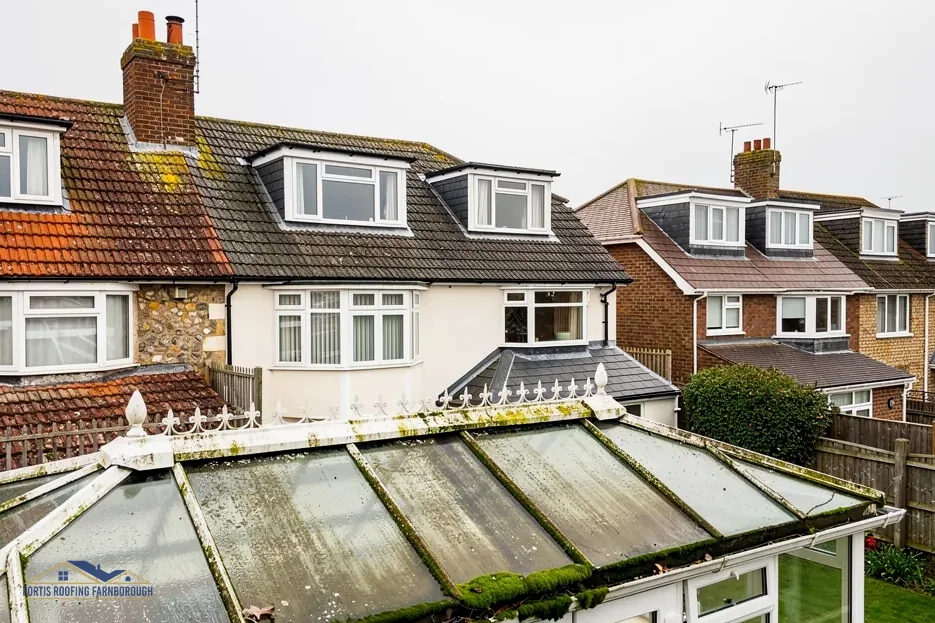
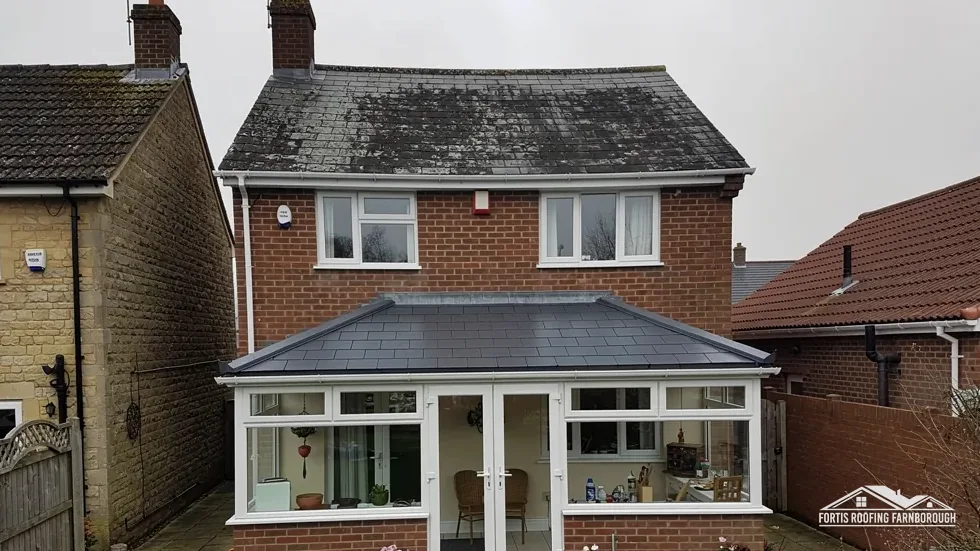
The short answer
A conservatory is cold in winter because its roof loses heat quickly. Single or thin glazing has little insulation, gaps at seals and bars let air leak, and warm air rises to the roof and escapes through it. Fixes range from sealing gaps and fitting blinds to adding insulation or replacing the roof with an insulated one, which Building Regulations treat as a new element.
Where the heat goes
Heat moves from warm to cold, and it moves fastest through materials that conduct well and have little thickness. Glass and thin polycarbonate are poor insulators compared with a roof built of insulation, timber and tiles. A conservatory roof is a large area of that thin material above the warmest air in the room.
Warm air rises. It collects under the roof, which is the coldest surface in the room, and loses its heat to it. The roof panels carry the heat out, and cold air sinking from the surface gives the sensation of a chill.
Gaps make it worse. Perished seals, loose caps, gaps at the wall junction and poorly fitted vents let warm air escape and cold air in. A draught along a glazing bar is both a heat loss and a clue to a failed seal.
Single glazing and thin multiwall polycarbonate are the weakest, and double glazing with a low-emissivity coating is better. The frame matters as well, because a bar or a frame with no thermal break conducts cold into the room.
The usual result is a room that cools quickly after sunset and takes a lot of heating. Comfort is poor, and with the cold glass come condensation and mould. Our guide to condensation in a solid conservatory roof covers the moisture side.
Quick improvements
Some measures cost little and bring a noticeable change. They are worth trying before spending on a roof.
- find and seal draughts: renew perished gaskets and caps, fill gaps at the wall junction and check the vents close properly;
- fit blinds or thermal curtains to the roof and walls, which cut heat loss at night, as long as the blinds do not trap moisture against the glass;
- add a layer of insulation to the roof if the structure allows, such as secondary glazing film or insulated panels, which need a roofer's opinion on weight and condensation;
- use rugs and an insulated floor, since a cold floor adds to the chill;
- check that any heating is sized and positioned for the room, and that it is installed safely.
Be cautious about treatments that stop air moving. A roof that is sealed too well with no ventilation will condense, and the damp that follows is worse than the cold.
Decorative insulating films or foil sheets are sold for conservatory roofs. They make a modest difference, they can affect the look, and they must suit the type of glazing, because some trap heat in a way that cracks glass. Ask the maker and a roofer before fitting.
These steps help comfort without changing the structure. If the room is still cold, the roof itself is the limit.
Replacing the roof with an insulated one
The most effective fix is a roof designed to insulate. Options include a solid roof of timber and insulation finished with tiles or a lightweight covering, a high-performance glazed roof with warm-edge double or triple glazing, or a hybrid with roof windows. Our guide to conservatory roof options compares them.
A solid insulated roof makes the biggest difference to winter comfort, because it replaces the thinnest and coldest surface with a built-up one. Approved Document L gives 0.15 W/m²K as the value for new roof work on an existing dwelling. Renovation of an existing roof is held to 0.16, where the 0.35 threshold sets the upgrade in motion. Whether those rules reach a conservatory depends on how it is divided from the house, how large its floor is and how it is heated, and building control confirms that.
A new conservatory roof must also be structurally safe and properly ventilated, as the Planning Portal says. A solid roof is heavier, so the base and frame are checked, and a roof of that type needs ventilation of its own.
The costs and the trade-offs are real. A solid roof gives less light, which roof windows can recover, and it needs building control approval. A high-performance glazed roof keeps the light and costs more per square metre.
We survey the conservatory and say which option suits it, with a written price for each.
Cold versus damp, and what to do next
A cold conservatory is often a damp one, and the two problems feed each other. Cold surfaces make moist air condense, and damp insulation and framing lose heat faster. Sorting out one often helps the other.
Check which complaint you have. If the room is cold but dry, heat loss through the roof and gaps is the issue. If it is wet, with water on the glass and mould in corners, ventilation and moisture control need attention too. Our answer on whether conservatory roofs need vents deals with the second.
A survey starts with the roof, seals, frame and ventilation. We photograph from safe access, test for draughts and moisture, and tell you what is causing the cold. If the answer is a few seals and a blind, the report says that. If it is the roof, it sets out the options.
Whichever route you pick, one written price follows the survey findings. The conservatory roofs hub lists the related services.
In the meantime, keep the room ventilated even in cold weather, because a closed-up cold room is the one that streams with condensation.